Thursday, November 19, 2020

Hercule Poirots Christmas - Agatha Christie

Hercule Poirotis a fictional Belgian detective created by Agatha Christie. Poirot is one of Christie's most famous and long-running characters, appearing in 33 novels, 2 plays (Black Coffee and Alibi), and more than 50 short stories published between 1920 and 1975. Agatha Christie was an English writer known for her sixty-six detective novels and fourteen short story collections, particularly those revolving around fictional detectives Hercule Poirot and Miss Marple. She also wrote the world's longest-running play, The Mousetrap, which was performed in the West End from 1952 to 2020, as well as six novels under the pseudonym Mary Westmacott. In 1971, she was appointed a Dame Commander of the Order of the British Empire (DBE) for her contributions to literature. Guinness World Records lists Christie as the best-selling fiction writer of all time, her novels having sold more than two billion copies. According to Index Translationum, she remains the most-translated individual author. Christie has been called the "Duchess of Death", the "Mistress of Mystery", and the "Queen of Crime".  Hercule Poirots Christmas was my 58th of 2020, wish I had the count of how many Agatha Christie novels I have read. 


In this Multi-millionaire Simeon Lee, frail in his old age, unexpectedly invites his family to gather at his home for Christmas. The gesture is met with suspicion by the guests. Simeon is not given to warm family sentiment, and the family are not on good terms, in particular, with the black sheep of the family, Harry. Simeon also searched out his orphaned, Spanish-born granddaughter, Pilar Estravados, to live in his house. None have met their late sister Jennifer's daughter before; she proves to be delightful. Simeon is intent on playing a cruel game with his family's emotions. Stephen Farr, a surprise guest, arrives on Christmas Eve. He is the son of Simeon's former partner in the diamond mines, welcomed warmly by Simeon. Simeon calls his family together that afternoon, to hear him on the telephone with his attorney, saying he wants to update his will after Christmas. This incomplete information stirs up negative feelings among his sons and their wives. Alfred Lee, Simeon's son, who lives with his father, Lydia Lee, Alfred's wife, George Lee, Simeon's son and an MP, Magdalene Lee, George's wife, David Lee, Simeon's son, the artist, Hilda Lee, David's wife, Harry Lee, Simeon's son, called the prodigal son, Pilar Estravados, Simeon's only granddaughter, aka Conchita Lopez where at home, in addition to Horbury, Simeon's valet, Tressilian, the butler, Walter, the footman.

After dinner on Christmas Eve, the sounds of crashing of furniture and a hideous scream are heard by several, who rush to Simeon's room. When they get to his door, they find it locked and have to break it down. The sight revealed includes heavy furniture overturned, crockery smashed, and Simeon dead, his throat slit, in a great pool of blood, a grisly and shocking sight. The local police superintendent is already at the front door, before anyone could call the police. Superintendent Sugden notices Pilar pick up something from the floor. He insists that she give the small bit of rubber and a small object made of wood to him.

Sugden explains that he is at the house by prior arrangement with the victim, who confided to him the theft of a substantial quantity of uncut diamonds from his safe. Poirot accompanies Colonel Johnson to investigate this murder. The murder generates many questions. How was the victim killed inside a locked room? Was the murder connected to the theft of the diamonds? And what is the significance of the small triangle of rubber and the peg first noticed by Pilar?

Poirot's investigation explores the victim's methodical and vengeful nature and the way these characteristics come out in his sons, and observes physical traits as well. Each son, and perhaps one of the wives, appears as a suspect to the investigators. When the butler mentions his confusion about the identities of the house guests, Poirot realises that the four sons of Simeon's marriage may not be Simeon's only sons present in the home. Poirot finds the uncut diamonds mixed in with the stones of a decorative outdoor garden, which takes theft away as a motive. The family lawyer reads Simeon's will, which leaves half to son Alfred, who runs the business, and the other half to be split among his other children. This leaves Pilar with nothing, as her mother died a year earlier, and his granddaughter is not specifically named. Alfred, David and Harry agree to pool their inheritances and make a share for Pilar. This warm gesture, based on what is just, as Lydia tells her, upsets Pilar, and she refuses it. The final major clue comes from Pilar. She and Stephen are playing with balloons and one bursts; she mentions that the pieces are like what she found on the floor after Simeon Lee was killed. Poirot warns her to be "on her guard", as she knows more than she realises. Soon she is almost killed in another murder attempt, of a stone cannonball perched above her bedroom door.

A cable comes from South Africa reporting that the son of Simeon’s partner was dead; Stephen Farr admits his name is Stephen Grant, and he is in England to meet his father, from Simeon's last trip to South Africa, five years after his marriage in England. After that, Pilar reveals the story of the death of the real Pilar as the two crossed Spain during its civil war, and her own plan to arrive in England in her stead. With this knowledge, Sugden tries to blame the murder on Pilar. Then Poirot takes over and explains the crime. Poirot reveals that Sugden was another illegitimate child of Simeon, from an affair with a local girl. Sugden hated the man who abandoned his mother, paying her off. Sugden planned his revenge carefully and murdered his father hours before he set off the noisy sound effects.

David is relieved of his years of anger toward his father for mistreating his mother. Stephen takes Pilar, now Conchita Lopez, to South Africa, to marry her. Lydia will invite them to a proper English Christmas.

This is such a classic Agatha Christie!

Wednesday, November 18, 2020

Great work Great Career - Stephen R. Covey & Jennifer Colosimo

 57th of 2020; In 'Great work Great Career' by Stephen R. Covey & Jennifer Colosimo; they  tells us how  to create our ultimate job and make an extraordinary contribution rather than just filling a job description.

This book will help discover the importance of contribution and how it can be made; by discovering the unique passion, talents and strengths; defining your cause, building your village and mastering the job-search process, thereby creating a great career.  A great career is all about solving great problems, meeting great challenges and making great contributions; and anyone can have a great career. The book is divided into two parts viz:

Part 1: What will be your contribution?

Begin with the end in mind.

Your strength lie in a combination of your talent, passion and conscience. Where the strength intersects with the market need at that point lies your ability to make a unique contribution.


Know your strengths. The singular, irreplaceable you, identify your portfolio of strengths. 

Discover your cause: The Fire in you, become a volunteer and not an employee, become a solution and not a problem. Contribute your best.

The contributor paradigm say:

  • "I'm a solution"
  • "Because you have a significant need, I want to offer you strengths that match that need"
  • "Here is my proposal to help you"
You are the creative force of your own job and life. No matter what role you play or where you are, your contribution can make a difference.

Part 2: How will your make your contribution?

Get the job you want. Be strong in the hard moments. Work in your circle of influence and not your circle of concern. 

Build your own village, contribute to the village, identify the members of your village, create and emotional bank account, carve out space on the internet, practice synergy. People with great careers always have a service paradigm. 

A highly synergistic team creates solutions that even the lone genius cannot foresee. Establish and control your personal brand across the world. It does your career little good to have a unique ability to contribute if no one knows about it. 

Don't regard yourself as a product that needs a marketing brochure, consider yourself a living, breathing, intelligent problem solver. Today interviewers want to know how you have used your skills.

Your career will be great if you make it great. 

Self Care While Working from Home or Otherwise

 Self Care while working from Home or otherwise will basically involve:

  • Coping with stressful events 
  • Effective coping mechanisam
  • Inducing long lasting change

Five Senses - we need to be aware. We are forced to social distance - This will lead to lonliness.

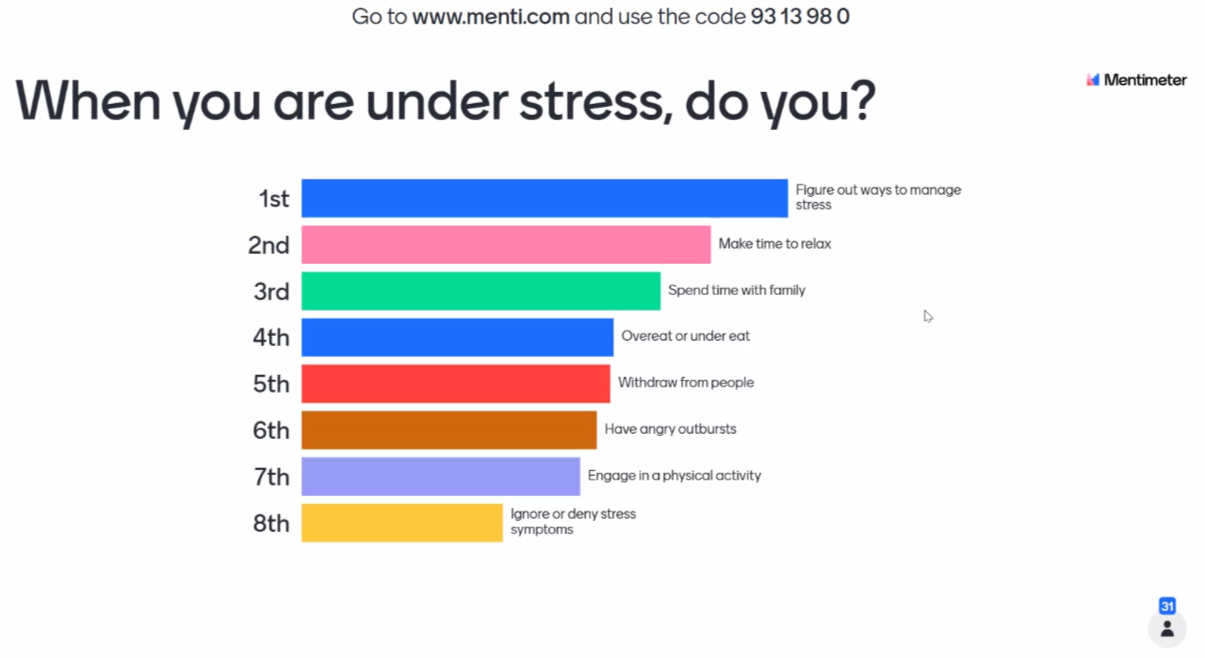
When you are under stress - you tend to?

Techniques to Destress are:


Burnout - 

You start feeling every day is a bad day, caring about your work or home life seems like a total waste of energy, you're exhausted all the times, majority of the day is spend on tasks you find useless.

It could be because of Work related stress or otherwise. WHO says its a - "Occupational Phenomenon" - Its like a wave - it comes and goes. 

What causes Burnout? Work; Lifestyle and/or Personality.

Signs of Symptoms of burnout are:


What we forget during this time is to be compassionate towards oneself. Take care of yourself. Draw boundries with those not contributing.

Reflection activity for self:

1) Think about a time when a close friend of yours is struggling and is comming to you and saying I feel like I have no meaning to this life, I feel worthless - how would you respond to your friend when your are doing pretty good.

2) Think of a time when you were struggling, how did you respond to yourself?

Notice tone you were talking to yourself during that time. 

Mostly when we go through tough times, we become critical of ourselves. 

This is because we were thought to be compassionate to others, but not to ourselves. 

Remember this activity and be compassionate.

Its important to Destress self and others. There are few techniques. Don't feel ashamed to ask for help.

Develop your own self care/help techniques: Self-Kindness, Humanity and Mindfulness:

1) Recall a situation when we were stressed, write down the situation; explore the comforting/soothing/validating aspect and the Protecting/providing/motivating aspect of the situation.  Nurture both these aspects.

a) Comforting - One thing to do to take care of emotional needs -

b) soothing - One thing you can do to make your self physically carmer and more at ease - 

c) Validating - One thing that you can say to yourself to validate your feelings - 

i) Protecting - One thing you can do to stop the harm you are inflicting on yourself -

ii) Providing - One thing you can do to give yourself what you need - time/space/break/workout/hug/listen?

iii) Motivating - how can you motivate yourself with the kindness/support and understanding and not criticising. 

All of us have our Ings and Yangs. All of us want to have the validating statement and what we need to actually do. 

These are the words - make use of these words to take care of yourself. 

Emergency self care:


Mehdi: Nothing is Impossible By Roy Alexander

56th of 2020 was Mehdi: Nothing is Impossible By Roy Alexander.


Mehdi Fakharzadeh, was born in Iran, he came to the United States in 1948 for graduate school and earned his Master of Economics degree at BYU. While starting doctoral studies at the University of Washington, he met Sigrun Fridriksdottir, a student from Iceland, whom he married in 1953. Mehdi joined the Metropolitan Life Insurance Company in 1955 and rest his history. 

The first biggest challenge in his life was convincing his wife to marry him, and second was letting his father allow him to migrate to US.  His principles are simple and he believed that most great ideas are simple and one need to establish their own true principles and follow them. Mehandi's five powers to shore up our weaknesses and develop strength were:

  1. Honesty above all
  2. Put yourself in the other person's shoes
  3. Knowledge is power - Read, Listen, Discuss, Observe, Think
  4. Work is pleasure
  5. Never get discouraged

Mehdi adopted a winning attitude by:

  1. Setting Goals
  2. Viewing problems as opportunities
  3. Thinking we Can
  4. Rejecting fear
    • Recognizing faulty assumptions
    • Assuming responsibility
    • Accepting failure as temporary

According to him honesty pays dividend. Self knowledge and accepting yourself is important for it.

We have another book about him - Everything is possible.


His biggest regret later on was that he came late into this business and the secret for success to him was Work, desire and ambition. Life insurance is a unique product and selling life insurance is an unique experience.  While it is a great career for the right person, not everyone succeeds. The more you talk, the more money you make.  Best job is that of insurance agent. Over the course of a distinguished 60-year career he became top life insurance salesman and a legend in the field.

Mehdi, 97 years young, peacefully entered into eternal rest on October 13, 2019. 

Tuesday, November 17, 2020

Special Ops - India's longest Manhunt

 My first experience, of a web series though had glimpses of others before. 

Created by Neeraj Pandey who along with Shivam Nair directed the series along with Pandey's Friday Storytellers attached as a production house for Disney+ Hotstar's label Hotstar Specials ; it keeps you hooked. The Eight episodes have names of eight hindi movies. 


Based on real-life incidents taken from the lives of officers working for the Indian intelligence agency. The series has eight episodes where Kay Kay Menon's character Himmat Singh tries to deduce the oncoming attack. The series begins in the present with the two-men audit team – played by Parmeet Sethi (Mr Chadda)  and Kali Prasad Mukherjee (DK Banerjee) – probing Himmat Singh about alleged irregularities in his department’s accounts.

Five terrorists were killed, but RAW (Research and Analysis Wing) officer Himmat Singh (Kay Kay Menon) believes there was a sixth terrorist, the mastermind, who slipped away.

We open at the 2001 attack on the Parliament of India, before jumping eighteen years forward to an internal inquiry into RAW agent Himmat Singh (Kay Kay Menon, from Shaurya). For nearly two decades, Himmat's been after a terrorist with the alias of Ikhlaq Khan — in whose pursuit he has spent vast resources on his team of five agents spread across Asia. Himmat believes Ikhlaq is the mastermind behind the aforementioned Parliament attack and several more across India. But here's the catch: no one believes Himmat. And with nothing to show for it after all this time, the investigators force Himmat to recount what exactly he's been up to with the millions he's seemingly wasted on chasing a ghost.

That acts as the gateway to introduce its supporting cast, and dive into Himmat's past. Amongst the former, we've Delhi Police cop Abbas Sheikh (Vinay Pathak, from Bheja Fry) who becomes close to Himmat post-2001. And then there's the said team of five: the Dubai-based Farooq Ali (Karan Tacker, from Ek Hazaaron Mein Meri Behna Hai), the Tehran-based “housewife” Ruhani Syed Khan (Meher Vij, from Secret Superstar), the Istanbul-based chef Balakrishna Reddy (Vipul Gupta, from K. Street Pali Hill), the Baku-based sniper Avinash (Muzzamil Ibrahim, from Dhokha), and the always-travelling Juhi Kashyap (Saiyami Kher, from Mirzya). Farooq is the only one whose background is properly sketched out though, with the others not getting more than a line or two. Sajjad Delafrooz as Hafiz Ali/ Ikhlaq Khan gave a splendid performance supported by Rajat Kaul as Ismail Hassan.


The ending of the series came as a surprise to many. It was something that no fan of the show had imagined. The audience was rooting for a good ending but director Neeraj Pandey went a step ahead and gave the fans a memorable ending. 

In the ending as Ikhlaq Khan gets killed, he says that he still has a trick left up his sleeve in his dying moments. The sisters Sadia and Farah Qureshi are shown in a very suspenseful tone throughout the last episode. Towards the end, it is shown that they are clean and did not carry the suicide bombing vests as they were expected to. In a surprising change of plans, they decide to not bomb the meet. This ending shows that there is still some humanity left even in those who have been hurt and that was the message to take from the series.

Worth a watch!

Friday, November 13, 2020

Showers of Blessing to my dear little girl......

" For love is as strong as death is,.......its flames are a blazing fire, the flame of Jah" - Song of Solomon 8:6

Can't believe by little girl is Mrs. Simon; time is fleeting, indeed. Let Jehovah fortify and safeguard your marriage. May there be showers of blessings on both of you. Hearty congratulations and best wishes.

Clothe yourself with love. Let there b lot of understanding, joy, peace and Happiness. Keep forgiving one another freely, when things happen. Treat others the way you like to be treated, not how they treat you. Marriage is more than just two people coming together. Cherish every moment. Enjoy and Keep rocking.


Feel like just yesterday, you walked into Surbhi Nagar, a little girl, not even 18, you helped create memories moving to Hoysala, and our home was no more the same without you. It made me do the unexpected. Was all waiting to attend your planned wedding - which unfortunately had to be cancelled because of travel restrictions, and though painful, your parents were bold enough to get both their daughters married off on the same day. A day of mixed , multiple feelings.


Two things - basics are always the same, one need not read the bible, the fundamentals for all marriage is the same and no wonder, if I talk to you in your language, we have been doing that so often - so as you know I have read bible before and not now. 

Build a strong and happy marriage. It is common for married couples to experience some difficulties. Everyday problems can cause stress in a marriage. As we are imperfect we tend to hurt each other, we have demanding jobs, financial problems, illness etc. Ensure that love and respect is intact, come what may. Be slow to anger, put into marriage what we hope to get out of it, forgive and move on. Enjoy the goodness, and be Happy Always. Count your blessings. Speak to each other in a kind, tender and compassionate way. Good communication is important. Reassure each other of your love by what you say and do. Do not awaken love until it feels inclined. Be loyal to each other, come what may.  We need to work hard to keep our love strong, its's not always easy. True and lasting love is possible. 

May there be showers of blessings on both of you! Stay Blessed! Be Happy Always!


Shubh Deepawali🌹🙏

Six things we traditionally do during Diwali, which if we do with understanding would make our Diwali spiritual and meaningful; 

1. Cleaning of house - Let us also clean our mind of all the accumulated dirt of kama, krodha, moha, mada, matsarya, and lobha

2. We buy/ bring in new things - let us acquire true knowledge

3. We eat sweets - let us share and sweeten other life, particularly of down trodden

4. We light lamps- let us light lamp of knowledge and spread it.

5. We do Laxmi Puja - let us pray for furtherance of our spiritual wealth

6. We burst crackers - let us burst our ego - noice less. but peace descends


One of the biggest and most important festival - means row of lamps. It symbolises victory of good over evil and light over darkness. It is believed that Lord Rama, Sita and Lakshmana was greeted by the glittering lights of thousands of lamps, and the cheers of the people celebrating the end of their exile. A festival of joy and prosperity, one that echoes in most of the household across India. Some for a day, some for five days, and some celebrate it for a month. 

Happy Diwali. 

&

For this year in particular, remember:


P.S. kama (lust), krodha (anger), lobha (greed), Mada (pride), moha (attachment), and matsarya (jealousy)

Wednesday, November 04, 2020

Alice’s Adventures in Wonderland by Lewis Carroll

Charles Lutwidge Dodgson born on 27 January 1832 was better known by his pen name Lewis Carroll. He was an English writer of children's fiction, notably Alice's Adventures in Wonderland and its sequel Through the Looking-Glass. 


 In Alice’s Adventures in Wonderland by Lewis Carroll, Alice has an extremely entertaining episodic dream, but the narrator exposes this at the end of the story.  At first, Alice follows a rabbit down a rabbit hole and finds a bottle labeled “drink me” and so she does, which allows her to fit through an underground door with a golden key.  Next, she finds a cake that is labeled “eat me” and her size is restored.  She begins to cry, becomes smaller, and must swim through her own tears.  Alice begins to talk to the creatures she finds in her wonderland adventure. Each creature may sing to her, give her advice, or help her along her way.  In the novel, Alice does not have any prejudice, eats magic mushrooms that do not affect her feelings about herself in any way, and meets up with a hookah-smoking caterpillar.  One of the most helpful creatures is the Cheshire cat who steers Alice to the mad tea party and eventually leads her to the garden, where she came from.  Alice is only threatened by one character and that is the queen of hearts who threatens Alice with an “off with your head” statement.  In the end, Alice wakes up, staying away from danger, and her sister tells Alice she has been dreaming.

As other answers have suggested, a central message of the book is that of identity. Her adventures there initially literally change her physical identity—she is always growing and shrinking. This shows how difficult it can be to "fit in" to a new culture. As Alice says, before bursting into tears, "Who in the world am I?"

Alice had a much more concrete sense of self when she was in her safe, if duller, Victorian home with Dinah and her cat. 


Through the Looking-Glass to follow as I work on Flamingo interesting 55 of 2020


The Marigold Story - Indira Gandhi & Others By Kumkum Chadha

 The Marigold Story - Indira Gandhi & Others By Kumkum Chadha. 54 of 2020. A little bit about the writer to know the book better; Kumkum Chadha is a veteran journalist, who can tell us the stories behind the stories, having worked with people political and otherwise for a long time. 


In this book Kumkum Chadha unravels the hitherto unknown aspects of eleven men and women who remain a significant part of India’s history. Embellished with interesting nuggets, this book is a collection of fascinating profiles including, L.K. Advani,  Lalu Prasad Yadav, Smita Patil, Smriti Irani, Ektha Kapoor, Ajay Bijli, Amitabh Bachchan, Abhinav Bindra, Arun Jaitley along with Indra Gandhi, Rajiv Gandhi and Sanjay Gandhi. Uncommon access, being privy to confidences and, above all, a willingness to tell the story, bring alive the people behind the headlines. The Marigold Story: Indira Gandhi & Others is not a gushing account of newsmakers; if anything it captures their weaknesses; goes beyond their achievements and examines what makes these individuals distinctive and unforgettable at the same time. The marigold story is just one among many observations Chadha makes about Indira Gandhi. Each chapter in the book is not only about the person in the title, but also the contexts in which these people worked and lived, plus anecdotes about the people close to us.

In parallel, she do write about her family and her story - especially on her parents and how they had to leave things behind in Pakistan. How her mother belonged more to Pakistan than she ever did to India. It was as if she was stuck in time warp, and never understood the concept of 'Indianness' because Pakistan was a definitive and intergral part of her psyche. She would fight for it, she defined geography; while Kumkum justified history and there was, therefore no meeting ground. 

So what’s the marigold story? It’s really just an observation about Indira Gandhi who hated the flower so much that her staff was trained to keep marigold garlands far away. If the flower actually touched her, Indira Gandhi would throw a fit. Unfortunately, no one remembered this when Gandhi was laid out in state after she was assassinated in 1984. Her body was draped with piles of marigolds — exactly the flower she always hated. Prime Minister Indira Gandhi hated the marigold flower, although in death it was strewn all over her body; Mrs. Gandhi was said to be the only man in her cabinet. 

Her son Sanjay Gandhi was dictatorial, but also uncommonly empathetic; The chapters on the Gandhi family are  solid — Indira, Sanjay and Rajiv Gandhi come alive in these pages, so do Sonia and Maneka, and  the bureaucrats who surrounded the Gandhis like R.K. Dhawan in particular on his loyalty and how he was the first to go. How Rajiv was unthinkable by excluding senior leaders from Cabinet the problem Muslim Women (Protection of Right on Divorce) Act in 1986 caused issue. What he did say for the the few party politicians then is true for any even today. The system was run by charlatans - those who were not only privileged, but also adept in the art of depriving the weak. (P.S. Charlatan is a person who says that he/she has knowledge or skills that he/she does not really have) How Sunil Dutt walked all the way from Maharashtra to Punjab not a congress party initiative, a spontaneous move in an effort to rebuild a state that had been wounded and alienated as he said. Rajiv alleged indifference broke Sunil Dutts heart. Unfortunately, these use and abandon malaise had become synonymous with the party. Despite a battery of well-wishers, amongst them technocrats, when it came to taking important decisions, Rajiv was easily influenced. Unlike Indiraji who viewed everything and everyone with suspicion, Rajiv began by trusting people. An IT officer turned astrologer, J.C. Mehdiratta, had told he saw nothing in Rajiv's horoscope after few years, it was thought he said about political career, as he never mentioned death. He had also said that Sonia's Jupiter was very strong and nothing would come to him as long as she was on his side. Sonia picked up the gauntlet, and decided to plunge into politics after waiting for some years. The Gandhis ae caught in a vortex of power, now compelled to play the game. 

It is rather unfortunate the way we the Indians deal with corruption charges. There are times when it becomes the most important issue, like during an election, while at most times, it is given short shrift because it is so deeply entrenched in the system. 

Abhinav Bindra’s story,  is just as much about his parents as it is about him. The shooter who presented India with her first individual Olympic gold medal was incredibly lazy as a child, Chadha says based on conversations with his parents, and only took up shooting, because a) it involved no running around and yet took the pressure off him academically, and b) it would likely give him what he wanted: fame without hard work! Abhinav Bindra, who won India the first Olympic gold medal in an individual event confessed how he was a laidback child with no goals in sight.

Advani though he shared similar trajectories like Pranab Mukherjee, unlike Pranabda  Advaniji was not lucky enough to even have a Presidential opportunity.  There was a special bonding with his wife Kamla Jagtiani. Both came from Pakistan. During one of his trips to Pakistan in June 2005; L.K. Advani created a stir on visiting Jinnah's tomb in Karachi and calling him 'secular' and an ambassador of Hindu-Muslim unity and written in the visitors book " There are many people who leave an inerasable stamp on history. But there are very few who actually create history. Quaid-e-Azam Mohammed Ali Jinnah was one such rare individual'. From the prism of history though it seems justified, it was a gross violation of his party's ideology, and he had to pay heavily for that. 

Ekta Kapoor’s chapter also relies a great deal on her mother for information; the day Chadha went to meet television’s enfant terrible, Ekta was more concerned about the health of her puppy than with telling Chadha things about herself. Ekta Kapoor, the television czarina believes that her unabashed faith in God helped her scale heights and earn her first big bucks; 

The chapter on Smita Patil was touching. Chadha clearly knew Patil as a friend, not a journalist, and the story of the late actress, her deep love for a married man, and her desperation for a child who ironically had to grow up without his mother really hurt. Smita Patil, who was synonymous with strong, women-centric films, was deeply insecure in her personal life. Another star who soon left the Earth with lot of stories woven around. 


Tuesday, November 03, 2020

Shades of Saffron - Saba Naqvi

It was listening to Saba say about Pramod Mahajan to Saurabh Dwivedi  in "The Lallantop" that prompted me to buy this book. For he has always been a mystery. Also after the 50 - next 4 went in random. This book could be 51st or 53rd nevertheless, happy to have read it finally. 


The BJP enjoys the predominant position in Indian politics today. In its journey from coalition politics to single-party hegemony, it has emerged as a very different entity from the one that first came to power in 1998. Veteran journalist Saba Naqvi—who has spent two decades covering the BJP—tells the story from the party’s founding in 1980 to its two stints in power.

Shades of Saffron: From Vajpayee to Modi is both a first-person account of racy events as they unfolded in the nation’s history, and a work that raises larger analytical points about the BJP’s growth. It examines the role of the RSS cadre and its equations with elected leaders, the calibration of ideology, the issue of political finance and the social expansion of the party, as also the cults of personality that would emerge around, first, Atal Bihari Vajpayee and then, more forcefully, around Narendra Modi. The book provides a riveting account of the party’s difficult journey from ‘untouchability’ (when allies were unwilling to join) to its presumed ‘invincibility’ today.

Naqvi’s long-standing equations with members of the party, developed over two decades of consistently fair reporting, delivers a narrative full of insights that are both fresh and deep, and anecdotes that are as lively as they are telling. In revealing hitherto unknown aspects, and reminding readers of the bigger picture, Shades of Saffron is a deep dive into the contemporary history of a party that keeps reinventing itself.

The book reveals interesting details about the inner workings of the Vajpayee administration. Chapters on Govindacharya’s ‘Vajpayee's mask remark’, 'tired and retired'; and how he was sidelined from the party with 'ideology' was an interesting read. The way some chapters are ended with the dialogue and a flashback make for fascinating reading. Few being Vajpayee is a leader, while Sonya is a reader. Once a man gets married, he will naturally pay more attention to his wife than his mother, the mother may feel hurt, but her importance isn't diminished. The General Secretary of BJP then Modi said about Vajpayee not attending the first year high tea party of Vajpayee Government.  Sushma Swaraj of fighting election with Sonia said, it would be like fighting the Kargil work, I'll either be a glorious martyr or a triumphant victor. No one is innocent in the dialogue of the deaf. Mahabharatha had Lord Krishna, BJP has Lal Krishna. From Kargil to Kandahar was an interesting chapter, with how the hijack was successful with mission accomplished with India releasing three hostages Ahmed Omar Saeed Sheikh, Masood Azhar and Mushtaq Ahmed Zargar. Narratives can be cooked up and embellished as facts, because there is often no real information to go by. Uma the Fiery Sanyasin, described the party's top leaders as 'power hungry, deceitful and conspiring'.  There were leadership issues and BJP was almost in oblivion but rose like a phoenix. Modi then said, 'Republic of Gujarat' has declared war on what he called 'Delhi Sultanate' - how Gujarat doesn't spread its hands for alms before Delhi; and how he is the chowkidar, not the ruler of Gujarat; the guardian of Gujarat's prosperity and so on and so forth. He was a paradox - a solitary reaper in Indian politics with a following that would be the envy of global cult leaders. One of the amazing feats that Narendra Modi achieved in not just winning elections but in controlling the narrative around it. NDA has become No Data Available government. They did manage to go deep and have roots intact. 


On 4th April 2002, PM Vajpayee visited Gujarat and went to the Shah Alam camp in Ahmedabad, where displaced Muslim riot-victim families were given shelter. At a joint press conference with Modi at the end of the day, Vajpayee made his famous remark about " Raj Darma". "I have just one message for the chief minister. Follow Raj Dharma. I also adhere to it. For the king and ruler cannot differentiate between people on the basis of birth, caste and community. " ; Modi responded to the PM in a soft voice, 'I am following it', to which Vajpayee remarked, " I know you are"  giving the chief minister a public dressing down.

One of the chapters in the book is "THE TRAGIC END OF PRAMOD MAHAJAN"

Cain rose up against his brother Abel and killed him. And when the Lord said to Cain where is Abel your brother, he said, I do not know; am I my brother’s keeper?

– Genesis, Old Testament

The first sin recorded in the Bible is the murder of a brother by a brother. Cain, the son of Adam and Eve, slays Abel in a fit of jealousy. Contemporary crime seems sordid, less grand. Yet the emotions that drove Pravin Mahajan to pump three bullets into his famous elder brother may have been the same deadly mix of blind rage and bitter jealousy.

On 22 April 2006, Pramod Mahajan was shot thrice by his forty-six-year-old younger brother at point blank range, and died thirteen days later. The reasons for this tragedy were never adequately explained, although there was a rumour that Pravin (who died in 2010) was mentally unstable. What happened thereafter to Pramod’s son and personal assistant, was shocking to say the least.

The saddest part of Pramod Mahajan’s macabre murder was that a man who had supported several loyalists and retainers, had failed to notice the darkness build up in his own brother’s soul.

Pramod Mahajan may have become the financial nerve centre for the BJP, but he had come up the hard way, taking care of his siblings even as he earned to support himself as a student. All of that came to naught on that fateful Saturday morning, when the forty-six-year-old Pravin Mahajan walked into Pramod’s Worli residence in Mumbai and pumped three bullets from a .32 Belgian pistol. All of that is however well documented.

What is less known is that just before dying, he had apparently forgiven his younger brother and told his brother-in-law and fellow BJP traveller, Gopinath Munde, ‘Pravin ko chhodo’ (Let Pravin be).

Exactly a month after Pramod Mahajan’s death, his secretary of fifteen years, the forty-one-year-old Vivek Moitra died of a drug overdose on 3 June 2006. On the night of 31 May, he along with Pramod Mahajan’s son, Rahul, and a twenty-one-year-old student, was said to have imbibed a cocktail of alcohol and drugs, and was declared dead on arrival at New Delhi’s Apollo hospital. Rahul Mahajan was taken into police custody.

This reckless party had taken place the night before Rahul was to immerse his father’s ashes. Eventually, the remains were sent by a courier service to Guwahati where the Assam unit of the BJP organised a small ceremony on the banks of the Brahmaputra.

It was well known that Vivek Moitra, the post-graduate in Law from Bombay University, who had joined Pramod as a young man, was the keeper of his secrets. Just before his death, Vivek had been complaining about how certain people had reneged on promises—after Pramod Mahajan’s death, many refused to return the money that was parked with them. Given that Vivek was the only one who knew details of the complex financial matrix created by Pramod, it was suggested that many stood to gain by his death.


With each passing day, the Pramod–Vivek–Rahul saga sounded more and more like a popular crime novel. 

Not sure why this was missed in the book:


The third day of a month proved fatal once again on March 3, 2010 when Pravin Mahajan passed away in a Thane hospital after failing to respond to weeks of treatment following a brain haemorrhage. Munde too died in a hospital here on the third day of this month apparently of shock and cardiac arrest suffered during the road accident on 3rd June 2014. Munde’s wife Pradnya is the sister of Pramod Mahajan.


Tragedy marred the festive mood in the infant Narendra Modi government with the demise of Union Rural Development Minister Gopinath Munde in an early Tuesday morning road accident in the capital, that left the BJP leadership stunned and political class perplexed.

Read more at: https://www.deccanherald.com/content/411508/gopinath-munde-dies-road-accident.html

Like every novel story, this too just faded away. 

Monday, November 02, 2020

Terror On Tour - Carolyn Keene and Franklin W. Dixon

Terror On Tour by Carolyn Keene and Franklin W. Dixon is and super mystery story or what happens when the Girl detective Nancy Drew and the Undercover Brothers Hardy Boys come together to solve the mystery. 


Nancy Drew is a fictional character, a sleuth in an American mystery series created by publisher Edward Stratemeyer as the female counterpart to his Hardy Boys series. The character first appeared in 1930. The books are ghostwritten by a number of authors and published under the collective pseudonym Carolyn Keene. Over the decades, the character evolved in response to changes in US culture and tastes.  The Hardy Boys, brothers Frank and Joe Hardy, are fictional characters who appear in several mystery series for children and teens. The series revolves around the teenagers who are amateur sleuths, solving cases that stumped their adult counterparts. The characters were created by American writer Edward Stratemeyer, the founder of book-packaging firm Stratemeyer Syndicate. The books themselves were written by several ghostwriters under the collective pseudonym Franklin W. Dixon.

This is the first in the series of Nancy Drew and the Hardy Boys are working together on any case they happen to get involved. The characters aren't as old fashioned as in the original Hardy Boys or Nancy Drew,they're more like today's modern teens.

They did work together fairly well as a team and I did like that Frank went from "don't work with us, we're trying to protect you" to "let's work on a plan together that will only work if we work together" and put George's and Bess' expertise to good use. A quick read, there's still a bit of the Nancy Drew and Hardy Boys charm in there with just enough of a mystery 

"So, Joe, what do you make of ATAC sending us on a mission without telling us what we're supposed to be looking for?"

"Frank, it's Rockapazooma! Who cares? We can handle this."

"I don't know."

"So, George, are you coming to Rockapazooma with me, or what?"

"How could I miss a chance to see my fave band, Lethal Injection, live? Even Bess wants in. But we're only going on one condition: If a case crops up, you'll leave it to one of the security guards. Just this once, Nancy? So we can actually listen to the music?"

"Where's the mystery in that?"

One rock concert. One big crime.

Three of the best teen detectives of all time.

Terror On Tour


Malory Towers - Enid Blyton

Malory Towers is a series of six novels by English children's author Enid Blyton. The series is based on a girls' boarding school that Blyton's daughter attended, Benenden School, which relocated during the war to the Cornish seaside. The series follows the protagonist, Darrell Rivers, on her adventures and experiences in boarding school. Darrell Rivers' name was inspired by that of Blyton's second husband, Kenneth Darrell Waters.

In 2009, six more books were added to the series by author Pamela Cox. Events in these take place after Darrell has left the school and focus on her younger sister, Felicity Rivers. 

 Darrell Rivers begins her first year at Malory Towers, a castle-like clifftop boarding school in Cornwall. Determined to do well and make friends, her first term is turbulent. Her temper causes problems, her efforts at playing the fool backfire, and the first book ends with Darrell becoming best friends with Sally Hope.

Darrell's career from this point is smoother, and she eventually covers herself in the personal, scholastic and sporting glory that was originally expected of her. She is head of the fourth form, games captain of the fifth, and head girl in her final year as well as being a successful lacrosse and tennis player. When she is in the fourth form, her younger sister, Felicity, joins her as a first former at the school. From then up until "Last Term at Malory Towers", we also focus on Felicity and the rest of her form, especially June, the troublesome cousin of Alicia. In all of the books, Darrell plays a pivotal role, though she is not always successful in her endeavours.

The school has four towers that are four storeys high. The kitchen, dining hall and common rooms are on the ground floor, dormitories are on the first and second floors, teachers' rooms and storage are on the top floor.

The school forms a square with a courtyard in the middle. The sides of the school are three storeys high. Between the west and the north towers there are the classrooms. Between the north and east towers are the 'san' and the headmistress's rooms. Between the east and south towers are the entrance, gym, assembly hall, labs and art room. Between the south and west tower are the mistress's rooms.

The school also has a rose garden, stables, tennis courts, sports pitches and an outside, natural swimming pool.

The six official books of the series are:

First Term at Malory Towers (1946)

Second Form at Malory Towers (1947)

Third Year at Malory Towers (1948)

Upper Fourth at Malory Towers (1949)

In the Fifth at Malory Towers (1950)

Last Term at Malory Towers (1951)


Pamela Cox wrote six sequels of the series in 2009 which focus on the adventures of Felicity Rivers, June Johns and Susan Blake:

New Term at Malory Towers (2009)

Summer Term at Malory Towers (2009)

Winter Term at Malory Towers (2009)

Fun and Games at Malory Towers (2009)

Secrets at Malory Towers (2009)

Goodbye Malory Towers (2009)

Got a copy of this last month - and glimpsing through it transposed to the school days.  51 of 2020 was a nice walk down the memory lane. Spend time specially going through In the Fifth at Malory Towers as it had a play we did in school as well. Was transposed to the days when school would reopen, the thoughts and feelings then, how we welcome new members, and get involved into a year, and it is just over very soon with sports, games, singing, dancing, drama, studies, fights, laughter and cries. 

Darrell and Sally are writing the script of the pantomime, Irene with music, Janet with dresses, and Belinda with scenery and designs. Was reminded of our Cindrella act.

And then, Felicity plays her first match, and shoots the winning goal, and Moria gets anonymous letters, and Alicia and Betty resign from the show (Because of Moira). Soon, June is discovered to be the one who is writing poison-pen letters, and is going to be expelled. But Moira saves her from being expelled, and Alicia and Betty join back in to the show.

Looking back, it strikes me that Blyton’s prolific output was so successful because it perfectly taps into the paradox of children: they crave freedom and familiarity. She is the 4th author whose books have been translated into many languages. Her Secret Seven and Famous Five books were the most common books in library during school days. 

Wednesday, October 28, 2020

Learnings from the teacher of the year 2020

 This year has been different; and there is something new most of us have realized or learned.  It came as a surprise, we thought it would be a fleeting show, but it seems to be unending. The year is about to end; but it is still around restricting our travel, making us have outside food as rarely if ever, craving to meet our near and dear ones. 

Some of the realizations are:

  1. "Not to always plan for long term, things might not work out or might take a u-turn" and "dont loose hope cause you might be very close to reach the top."
  2.  re - learned my old childhood lesson that we are all mere mortals and at the mercy of some Almighty or Super Being above . Science & technology are just extensions of our intelligence NOT our provider or protector .
  3. realized that the rat race was a mirage. Going after the corner office, next promotion, swanky cars and expensive phones, foreign trips etc. all is farce... and what really matters - our family, our relationships, being humble and helpful. Get your focus right!!!
  4. Life is so uncertain and anything can happen at any time which u never want to expect And try to close your parents
  5. Never wait for tomorrow cause tomorrow can be the last day say 'love you' to all loved ones❤️
  6. Don't take anything for granted especially NATURE coz when it hits back no corner in the world will be safe ...
  7. If you are breathing, healthy & alive you are privileged. Life is short, there will come a day, when each of us without exception, will have to bid life, goodbye. No amount of success,money, power, fame or glory, can change that. So be kind.
  8. realised that we all can become UNTOUCHABLES 😢 We can't even be pall bearers to our dear ones on their demise and be part of their final journey. We realised that our near & dear ones can't even hug us and express their condolences.I stepped into their shoes and realised how unfortunate the backward castes who are always treated like that feel
  9. Use all the resources wisely..... Simplicity is the best.....surviving with even what you have is more important lesson learned..... value every human being... Because you never know what's gonna happen the verry next minute... hour. Day.. Month...
  10. Learnt that we will never really know what happened to behind so many suicides, that rapes will continue without any justice to victims, that we not even rely on one single news channel for the real facts..that doctors wont even be given basic salary for fighting the real fight for the country..learnt indian judicial system will take forever to give a conclusion even when the truth is right infront of them...learnt that those who do one thumka on the screen are paid in crores go into depression and do drugs ..oh what a sad life ..and those who spend so much on education and wrk hard will never be given enough credit... learnt that when we stopped watching saas bahu sazish on television news channels took up the duty to entertain us in that way..why wont indian economy go down? Look where is the massive economy going.....learnt that the only way to get india up is start investing in educating citizens and strengthening the law and order...did u guy knows that when a lawyer dies...the whole court closes down mourn but when a doc dies..or is beaten up you just cant close the hospital down... here ethics come into play... law and order need to be strictly monitored and should not be closed every now and then and that enough with delaying of justice..or this country will soon be hell on earth...
  11. News channels are for sale. Just like any/every other establishments in India. They have become the most dangerous instruments that have been employed to literally turn anyone /person/actor/state/citizen into any thing they choose . 2020 has opened my eyes to seeking an alternative to everything said by  news outlets . With certainty that there is always another angle that folks are not supposed so see/seek /understand/know. 
  12. Many persons experienced depression under the regime of lock down !
  13. Internet has been a greatest blessing, that help things moving, many things have gone online, including teaching. Teachers need more support and honour. 


And it is still around teaching us many more things. 

Tuesday, October 27, 2020

The Traveler's Gift - Andy Andrews


Have often wondered, how some books just reach us - always wanted something special as my 50th book, lo and behold, as we shifted the house, this book sat in my book shelf, asking me to pick her up. 

At a time when we are confined at home with virtual, a perfect Traveler's gift; making me ponder what came first the similar thoughts as part of inner engineering or this book?

A combination of fiction and self - help; as the cover page say, the books unveils Seven decisions that determine personal success, through forty-six-year-old David Ponder. He feels like a total failure. Once a high-flying executive in a Fortune 500 company, he now works a part-time, minimum wage job and struggles to support his family. Then, an even greater crisis hits: his daughter becomes ill, and he can’t afford to get her the medical help she needs. When his car skids on an icy road, he wonders if he even cares to survive the crash, he begins to think that maybe him not surviving the crash isn’t a bad thing…. The first 2 chapters in this book are setting the stage of watching a man’s life fall apart, to the point he is asking “Why me”.  Haven’t we all been there before at some stage in our life?

The last thing David remembers is the icy crash and he wakes up to a unique experience that will change his life. But an extraordinary experience awaits David Ponder. He finds himself traveling back in time, meeting leaders and heroes at crucial moments in their lives—from Abraham Lincoln to Anne Frank. By the time his journey is over, he has received seven secrets for success—and a second chance. The Traveler's Gift offers a modern day parable of one man's choices—and the attitudes that make the difference between failure and success.  

The actual principles/decisions are:

  1. The buck stops here. I am responsible for my past and my future.
  2. I will seek wisdom. I will be a servant to others.
  3. I am a person of action. I seize this moment. I choose now.
  4. I have a decided heart. My destiny is assured.
  5. Today I will choose to be happy. I am the possessor of a grateful spirit.
  6. I will greet this day with a forgiving spirit. I will forgive myself.
  7. I will persist without exception. I am a person of great faith.

The buck stops here. I control my thoughts. I control my emotions. In the future when I am tempted to ask the question “Why me?” I will immediately counter with the answer: “Why not me?” Challenges are gifts, opportunities to learn. Problems are the common thread running through the lives of great men and women. In times of adversity, I will not have a problem to deal with; I will have a choice to make. My thoughts will be clear. I will make the right choice. Adversity is preparation for greatness. I will accept this preparation. Why me? Why not me? I will be prepared for something great!
 

The Case of the Bonsai Manager - R. Gopalakrishnan


This is the perfect antidote for every manager who feels they are not achieving their full potential. Effective leadership is not just about hard facts but also about listening to, and using, your intuition. Using anecdotes from Nature and the world of management, R.Gopalakrishnan explores how you can be more intuitive, inclusive and humane. This was 49th of 2020.

The six simple messages of this book are:

  • Intuition does exist and it is very important for the manager, especially at the more senior levels of leadership
  • Analysis and intuition are not substitutes for each other, they are complementary.
  • A manager can develop intuition through viewing issues holistically, with the 'surrounds' of the issues, and not in isolation. He should observe and learn from the peripherals of his vision, hearing, experiences and relationships.
  • The manager's intuition is enhanced through varied experiences and relationships, contemplation and reflection
  • A manager can develop his intuition by exploring and sensing beyond what is visible and audible.
  • The leader needs to think about issues at the 'edges of the spectrum of the obvious'.
The book is organized in five sections:
  • Section 1 is a discussion about analysis and intuition. It contains a relevant incident from author's experience.
  • Section 2 is a pragmatic view about how the leader's intuition works.
  • Section 3 is about building intuition through varied experiences and varied relationships.
  • Section 4 is about building intuition through contemplation and reflection and
  • Section 5 is about building intuition through sensing and perceiving beyond the obvious. 
Intuition complements analysis and is not a substitute; it does exist and increases in importance with seniority and larger responsibility. People with an intuition-driven mind are more interested in the possibilities than in the predictions, they like to listen to what comes from the unconscious, and they  emphasize vision and purpose and are less driven by process and routine. 

There is a sort of ‘email ID’ in the brain.  BRIM, standing for the Brain’s Remote Implicit Memory. The letter R in BRIM stands for ‘remote’. The part of the memory called the remote memory  stretches very deep into your psyche and childhood - your village, your grandfather’s house, the smells of mother’s cooking, and the stories that granny told you. This remote memory is very durable. That is why a person may forget what happened last week, but can recall early life events with clarity. The letter I in BRIM stands for 'implicit'.  In the implicit memory, you hold processes - such processes manifest themselves as skills and habits. BRIM is the common area between the remote and implicit memory in the brain. To develop strong intuition, this  email ID must be accessed for messages stored there. 

Both in Nature and in organizations, there arises two responses to an external threat: an adaptation to survive and a reallocation of resources. Accelerated evolution occurred in species with three characteristics:  one or a few members get and idea (innovation), then they share the idea with their colleagues (social propagation) and finally, they all try the idea out in different circumstances and location (mobility). If you do not expect to retire, you tend not to nurture talent. Scarce resources promote corporation.  Sense, listen and feel so that you can crack the code of change and rearrange the resources of the company to suit that code. 

A good leader must combine in him two important but competing and contrary qualities. One is to help create a vision, and energize, enthuse and empower his people to great heights of achievements and performance and the other is the architectural dimension. i.e. creating systems, structure and processes in the organization to ensure that the dreams and the views are  properly channeled and implemented. This is where the 'questioning' comes and contrarian viewpoint surface.  Enduring leaders are conscious about themselves as human beings, about their weaknesses, and about what can derail them. They have an eye of the fly. Society values efficiency more than effectiveness. One of the most satisfying things in life is a sense of purpose beyond oneself. This provides the values aspect of coping with turbulence. 

 "A bonsai manager limits him or herself from reaching his or her full potential."  It's impossible for people to reach full potential, as we put tape around ourselves. Become more self-aware, reflect on the experiences and learn from them. Each person is distinctive. Intuition is enhanced  through immersion, openness, contemplation and reflection (ImOpCoRe). The people who have demonstrated extraordinary intuition throughout history  (for example, Einstein, Mozarat and Salk) are people who demonstrated ImOPCoRe in abundant measure. 

To quote Einstein: "The intuitive mind is a sacred gift and the rational mind is a faithful servant. We have a society that honors the servant and has forgotten the gift. 

Self Help Work Book:

Thought No. 1: To develop your powers of Intuition, you must believe that intuition does exist and has some power. Non-Believers cannot develop their intuition.

Thought No. 2: Before you convert your belief into intuition, you realize that 'what you know that you know' is a small part of what you 'do not know that you know'.

Thought No. 3: If you seek methods that will quickly develop your intuition, be patient, programmed method do not add up to much with regard to developing intuition.

Thought No. 4: To learn how to be intuitive, you must prepare and be prepared. You must adopt certain techniques that help enhance intuition. 

Thought No. 5: Much of our academic training is programmed teaching with formal curriculum and target milestones. Our minds are enslaved to such a regimen. You have to liberate your mind from such a tyranny early on in the intuition journey. 

Thought No. 6: Intuition comes into the consciousness in a flash, for just a moment. It may not remain in the conscious, so you have to write it down when it flashes from the unscious. 

Thought No. 7: Recognizing patterns and imagining situations are both important aids to intuition. These can be practised. 

As Ratan Tata writes in the foreword; " This book is about effective leadership in today's uncertain times and addressing budding managers aspiring to become tomorrow's leaders. 

Tuesday, October 13, 2020

Truth or it's annihilation


Critical thinking is being amply crushed by our education system itself. Majority of our population lacks analytical capabilities which is why fake propaganda is such a success. We don't ask questions. We believe everything that comes from what we perceive as positions of authority. And the minority voices of thinkers get drowned in all the noise.

Truth does not require explanation. But what if the extremist believes their truth and imposes it on critical thinkers.

No murder, No rape, No Pandemic, Mosques fall by itself, booming economy, borders safe, best CM to be next PM from the state where priority is construction of temple for 'God'!  Are we experiencing a collective, nation-wide hallucination? Is 'Maal' part of the daily food we consume? Seems some where having only that or all are?


And he was not Mohanlal but Mohandas. Real hero's are who fight for truth and justice

What do we call the people who fight against the person who fought for truth and justice, and who is constantly trying to bring him down? To the extend, the person who killed him was fully praised. 

"A lot of conversations have started about what Gandhi Ji is. If we can convict people with the benefit of hindsight, all of us would deserve to be sacked and even hanged.  Here are some remarkable facts that makes Gandhi Ji a  Mahatma. Think about the mind boggling numbers and see if you can do any one of them: 

1. Gandhiji was jailed eleven times. In all, he spent 11 years and 19 days in jail.

2. Gandhiji, in all fasted 17 times as his way of protest. 

3. Gandhi Ji fasted for 21 days at a stretch three times - one for Hindu/Muslim Unity,  another to protest untouchability and third time to protest his detention without charges. 

4. In all, 79,000 km is the estimated distance that Gandhiji walked during his campaigns from 1914 to 1948. This is equivalent to circling the Earth twice.

5. Gandhiji walked 18 kms a day for nearly 40 years.

6. Gandhi Ji wore just a loin cloth for 27 years. He gave up his normal wardrobe in Sep 1921.

7. In 1930, Gandhiji was the Time Magazine's Man of the Year.

8. Gandhi wrote a lot if articles and essays. He founded 3 newspapers and wrote 3 books of his own. The Collected Works of Mahatma Gandhi have 50,000 pages!

9. His book, ' My Experiments with Truth' sold 57.74 lac copies till 2019. The sale in English was 20.98 lac copies. The Malayalam edition.published in 1997 sold 8.24 lac copies. 

10. He was nominated for the Nobel Peace Prize five times but never won. Maybe, the Nobel was not worth a Mahatma. 

It is the poet Rabindranath Tagore, who gave the title Mahatma to Gandhiji. His resilience, steely resolve, determination, non-violent ways to protest, struggle, suffering and still a desire to do good can never be found in another. Even today, when any leader, from left to right to far right visit any foreign country, they espouse the teachings of Gandhiji to get any credibility or recognition. 

Try a million times, but for India, there is only one Mahatma and One 'Father of the Nation. 

MAHATMA GANDHI."

And beyond the numbers and facts, anyone who has read his book 'my experiments with truth' and has even modicum of an open mind would realize what an astounding force for good one person can be. Reading that was a character forming experience. A lifetime of a lesson in radical honesty and humility. But then I guess people can only learn what they are ready for / capable of, at a given point in time.

Albert Einstein said of Mahatma Gandhi that: "Generations to come will scarce believe that such a one as this ever in flesh and blood walked upon this earth."

Sad to see trending in India on Gandhi Jayanthi - 2nd October - 'Godse Zindabad'

True every coin has two sides, and so do people. But now! 


Monday, October 12, 2020

Mansplaining


“Mansplaining” is about raising awareness of how deeply embedded misogyny is in our society, down to little interactions that men aren’t aware of, but women put up with constantly. Then there’s the “make me a sandwich” guys who genuinely believe women are inferior and enjoy attacking women across all kinds of platforms, think women belong at home having babies, basically being domestic servants/laborers for men. Then you’ve got guys who are actively dangerous to us, who abuse the women in their lives (physically/mentally/emotionally/financially, etc), who will beat, rape, and kill us. Men are much more likely to kill their female partners than the other way around. Never mind politicians making sweeping policies of exclusion, limiting access, to healthcare and other services.

I’m not saying that all men do these things, but it’s all connected, all variations on misogyny. So many men who would never rape or beat a woman still don’t see us as actual people who are their equals, and still behave in ways that are harmful and reinforce the existing norms.

You’re right, there are a lot of injustices in the world. But when you boil them down, most of the root causes are the same: disregard for those who are ‘different’. To fight back and make things better, we need to address the fundamental issues at all levels, and that includes within ourselves.


You can avoid being a mansplainer by asking yourself these questions:
  • Did she indicate any desire to hear this information?
  • Is it possible that she knows more about this topic than I do?
  • Did I read the room before starting to speak?

Joy-ride Towards Divinity: A Spiritual Autobiography - Shobha Rajgopal Menon


Joy-ride Towards Divinity: A Spiritual Autobiography is by Shobha Rajgopal Menon  who is  retired as Principal from the reputed St. Kabir High School in Ahmedabad. She has undergone dedicated spiritual ‘Sadhana’ for over eight years. The present book is an outcome of the knowledge gathered during those wonderful years in search of Divinity.It is a useful and exciting reading for spiritual seekers.

The author has been awarded Ph.D. in English Literature by ‘The International University of Contemporary Studues’, Washindton.D.C, U.S.A., in 2011, for this book published in November 2009.

Introduction.

The world is poised at a juncture where it needs a new direction; a change of perspective into a more compassionate, humanitarian one. This can be accomplished only by a serious look inward into the essence of the individual. The coming generation needs to be nurtured on the intuitive wisdom within, leading to universal love so that one can look forward to a healthier world tomorrow, if not an ideal one.

The book is dedicated with gratitude to :

*beloved guru, Sadguru Jaggi Vasudev,

*erstwhile and revered guru Shri  Parthasarathi Rajagopalachari,

*First guide, co-seeker and friend in the spiritual quest, Preceptor Sheela Das,

*Family friend Parashu, who introduced  to the spiritual system instrumental to inner growth,

*And to Divinity itself.

The other chapters are:

1  The Roots of my Quest.

2   My Formal Introduction to Spirituality.

3   The First Touch of Divinity.

"Br.Rajagopal’s visit, and more specifically his sitting, opened my heart to a beautiful and mysterious new aspect of the spiritual sadhana. While seeing him off, by way of thanks, I said to him, “I feel I have met Master himself!”. To this he answered very benevolently, “I am just a candle, he is the sun!” After he left, I realized the deeper implications of the wonderful gift I had received from him. The effect of his spiritual transmission started manifesting itself with full impact only after he left. He had given me the first taste of Divinity! This was the first time I realized what spiritual bliss is all about! My heart was brimming with affection for everyone. For days, I was going through life with a strange inexplicable joy within me, in a dazed, intoxicated condition!"

4   The Taste of Divine Bliss.

5   Believe me, its Child’s Play!

All the communication systems that humanity has so far invented, and all that will happen in this field in future, is already present in the most sophisticated form, within the human being! It is not very difficult to think one step beyond this, and perceive that the external world is just an amateur manifestation of the fathomless internal one. The scriptures have been reaffirming this universal truth all through!

6   Small Wonders!

7   Chatting with God!

8   The Most Blessed Day of my Spiritual Life.

The desperation to ‘merge’, drives you to tears of pure misery. This is the secret of the ecstasy of Meera, Surdas, Tulsidas, and other Bhaktas down the line. The inexplicably blissful yearning, when it becomes unbearable, finally climaxes into an ecstatic outburst of something within! This, as per my understanding, is the ‘divine bliss’ that spiritual seekers are craving for. 

9   My First Satsang as a Preceptor.

The whole spiritual trip is so highly personalized and experiential that it can not be interpreted in words. Nevertheless, this tradition of guarding spiritual knowledge should be exercised with discretion by the guardians of spirituality. Carried beyond a point this secretiveness turns into a vice in the spiritual hierarchy. It is the lone reason for this precious wealth not being systematically handed down through generations, and made available to humanity liberally. Easy access to spiritual truths would have made humanity so much more aware of the transcendental than they are today.

10   A Red Rose for Divine Love!

11   A Stumbling Block on my Spiritual Track.

Depression is the worst hell one can be in, as long as it lasts.  I was’ down and out’ for three months, going around ‘like a zombie’ for another six, and ‘getting back to normalcy’ for another year.

12   Back on the Track of Divinity.

Mara’s Children’ is the general term used for the whole gamut of the recurring, disturbing thoughts which keep rising up from within your own conscience. One needs to learn to overcome these with serenity and inner strength. 

13   In Love with God!

There are no coincidences in Divinity’s kingdom. This is often seen mentioned in spiritual texts. My experience is a live proof to this fact. ‘Not a leaf shakes without Divinity being aware of it’ says an adage among the enlightened. The mural in question is still very much there as part of the school’s new branch’s rear wall, for anyone to verify!

14   The Manifold Blessings of the Spiritual Path.

Spirituality will soon be declared a science that can be introduced officially even in schools, and imparted scientifically and methodically under the guidance of accomplished teachers. Meanwhile, one needs to exercise caution while choosing a spiritual Guru. In the present scenario, there are quite a few masquerading as realized Masters, making easy moneys from large followings. It is time to make sincere efforts to remove the veil over the cosmic. There are pointers in this direction already. The flowering of the famed ‘Sahasrara’ of the individual will soon become indispensable and integral to education and knowledge and to the development of humanity in general. Scientists have evidence that says that the present-day man uses only 3% of the brain that nature has gifted him with! The homo-sapiens will walk the earth in his ultimate splendor, only when his caliber has been fully realized through spiritual pursuits. As the famous quote goes, “It is an understatement to say that God has made man. He is still making him”

15   Never say Die!

16   Shiva’s Abode at the Foothills of the Velliangiri.

17   The Magic Never Wears off!

Bhakti, Gnana, Karma and Hata, are known to be the four paths to enlightenment in the Indian yogic tradition. What I have discovered, through my own spiritual quest of about eight years, (exclusive of the unavoidable two to three years’ break) is that all these paths themselves are basically one. Follow any one earnestly, and you will find that after you reach beyond a point, the others naturally merge into it. A person who is on the Bhakti path, is in love with God. When her devotion grows intense, she dedicates all that she does, to God, out of sheer love. And when this transcendental devotion pervades all work, work turns ‘into worship’ in the real sense. Everything is done in constant remembrance of the Divine, and thus work attains perfection. This is ‘Karma Yoga’ accomplished. Further, this love acquires universal dimensions, as the Guru himself represents God; the omnipresent. This all-embracing love brings with it identification with everything in creation. This sense of universal oneness enhances intuitive abilities, which is the source of all-inclusive knowledge and wisdom. This is ‘Gnana Yoga’ in essence. As for ‘Hata Yoga’s, the body is considered to be the temple of the Divine. It is to be kept in a condition good enough for God to reside in. This is the reason for all the stress laid on health and hygiene in the yogic tradition. Besides, anyone interested in following the spiritual path must see to it that she keeps the body agile for the practice, and hence, sooner or later she resorts to yogic exercises that tone up the body. This is what I have been doing of late, to adapt my stiff joints to Isha Yoga! So all spiritual paths not only lead to one God, but all paths themselves blend into one en route! The Isha Foundation calls its practice ‘Kriya Yoga’; a combination of asanas, mudras and pranayams. This system too, obviously, brings Bhakti, Gnana, Karma and Hata, in its wake!

*Bhakti = devotion.

*Gnana =knowledge, wisdom.

*Karma = action, work.

*Hata = toning up of the physical body.

*Asanas = sitting positions.

*Mudras = gestures of the hands, including positions of fingers.

*Pranayams = breathing exercises.

18   All the World is God’s Abode!

God can surely not appreciate us dumping the responsibilities of our life, and walking off to the Himalayas to follow our spiritual whims, expecting all concerned to pick up the pieces of their shattered lives! Both spiritual and material life must go on side by side, right in the middle of the hub of life. That is the real ‘spirit’ of spirituality. The life of Krishna was in essence, a profound statement in this direction. He was, all at once, the ace-statesman of the Mahabharata fame, the delightfully playful beloved of the gopis, the accomplished Guru of the dejected Arjuna, the ‘ishtadevata’ of thousands of devotees, and yet, in essence the simple cowherd boy of the countryside!

19   A Closer Look at the Isha Way of Life.

20   The Isha Mahashivaratri ; Within my own Self!

21   Forward, towards  Eternity……’

If asked what I have gained through this search into the self, the answer is ‘nothing’ with a capital ‘N’. This means, that I am close to that ‘nothingness’ which is the source of everything in creation. It means that death does not mean anything to me, as I know that none ever dies. It means there is nothing material that can I really desire. It means that I am emotionally fulfilled with all the love an individual can have, from God himself! It means I have a constant companion in the spiritual realm who knows me thoroughly, even better than I know myself! At the material level, it means that my knowledge and understanding has become enhanced through the continuous unfolding of my intuitive faculties. Coming down to the mundane,it means that many of my little and large problems in life get sorted out all by themselves.

It is as if God has adopted me, and looks after me, not as I please, but on his own terms and conditions. And those conditions are extremely benevolent ones! Er….. excuse me; God is online for a chat regarding the further journey…… See you later!

Don't know how and why did this book land into my hands, but a much needed solace, and 48th of 2020.

Monday, September 28, 2020

The Broker - John Grisham

"In his final hours in the Oval Office, the outgoing President grants a controversial last-minute pardon to Joel Backman, a notorious Washington power broker who has spent the last six years hidden away in a federal prison. What no one knows is that the President issues the pardon only after receiving enormous pressure from the CIA. It seems Backman, in his power broker heyday, may have obtained secrets that compromise the world’s most sophisticated satellite surveillance system.

Backman is quietly smuggled out of the country in a military cargo plane, given a new name, a new identity, and a new home in Italy. Eventually, after he has settled into his new life, the CIA will leak his whereabouts to the Israelis, the Russians, the Chinese, and the Saudis. Then the CIA will do what it does best: sit back and watch. The question is not whether Backman will survive—there is no chance of that. The question the CIA needs answered is, who will kill him?"

So says the cover page of the book. 47th of 2020, The Broker by John Grisham was an interesting and a relaxing read, though fiction, can see many of it could be true - especially given the current scenario. 


Six years ago, the Backman scandal had engulfed much of Washington and eventually tainted the White House. A cloud appeared over a popular president, paving the way for Arthur Morgan to stumble his way into the White House.

Now that he was stumbling out, he relished the idea of one last arbitrary slap in the face to the Washington establishment that had shunned him for four years. A reprieve for Joel Backman would rattle the walls of every office building in D.C. and shock the press into a blathering frenzy. Morgan liked the idea. While he sunned away on Barbados, the city would gridlock once again as congressmen demanded hearings and prosecutors performed for the cameras and the insufferable talking heads prattled nonstop on cable news.

The President smiled into the darkness.

"The President had shifted to the "we" mode now, something he invariably did when a potentially unpopular decision was at hand. For the easy ones, it was always "I." When he needed a crutch, and especially when he would need someone to blame, he opened up the decision-making process and included." - Is this common?