Monday, March 18, 2024

Choice, Change


Hate has 4 letters…

…But so does love. 

Enemies has 7 letters…

…But so does friends.

Lying has 5 letters…

…But so does truth.

Failure has 7 letters…

…But so does success.

Sad has 3 letters…

…But so does joy. 

Negativity has 10 letters…

…But so does positivity. 


As you go through your week this week you will be faced with all kinds of challenges. 

Some might be really small. 

But others might push you to the edge.

You have zero control over the random things that happen in life. 

All you can control are your thoughts and your actions. 

You ALWAYS have a choice on how you respond.

You ALWAYS have a choice on how you choose to think about something/ someone.  

The question is what are you choosing every day?? 

What you focus on the most will usually determine what you get more of in your life. 


When you start to own your choices and change your focus, you’ll start to own your life and change in ways you never thought possible. 

Discipline, Consistency, Gratitude, Miracle

🦋Gratitude is just words, words, words unless you feel it intensely and deeply. 


To really harness the power of gratitude you must practice, practice, and practice until you reach the greatest depth of feeling and the highest frequency.


To Create:


Step 1 - Ask. 

That means you get very, very clear about what you want by thinking it through completely.

Remember that the moment you ask for what you want, it already exists in the spiritual world. Asking is the active step of creation. ✨


Step 2 - Believe. 

That means you must know inside yourself that what you asked for is yours immediately. Your belief provides the means for your desire to transform from the spiritual into the material world. Believing is the passive step of creation. 🌟


Step 3 - Receive. 

If you believe you have already received, then you will receive. Receiving is the third step in creating, and it is the result of you bringing the active and passive together, which forms a perfect creation. 🎁


Creation is identical to a battery. Positive is active. Negative is passive. Connect the two perfectly and you have power. ⚡


Good morning, Here a description of who you really are:


I AM whole. 💫


I AM perfect. ✨


I AM strong. 💪


I AM powerful. 💥


I AM loving. ❤️


I AM harmonious. ☯️


I AM happy. 😊


If you are feeling any lesser than this, then you have got to do some serious work on yourself. 🛠️


That is gratitude at its most powerful.🦋


When gratitude becomes a deeply ingrained practice, it becomes a magnet for manifesting abundance and fulfillment in your life. ✨🙏


 Embrace the journey with a grateful heart and watch miracles unfold before your eyes. 🌟💖

Build discipline and consistency muscles to be successful in any area of your life.


Thanks to Sushree for her wonder women festivals and sharing this in her Be flawsome school.


🤔 Did you know that struggles in health, wealth, and relationships can lead to stress?


😰 Chronic stress can pave the way to serious health issues. Take a look at these alarming stats:


💔 **Cardiovascular Diseases**: Job strain accounts for 3.4% of new heart disease cases globally (The Lancet).


🍔💰 **Obesity and Diabetes**: Stress costs industries $300 billion yearly (Global Org. for Stress).


😔🧠 **Mental Health Disorders**: Stress-related issues make up 80% of doctor visits globally (American Inst. of Stress).


😴💼 **Digestive and Sleep Disorders**: Stress leads to absenteeism and productivity losses (Industry reports).


Ready to break free from stress and manifest your dreams? 


🔗 Reserve your spot now before it's too late: 


Don't miss this chance to unlock your manifestation power and soar to new heights! 🦄


Spaces are filling up quickly. Register NOW.

The basic reality of life.


Sunday, March 17, 2024

Mr. Bean (Rowan Atkinson)


 Mr. Bean (Rowan Atkinson) – The story of the man who never gave up on his dreams.

Rowan Atkinson was born in a middle-class family and suffered terribly as a child because of his stuttering. He was also teased and bullied at school because of his looks. His bullies thought he looked like an alien. He was soon marked a strange and became a very shy, withdrawn kid who didn’t have many friends, so he dived into science, one of his teachers said. There was nothing outstanding about him. I did not expect him to be a brilliant scientist, but he has proved everyone wrong. Admitted to Oxford University during his days, he started falling in love with acting but couldn’t perform due to his speaking disorder. he got his master’s degree in electrical engineering before appearing in any movie or TV show after getting his degree, he decided to pursue his dream and become an actor so he enrolled in a comedy group but again, his stammering got in the way.

A lot of TV shows rejected him, and he felt devastated but despite the many rejections. He never stopped believing in himself. He had a great passion for making people laugh and knew that he was very good at it. he started focusing more and more on his original comedy sketches and soon realized that he could speak fluently whenever he played some character. he found a way to overcome his stuttering and his also used there is an inspiration for his acting. While studying for his master’s Rowan Atkinson co-created the strange, surreal, and now speaking character known as Mr. Bean.

He had success with other shows, Mr. Bean made him globally famous and despite all the obstacles, he faced because of his looks and his speaking disorder, he proved that even without a heroic body or a Hollywood face, you can become one of the most loved and respected actors in the world. The motivational success story of Rowan Atkinson. It’s so inspiring because it teaches is that to be successful in life, the most important things are passion, hard work, dedication and never giving up, because without caring about our feelings and weaknesses.

Moral of the story:

No one is born perfect. Don’t be afraid. People can accomplish amazing things every day in spite of their weaknesses and failures. So go and do the best you can with the one life you’ve got

Friday, March 15, 2024

Wonders of Sikkim : 6 Day Exploration ~ Usha Hariprasad (20 of 24)


This book covers the myths about Sikkim, FAQ's, Overview, Sikkim Ladscape, History, Itinerary, Journey, Sightseeing - Gangtok, Namchi, North Sikkim, Lanchen, Getting a Permit, Things to Note and a Bonus chapter on Darjeeling. It was like relearning how to live.  Sikkim has a bit of everything from beautiful flower valleys to snow, glacier lakes. 

Offseason rates would be lesser, ask hotel if they can help with driver. Shared cabs are available too. 

There are many firsts one encounter....

The blooming Rhododendrons in May, hot springs, snow at zero point, high altitude sickness, magic of prayer wheels, the warmth of Angeethi - the traditional brazier. 

Book - Bare glimpse of this land of peace. Hope you like it as much as me. 

Not all places are high altitude and you need not fear AMS (Altitude Motion Sickness) every where . Good to carry medicine for motion sickness, and regular medicines. 

You can book a vehicle and go on your own. No need of travel agent. But for restricted and protected places best to book a travel agent as it will need permit. 

There is someone following you through out the journey. i.e. the river Teesta. 

She is your constant companion as you traverse Sikkim. Sometimes silent, sometimes gurgling, most often gushing, Teesta is always there with you. 

There is huge diversity of people, who have migrated from various places.  Prayer flags will be seen around and so also the prayer wheels. 

Sikkim is divided into four districts. - East, North , South West - ENSW - 1,2,3,4 - best to follow. 

The chardam in Namchi has the giant statue of Shiva - 87m and houses 4 Dams - Ram, Badri, Jaganath and Dwarka along with it there are 12 Jyothirlingas and statue of Lord Kirteshwara. 

Gangtok in East is the ideal place to start the trip. 

Gangtok Darjeeling Tour

Rebound and Rebuild ~ Alkha Puranik (19 of 2024)

 As the Tag line go: Live the Life You Deserve and Desire. 

https://www.amazon.in/Rebound-Rebuild-Live-Deserve-Desire/dp/9360064181

Tough times never last. But tough people do. We may not be born tough, but Alkha, in her book Rebound and Rebuild, guides the readers to be one from her real-life experiences. 

Proud of the way she has bounced back and lived her life with meaning and purpose sailing through multiple events simultaneously. 

Why wait to learn until we have to face tough times? God forbid nobody should go through it. Nevertheless, it is wise to be prepared and this book, indeed is a guiding light. 

She begin by asking whom she can hold responsible for the events in her life?

Acknowledging the journey isn't always easy.  Steps suggested are:

  1. Self Acceptance
    1. Create s supportive environment
    2. Journal thoughts and feelings
    3. Seek Professional Guidance
    4. Practice Mindfulness and Meditation
    5. Reflect on Your Experiences
    6. Identify Your Strengths and Weaknesses
    7. Set Realistic Expectations
    8. Challenge Negative Self-Talk
    9. Embrace Self-Care
    10. Set Personal Boundaries
    11. Forgive and Let Go
    12. Embrace Your new Identity
  2. Explore new identity - find your true self
  3. Work through emotional growth and healing
    1. Acknowledge your emotions
    2. Seek Support
    3. Allow Yourself to Grieve
    4. Express your feelings
    5. Practice Self-Compassion
    6. Set Realistic Expectations
    7. Seek Professional Help
    8. Mindfulness and Mediation
    9. Create a New Routine
    10. Focus on Self-Care
    11. Practice Forgiveness
    12. Set Boundaries
    13. Lean on Support Groups
    14. Reframe Your Perspective
  4. Find Financial Footing
  5. Embrace Emotional Growth
    1. Self-Discovery
    2. Embrace Change
    3. Learn from the Experience
    4. Set Personal Goals
    5. Rediscover Independence
    6. Strengthen Resilience
    7. Cultivate Healthy Relationships
    8. Practice Self-Reflection
    9. Stay Open to New Experiences
    10. Forgive and Let Go
    11. Develop a Growth Mindset
    12. Seek Inspiration
    13. Reconnect with your Passion
    14. Be Patient and Kind to yourself
    15. Cultivate Gratitude. 
  6. Nurture Well-Being
  7. Pursue Passion
  8. Housing and Living Arrangements
  9. Navigating Career
  10. Supporting Children
  11. Rebuilding Relationships
  12. Embracing Life's new challenge
  13. Embracing Gratitude
  14. The Power of Positive Outlook
Rebuilding is hard, yet it's the only way to create something new and better. Rebuilding is the only way to start again with a clean slate. Rebuilding is about creating something new and better from the pieces of the past. 

The French Sultana: The Legend of Aimee Dubucq de Rivery (18 of 24)


 Elizabeth Kerri Mahon

http://www.elizabethkmahon.com/2010/08/french-sultana-legend-of-aimee-dubucq.html

The French Sultana: The Legend of Aimee Dubucq de Rivery

August 01, 2010

On a dark, sultry night, the scent of the lush bougainvillea and frangipani filling the air, two young girls barely in their teens, cousins, one slight and skinny, the other with hair the color of moonlight slip away from the plantation house where they live. The velvet caresses of the night breezes stir their hair as they creep into the surrounding jungle, giggling at how they have eluded their guardians. They make their way past the swaying vines, entering into an eerie and mysterious world, no light but the fireflies to guide them as they pick their way to the tumble down shack of the conjurer woman who will hopefully tell their fortunes. Both girls know that they will get into trouble if their families know where they have gone, but the urge to know their future is too great.

In the shack they find an elderly black woman of indeterminate years wearing a red turban and crouching on a filthy mat. Frightened and nervous, the two girls hold hands tightly as they tell the woman what they seek. The dark haired girl is the first to have her fortune told. The woman tells the girl that her fortune lies across the sea in France; there she will marry a blond man meant for another in her family. A native of Martinique, he will perish in a tragic manner, she will be left with two children, but fortune will smile on her again, because she will marry a second time to a dark haired man, with an unpromising future. Nevertheless he will wield great power, he will be celebrated and fill the world with his glory. After having astonished the world, she will die unhappy wishing that she had never left Martinique.

The other girl passes the woman coffee grinds to have her fortune told. Euphemia tells her that her fate too lies across the sea, that she will be captured by pirates and taken to a foreign land, where she will give birth to a son, who will one day rule a great country, but his path to the throne will be reddened with the blood of his predecessors. She will never enjoy the public honors of the court but will occupy a vast and magnificent palace which she will command. At her happiest moment, she will die.

These two young girls were Marie Josèphe Rose Tascher de La Pagerie, soon to be known to history as Josephine Beauharnais, Josephine Bonaparte, and the Empress Josephine. The other young girl was her cousin Aimée Dubucq de Rivery who would one day become the mother of the Sultan Mahmud II. This is a story that has been debated over the last two centuries. Was the Nakshedil Sultan Aimée? Unfortunately there is no evidence that the legend is true.

Aimée’s story owes a great deal to a chapter in Lesley Blanch's 1954 book The Wilder Shores of Love which was based on an earlier biography called The Veiled Empress by Benjamin Morton. Aimée’s story reads like part historical romance, part political thriller, and part adventure story. The real Aimée was born on Martinique in 1763 (Wikipedia says 1776) of noble Norman stock. Her father died soon after she was born, her mother when she was six, and she was adopted by relatives. In 1776, she was sent to France to complete her education at the convent Dames de la Visitation, a sort of finishing school for the daughters of the nobility where she learned all the polite accomplishments expected of her. She spent eight years at the convent, unable to return home to Martinique due to the war between France and England.

Blanch’s book details how Aimée was kidnapped on her way back to Martinique from the convent in Nantes by Algerian corsairs (after being rescued from her original sinking ship by a Spanish privateer). When the Dey of Algiers catches a glimpse of Aimée's beauty, blonde hair, pale skin, and large blue eyes, he realizes what an incredible prize she would be. Sending her as a gift to the Sultan of the Ottoman Empire, Abdul Hamid I would score him major brownie points.

As soon as Aimée arrived in the Seraglio, the place where the Sultan’s harem is kept, she enters into a whole new world. The Seraglio held hundreds of girls all hoping to catch the Sultan's eye, and to bear him a son. Since the throne was passed to the nearest male relative and not from father to son, there was an awful lot of poisonings and accidents as women jockeyed to have their son become the next Sultan. The woman who became the Valideh Sultan could wield an enormous amount of power. She was soon caught up in the political infighting between the Circassian Kadin, mother of Abdul Hamid’s nephew and heir Selim, and the mother of his son Mustapha who are backed by the powerful Janissaries. Realizing that she has no chance of being rescued, Aimée throws her lot in with Selim’s faction, becoming his confidante. She also became a favorite of the Sultan after graduating from the Académie de l’amour with flying colors. Blanch writes an affecting scene of Aimée freaking out on the day that she’s called to the Sultan’s bed. Selim’s mother calms her down, and reminds her of her duty. Aimée gives birth to a son Mahmud, cementing her place in the Sultan’s favor, becoming a Kadin or wife. She is given the name Nakshedil which means ‘Beautiful One.’

After Abdul Hamid’s death in 1789, his nephew ascends the throne as Selim III. According to the legend, it was because of Aimée’s influence that French engineers were employed at the artillery school, one of who might have been Napoleon if he hadn’t pissed off the wrong people. A strong French influence began to pervade Turkey. Ships were built according to plans used by the French navy. For the first time, a Turkish ambassador was sent to the French court, and a French language newspaper was started. Unfortunately Selim was assassinated by the Janissaries in 1807 who disapproved of his liberalism. Mahmud was saved by his mother who concealed him in a furnace. After Mustapha was deposed and killed, Mahmud became Sultan fulfilling the prophecy related to his mother. In 1817, Aimée died, the legend says that on her deathbed, she asked for a priest to perform the last rites. For the first time, a Catholic priest passed through the gates of the Seraglio, to perform the Holy Sacrament before her death.

That is the legend of Aimée Dubucq de Rivery. Nobody knows or probably ever will know whether or not Aimée was Nakshedil Sultan. Benjamin Morton in his biography Veiled Empress lists no sources. The story of a French Sultana had been around since the 16th century in Turkey helped by the fact that since the Sultan could not have relations with his own people, all of the women in the harem were either captured or recruited from foreign lands. We know very little about the mothers of the Sultans apart from a few like Roxelana. However, according to Wikipedia,  historian, Dr. Fikret Saracoglu has found documents in the Topkapi Palace that state that Nakshedil was Circassian, that her family came from the Caucasus region in Georgia. What happened to the real Aimée? That is the $64,000 question, perhaps she was really kidnapped by Corsairs but if she was, she didn't end up in Turkey.

Whoever the Valideh Sultan during this period was definitely western and French influenced. She was said to have given both Selim and Mahmud French lessons and decorated the palace in a rococo style which was popular in France at the time. Some historians believe that if Aimée was not Mahmud’s mother, then perhaps she was his stepmother. Mahmud’s son Abdul Aziz and Napoleon III helped to keep the legend alive for their own purposes when they met in Paris in 1867. For Abdul Aziz, he used the claim to bolster his position against the predatory European powers. For Napoleon III it was a link to his grandmother.

So if the story isn’t true why has it continued to hold sway over the imaginations of writers for the past two centuries? Because it’s a damn good story that’s why! You have everything, a young virgin kidnapped by pirates, who is plucked out of the harem by the Sultan and gives birth to a son who then becomes the Sultan himself after surviving an assassination attempt. The young girl then becomes the power behind the throne. Add to that a kinship to the wife of the French emperor and you have a best seller. It’s no wonder that at least nine novels and one movie (Intimate Power starring F. Murray Abraham and Maud Adams) in the past forty years use the legend of Aimée as inspiration keeping the legend alive for future generations.

Sources:

Blanch, Lesley. "Aimee DuBucq de Rivery: Message from a Ghost" in the Wilder Shores of Love. New York: Simon & Schuster, 1954

Morton, Benjamin, Veiled Empress: An Unacademic Biography. New York: G.P. Putnam's Sons, 1923

Isom-Verhaaren, Christine, "Royal french Women in the Ottoman Sultan's Harem: The Political Uses of Fabricated Accouonts from the 16th through the Twenty-First Century," Journal of History.

Novels about Aimee:

The Veiled Sultan by March Cost (pen name of Margaret Mackie Morrison) (NY: Vanguard Press, 1969)

Sultana by Prince Michael of Greece (NY: Harper & Row, 1983),

Seraglio by Janet Wallach (NY: Nan A. Talese, 2003),

Valide by Barbara Chase-Riboud

The Janissary Tree by Jason Goodwin (NY: Farrar, Straus and Giroux div. of Macmillan, 2006),  not just about her, but she is a major character

The French Odalisque by Sean Graham (London: Orbach and Chambers, 2009)

Aimee Dubucq de Rivery Empress Josephine


The New Threat to Indian IT

By the Big Four, we mean auditing and consulting giants of the world: EY, PwC, Deloitte and KPMG. 

You see, these companies are no longer just interested in auditing and consulting. 

They also want to go ahead and implement the processes about which they are consulting. 

And that means getting into the tech space. Confused? 

The Big Four firms provide consulting services to businesses, telling them how they can grow, expand and improve their businesses. 

Now, in today's world, these objectives are achieved by implementing tech. 

So, that's what the Big Four now want to get into. 

And logically this makes sense. 

You see, the deal size and the margins are higher for tech services than for consulting services. 

For every one dollar of consulting revenue, you can get $8-10 worth of tech revenue. 

So, why send the client somewhere else? 

Why not upsell your tech services to them and make more money? 

This is exactly what the Big Four companies have been planning to do, so they are now hiring tech talent in large numbers. 

And they're turning to Indian IT companies to poach tech talent.

In fact, 15% of the employees added by the Big Four firms in FY22 were from our top five IT companies. 

Result? High attrition rates in IT companies  (too many employees leaving): 

But why are employees ditching IT firms so easily? 

Simple. When they join a Big Four firm, they get:

Associated with a global brand

A 15%-20% salary hike

Plus, now that Indian IT companies have become so strict about moonlighting, it could further convince a lot of professionals to leave in search of a supportive work environment. 

Okay, so employees may prefer Big Four to IT firms but will clients also do so? Will they go to the Big Four for IT or stick to their current consultants? 

Well, the short answer is "probably, yes." 

You see, these consulting firms already have great relationships with companies' C-Suite (the CEO, the CMO, etc). 

Now, most of these heads may not speak the language of tech. So, they would prefer to stick to the consulting firms to get a better idea of things than the IT firms. 

Plus, consulting firms are fast trying to fill in the gaps. They are rapidly hiring coders or acquiring small-scale tech firms to be able to provide tech services to their clients. 

And if they can offer beyond what current IT firms offer, it's game over for the IT companies. 

Just think about it, if one company could solve all your problems, why would you go to a second company? 

Now, IT companies know this. So, they are trying to play a reverse UNO card on consulting firms. How? 

By getting into the consulting business. Yes, two can play this game. 

They want to do exactly what the consulting firms are doing: enter their domain and steal their clients.  

But, this won't be a cakewalk. Since these IT firms are viewed as tech-first, a lot of their clients may go to the Big Four for consultancy first. And if the Big Four offer them IT services, they may never come back. 

Plus, they need to hire more talent and retain them. 

This could mean significant expenses: a bad move amidst an upcoming recession. 

So, it looks like the Big Four have an advantage here. And they might need it. 

You see, regulators around the world want these Big Four to separate their audit and consulting arms. 

EY has already given in to this pressure and the other firms may soon follow. In this scenario, both arms will need another source to boost their revenues. And they're betting on IT services to get additional revenue.

So, will the Big Four manage to overpower Indian IT firms or will they be the ones tasting defeat? 

Only time will tell. 

Book Lovers ~ Emily Henry (17 of 24)

 Emily Henry is a series of 7 books written by 2 authors. 

The Love That Split the World - Emily Henry

A Million Junes - Emily Henry

Hello Girls - Brittany Cavallaro

When the Sky Fell on Splendor - Emily Henry

Beach Read - Emily Henry

People We Meet on Vacation - Emily Henry

Book Lovers - Emily Henry


Emily Henry's books, particularly those in her adult romance genre, can be read in the order of publication or independently as each book stands on its own. Some readers love to track an author's progression and see how their stories evolve, so reading Emily Henry's books in order might enhance that experience. Emily Henry's books are renowned for their heartwarming romance and relatable characters. The author artfully blends love and humor with a touch of drama, creating stories that are perfect for a vacation read or just a cozy day at the beach. Many of her novels explore the complexities of love, navigating through personal growth, and finding happiness in unexpected places. Emily Henry's storytelling can transport readers into a world where love is often challenged but ultimately prevails. 

The novels by Emily Henry often center around romance, especially her adult romance books which are filled with love and emotional journeys that many readers adore. She has a great knack for combining wit with deeply felt emotions, making her books a beloved choice for fans of the romance genre. However, they also weave in elements of personal growth, life choices, and the beauty of the world around us, offering a rich and fulfilling reading experience beyond just love stories.

Readers who love hilarious banter and fiction filled with tropes will love all Emily Henry‘s romance books. But they’ll fall especially hard for her 2022 novel, Book Lovers, which leans more toward the rom-com end of the scale. Nora Stephens is a take-no-crap literary agent living in New York City who agrees to a vacation with her younger sister in the small town of Sunshine Falls, North Carolina. When she bumps into brooding book editor Charlie Lastra—the very editor who dissed her client’s last book—the two end up growing closer as Nora attempts to be the heroine of her own story.

A heartfelt and hilarious read about books, sisters, and writing your own love story. Nora Stephens knows she isn't anything like the heroines in small-town love stories. As a badass, hardworking city gal, Nora has been left by multiple past boyfriends for wholesome country women who bake and dutifully pop out kids. She's the b*tch in this trope; career-driven, ambitious, and particular about the shoes she wears, obviously not the kind of woman someone wants to be with in the long term. Nora knows she’s not an ideal heroine, Charlie knows he’s nobody’s hero, but as they are thrown together again and again—in a series of coincidences no editor worth their salt would allow—what they discover might just unravel the carefully crafted stories they’ve written about themselves.

One of the most powerful elements of Book Lovers is the relationship between Nora and Libby. These two sisters, as they go off to Sunshine Falls, have a great girls’ trip, but also unpack a lot of trauma from when they were growing up. Their mother died, and Nora stepped up to be a mother figure to Libby at a young age. The novel shows this tension of wanting to be a fun older sister but having the opinions of someone who had to be a parental figure. For example, the reason Libby wanted to visit Sunshine Falls is misunderstood by Nora because of her mother-like nature. It is later revealed that Nora was wrong in her assumptions about Libby. This further shows the complicated nature of Nora’s roles as both a sister and a motherly figure. I felt the sisters’ relationship was very relatable and believable, and when things weren’t tense, it was very enjoyable to read. Libby is an infectious character, and whenever she was in a scene, it made the story a lot brighter. 

Even with the more serious topics in this novel, there is a lot of fun and humour in it. There is situational comedy, but also funny awkwardness when Charlie and Nora’s relationship starts to bloom. Texts between the two are very funny and playful, just like you would expect in a relationship that started on a bit of a rivalry. Having Libby integrated in this love story also creates a lot of great humour when she knows Nora has a thing for Charlie. Book Lovers has these expected tropes and silly moments, but it’s this type of humour that makes it a perfect balance with the more hard-hitting topics that pop up such as childlessness, career advancement, and the death of a parent, to name a few. 

I love how this book doesn't change Nora or punish her for being ambitious and hardworking. It's so true that men are allowed to be obsessed with their work, whereas women who do the same are too often treated as if they have an illness. I'm glad that's not the case here. I always hated to see powerful women tamed.

"'i already told you, nora,' he murmurs. 'i'd go anywhere with you.'"

It will make you laugh, cry, and think about the importance of family. 


The Shepherd ~ Frederick Forsyth (16 of 24)


The Shepherd ~ Frederick Forsyth (Author), Illustrated By Lou Feck (Author)

Forsyth is a master story teller and this one was especially good. The story is beautifully told and one is immediately attached to the main characters. 

It is Christmas Eve, 1957, and there are cozier places to be than the cockpit of a de Havilland Vampire fighter plane. But for the Royal Air Force pilot who has just taken off from West Germany, this single-seat jet is the only way to make it back to England for Christmas morning. His flight plan is simple; the fuel tank is full. In sixty-six minutes, he will be back in Blighty. But then the plane begins to fail. First the compass goes haywire, then the radio dies. Lost and alone above the English coast, the pilot is searching for a landing strip when the fog closes in, signaling certain death. He has given up hope when a second shadow appears—a Mosquito fighter-bomber of World War II vintage. The plane is a “shepherd,” guiding the Vampire to a safe landing, and its appearance is a gift from fate, a miracle out of time—but for one lonely pilot, the mystery has just begun.

What great writing . Puts you in the plane as it try’s to kill him . If you like planes or flight this short story is a home run.

Frederick Forsyth is the author of a number of bestselling novels including The Day of the Jackel, The Odessa File, The Dogs of War, The Devil's Alternative and The Fourth Protocol. He lives in Hertfordshire, England. www.frederickforsyth.co.uk

By chance saw the movie in Disney today:

Taking off in his Vampire, Freddie is ordered onto course heading 265° at flight level 280 over the North Sea, whereupon Celle's ATC shuts down for the night. Momentarily after exiting landfall, the Vampire suffers multiple-instrument failure, leaving Freddie stranded without navigational guidance. After several attempts to contact Lakenheath for a radio-guided approach fail, he plans a detour to RAF Miriam St. George, located near the coast. With fog having set in, Freddie attempts a last resort by flying a triangular pattern in the hopes of being located on radar.

Flying low on fuel, and believing a sea ditch is inevitable, Freddie reminisces past memories with his girlfriend, Lizzie, before writing a final note to her. After flying through an aurora, he notices a nearby plane flying just below him and attempts to contact it. Inching closer to the plane, he identifies it as a Mosquito, but is unable to make radio contact with it. The Mosquito pilot, who is able to contact Freddie, asks if he requires assistance, to which he responds using hand signals. Acknowledging him, the pilot guides him with a steady descent through the fog to a nearby base, before breaking off. After touching down safely, he shares a salute with the pilot, who disappears into the fog.

On the ground, Freddie encounters Sergeant Joe Marks, the base's lone officer, who informs him that he had landed at RAF Minton, an abandoned base just ten miles short of Miriam St. George. Taking sanctuary in the officer's mess, Marks informs him that the base used to an epicenter for fighter missions during the Second World War. There, Freddie notices a picture of the Mosquito pilot, whom Marks identifies as John Kavanagh, a Canadian Pathfinder pilot who flew solo patrols to assist stranded pilots after target-marking flights. When Freddie notes to Marks that Kavanagh had guided him into Minton, Marks replies that Kavanagh went missing in action during a patrol on Christmas Eve, 1943.

A bewildered Freddie is approached by two airmen from Miriam St. George, who had driven down to Minton after noticing his Vampire on radar. When he highlights Marks' help, they inform him that no one has occupied Minton for years. Astounded, he looks up the clear sky before leaving the base.

The scene shifts to a rising horizon, where Kavanagh is seen contacting another stranded pilot. An ending note highlights the role of guide-pilots in saving the lives of countless fighter pilots returning from missions during the war.

Thursday, March 14, 2024

My Fair Lady

The Noblewoman Flower Girl (My Fair Lady)  a 1964 American musical drama film depicts a poor Cockney flower-seller named Eliza Doolittle who overhears an arrogant phonetics professor, Henry Higgins, as he casually wagers that he could teach her to speak "proper" English, thereby making her presentable in the high society of Edwardian London.

I am not a dirt under your feet. What I want is a little bit of kindness. 

You turn everything against me, make everything my mistake. 

I knew you would strike me one day. 

What a fool I was, to think you were the earth and sky. 

Now my reverberating friend, you are not the beginning and the end. 

There will be spring, without you, fruit on the tree, art and music will thrive without you....

I can do without you...you dear friend who taught so well...

So go back in your shell, and I can do bloody well without you. 

I have my own spark of divine fire.

Man Pasand starring Tina Munim, Dev Anand and Girish Karnad is its remake in hindi about two best friends who lay a bet on a poor girl. While one of them is confident that he can turn the girl into a graceful woman, the other one promises to get married to her.

Was under the impression that Abhinetri starring Hemaji and Sasiji was the remake. Had loved that movie and grew up with it. 

Anjana (Hema Malini) is a well-known theatre performer – dance is not just her passion, but her profession as well, and her ballets have made her an extremely popular artiste. She lives alone, and is quite happy with the direction her life is taking.

Shekhar (Shashi Kapoor) is a scientist engrossed in his profession. A chance meeting between them and then  it seems like the universe is bent on actively encouraging their romance – indeed, Ratna (Nazima), Prof. Das, and even Shekhar’s mother aid and abet in the progress of their relationship. A wedding and honeymoon ensue, and when they return, Shekhar and his Anju settle into domestic bliss. 

Newly married, Shekhar loses his professional focus – the irascible Prof. Das has to remind Shekhar that it’s been nearly a year since his wedding. Recalled to his professional duties, he almost immediately forgets Anjana. Which results in Anjana trying some rather juvenile tricks in order to get his attention. AS Shekar gets engrossed in his work, slowly Anjana gets back into dancing. 

Besides, his ego takes a beating when the onlookers suggest that he’s living off his wife’s earnings. That, and the men’s derogatory comments about Anjana infuriate him so much that he demands that Anjana choose between her dance and their marriage. Anjana, at first taken aback by the absurdity of his reasoning, and furious that while she celebrated his promotion, he couldn’t be happy for her success, eventually becomes mad enough in her turn to choose to leave home. 

Both of them are so entrenched in their own points of view that any future meetings between them are either avoided (by one or both) or end in bickering. Even Ratna’s well-meaning effort ends in a fiasco when Shekhar insults both of them. Finally, one day, Shekhar gets news that his mother is coming to visit. Which means he has to plead with Anjana to return home – he hasn’t told his mother yet that they have separated.  Hema’s Anjana is a strong, independent character and very unusually for a Hindi film heroine, someone who can take a stand for herself without deteriorating into a shrill stereotype or a whiny doormat. She loves her profession, sees nothing wrong in exhibiting her skill in front of an audience, and is very clear that her profession is as important as his. 

‘Ma’ is another unusual female character, both in the Hindi cinema of the time, and for the character she plays. She makes a case for female independence of thought, as well as commiserates with Anjana for Shekhar’s expectations that she will give up her career in order to fit into traditional gender roles. It is also unusual to see a ‘Ma’ who admits to having been a singer before marriage – filmi mothers usually have no other identity other than motherhood – and how difficult it is to give up something you love because society has clearly defined roles for women.

Initially shown to be rather decent, Shekhar turns into the ultimate man-child, self-centred (even selfish), self-absorbed and worst of all, whiny. While it’s understandable that Shekhar cannot bear to hear cheap comments about his wife, his solution is to veto her dancing.

Anjana calls him out on that – she shows him how his principles are fluid when it becomes expedient.

When Ratna advises her to make peace with Shekhar, Anjana says: “Woh bahut achhe aadmi hai. Lekin unke ghar mein jo naukar ke izzat hai, woh biwi ki nahin. Aur jis ghar mein aurat ki izzat nahin, main wahan kabhi nahin jaaoongi.” 

Karadaiyan Nombu

Karthikai Vratham, Karadaiyan Nombu and Meena Sankranti. On the Tamil month Panguni start date. 

Karadaiyan Nonbu is a festival performed by women from the Tamil Hindu community for the welfare of their husbands as well as future husbands. This festival is mostly observed by married women and young girls in the name of Goddess Gowri / Sakthi. This is in relation to how Savithri saved her husband from Yamadharma Raja. It is celebrated on the first day of Panguni in the southern calendar.

Karadaiyan Nombu is commemorated, when the two Tamil months of Panguni and Massi occurs. This is the beginning of the Tamil month of Panguni and the end of the Tamil month of Massi.

Married women fast on that day. Before the auspicious time, women draw kolam in front of their pooja room, take a bath and officiate the ceremony with the pooja. Typically, an offering made out of rice powder and jaggery is prepared and offered to the goddess.

After performing all the rituals the devotees consume the Karadai which is prepared with rice flour, black eyed peas, jaggery and coconut and is eaten hot with butter. Karadaiyan Nombu is based on the legend of Savitri and Satyavan, as Savitri was the first women who first started observing this fast.

This nonbu/vrat should be done exactly in the time when Tamil month 'Masi' ends and the next month 'Panguni' starts.

During the nombu ceremony, nombu thread is offered. Its done wearing red/yellow thread. Nombu Charadu is a red-coated thin thread.

We worship Goddess Parvati during the fast (nombu). It marks Birthday of Parvati Devi.

It is similar to Karwa chauth celebrated in North India. Married women observe fast for well being and long life of their husband.

Adai Recipie

Cup measurements

Ingredients

2 cups Raw rice

For sweet adai

1 cup Rice flour

1 cup Jaggery

2 cups Water

4 tablespoon Coconut pieces

¼ cup Karamani/ black eyed peas

1 Cardamom powdered


For salt adai

1 cup Rice flour

4 tablespoon coconut

¼ cup Karamani

Salt

1 teaspoon Oil

¾ teaspoon Mustard

2 Green chilli

1 sprig Curry leaves

2 generous pinches Asafoetida


Instructions

How to prepare rice flour:


Wash and soak rice for 1 or two hours. After soaking, drain water completely and spread it in a clean kitchen towel.

let the cloth absorb excess water. Say for 10-30 minutes. Grind it to a fine powder in a mixie.

Sieve it and if you get more remains(coarse rice in the sieve) again powder it sieve to prevent wastage.

Roast the rice flour just a little until steam raises to remove excess moisture. For store bought flour, no need to roast or just for 1 minute you can roast.

This will yield 2 cups of rice flour. So divide and use it for this recipe. 1 cup flour for each, sweet and salt version.


Roasting the navadhanyam:

Roast karamani and 7 other grains one in each just for name sake(optional)– I used  chana, black urad, green moong, finger millet, red milltet, mocha kottai, dried peas . Roast until karamani starts golden and nice aroma wafts.

Let the flame in medium flame. Soak in water until you do the other works (2-3 hrs). If you want you can give a whistle to ensure softness of karamani and easy cooking in kozhukattai.


How to make sweet karadaiyan nombu adai?

Boil 2 cups water in a heavy bottomed vessel, add jaggery and dissolve it completely.

Filter the jaggery to remove impurities in a metal strainer.

Bring to boil again and add the karamani we soaked drained from water. (Pre cook the karamani for softer results).

Simmer the flame and add the flour in a sprinkled way.

Mix it while you add briskly with other hand to avoid lump formation.

Continue stirring in a mashing way, to break the lumps if any.

When it becomes a lump as in the picture, switch off the flame.

It takes some time, so keep stirring. When it forms lump, it may look sticky, but after cool down, it will stiffen.

How to make Salt version of karadaiyan nombu?

heat a heavy bottomed pan with oil and season with mustard, green chillies, curry leaves, asafoetida.

Add 2 cups water,mix salt to it. Bring to boil. You can add a pinch of asafoetida at this stage for extra flavour.

Add karamani and boil for 5 mins. Simmer the flame and add the rice flour little by little as you mix with the other hand.

Cook in medium flame, this will thicken soon than the sweet dough, so be prepared for that.

When it forms as a lump, switch off the flame and transfer to another vessel.

By now the sweet dough would have cooled down.

Make equal sized balls, flatten in well greased hands and make a hole in the middle. Knead each dough ball every time just before/ while you flatten to avoid cracked edges.

When you make hole, dip the finger in sesame oil to make it easier.


Steaming the prepared karadaiyan nombu adai:

Arrange in plate/ idli plate.Repeat the same for salt version and make equal size balls and flatten in well greased hands, make a hole in the middle.

Arrange in greased idli plate and steam for 5-8 minutes.


Notes

You can use store bought rice flour also for this preparation.

Make sure you reduce the flame when you add flour and keep stirring to avoid lumps in the dough. If few lumps are there, it will break as we keep stirring, no need to worry.

Roasting karamani adds a great flavour, not only that, it also makes it cook easily. The longer it gets soaked, it will easily get cooked and be soft in the adai. But make sure not to roast too dark as it will give you hard result in the kozhukattai. 

You can roast the karamani prior night and morning on wake up you can soak it. So that it gets cooked easily when added to water.

If you skip the above steps, you can even boil or pressure cook the karamani  for a whistle, to cook it before adding.

Keep the prepared dough covered, as it will become dry while cooling down.

If it is too dry, sprinkle water while you make adai. Otherwise the edges will be cracked.

You can add grated coconut in place of chopped coconut, both has its own texture and taste.

The sweet dough takes longer time to get stiff. So keep stirring.

You can add finely chopped ginger in salt adai while tempering…

Tuesday, March 12, 2024

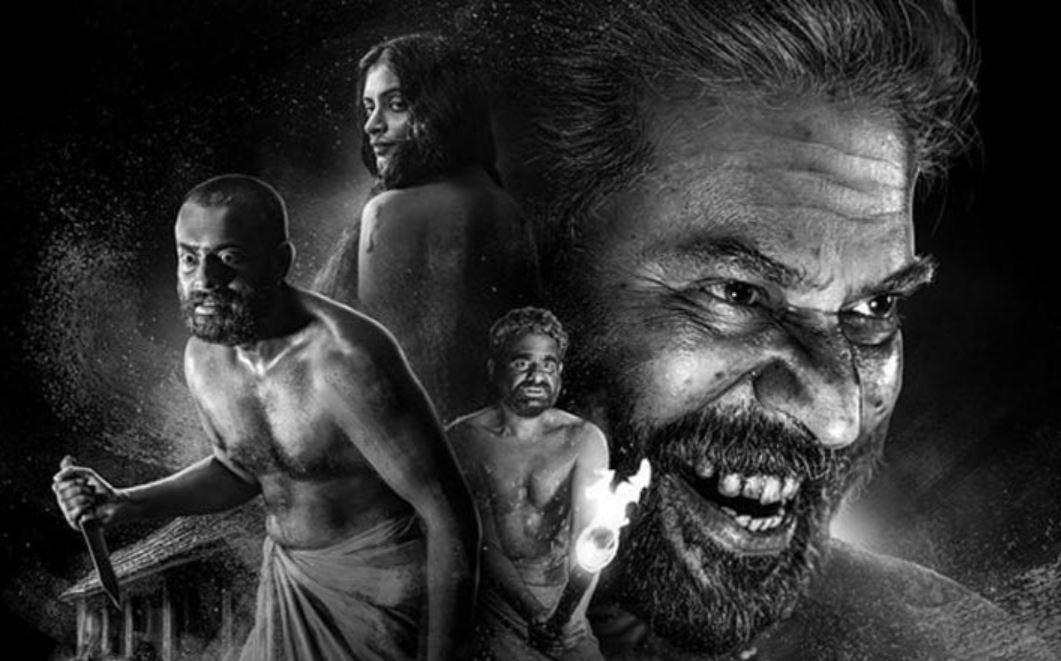
Bramayugam

 Bramayugam not like Lord Brahma, but Bramayugam, Bhrama like illusion/dillusion


The film begins with a scene depicting two men who have lost their way in the forest, seeking shelter for the night. In 17th century Malabar, Thevan and Koran escape the clutches of the Portuguese slave trade in Ponnani and flee to the east. At night, they camp at the banks of the Bharatappuzha River. However, Koran inadvertently falls into the enchanting snare of a yakshi, who lures him to his death. The second one, Thevan (Arjun Ashokan), realises that it is a yakshi and runs, and he enters the mana. While stealing a coconut, he is apprehended by the house's cook. He is brought before the lord of the manor, Kodumon Potti, who requests him to sing a song. The potti compliments Thevan on the song and insists that he stay the night there, in spite of his desire to leave. The cook, while showing Thevan his room, discourages him from asking questions about the house or the lord's background. In Rahul Sadasivan’s Mammootty-starrer Bramayugam, one would find three damned souls stuck up in an old mana (house of aristocratic Namboodiri Brahmins). Inside the old mana, which is in a dilapidated state, Thevan encounters Koduman Potti (Mammotty)—an old man—and his helper (Siddharth Bharatan). From there the film follows the perspective of Thevan, who would soon find the dark secrets about Potti and his helper. Mammootty delivers an outstanding performance, embodying an exceptionally cunning and eerie evil character.

Over the next few days, he discovers from the cook that the potti is a descendant of Chudalan Potti, who was gifted a demon helper, a chaathan, by the goddess Varahi. His constant torture of the chaathan turned it mad, and it went on to kill Chudalan Potti and his family. Kodumon Potti eventually defeated the chaathan and chained him to the mansion's attic.

One day, Thevan sees the cook digging a grave in the backyard, presumably for himself. Terrified, he tries to leave, but cannot. He then realizes that he has lost his memory and that he has been trapped in the mana for months. The cook tells Thevan that the grave is not for him, but for Kodumon: the man who has been running the mana is the chaathan in disguise, and he imprisoned the real Kodumon in the attic and drove him insane, leading to his eventual death. The only way that the cook and Thevan can escape the mana is by defeating the chaathan by dousing an ever-burning lamp located in a secret chamber under the mansion and then trapping the creature in a special chest.

During an argument, the cook steals the key to the chamber from the chaathan's waist. He opens the lair and blows out the lamp, rendering the chaathan powerless. Thevan and the cook set fire to the chaathan's disguised form, and the creature inside emerges. The cook, now revealed to be Kodumon's illicit son, attempts to put on the ring that will give him mastery over the chaathan, but is stopped by Thevan, who sees that it can reanimate the chaathan like it did with Kodumon. The two keep fighting while a big fire destroys the mana and collapses on them.

The cook escapes alive and meets Thevan outside the compound. He realises that it is not the real Thevan as he had died when the mana collapsed, but the chaathan who has been reanimated by the ring. Terrified, he runs away into a river. A Portuguese soldier guns him down, taking him for a lunatic. A battalion of Portuguese soldiers cross the river and moves in the direction of the mana, while the chathaan is seen walking away into a forest as the mana is now completely destroyed.

Presented as a period horror drama, this black and white film presents a comparable viewpoint, where each character arrives at a juncture where they realize that hell is other people exerting power over them.

Freedom

Time, something we all have but never realise. In fact only thing ours, but not ours. 

Fear. Only factor that stops us from success. 

Illusion is something that is caused by outside influence but delusion is caused by one'sfeelings. Illusion happens whenyou are fooled by your vision but delusion happens when you become a fool of yourself because of your beliefs. While illusion can be termed to be external, delusion can be called as internal.

'Rahul Sadasivan is not your average filmmaker - the young writer - director has worked up a script that is heavy on content and raises philosophical and socially relevant questions in the garb of being a horror thriller. He has picked up the philosophy of "power" in Bramayugam and through the 3 characters, he tries to explain what power means to a man, how one can use it to subjugate others and how power can corrupt even the most docile human being only to realize that he is powerful only till the time someone more powerful enters the scene.

"Bramayugam" is not for those looking for entertainment - this is the equivalent of a book that has more written in between the lines than in the lines. You will enjoy it and ponder over it only if you have a taste for it. '

As one of my ex-colleague, Sreeram Sundaram puts it in FB. The Chatan and the Yakshi are the master and the servant at the same time 

Mammootty portrays Potti with a diverse array of mannerisms and distinctive body language that exudes both authority and charm. Bharatan’s character is a stone-faced one, which hides secrets from both Thevan and Potti. And, the actor-director does justice to his character. Meanwhile, Ashokan gets a chance to deliver a full range of expressions from hope to ultimate horror. Amalda Liz portrays the Yakshi character; despite having no dialogue and minimal screen time, Sadasivan ensures that Liz's portrayal leaves a significant impact on the audience. Manikandan Rajan too displayed an amazing performance right in the beginning. 

Also it is the confined yet evocative setting, that truly captivated the viewers. Athirapilly has always been captivating, and so it is here too. 

"Bhoothakalam" director Rahul Sadasivan has written and directed this and it is jointly produced by Night Shift Studios and YNOT Studios. jointly produced by Night Shift Studios and YNOT Studios. Girish Puthenchery's son Din Nath made his debut as a lyricist, after Sadasivan suggested him to Xavier. Din Nath wrote four out of five original songs. Since the film is set in the 17th century, recreating the period through the film's music would have been challenging, but the team has done a good job there.


Saturday, March 09, 2024

Abudabi Temple


Shiva - Shakti


*Shivratri and Women’s Day !*


*Adi Shankaracharya in the first Sloka of Soundarya Lahari told. ....*


"Shivah Shakthyaa Yuktho 

Yadi Bhavathi Shakthaha Prabhavithum

Na Chedevam Devo Na Khalu Kushalaha Sphandithumapi“


*It means Shiva becomes capable of creating the Universe, only when he is united with Shakti. Otherwise, He is incapable of even moving without Shakti.*

💕💐💐💐

What is the biggest decision making for a woman ?


What to cook ...

Wednesday, March 06, 2024

Dhirajlal Hirachand Ambani


In April 2002, barely three months before his death, Dhirajlal Hirachand Ambani, known to everyone in the diminutive form, Dhirubhai, rose to speak at Birla Matushree Sabhaghar, near Mumbai’s Marine Lines. Though he was nowhere near hanging up his boots, at 69, Dhirubhai was working mostly from home. He had begun spending the afternoons on the huge floor that he and his wife Kolkila ben had kept for their use at Sea Wind, the villa that the Ambanis had got custom-built at Cuffe Parade not very long ago. At the terrace-lawn adjoining his apartment, he would play with his grandchildren, occasionally throw lavish parties (as he did, curiously, on a Valentine’s Day), and enjoy the eventide light across the Arabian Sea. If he somewhat resembled Don Corleone in the last scene of The Godfather, the similarity was purely a coincidence, and it also drew from the Hindu concept of a life cycle fully traversed. By then, his personal achievement in business had reached its climax, and the controversies that had dogged him were left far below in the valley. Or, sort of.


At Birla Matushree, it was a meeting of Reliance Industries Limited (RIL) shareholders under the orders of the Bombay High Court, to consider its amalgamation with Reliance Petroleum Limited (RPL), which owned the country’s largest grassroots refinery at Jamnagar, and a clutch of oil-and gas fields on both western and eastern sea coasts of India. “The RIL-RPL merger”, said the patriarch who had begun it all 42 years ago, in a voice choked with emotion, “is the largest ever merger to take place in the corporate history of India. This merger will achieve several new distinctions for your company, both on a domestic and international scale”. He remembered Reliance’s “humble beginning” during its first public offering in 1977, raising a meagre Rs 2.82 crore, and recalled that since then sales had grown by “over 400 times”, net profits “by 900 times”, net worth by 1,500 times and total assets by 900 times. He went on to reel off benefits of the merger. But then there was a sudden crack in his trademark baritone, and the old fire returned to his eyes. “Even after the merger, RIL’s sales, profits and assets, will be less than 10 per cent of the respective figures for the largest global energy companies. Therein lies the challenge and the opportunity, as well as the enormous potential for future growth.”


It was truly the patriarch retiring in his autumn, with all but a distant vision of the horizon. By then, the growing heft of his business, and his stature in public life, had cut him off from his critics, but they were never silenced. Instead, the background squawk got embarrassingly noisy after a decade of relative quiet since the V.P. Singh government fell in 1990. It was shattered towards the end of the decade when the accidental involvement of one of Reliance executives with a Delhi land shark having connections with the fugitive gang of Dawood Ibrahim had led to a police raid of the executive’s home and office. But that was sowing the wind; the whirlwind was reaped when search of the executive’s office allegedly led to the discovery of reams of secret government documents, including alleged Cabinet notes. There was talk of Reliance running a “parallel government”. L.K. Advani, home minister of the day, took special interest in transferring the investigation under the Official Secrets Act to the CBI. Then the unthinkable happened, with the raiding parties reaching even RIL’s headquarters at Mumbai’s Nariman Point and, finally, Sea Wind. It is a testimony to Dhirubhai’s proverbial clout that the ensuing cases promptly got glaciated in the ‘deep freeze’ of Indian courts. Even in April, when Dhirubhai was spelling out his dreams before RIL shareholders, his lawyers got court orders overturning the arrest of its impugned executive. Reliance’s almighty power was tellingly summed up in a note by Jaswant Singh, finance minister of the NDA cabinet, in January 2003: “I would never have got into investigating Reliance Group but for the fact that there is today not a single newspaper or magazine, which would publish anything against this group.”


But that is a mere footnote to Dhirubhai’s long history of engagement with the Indian capital market, marked by spectacular dogfights with the press and Parliament. Reliance’s market capitalisation was big but not gigantic, being Rs 9.96 billion in 1990 against Bombay Stock Exchange’s overall m-cap of Rs 510 billion. But, throughout the 1980s and even 1990s, Reliance was the life of BSE. It happened due to Dhirubhai’s deep personal ties with his shareholders, some of whom being his schoolmates from coastal Gujarat who subsequently became NRIs in the UK and the Gulf. But his public offerings always promised rewards in a variety of ways, not all of which were straight and narrow. He offered debentures that would after a while get converted to shares, or some papers that would become one part debenture, another party equity, and a third part carrying a warrant that would one day become three shares. Laws of the capital market are quite clear: a share is an equity in which its holder accepts that much risk in the firm’s business whereas a debenture is pure loan that earns interest, period. It is obvious that the faint at heart would not venture into trading in equity. But what if you entice him with the promise that, if he liked, he could sell his debenture before its conversion?


In the early 1980s, Dhirubhai enjoyed the most conducive political atmosphere in his career—with a ‘friendly’ finance minister in Pranab Mukherjee. In the 1980s, Mukherjee kicked off a new policy of NRI investments in which, unlike in the past, the investor could repatriate his profits. It led to a sudden torrent of NRI investments in just one company, as it appeared. On May 10, 1983, Mukherjee told Parliament that 11 overseas Indians had purchased shares and debentures worth Rs 225 million in two companies. But it transpired that all the investments were made in Reliance. Mukherjee said all the companies were registered in the UK, but finally amended his version as he admitted that their registration was in fact in Isle of Man, a British protectorate with different tax laws. Some of these companies carried unorthodox names, like ‘Crocodile’ and ‘Fiasco”. India Today reported: “Someone in the (Isle of Man) companies was remarkably well-informed on investment conditions in India, however, on August 20, 1982, the RBI had lifted a Rs 1,00,000 ceiling in share investments in any one company by non-resident Indians. 


Three days later, three of the Isle of Man companies applied to the central bank to invest Rs 20 million each in Reliance. Four other companies applied together on September 24. Six other companies made their purchases on the same day, October 15”. Whose money was it? There was no proof it was Dhirubhai’s own money making a roundtrip. So, the matter ended there. But the NRI purchase of Reliance shares added fuel to set the market on fire. Reliance could issue four series of convertible debentures, raising what was then a head-turning amount of Rs 10 billion. Its share was the buzz not only in social circles but in merciless pre-nuptial negotiations on bride price. The esteemed editor of a large newspaper borrowed cash from a Gulf-based ‘rogue’ bank to buy Reliance papers from the promoter’s quota. Between 1980 and 1985, the number of Indians owning shares quadrupled, from 1 million to 4 million. And it happened long before introduction of demutualised stock exchange with screen-based trading. The local paparazzi named the early craze for Reliance shares as the harbinger of the “equity cult”, and Dhirubhai its icon.


Dhirubhai was an ambitious lad of a poor family who had sailed off at age 17 to Aden, a free port till the mid-’50s, and had derived, partly from there and partly from his genetic make-up, the ‘dragon spirit’ so uncharacteristic of the Indian trading community. Still, he was a product of India’s early socialist era as it is doubtful if he could create his textile-to oil-exploration empire without an indulgent government that would readily play favourites. But he craved to run in a level playing field as is evident in his urge to diversify, post-1991 reforms, into tele-communications and distribution and generation of electricity. Even exploration of oil and natural gas had to contend with foreign players many times the size of Reliance in asset value.


Be it Dhirubhai or John D. Rockefeller, every entrepreneur with dragon spirit, (as different from Keynes’ ‘animal spirit’ in which the drive to take risk is tempered with trust) has to reach a deadlock with the state at some stage. Rockefeller, being born a hundred years before Dhirubhai, in a new nation where socialism had no space, had a much longer run for his Standard Oil until it hit the final barricade of anti-trust laws. But being a big fish in India’s small pond, Dhirubhai, or his children, are circumscribed not so much by public protest but by the limited size of their market.


But, despite the limitations of geography, Dhirubhai was able to put into the psyche of his people a new and welcoming attitude to wealth, not as inheritance but as something worth earning. Though he did not study beyond school, the world was his oyster. In my first meeting withhim in 1985, he asked me, “Do you know which is the largest business in the world?” “Oil”, I said with hesitation. “And the second?” As I kept fumbling, he said, “It is travel and tourism; but I am sure information will be No.1 in another 15 years, and I’m trying to put a foot in the door there.” He didn’t succeed in it but he hit the mark about information technology to be the leader by the year 2000.


SUMIT MITRA is a journalist, formerly with India Today


Published By:

Vishakha Sharma

Published On:

Dec 27, 2021

https://www.indiatoday.in/india-today-insight/story/from-the-archives-dhirubhai-ambani-the-futurist-1892875-2021-12-27

Being the third of five children born to a village schoolteacher in Gujarat's Chorwad, Dhirubhai migrated to the British colony of Yemen's Aden to join his brother.


In the 1950s, he began his career as a dispatch clerk with the largest transcontinental trading firm east of Suez – A. Besse & Co.


When the firm became a distributor for Shell products, Dhirubhai was promoted to manage the company’s oil-filling station at the port of Aden. Then he dreamt of setting up and owning a refinery. There he learned trading, accounting, and other business skills. But, in 1958, he returned to India and settled in Bombay – now Mumbai.


1) In the 1950s, Dhirubhai began a business trading in spices and called his venture Reliance Commercial Corporation. Following this, he expanded his business into other commodities, by offering higher-quality products and accepting smaller profits than his competitors.


2) After this, he opened the first Reliance textile mill in 1966, as he turned his attention to synthetic textiles. he bought land in Naroda. In 1975, the Naroda mill was recognized as one of the best composite textile mills in India and certified as ‘excellent even by developed country standards’, by a technical team of the World Bank. This later became Reliance Industries.


3) In 1977, Dhirubhai took Reliance public after nationalized banks declined to finance him. Having a belief in democratizing money and making it available to the masses through efforts such as the Reliance IPO, he managed to convince a large number of middle-class investors to put their money. He was credited with introducing the stock market to the average investor in India.


He later added plastics and power generation to the company’s businesses.


4) Bringing his Yemen experience into use, Dhirubhai gradually shaped Reliance into a petrochemicals behemoth by setting up Reliance Hazira -- for the manufacture of petrochemicals -- in 1991. This was the single largest investment made by a private sector group in India at a single location at that time.


Despite many troubles, Dhirubhai's Reliance commissioned the Jamnagar facility in 1999 at a cost that was significantly lower than the prevailing global benchmark for a project of such magnitude.


5) In the mid-80s, Dhirubhai handed over the day-to-day running of the company to his sons, Mukesh Ambani and Anil Ambani, though he continued to oversee them until shortly before he died in Mumbai on 6 July 2002. He was honored with the Padma Vibhushan in 2016 for his ‘exceptional and distinguished’ service to trade and industry.

Riches to Rags

The world has seen rise and falls of biggest empires. Its all circle of life.All Mortal Human being get back to where they had started their life .We rise and we fall it's all part of life .

We humans are mortal so nothing comes to this world with us and nothing goes out of this world with us.So not surprising to see rise and fall of people.It has always happened in human history.

Very well explained in video. 18th June 2005 https://www.facebook.com/100088405460024/videos/664512739126109/

Here is the Anil Ambani Story - A Deep Dive on How Anil Ambani went from $42B to $0!

18 years ago, two brothers were given this empire. 

One made it bigger, and the other took it down. 

Dhirubhai Ambani symbolised a welcome new attitude to wealth, not as inheritance, but something worth earning through hard work. Rising up after fall. 


When Dhirubhai Ambani passed away in 2002, a bitter feud started between the two brothers about how his vast empire would be divided. 

The dust settled in 2005 and this is how the businesses were distributed:

Anil Ambani: Reliance Infocomm (telecom), Reliance Energy (electricity, later became Reliance Power) and Reliance Capital Limited (financial services). 

Mukesh Ambani: Reliance Industries Limited and Indian Petroleum Corporation Ltd.

With this division, came a non-compete agreement: None of them could enter the other's business till 2016.

Ironically, Anil got all the glamorous businesses and Mukesh got the non-glamorous cash cow. 

So how did Anil end up going from riches to rags?

Let's take a look company by company. 

Reliance Power
By 2008, Anil Ambani had managed to become richer than Mukesh Ambani, with a net worth of $42 billion. 

This fortune was short-lived. 

As per an older agreement, Mukesh Ambani was to supply gas (till 2022) to Anil’s Reliance Power at a price that was 44% lower than the then government’s prevailing rates.

In 2010, Mukesh stopped doing this! Why?

Because the government had raised gas prices. It was no longer feasible for him to give cheap gas to his brother.

What next?

Anil took Mukesh to court, which sided with Mukesh because the gas was government property and it had the right to decide prices. 

This took away the competitive advantage of Anil and marked the beginning of his downfall. 

The company's alleged involvement in the coal allocation scam (this needs a piece of its own!) further eroded trust. 

This combined with poor management drove RPower into major debt. 

Today, its debt stands at around Rs. 26,000 crores! 

However, the company is still standing. It has one of the largest power portfolios in India. And it is set to get a loan of Rs. 1,200 crores from Varde Partners which could give it a boost. 

Reliance Telecom
There was a time when Reliance Infocomm or Reliance Communications was one of the biggest telecom players. 

It was the Jio of the 2010s, providing affordable phones and phone calls. 

But it faced three major problems:

Its alleged involvement in the 2G scam (the scam highlighted irregularities in the distribution of spectrum) caused RCom shares to fall. Plus, its reputation was damaged. 

RCom had focused on CDMA tech (which doesn't involve a sim card). This helped it lower costs. But other players were focusing on GSM because it had better network quality and international roaming. So, consumers shifted to GSM. To stay in business, RCom had to reinvent itself. This meant major expenditures on infrastructure, which put the company in debt (noticing a pattern here?). 

When Mukesh Ambani entered the space with Reliance Jio, it was game over for Anil and RCom. 

The company failed to pay off its Rs. 45,000 crore debt and headed for bankruptcy proceedings in 2018. These proceedings are still ongoing!

Reliance Capital
Yet another Anil Ambani company currently facing bankruptcy proceedings. Its failure was the result of the failures of Ambani's other companies. How?

Anil Ambani's businesses were super capex heavy. 

He also spent a lot on acquisitions in the entertainment space. 

So, he started using Reliance Capital's lending businesses to fund his other ventures. 

Reliance Home Finance lent out huge amounts to Reliance Infrastructure and Reliance Power, which they failed to repay. 

In 2019, it had an exposure of Rs. 8,708 crores to group companies as well as other corporates. And while Anil failed to pay back debts, Reliance Capital also faced difficulties in raising funds. Why?

All thanks to IL&FS' default in 2018: the default eroded people's trust in NBFCs. 

Anil tried to make it through by selling assets like the Mutual Funds and the Insurance business. 

This didn't help. RCapital filed for bankruptcy in 2021 after defaulting on bonds worth Rs. 24,000 crores. 

Even before RCapital failed, Anil Ambani's net worth had gone down to zero (yes, he admitted it in a UK Court in 2020)!

He has also been removed from the boards of the still operating company for charges of syphoning funds. 

Key Failures that Led to Anil Ambani's Downfall
By charting his entire journey, we found key pointers that led to this massive downfall:

Running capex heavy businesses with too much leverage

Taking on too much debt when money was flush .

Created, build Big Cinema which was sold off to Carnival. That was part of Reliance MediaWorks

Living a lavish lifestyle (he allegedly rode his helicopter twice a week just to cover a few kilometres of distance)

Filing lawsuits against anyone and everyone! This was also capital and time intensive

These factors were grouped with a heavy dose of bad luck. 

Ambani inherited these businesses at a time when power and infrastructure were facing a downturn, thanks to the financial crisis.

Maybe strategic planning could have prevented losses this huge?

He still has Reliance Power and Reliance Infra: sectors that are seeing an uptick again today.

Will he be able to turn his fortunes around from here? Who knows…

Will the employees who have sufferred in their hands be compensated? Will the government let huge debts go?

They have been very highly unethical. They never cleared FnF of many employees when they actually could. Not sure how they can stay happy.

One should be alert and right at top. Any one wrong decision takes you down ur entire Kandhaan. Behind that our fate and destiny runs. Losing gives pain to anyone.  Being an employment creator is not a small thing .. that is nothing but serving the Nation.  Respect Business men .. one political decision against them brings them ground level. They should be smart enough to deal political parties  and get survived long.


Brothers Bonding or fights?