Tuesday, July 16, 2024

Cold Warriors: Writers who waged the Literary Cold War ~ Duncan White (67 of 2024)


If the Cold War had not been selected as the theme for our July Cochin Book Club meet up, I would never have come across this utterly engrossing book recommendedand read by Abraham Varghese Sir. Even those of us who are familiar with these authors and have read their books  will be amazed at how much more we can learn about those years and the parts they played as authors, spies, propagandists. Their very human frailties   courage and weaknesses are revealed.

 "In this brilliant account of the literary war within the Cold War, novelists and poets become embroiled in a dangerous game of betrayal, espionage, and conspiracy at the heart of the vicious conflict fought between the Soviet Union and the West

During the Cold War, literature was both sword and noose. Novels, essays, and poems could win the hearts and minds of those caught between the competing creeds of capitalism and communism. They could also lead to blacklisting, exile, imprisonment, or execution for their authors if they offended those in power. The clandestine intelligence services of the United States, Britain, and the Soviet Union recruited secret agents and established vast propaganda networks devoted to literary warfare. But the battles were personal, too: friends turned on one another, lovers were split by political fissures, artists were undermined by inadvertent complicities. And while literary battles were fought in print, sometimes the pen was exchanged for a gun, the bookstore for the battlefield.

In Cold Warriors, Duncan White vividly chronicles how this ferocious intellectual struggle was waged on both sides of the Iron Curtain. Among those involved were George Orwell, Stephen Spender, Mary McCarthy, Graham Greene, Aleksandr Solzhenitsyn, John le Carré, Anna Akhmatova, Richard Wright, Ernest Hemingway, Boris Pasternak, Gioconda Belli, and Václav Havel. Here, too, are the spies, government officials, military officers, publishers, politicians, and critics who helped turn words into weapons at a time when the stakes could not have been higher. Thus Besides the obvious names like le Carre , Orwell, these are some of the other writers who were part of the Cold War, willingly , unwillingly and in some cases unwittingly. No writer could avoid been involved.

Vaclav Havel

Boris Pasternak

Stephen Spender,  Graham Greene

Arthur Koestler

Mary McCarthy

Anna Akhmatova

Alexander Solzhenitsyn

Andrei Sinyavsky

John Steinbeck

Ernest Hemingway

Roald Dahl

The narrative is mostly chronological, and White shifts focus, chapter by chapter, to various writers and the political realities that they had to face—and endure. He also shows how governments tried to influence (or silence) their own writers and how they tried to use literature both as a weapon and a shield. “The issue of complicity is at the center of this book,” he writes. “Every writer in these pages had to grapple with it in one form or another—such was the price to be paid for writing at a time when, to paraphrase historian Giles Scott-Smith, to be apolitical was itself a form of politics.” White delivers tales of astonishing courage—e.g., the Czech playwright Václav Havel emerging from persecution and prosecution to become his country’s president, Solzhenitsyn sticking firmly to his determination to tell his stories—and of duplicity and betrayal: The story of Kim Philby, the English traitor, is prominent. Many readers will be surprised by the connections among these writers, which White ably highlights: Orwell and Hemingway, Koestler and McCarthy, and so many others."

Drawing upon years of archival research and the latest declassified intelligence, Cold Warriors is both a gripping saga of prose and politics, and a welcome reminder that--at a moment when ignorance is all too frequently celebrated and reading is seen as increasingly irrelevant--writers and books can change the world."

Duncan White has written a book that manages to be both academically rich while reading like a thriller. In the hands of a lesser writer this effort might not have worked, but the prose deftly conveys the complexity of things like the internally twisted logic of Soviet ideology while keeping the reader wanting to read more. Starting with Orwell, Koestler and Spender's experiences during the Spanish Civil War, the book relies on the intimacy of biography to reveal larger trends in the ideological battle that was the Cold War. This approach works. Instead of simply detailing the myriad ways in which the KGB and CIA leveraged the work of writers (and used them as pawns), White's intimate portraits show these writers to be active, thinking subjects who make choices within the historical contexts in which they lived. The result is a narrative that exposes both sides: the power of institutions and humanity of people that confrent them.

"...

The Cold War may have been a conflict of ideas, but imposing those ideas on the enemy through military means was not an option. As Kenneth Osgood writes in Total Cold War, the existence of nuclear weapons meant that “the Cold War, more than any other conflict in human history, was channeled into nonmilitary modes of combat, particularly ideological and symbolic ones.”Each side therefore used various forms of propaganda and disinformation "as a way to undermine the way its enemy organized its own society. Some of this propaganda was crude and, as such, ineffective. But literature was another matter, for it had a more sophisticated power to persuade. In reading Animal Farm, with its allegory of a revolution gone awry, exploited by corrupt and self-serving leaders interested only in consolidating their own power, Polish citizens might begin to question the received truths of their rulers."

https://www.kirkusreviews.com/book-reviews/duncan-white/cold-warriors/https://www.kirkusreviews.com/book-reviews/duncan-white/cold-warriors/

The Bhagavad Gita ~ Eknath Easwaran (65 of 2024)


 Another Year. This year's 'The Bhagavad Gita' read and interpretation is of that by Eknath Easwaran. 

Nowhere has this 'mysterious Eastern notion' of Maya been formulated more succinctly than in the epigram of Ruysbroeck: "We behold what we are, and we are what we behold". The world of the sense is real, but it must be known for what it is: unity appearing as multiplicity. 

The word Dharam means many things, but its underlying sense is "that which supports", from the root dhri, to support, hold up or bear. Generally, dharma implies support from within, the essence of a thing, its virtue, that which makes it what it is. 

Karma means something that is done. Often it can be translated as deed or action. The law of Karma states simply that every event is both a cause and an effect. Every act has consequences of a similar kind, which in turn have further consequences and so on, and every karma is also the consequence of some previous karma. This refers to both physical and mental action. 

Everything we do produces karma in the mind. In fact, it is in the mind rather than the world that karma's seeds are planted. Aptly, Indian philosophy compares a thought to a seed: very tiny, but it can grow into a huge, deep-rooted wide-spreading tree. 


AS the traditional chapter titles put it, the Gita is brahmavidyayam yogashastra, a textbook on the supreme science of yoga. 

The Gita does not present a system of philosophy. It offers something to every seeker after God, of whatever temperament, by whatever path. The reason for this universal appeal is that it is basically practical; it is a handbook for self-realization and a guide to action. 

Yoga is a word with many meanings -as many, perhaps as there are paths to self-realization. What kind of Yoga does the Gita teach?

 The four main paths of Hindu Mysticism.

 In jnana yoga, the yoga of knowledge, aspirants use their will and discrimination to disidentify themselves from the body, mind and senses until they know they are nothing but the self. 

The followers of bhakti yoga, the yoga of devotion, achieve the same goal by identifying themselves completely with the lord in love, by and large, this path is choosen by mystics. 

In Karma Yoga, the yoga of selfless action, the aspirants dissolve their identification with body and mind by identifying with the whole of life, forgetting the finite self in the service of others. 

The followers of raja yoga, the yoga of meditation, discipline the mind and senses until the mind-process is suspended in a healing stillness and they merge in the self. 

The 18 chapters in the Gita can be divided into three six chapter parts, first part being on Karma Yoga, the second on jnana yoga and the last with bhakti yoga.  The Gita begins with the way of selfless action, passes into the way of Self-knowledge and ends with the way of love. 

The Gita brings together all the specialized senses of the word yoga to emphasize their common meaning, the sum of what one must do to realize the self. 

The thread through Krishna's teaching, the essence of the Gita, can be given in one word: renunciation. The is the common factor in the four yoga. It certainly encourages simplicity, but emphasis on the mind. It teaches that we can become free by giving up not material things, but selfish attachments to material things , of thoughts, word and action. 

Nishkama Karma, selfless action, work free from any selfish motive. Renounce and enjoy. 

Whatever you do, make it an offering to me. 

When Gita talks about "inaction in the midst of action" , we can call on Ruysbroeck to illumine the seeming paradox. The person who has realized God, he says, mirrors both his aspects: "tranquility according to His essence, activity according to His nature: absolute repose, absolute fecundity". 

Action of the most tireless kind; the only thing inactive is the ego. Perform selfless service. 

How do such people conduct themselves - look at those who practise it. 

2(54-72) They have banished all selfish desires. Their sense and mind are completely trained, so they are free from sensory cravings and self-will. Identified completely with the self, not with body or mind, they realize their immortality here on earth. Those "who see themselves in all and all in themselves"  would simply not be capable of harming others. 

12(13-14) Who follow the path of love - who is incapable of ill will, who is friendly and compassionate. Living beyond the reach of I and mine and of pleasure and pain, patient, contented, self-controlled, firm in faith with all their heart and all their mind given to me.

18(49-50) How to recognise man or women who has reached life's supreme goal? - Attains the supreme perfection of freedom from action. 

It is running into life, open handed, open armed. Vital, active, compassionate, self reliant in the highest sense, for he looks to the self for everything and needs nothing from life but the opportunity to give. 

Such person has yoked all human passions to the overriding desire to give and love and serve and in that unification we can see, no tthe extinction of personality, but its full blossoming.

Shraddha is much more than faith. it is literally 'that which is placed in the heart'. It is our very substance and not an intellectual abstraction. "A person is what his shraddha is". Thus shraddha determines destiny. 

The purpose of karma is to teach the consequences of shraddha - ' when a person is devoted to something with complete faith, I unify his faith in that. Then when faith is completely unified, one gains the object of devotion. In this way, every desire is fulfilled by me. '

Thus the Gita places human destiny entirely in human hands. Its world is not deterministic, but neither is it an expression of blind chance; we shape ourselves and our world by what we believe and think and act on; whether for good or for ill. In this sense the Gita opens not on Kurukshetra but on dharmakshetra, the field of dharma, where Arjuna and Krishna are standing for us all. 


Indian Philosophies

 Philosophy arose in India as an enquiry into the mystery of life and existence.

Indian Philosophy refers to several traditions of philosophical thought that originated in the Indian subcontinent.

Over centuries, India’s intellectual exploration of truth has come to be represented by six systems of philosophy. These are known as Vaishesika, Nyaya, Samkhya, Yoga, Purva Mimansa and Vedanta or Uttara Mimansa.

These six systems of philosophy are said to have been founded by sages Konada, Gotama, Kapila, Patanjali, Jaimini and Vyasa, respectively. These philosophies still guide scholarly discourse in the country.

The six systems of philosophy were developed over many generations with contributions made by individual thinkers. However, today, we find an underlying harmony in their understanding of truth, although they seem distinct from each other.

Orthodox Schools of Indian Philosophy

Orthodox (astika) schools, originally called sanatana dharma, are collectively referred to as Hinduism in modern times. The ancient Vedas are their source and scriptural authority. Hinduism consists of six systems of philosophy & theology.

Samkhya (Kapila): Samkhya is the oldest of the orthodox philosophical systems, and it postulates that everything in reality stems from purusha (self, soul or mind) and prakriti (matter, creative agency, energy).

Purush cannot be modified or changed while prakriti brings change in all objects.

Yoga (Patanjali): Yoga literally means the union of two principal entities. Yogic techniques control body, mind & sense organs, thus considered as a means of achieving freedom or mukti.

This freedom could be attained by practising self-control (yama), observation of rules (niyama), fixed postures (asana), breath control (pranayama), choosing an object (pratyahara) and fixing the mind (dharna), concentrating on the chosen object (dhyana) and complete dissolution of self, merging the mind and the object (Samadhi).

Yoga admits the existence of God as a teacher and guide.

Nyaya (Gautama Muni): Nyaya Philosophy states that nothing is acceptable unless it is in accordance with reason and experience (scientific approach). Nyaya is considered as a technique of logical thinking.

Nyaya Sutras say that there are four means of attaining valid knowledge: perception, inference, comparison, and verbal testimony.

Vaisheshika (Kanada): The basis of the school's philosophy is that all objects in the physical universe are reducible to a finite number of atoms and Brahman is regarded as the fundamental force that causes consciousness in these atoms.

Vaisheshika system is considered as the realistic and objective philosophy of universe.

The reality according to this philosophy has many bases or categories which are substance, attribute, action, genus, distinct quality and inherence.

Vaisheshika thinkers believe that all objects of the universe are composed of five elements–earth, water, air, fire and ether.

They believe that God is the guiding principle. The living beings were rewarded or punished according to the law of karma, based on actions of merit and demerit.

The Vaisheshika and Nyaya schools eventually merged because of their closely related metaphysical theories (Vaisheshika only accepted perception and inference as sources of valid knowledge).

Purva Mimamsa (Jaimini): This philosophy encompasses the Nyaya-vaisheshika systems and emphasises the concept of valid knowledge. According to Purva Mimamsa, Vedas are eternal and possess all knowledge.

According to Mimamsa philosophy Vedas are eternal and possess all knowledge, and religion means the fulfilment of duties prescribed by the Vedas.

It says that the essence of the Vedas is dharma. By the execution of dharma one earns merit which leads one to heaven after death.

Vedanta: The Vedanta, or Uttara Mimamsa, school concentrates on the philosophical teachings of the Upanishads (mystic or spiritual contemplations within the Vedas), rather than the Brahmanas (instructions for ritual and sacrifice). The school separated into six sub-schools, each interpreting the texts in its own way and producing its own series of sub-commentaries:

Advaita (Adi Shankara): It states that both the individual self (Atman) and Brahman are the same, and knowing this difference causes liberation.

Visishtadvaita (Ramanuja): It believes that all diversity is subsumed to a unified whole.

Dvaita (Madhvacharya): It considers Brahman and Atman as two different entities, and Bhakti as the route to eternal salvation.

Dvaitadvaita (Nimbarka): It states that the Brahman is the highest reality, the controller of all.

Shuddhadvaita (Vallabhacharya): It states that both God and the individual self are the same, and not different.

Achintya Bheda Abheda (Chaitanya Mahaprabhu): It emphasizes that the individual self (Jīvatman) is both different and not different from Brahman.

Unorthodox Schools of Indian Philosophy

Schools that do not accept the authority of Vedas are by definition unorthodox (nastika) systems. The following schools belong to heterodox schools of Indian Philosophy.

Charvaka (Brihaspati): Charvaka is a materialistic, sceptical and atheistic school of thought.

According to Charvaka there is no other world. Hence, death is the end of humans & pleasure is the ultimate object in life.

It is also known as the Lokayata Philosophy-the philosophy of masses.

Buddhist philosophy (Siddhartha Gautama): Buddhism is a non-theistic philosophy whose tenets are not especially concerned with the existence or nonexistence of God. Buddha considered the world as full of misery and considered a man’s duty to seek liberation from this painful world. He strongly criticized blind faith in the traditional scriptures like the Vedas

Jain philosophy (Mahavira): A basic principle is anekantavada, the idea that reality is perceived differently from different points of view, and that no single point of view is completely true.

According to Jainism, only the Kevalins, those who have infinite knowledge, can know the true answer, and that all others would only know a part of the answer.

Manthan - Amul


Shyam Benegal's the Churning (Manthan): Screenplay, by, Vijay Tendulkar, Shyam Benegal, Samik Banerjee, was first made into a film and then there was the book.  Aside from the great measurable success that this project was, it also demonstrated the power of "collective might" as it was entirely crowdfunded by 500,000 farmers who donated Rs. 2 each.Manthan is the first crowdfunded Indian film. The film won the 1977 National Film Award for Best Feature Film in Hindi and National Film Award for Best Screenplay for Vijay Tendulkar, and was also India's submission for the Academy Award for Best Foreign Language Film for 1976. A restored version released in the Cannes Classics section of the 2024 Cannes Film Festival.

The word manthan literally means "churning", and other meanings may be deep contemplation, churning of facts, analysis aimed at a solution or conclusion. The film traces a small set of poor farmers of Kheda district in Gujarat who had the vision and foresight to act in a way that was good for the society and not for the self alone.

The cast in the movie are Girish Karnad as Dr. Rao, Kulbhushan Kharbanda as Sarpanch, Smita Patil as Bindu, Naseeruddin Shah as Bhola, Mohan Agashe as Deshmukh, Anant Nag as Chandavarkar, Amrish Puri as Mishraji, Rajendra Jaspal as Bindu's Husband, Abha Dhulia as Shanta, Dr Rao's Wife, Sadhu Meher as Mahapatra and Anjali Paigankar

Dr. Rao, a young veterinary doctor with his team of Deshmukh, Chandravarkar and others comes to a village in Kheda district, Gujarat. The village is inhabited by poor people whose chief occupation seems to be cattle-rearing and producing milk, which they sell to a local dairy owner Mishra. Mishra pays them ridiculously low amounts for their milk. Dr. Rao and his team have arrived with the purpose of setting up a co-operative society dairy which will be owned collectively and managed by the villagers themselves. As Dr. Rao and his team grapple with village politics, rigid casteism and general distrust of the village folk, they face planned hostility from the local Harijan community's leader Bhola who harbours deep anger and resentment against the higher caste Panchayat Head. Local village women are led by a feisty young woman Bindu, mother of a young child whose husband has supposedly left her.

Dr. Rao wins the trust of Bindu and other villagers by testing their milk and paying them fair amounts for their high fat-content milk and this irks Mishra. Deshmukh is worried by the caste politics and divide between the higher castes and Harijans in the village and repeatedly warns Rao against getting involved in it. Chandravarkar gets attracted to a local Harijan girl and has a rendezvous with her in secret. The Harijans don't want to join the co-operative as they feel that the higher caste Sarpanch and his cronies will usurp the society as well. Rao and his associates talk sense into them and organise an election for the post of the head of the co-operative. Bhola begins to trust and believe in Rao's ideals when Rao fires Chandravarkar for cheating the Harijan girl on pretext of marrying her and bails Bhola out of jail when Sarpanch gets him arrested for rowdy behaviour.

Meanwhile, a mutual admiration and liking develops between Rao and Bindu, which is cut short when Bindu's husband returns home suddenly, and Rao's wife comes to visit him in the village. In the election, the Harijan representative Bhola defeats the Sarpanch in a tiebreaker and the Harijans erupt in joy. The Sarpanch takes the loss terribly on his ego and joins Mishra, also aided by Bindu's husband. Together, they force Bindu to put her thumb impression on legal papers that claim Dr. Rao has raped her. Dr. Rao is extremely agitated when the allegations are brought against him and starts to wonder if he has bitten off more than he can chew. His wife also falls sick with Typhoid. Dr. Rao finishes the setting up of the board and leaves with his wife. This greatly troubles Bhola as he considers this cowardice on Dr. Rao's part. Bhola, however, continues to carry on the work of the co-operative with support from a few villagers and notably, Bindu. Both of them have been inspired and churned as new, brave individuals by the work of Dr. Rao.

Real Inspiration

Under leaders like local social worker Tribhovandas Patel, who took up the cause of the farmers, lead to the formation of Kaira District Co-operative Milk Producers' Union. Soon the pattern was repeated in each district of Gujarat, which in turn led to the formation of Amul, a dairy cooperative in Anand, Gujarat in 1946, which is today, jointly owned by some 2.6 million milk producers in Gujarat, India.Inspired by the pioneering milk cooperative movement of Verghese Kurien. Eventually, this led to the initiation of White Revolution of India in 1970, by creating a "Nationwide Milk Grid", and the setting up of Gujarat Co-operative Milk Marketing Federation Ltd. (GCMMF) in 1973, whose 500,000 members jointly financed the film, by donating Rs. 2 each.Upon its release, truckloads of farmers came to see "their" film, thus making it a box office success.

Manthan - A movie for entrepreneus. 

Monday, July 15, 2024

Book Facts

 Here are some interesting facts about books from CBC:

1. Harvard University Library has four books bound in human skin.

2. Iceland tops the world in per capita book reading.

3. People who read books are less likely to develop Alzheimer’s disease.

4. In Brazilian prisons, reading a book can reduce a prisoner's sentence by four days.

5. Virginia Woolf wrote all her books while standing.

6. The most stolen book is the Bible.

7. Roosevelt read an average of one book per day.

8. There are over 20,000 books written about chess.

9. Victor Hugo’s "Les Misérables" contains a sentence with 823 words.

10. Words like "hurry" and "addiction" were invented by Shakespeare.

11. If all the books in the New York Public Library were lined up, they would stretch 8 miles.

12. Leo Tolstoy's wife hand-copied the manuscript of "War and Peace" seven times.

13. Noah Webster took 36 years to write his first dictionary.

14. The Mahabharata is the only book or epic in the world with over 1,200 characters.


Books enable me to see the world in general with new eyes and critique hitherto taken for granted norms prevalent in society. They also serve as a microcosm of the world around us.

When my confidence soars too high, I open a book to ground myself. Guess it works both ways.

- The first book ever written was "The Epic of Gilgamesh" around 2500 BC.


- The longest book in the world is "Remembrance of Things Past" by Marcel Proust with 1.26 million words.


- The most expensive book ever sold is the "Codex Leicester" by Leonardo da Vinci for $30.8 million.


- The most translated book in the world is the Bible.


- The first e-book was created in 1971 by Project Gutenberg.


- The most borrowed book in libraries is "The Da Vinci Code" by Dan Brown.


- The longest novel ever written is "Artamène ou le Grand Cyrus" with 13095 pages.


- The most popular book genre is romance.


- The average book takes 475 hours to write

.


Sunday, July 14, 2024

Ullozhukku


Saw this film today.  Lost both money and peace of mind. Could spend some time with Jomy, Thanks to Sini.  While it's a good movie - well scripted, competently directed, and with stellar performances from Parvathy and Urvashi - it's not in any way exceptional, the way the praise it's getting on social media would make you think.

Anju, trapped in a loveless marriage to a sick man, is carrying on with her sweetheart. While her husband is on his deathbed, she learns that she is carrying her lover's child. Her mother-in-law Leelamma naturally thinks this is her son Thomas Kutty's child and is overjoyed.  In the middle of the lashing rains and waterlogging,  Thomas Kutty breathe his last. However, during Thomas Kutty's final rites she learns the truth. 

In the process, long buried secrets are revealed, and the undercurrents are too strong for the principal players to handle especially since there are more people around – Anju’s parents (Alencier and Jaya Kurup), her ex-boyfriend Rajeev (Arjun Radhakrishnan with some good dubbing by Roshan Mathew), Leelamma’s younger sister who is a nun, Thomaskutty’s sister Sheba and her young daughter etc. 

Anju's determination to unite with her lover against all odds leads to a huge meltdown.

The slow disintegration of a traditional Christian family on the banks of Allapuzha backwaters against rising flood waters is evocatively picturised. The movie raises valid concerns about traditional morality and women's autonomy; and does it without unnecessary histrionics. But that's it. The story moves along expected channels towards its highly predictable ending.

A good movie - but nothing pathbreaking.

Christo Tomy writes and directs “Ullozhukku” (“Undercurrent” in English) that was in the news since the screenplay won the Cinestaan India’s Storytellers Contest in 2018 pushing the script of another recent, well received film – “Laapata Ladies” - to the second place. Coming from the maker of the documentary – “Curry & Cyanide: The Jolly Joseph Case” – and headlining the talent powerhouses – Urvashi and Parvathy Thiruvothu. The movie is Produced by Ronnie Screwvala, Honey Trehan and Abhishek Chaubey

 The constant rains, the waterlogged house and surroundings and the principal characters that carry a sea of emotions within them with Sushin Shyam’s minimalistic but impactful background score helps the narrative soar and Shehnad Jalal’s cinematography deserves a special mention – from the dimly lit interiors of the flooded house to the aerial shots of the backwaters, this is one cinematographer who understands exactly what the director is trying to convey. Kiran Das’s editing, Ronex Xavier’s make up and Dhanya Balakrishnan’s costumes complement the director’s vision and intention. 

There are no songs in the movie. It is not everyday that you come across a movie that is carried forward by its female protagonists – Urvashi and Parvathy have proved themselves multiple times in the past, but they approach their respective parts with the hunger to make a mark and play off each other so well that it is difficult to conclude who is better than whom. 

“Ullozhukku” is another shining example of what Malayalam cinema can achieve with minimum spend and drama. On the flip side, the first half is extremely slow and could have been trimmed by at least 10 minutes without diluting the impact. Rajeev’s characterization seems to be more convenient than convincing to get to the climax that the filmmaker wanted. 

Though there are great appreciation for the movie and I loved the cinematography and female lead characters,  may be it was too much of hype and expectation or my inability to reconcile with the story which do have all possibility to be true; that let me down.

Friday, July 12, 2024

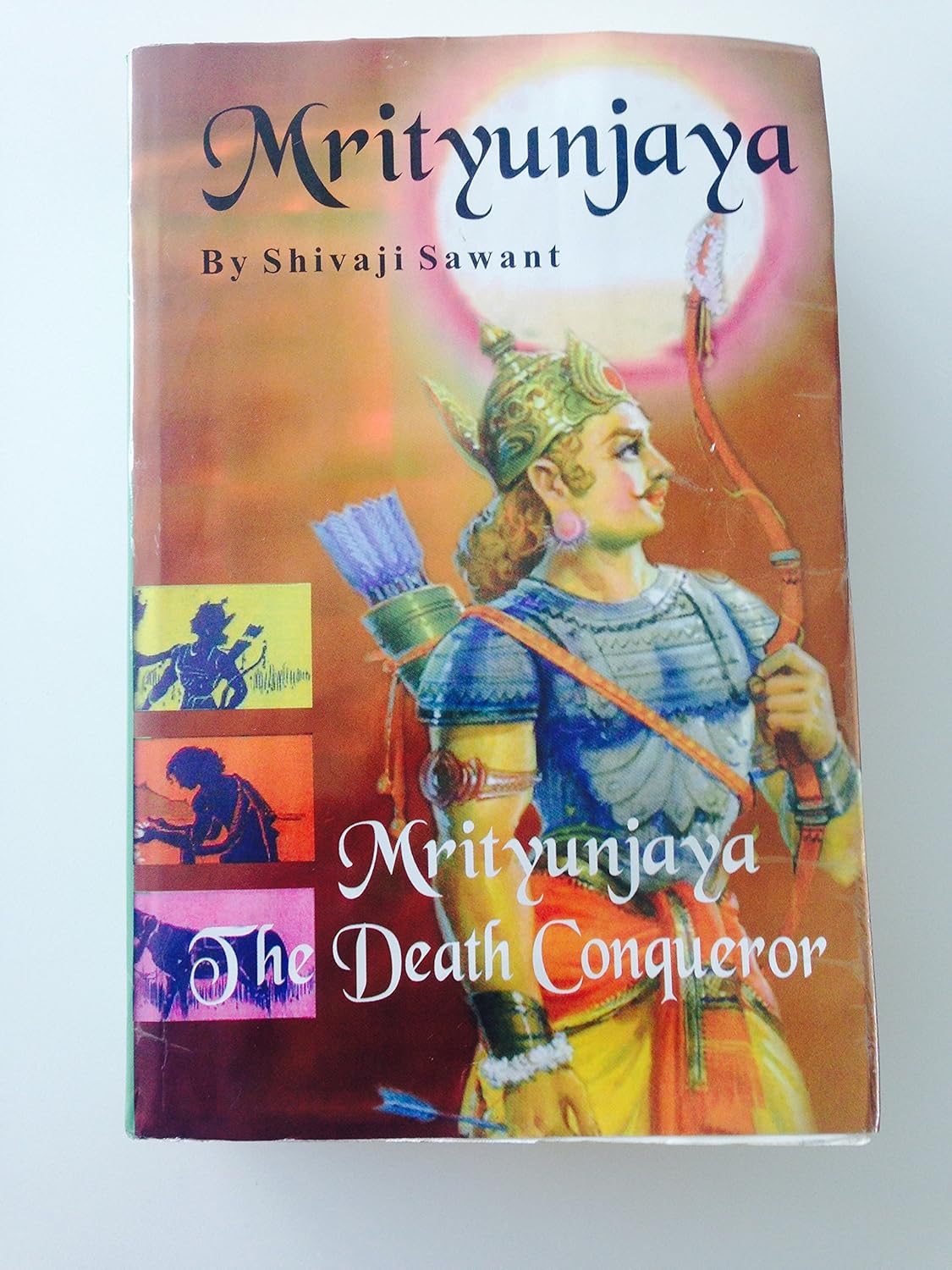
Mrityunjaya ~ Shivaji Sawant (64 of 2024)


Finally I am fortunate to read the English version of the Marathi Novel written by Shivaji Sawant, which was translated as Karnan in Malayalam thanks to Thanseeh from CBC. Have heard about this book since childhood from Sasiman, and was fortunate to get hold of the Malayalam version with Raghavan Chittapan.  


In the Mahabharata, Karna, who shines with the brilliance of the sun, is the story that has attracted the novelists the most. Am waiting to read the original Marathi version of the book. Hopefully soon.

 Brotherly love, friendship, filial affection, generosity, charity, fearlessness, courage, sense of value, idealism, purity of character, passion for culture, all of these are revealed in the novel. The sense of loss of not being able to experience anything of his own - true motherly love, family pride, Kshatriya - the disdain he had to hear even from the unworthy  - none of this swayed the Maharati even at the crucial moments. In vain moments and in dire straits, unbroken, unflinching, that brave man stood firm.

Without yielding to any temptation, he persevered with his righteousness till the end of his life. Karna faced human and divine challenges all his life with self courage and became invincible even in the face of death. Such is the immortal story of Karna that Shivaji Sawant has reimagined through the novel Mrutunchaya.

The novelist has adopted the technique of moving the story forward through the autobiographical accounts of Karna, Kunti, Duryodhana, Vrishali, Shon and Sri Krishna. Centered around Karna, rest of the Mahabharata stories are intelligently combined here. Each chapter though named after a character,  is not about them but a view of each of the characters on the events during that period. 

There are four chapters titled Karna. Athirathan's adopted son who excelled in every area. Athirathan's real son was Shon, he admired Karna a lot. For him Karna was his beloved elder brother, God like.  He has seen how Karna with all pain stood strong with smile.

Karna used to bathe in Ganga daily, where he met his first wife Vrishali  a beautiful lady. He also had another wife whose story is described in The Outcasted Queen.

In Vedas any person who has slept with more than three people is called 'Pumchali'. Karna told this about Draupadhi so Kaurava don't trouble her. Which was misunderstood.  There are so many stories and sub-stories looked at from different viewpoint  and ends with Sri Krishna describing the 18 day war and the need for it; covering emotions,  promises and betrayals of those involved. Mothers sorrow and the bond between Krishna and Karna is explained at the end with all its mirage. Enchanting,  poetic,  philosophical. 

One interesting subplot worth pondering is, the question from Arjun when Krishna praise Karna as his Chariot moves three steps behind.  Arjuna ask Sri Krishna why he was not praised when Karna's chariot was pushed five steps behind.  To this Sri Krishna said Karna did it alone when Arjuna had Sri Krishna himself as the charioteer and Hanuman to protect him. 

Shivaji Sawant presents Karna's life through his own perspective, exploring themes of fate, honor, and sacrifice delving into Karna's struggles with his identity, loyalty, and the societal pressures he faces.

The great poet Vyasa has given a miracle, by providing us the glimpse of the character Surya Sambhava Karna, in the Mahabharata.

Perhaps if Karna  had the strength of Durga, Sri Krishna would not have had to tell the secret of the Gita to Arjuna.

Vyasa says that the one who was branded as Maharati and Ardha Rati, who had the power to consume love, sacrifice, and vision, was brought to chastity  even when Karna was dead. 

Narada on meeting the Pandavas after the war tell them Karna was the most brilliant and energetic character in the Mahabharata, even if the qualities of five pandavas were put together, they would not equal to Karna.

The story of Karna and his life is a lesson on how human life is so very interconnected. Unaware we ridicule, harm and even kill others. Only to repent later. A valuable lesson for one and all of all ages. 

The book is philosophical poem. A poignant retelling and a profound exploration of a complex hero.

Life Lessons


Three stories to boot:

1. Nokia refused Android


2. yahoo rejected google


3. Kodak refused digital cameras

Lessons:

1. Take chances


2. Embrace the Change


3. If you refuse to change with time, you'll become outdated

Two more stories:

1. Facebook takes over whatsapp and instagram


2. Grab takes over Uber in Southeast Asia


Lessons:

1. Become so powerful that your competitors become your allies


2. Reach the top and eliminate the competition.


3. Keep on innovating

Two more stories:

1. Colonel Sanders founded KFC at 65


2. Jack Ma, who couldn't get a job at KFC, founded Alibaba and retired at the age of 55.

Lessons:

1. Age is merely a number


2. Only those who keep trying will succeed

Last but not least:
Lamborghini was founded as a result of revenge from a tractor manufacturer who was insulted by Ferrari founder Enzo Ferrari.

Lessons:
Never underestimate anyone, Ever!
✔️ Just keep working hard
✔️ Invest your time wisely
✔️ Don't be afraid to fail

Thursday, July 11, 2024

Becoming Wise: An Inquiry into the Mystery and Art of Living ~ Krista Tippett (66 of 2023)


Becoming Wise: An Inquiry into the Mystery and Art of Living ~ Krista Tippett 


She is the host of the public radio program and podcast On Being and Curator of the Civil Conversations Project. As the host of the On Being podcast, Krista Tippett gets to have conversations with some of the most inspiring artists and spiritual teachers in the world – from the Dalai Lama to Anne Lamott, Mary Oliver to Eckhart Tolle, and most people in between.


'Becoming Wise' is a distillation of some of her most memorable conversations, and acts as a kind of guide to living – how to be. The richness of the book is almost overwhelming – it's sumptuously written, full of wisdom from some of the greatest thinkers of our time, ambitious in its scope. It encomposses all that Krista Tippett has found to be most crucial in the "art of living." Don't expect roadmaps, but expect questions and soft direction.


In Becoming Wise, Krista Tippett has created a master class in living for a fractured world. Fracture, she says, is not the whole story of our time. The enduring question of what it means to be human has become inextricable from the challenge of who we are to one another. She insists on the possibility of personal depth and common life for this century, nurtured by science and “spiritual technologies,” with civility and love as muscular public practice. And, accompanied by a cross-disciplinary dream team of a teaching faculty, she shows us how.

Book is divided into six parts beginning with Introduction i.e. the Age of us. 

Words are the poetry of creatures

Flesh is the Body's grace. 

Love: A few things learned. 

Faith: The Evolution

Hope : Reimagined. 

So many excellent and eloquent quotes. Some from Tippett, Some from those she has interviewed over the years.


On tolerance:

"We chose too small a word in the decade of my birth—tolerance—to make the world we want to live in now. We opened to the racial difference that had been there all along, separate but equal, and to a new infusion of religions, ethnicities, and values. But tolerance doesn’t welcome. It allows, endures, indulges. In the medical lexicon, it is about the limits of thriving in an unfavorable environment. Tolerance was a baby step to make pluralism possible, and pluralism, like every ism, holds an illusion of control. It doesn’t ask us to care for the stranger. It doesn’t even invite us to know each other, to be curious, to be open to be moved or surprised by each other."


On admiration and love:

"When you admire people, you put them on pedestals. When you love people, you want to be together."


On the Miraculous and Love:

"What do you do about evil that swoops down completely at random? I suppose that’s where the issue of miracles comes in, that so many things had to happen in the right way, or the wrong way, depending on how you put it, for this particular young woman to meet this particular guy in the parking lot at 7:00 in the morning. That is as improbable as any miracle. And because of that, a miracle to me can’t just be something that was providential, that everything had to line up just right in order for it to happen. Bad things happen that way too. Really bad things happen that way too. If I look at it from another perspective, and this is really the perspective I maintain, I don’t look for God or God’s work in magic or in tricks or in, you know, “this is what I want” and then I get it. I look for God’s work always in how people love each other, in just the acts of love that I see around me."


God is bigger than Religion:

"The Bible is saying to us the whole time: Don’t think that God is as simple as you are. He’s in places you would never expect him to be. And you know, we lose a bit of that in English translation. When Moses at the burning bush says to God, “Who are you?” God says to him three words: “Hayah asher hayah.” Those words are mistranslated in English as “I am that which I am.” But in Hebrew, it means “I will be who or how or where I will be,” meaning, Don’t think you can predict me. I am a God who is going to surprise you. One of the ways God surprises us is by letting a Jew or a Christian discover the trace of God’s presence in a Buddhist monk or a Sikh tradition of hospitality or the graciousness of Hindu life. Don’t think we can confine God into our categories. God is bigger than religion."


On Resilience:

"I’m glad for the language of resilience that has entered the twenty- first-century lexicon, from urban planning to mental health. Resilience is a successor to mere progress, a companion to sustainability. It acknowledges from the outset that things will go wrong. All of our solutions will eventually outlive their usefulness. We will make messes, and disruption we do not cause or predict will land on us. This is the drama of being alive. To nurture a resilient human being, or a resilient city, is to build in an expectation of adversity, a capacity for inevitable vulnerability. As a word and as a strategy, resilience honors the unromantic reality of who we are and how we are, and so becomes a refreshingly practical compass for the systems and societies we can craft. It’s a shift from wish-based optimism to reality-based hope. It is akin to meaningful, sustained happiness—not dependent on a state of perfection or permanent satisfaction, not an emotional response to circumstances of the moment, but a way of being that can meet the range of emotions and experiences, light and dark, that add up to a life. Resilience is at once proactive, pragmatic, and humble. It knows it needs others. It doesn’t overcome failure so much as transmute it, integrating it into the reality that evolves."


Wednesday, July 10, 2024

GOOD BOOKS BY Edgar Guest

 GOOD BOOKS BY Edgar Guest


Good books are friendly things to own

If you are busy they will wait

They will not call you on the phone

Or wake you if the hour is late

They stand together row by row

Upon the low shelf or the high

But if you’re lonesome this you know

You have a friend or two nearby


The fellowship of books is real

They’re never noisy when you’re still

They won’t disturb you at your meal

They’ll comfort you when you are ill

The lonesome hours they’ll always share

When slighted they will not complain

And though for them you’ve ceased to care

Your constant friends they’ll still remain


Good books your faults will never see

Or tell about them round the town

If you would have their company

You merely have to take them down

They’ll help you pass the time away

They’ll counsel give if that you need

He has true friends for night and day

Who has a few good books to read

Tuesday, July 09, 2024

Kalki 2898


 "Kalki 2898" is not just a movie; it's an experience that redefines the boundaries of science fiction and epic storytelling. Directed by the visionary filmmaker Nag Ashwin, this film is a tour de force that combines a compelling narrative, breathtaking visuals, and stellar performances, setting a new benchmark for Indian cinema.

Plot and Storyline: Set in a dystopian future, "Kalki 2898" explores themes of hope, survival, and the eternal battle between good and evil. The plot intricately weaves together elements of mythology and futuristic science, creating a tapestry that is both thought-provoking and emotionally resonant. The story follows Kalki, a hero prophesied to restore balance in a world teetering on the brink of chaos. The narrative is gripping, with each scene meticulously crafted to keep the audience on the edge of their seats.

Visuals and Special Effects: The visual effects in "Kalki 2898" are nothing short of spectacular. The futuristic landscapes are rendered with a level of detail that is awe-inspiring, transporting viewers to another world. The use of CGI is seamless, enhancing the storytelling without overwhelming it. The film's cinematography is equally impressive, with each frame composed like a work of art. The use of color, lighting, and innovative camera angles adds depth and dimension to the viewing experience.

Performances: The cast of "Kalki 2898" delivers performances that are powerful and nuanced. Prabhas, in the titular role, brings a perfect blend of intensity and vulnerability, making Kalki a hero that audiences can root for. Deepika Padukone, as the enigmatic and strong-willed heroine, adds a layer of complexity to the narrative. Amitabh Bachchan, in a pivotal role, delivers a performance that is both commanding and emotionally charged. The supporting cast, including Disha Patani, brings depth and authenticity to their characters, enhancing the overall impact of the film. Sir Amitabh Bachchan outweighs every other character and is the heart of the whole movie. His stature, voice, caring attitude & protective nature, and breathtaking action scenes will be remembered by all ages.AmitabhBachchan as Ashwatthama is the highlight of Kalki. He has a roaring screen presence and excels. DeepikaPadukone gets a meaty part and is the soul of the film. She delivers a fabulous performance, lending the right emotions. Prabhas does well in his part though his character warranted a better arc. I feel, the maker has saved the best of #Prabhas for the sequel. He gets his share of elevation moments and emerges a winner in there.KamalHaasan is terrific in his cameo and spikes excitement for the next installment. SawataChatterjee is solid as the villain. Some of the cameos are exciting and come across as a pleasant surprise in the narrative. characters like Ram Gopal Varma, Rajamouli, Vijay Devarakonda, Mrinal Thakur, Dulquer Salmaan and others gives a goosebumps moments that makes you love the flick. I loved Shobhana as Mariam. Wondering why that name?

Direction and Screenplay: Nag Ashwin's direction is masterful, showcasing his ability to blend genres and create a cohesive and compelling story. His vision for "Kalki 2898" is ambitious, and he executes it with precision and flair. The screenplay is tight, with a perfect balance of action, drama, and philosophical musings. The dialogues are poignant, often leaving a lasting impact long after the credits roll.

Music and Sound Design: The music by Santhosh Narayananelevates "Kalki 2898" to another level. The score is hauntingly beautiful, perfectly complementing the film's tone and themes. The sound design is meticulous, creating an immersive audio experience that draws viewers deeper into the story.

Conclusion: "Kalki 2898" is a cinematic triumph that stands out in every aspect. It is a film that challenges, inspires, and entertains, leaving a profound impact on its audience. This movie is a must-watch for anyone who appreciates the art of filmmaking and storytelling. Nag Ashwin has crafted a masterpiece that will be remembered as a landmark in Indian cinema. "Kalki 2898" is not just a film; it is a journey that stays with you long after you leave the theater. 

Cons : 1. Music, background score is unique but doesn't give the much needed grandeur to the visuals and scenes, repeated use of same score, abruptly high background score during stunts 2. Editing especially first half. 3. I didn't personally like is the extremely repetitive and prolonged fights between Bhairava and Aswattama. It could've been way shorter.

Although the nature of the film are far from logical, the directors and the technical team have succeeded in creating a new world on the silver screen. It stands as a film that takes Indian cinema to another level...This is a film dedicated to the company's five-year journey of hardwork...

Monday, July 08, 2024

Rasathantram


Rasathanthram was released in theatres on 7 April 2006, did see it in the theather then, got an opportunity to watch it again with Amma, last saturday. The film starring Mohanlal and Meera Jasmine, with Bharath Gopi, Innocent, Oduvil Unnikrishnan, and Mamukkoya in prominent roles is an amazing family drama film written and directed by Sathyan Anthikkad . Story, emotions, fun, you name it, and it is in the movie. The best part and tons of applause to Meera Jasmine. 


Premachandran is a carpenter who lives along with his father, Balan Master, and works along with his friend, Manikandan. They are now working on a house near the house of a rich landlord. Kanmani, who was sold by her mother, works in that house as a servant and is ill-treated. Seethamma lives along with her daughter, Kumari, who has a liking towards Premachandran.


One night, Premachandran goes to his workplace to take his tools. He sees Kanmani leaving the house and is puzzled. He follows her. She was on the verge of committing suicide when Premachandran rescues her. He gives her shelter in one room in a building owned by Chettiyar, telling Chettiyar that his friend did not get the bus to go back home. Kanmani dresses up as a boy by the name of Velayuthan Kutty and soon starts working with Manikandan and Premachandran. Balan Master starts liking the disguised boy.


One day, Premachandran tells Kanmani that he has planned to rescue her by sending her to Tamil Nadu to work in a banyan company where Premachandran's friend is working. Kanmani refuses to go. Premachandran accidentally confesses to Manikandan that Velayuthan Kutty is actually the missing Kanmani. Manikandan has no peace and shouts out the truth in the middle of the night. Two policemen, accidentally hear this and take Premachandran and Kanmani into custody.


Kanmani tells the court that she and Premachandran are in love and intended to elope. She said this to avoid imprisonment. Soon, Kanmani develops an affection towards Premachandran. Premachandran tells her that she does not know anything about him and that he is an ex-convict in a murder case. Actually, Premachandran's friend Sivan murdered a hooligan who abused Premachandran's sister. Kanmani now agrees to go to Tamil Nadu, but Premachandran does not let her go, he admits her in a hostel.


Premachandran's brother, Ramachandran, comes to the fray and asks Balan Master to attend his daughter's marriage. He asks that Premachandran not come. Actually, Balan Master and Premachandran are living far away from home because of the bad nature shown by Premachandran's brother and sister. Balan Master is not willing to go without Premachandran. Premachandran who loves his niece as his daughter changes Balan Master's mind, by going with him without anybody knowing he is there. On returning, they see their rented house being destroyed. Balan Master takes shelter in an old age home headed by a retired Colonel until a new house can be rented.


Premachandran goes to Kochi to meet Sivan – who is now a business tycoon, but Sivan does not meet Premachandran's needs. On returning, Premachandran finds out that Balan Master is dead. He performs the ceremonial rites and goes to Kanmani. Meanwhile, Kanmani's so called uncle (Jagathty Sreekumar) – who wants to marry Kanmani – and his sister have court orders to take Kanmani back to Tamil Nadu. But, Premachandran grabs the "thali mala" from Sundara Pandian, ties the knot on Kanmani and subsequently marries her.

Dil Chahta Hai


 Dil Chahta Hai was based on Farhan Akhtar's diary he wrote during his trips to Goa and his month-and-a-half-long stay in New York City in 1996, and a story by a friend of his, Kassim Jagmagia. He originally conceived a story about the romance between Akash and Shalini. He later shared it with his parents, who immediately liked his idea but suggested several changes. However, he felt the story was not exciting and unusual enough for him and started to develop other characters, including Akash's friends, making his initial idea become the film's subplot.Farhan began writing the film's screenplay under the working title of Hum Teen in 1998.

 After principal photography commenced in 2000, the film was retitled Dil Chahta Hai. Farhan originally wrote the dialogue in English, and he translated it to Hindi in two months.This marked the cinematic debut of Akhtar and his friend Ritesh Sidhwani, who produced it under their banner of Excel Entertainment.Several elements of the film were inspired by the English playwright William Shakespeare's Much Ado About Nothing which looked at the conflict between romantic love and male bonding. The only clue for the unacknowledged remake was that in one shot there was a boat in a harbour that was clearly named Much Ado,"  Farhan's sister, Zoya, was in charge of the casting of the film.Filming started in 2000 and was completed in 108 days by Ravi K. Chandran, taking place in Mumbai, Goa, and Sydney.

Three close friends are separated after college due to their different approaches towards relationships. Akash goes to Australia, Sameer gets busy wooing a girl and Siddharth devotes himself to art.The film focuses on a significant transition period in the romantic lives of 3 college-graduate friends (Aamir Khan, Saif Ali Khan and Akshaye Khanna). It also stars Preity Zinta, Sonali Kulkarni and Dimple Kapadia.

The film starts with Siddharth "Sid" rushing a patient to the hospital. The patient is diagnosed with liver cirrhosis. Sid calls up his friend Sameer who calls up their friend Akash who refuses to come with him. Sameer and Sid meet at the waiting lounge and reminisce their life's events.

Akash does not believe in the concept of love and doesn't take anything seriously. Sameer is a very romantic but confused guy. Whenever he is attracted towards a girl, he thinks that he has found true love. Sid, an artist by profession and the most mature of the three, has no interest in romance and is very serious and dedicated towards his work. They spend all their time together, taking trips, playing pranks on each other and supporting the other when needed.


At their college leaving party, Akash jokingly professes love for a girl called Shalini, earning him a punch from her hot-tempered, possessive fiancée Rohit. Upon graduating from college, they are forced to decide on what to do with their lives ahead. Sameer's parents want to arrange his marriage with their friends' daughter, Pooja while Akash's parents ask him to manage the family business in Sydney. Sid is busy trying to become a painter and works to develop his skill.


One day, Sid runs into his new neighbour, Tara Jaiswal, who is a divorcee and an alcoholic. She takes an interest in his art and the two become friends. Despite her older age, Sid finds himself attracted to her. After a night out, Sid confesses to Sameer and Akash that he loves Tara. In typical fashion, the friends refuse to take him seriously. Sameer realizes that Sid is not joking but Akash continues to mock him, leading Sid to slap him. Infuriated, Akash leaves the scene, refusing to reconcile with Sid despite Sameer's attempts to mediate. Soon, Akash leaves for Sydney to work on the family business and Sid temporarily moves away to Kasauli to attend a painting workshop, leaving Sameer to his own means.


Sid eventually returns and he meets Sameer who tells him that he is attracted to Pooja at first-sight. However, Pooja has a boyfriend but it seems their relationship is not going strong hence they inevitably break up. With the help of Sid, Sameer asks her out and Pooja accepts.


In Sydney, Akash meets Shalini who shows him around the new city. The two soon fall in love, but she has to return to India to marry Rohit. It is revealed that Shalini does not love Rohit, and is only marrying him to please his parents, who have raised her. Determined not to lose Shalini, Akash shows up at her wedding. He proposes to her in front of all the guests, Rohit and his family. Rohit is enraged but decides to yield on being told by Shalini that she loves Akash too much to the approval of Rohit's parents who accept Shalini's love for Akash enraging Rohit more who gets slapped by Akash.


Back to the present, Sameer lies to Sid about being unable to contact Akash. The next morning, however, Akash arrives at the hospital to bury the hatchet with Sid. He apologizes to him, and the two hug.


Meanwhile, Tara who is revealed as the patient is about to die from liver cirrhosis due to her alcoholism. The hospital staff approach Sid to inform him, and he speaks with Tara for the last time in her hospital room. She thanks him for being there for her in her final moments and passes away, leaving Sid's love for her unrequited. Six months later, the friends again visit Goa for a trip, now accompanied by Shalini and Pooja. Sid sees a woman who resembles Tara, and approaches to talk to her. It is implied that she and Sid get together, as the three friends are shown enjoying dinner with their respective partners.

Friday, July 05, 2024

Global Forgiveness Day ~ 7th July


 Life involves interacting with people around us, and sometimes they can hurt us. It's natural to hold grudges, but that anger can burden us. 

 Forgiveness is a great way to let go and move on. Remember, forgiveness doesn't mean forgetting, but it allows you to heal from within and avoid similar situations in the future.

It can be difficult, but the comic strip below is an example of how we can tackle such situations. 

Global Forgiveness Day ~ 7th July. 

Few of my Favourite Reads

 Not an easy task, am sure the list will be different, if you ask me at some other time, but in No Particular Order

Fiction

Alice in wonderland

Wuthering Heights

The Palace of Illusion 

Once there were wolves

The Secret garden

The Shell Seekers

What you are looking for is in the library

Fresh water for flowers

One Hundred Years of solitude

The Moor’s Last Sigh


Non Fiction

The Chicago Address by Swami Vivekananda

Vesper Flights by Helen Macdonald

Mirrors stories of almost everything

The complete works of Kahlil Gibran

In Search of Your true self

The Magic of Thinking Big

The success Principle

The Boy, the Mole, the Fox and the Horse'

Future Shocks

Man’s search for meaning

And yes the Great Indian Story by Shasi Tharoor

Thursday, July 04, 2024

T20 Cricket World Cup 2024

 India won the match and so many to take credit. 

There was a discussion going on about who could have a hand in India's victory in T-Twenty World Cup 2024.

One person said that BJP, VHP and RSS have a hand in this.

The rest of the people angrily asked that person, this cannot be possible, how did BJP, VHPand RSS come in between??, please explain to us.

The guy replied, 'Hey brothers, there is no politics in this victory, BJP means Bumrah, Jadeja, Patel. VHP means Virat, Hardik,Pant.

RSS means Rohit, Suryakumar, Shivam 

What an emotional farewell to Rahul Dravid. 

What a comeback from run a ball scenes.

Rahul Dravid, Rohit Sharma, Virat Kohli - all moving out of the T20 .

Jasprit Bumrah, Hardik Pandya rocking.

സ്വപ്നങ്ങൾ ഒന്നും അവശേഷിപ്പിച്ചു കൊണ്ടു ഭൂമിയിൽ നിന്നും മടങ്ങാൻ തയാറാല്ലാത്ത മനുഷ്യന്മാർക് ധൈര്യമായി ഈ മനുഷ്യനെ മാതൃകയാക്കാം...... ❤️❤️

ഇന്ത്യ ലോകത്തിന്റെ നെറുകയിൽ.... ❤️❤️ 

എന്റെ രോഹിത്.... ❤️❤️❤️❤️

Looks like that is the determination of Rohit Sharma. 

 This is the day Rohit Sharma would cherish for ever and close to his heart ❤️

And well deserved victory for India the world champions - remarkable and incredible performance of bowlers and some top class fieldings (SKY). Bumrah is a gift to our country, he is the real 🐐 goat....what an inswinger to right handers...

Really sorry for Proteas again, unfortunate still...but reall well played Dekock and Miller and ofcourse klassen was real class. You lost the championship between the Cup and nip.

From WhatsApp 

1975 - No malayali

1979 - No malayali

1983 - Sunil Walson 🏆

1987 - No malayali

1992 - No malayali

1996 - No malayali

1999 - No malayali

2003 - No malayali

2007 - No malayali

2007 - S Sreeshanth 🏆

2009 - No malayali

2010 - No malayali

2011 - S Sreeshanth 🏆

2012 - No malayali

2014 - No malayali

2015 - No malayali

2016 - No malayali

2019 - No malayali

2021 - No malayali

2022 - No malayali

2023 - No malayali

2024 - Sanju Samson 🏆

Hence Proven - U need to have a Mallu on the team...

Wednesday, July 03, 2024

Great Indian Cricket Circus (63 of 2024)

 Mukherjee, who won the Anandji Dossa Award for the Cricket Statistician of the Year in 2019/20, is the content head at Wisden India. Bhattacharjya, who was ESPN Star Sports’ first Indian head of production, and has been the team director for the Kolkata Knight Riders, is a cricket analyst with the online platform Cricbuzz. They have combined their experiences and networks to write a memorable book aptly named 'Great Indian Cricket Circus'.


A book that promises to be “an unabashed celebration of this incredible sport” is a smart idea because success in cricket as well as publishing often depends on good timing. It has 52 short, crisp chapters. Each one can be read in a few minutes. The emphasis here is on supplying readers with trivia that is humorous, astonishing, and sometimes even bizarre.

Did you know that ...

Chandu Sarwate, Indian Test cricketer, was also a fingerprint expert?

Sania Mirza is related to four Test captains, two of them Indian.

In addition to roads and neighbourhoods, Sachin Tendulkar also has a racehorse, a variety of mango and a species of spider named after him?

The Great Indian Cricket Circus takes a rollicking journey through more than a century of Indian cricketing history. It tells the stories of not just the matches and the players, but also of crazy fans, mind-boggling endorsements, memorable scores, eccentric commentators, iconic stadiums and much more.

Supremely entertaining, and full of bewildering events, surprising anecdotes and cool facts compiled together in wacky, interesting ways, this is the perfect book for fans of the sport, trivia lovers or anyone looking for entertainment!

Not simply a compendium of information, this is a chronicle of memories around the game that evokes joy, sadness, longing, anger, despair, and hope.

“Where does cricket end and the rest of life begin? In India, you never know,” writes Indian cricketer R Ashwin in his foreword to The Great Indian Cricket Circus. People who do not follow cricket might think that he is exaggerating but those who have been ardently following would fully agree. 

The book opens with a chapter that is ideal for people who are equally devoted to fiction and cricket. Following the format of a listicle, it spots references to real-life cricketers in book such as RK Narayan’s Swami and Friends (1935), Jeffrey Archer’s A Quiver Full of Arrows (1980), Ruskin Bond’s Cricket for the Crocodile (1986), Rohinton Mistry’s Tales from Firozsha Baag (1987), Salman Rushdie’s The Moor’s Last Sigh (1995), Chetan Bhagat’s The 3 Mistakes of My Life (2008) and Anuja Chauhan’s The Zoya Factor (2008), among others.

Another endearing chapter tracks down things and places named after Indian cricketers. Sachin Tendulkar has a hybrid mango variety – “a cross between gudshah and chausa” named after him thanks to horticulturist Haji Kaleemullah Khan of Malihabad in Uttar Pradesh. A cricket stadium in Zanzibar (Tanzania), a ground in Leicester (England), and a cricket field in Louisville (Kentucky, USA) are named after Sunil Gavaskar. The Tihar Jail in Delhi used to have a block named after Manoj Prabhakar but “the authorities changed the name of the block in 2001 after Prabhakar was named in the match-fixing scandals the year before”.

The writing seems effortless but it must have taken a lot of research and fact-checking. The chapter on religion and Indian cricket is a case in point. It throws light on the history of a less known interfaith cricket tournament called the Bombay Pentangular that was played between the Parsees-only Zoroastrian Gymkhana, the Europeans-only Bombay Gymkhana, the Hindu Gymkhana, the Mohammedan Gymkhana, and fifth team added later to include “Sikhs, Buddhists, Jains, Indian Christians, other Indian communities and even the Ceylonese”. Unfortunately, this tournament was discontinued in 1945/46 because of communal riots.

One of the chapters in the book focuses on cricketers who were forced to leave their birthplaces and ancestral homes at Partition or just before. The authors note, “Of the 31 Pakistan Test cricketers born in what became India after Partition, most were – not surprisingly – from Punjab, Rajasthan and Gujarat, all of which share borders with Pakistan.”

Selected Stories of Rabindranath Tagore (61 of 2024)


 Another buy from Calcutta - College Street. 

This covers 14 stories. 

  1. Kabuliwallah

In the story there are three examples of filial affection—the narrator and his daughter Mini; the Kabuliwala "Rahmat" and his own daughter in Afghanistan; and the Rahmat "Kabuliwala" and Mini. In this story Rahmat comes to India every year to sell dry-fruits and to meet this girl named Mini. He had a physical altercation with a person while collecting debts and was imprisoned. After several years, he was pardoned and was released from jail. He returned to meet Mini at her house on her wedding day, but she had grown up and did not recognize him. Her father, however, gave him some money so he could visit his own daughter. 
  1. Postmaster
For his first job, the Postmaster is assigned to work in the village of Ulapur, a quiet backwater with an indigo factory. He feels sorely out of place in the village, feeling both too sophisticated as a Calcutta man amongst uneducated villagers, and needlessly arrogant to the very people who he might turn to, hoping for friendship.

For lack of anything better to do, the Postmaster takes to writing poetry about his scenic surroundings, pontificating on rain-soaked leaves and the like as a way to express his deepest sorrows. Since he doesn’t make much money, the Postmaster cooks for himself and enlists a young orphan girl named Ratan to help him with housework in exchange for some food.

One night while Ratan is preparing his hookah, the Postmaster asks her to describe her family. This begins a relationship where the two share intimate details about their families, with the Postmaster divulging how much he misses his mother and sister back in Calcutta. The rapport develops to such an extent that Ratan starts to consider the Postmaster’s family her own.

One day while watching a bird in a tree, the Postmaster is taken by a desperate need for female companionship, for someone who he could share this sighting of a bird with. He calls Ratan into his office and informs her that he’s going to teach her how to read. These lessons continue until the Postmaster falls ill and he grows unable and unwilling to continue. Ratan, regardless, practices what he has taught her. Fed up with the village and his illness, the Postmaster applies for a transfer and is denied.

Nonetheless, he quits the job to return home, and tells Ratan as much. Ratan begs him to take her with him, but he smugly tells her that’s impossible. He promises her that the next Postmaster will take care of her, but that does nothing to comfort her. Upon leaving, he tries to give Ratan money, but she refuses.

As the Postmaster is leaving, he is struck by a feeling that he should go back and take Ratan, but concludes that life is full of separations and endings, so what’s the point? Ratan doesn’t have the same view though, and holds out, in anguish, for the possibility that the Postmaster will return to take her to Calcutta.
  1. Homecoming
The story is told from the perspective of a fourteen-year-old adolescent boy, describing the hardships he faces. The themes of strife and love in Phatik’s life are at the center of this tale. Minor themes also include a teenage boy’s feelings of isolation and responsibility.

Phatik, a naughty and fun-loving fourteen-year-old boy, has developed a reputation for it. His younger brother Makhan sat on the log in front of him when he was with other village lads to agitate him. Phatik warns that if he doesn’t go, he would shove him to the ground. However, this threat is ignored. Phatik pushes the log off while swallowing his fright because he couldn’t lose face in front of the other boys. Makhan beats Phatik out of hatred despite being hurt. When Makhan gets home, he instantly tells his mother the lies. His mother shares his convictions. Before a stranger who turns out to be the mother’s brother comes, Phatik punches his sibling out of rage. His mother gives her consent for his uncle, Bishmaber, to bring Phatik to Calcutta with him so that he can receive an education. His mother was only too willing to concur. His mother was troubled by his presence since she constantly feared that he might end up endangering Makhan. She becomes upset, though, because Phatik is just as eager to escape. Calcutta wasn’t any better, though. He wasn’t loved by his aunt. He was considered a bother by others. He was unhappy. He yearned to return home. Phatik had a terrible time in school as well. He was unable to fit in or win over the teachers. He finally finds the confidence, out of desperation, to ask his uncle when he could return home. The only response from his uncle was that he could come back during the holidays. He misplaces his book one day, and as a result, his aunt and fellow students scold him and correct him. The following day when he gets home, Phatik attempts to get away. He is however caught in a downpour and has a serious malarial cold. Unable to locate him, his uncle reported him to the police. He receives more criticism once the cops track him down and bring him home. He sobs, unable to take it any longer.

Phatik begs his mother not to beat him in a fever-induced hallucination, even as he longs to go back home. Tagore sharply criticizes society’s treatment of teens when he notes that not a single person made an effort to comprehend the emotional pain he was experiencing. Even if his mother seemed to regret her choices after the novel, it is too late to undo the suffering her son had to go through. Phatik’s mother forbids him from entering his early teens. Perhaps for this reason, she is happy to have Bishambar take him to Calcutta. It is clear to the reader that Phatik’s mother is powerless to control him. She is to blame for something, not Phatik.

The conclusion of the story is especially intriguing because it makes it plain to the reader that Phatik is insane as a result of his disease. He thinks that the holidays (October) have arrived when he sees his mother. However, everyone in the room is aware that Phatik is dying and is in critical condition. What was once a healthy youngster has in such a short time turned into a weak wreck. It’s possible that Tagore was implying that Phatik shouldn’t have been removed from his familiar village setting. Some kids will be successful in the city or at school. That kind of character was not Phatik. Despite being a lover of nature, he passed away in Calcutta’s walls. Bishambar cannot be held responsible for what occurred, though. He was merely attempting to assist Phatik. The two mothers that appear in the story cannot be claimed to be the same. Both Phatik’s mother, who was impatient and eager to get rid of Phatik, and Bishambar’s wife, who thought Phatik was just a clumsy small child. whom she truly wanted nothing to do with.
  1. Master Mashai
The father of the young man lives from the interest on money he inherited from his family. Until, somewhat late in life, his wife finally has a child, a son, he is very tight with his money. Gradually he gets used to spending money on his son. He hires a distinquished tutor but a riff develops between the tutor and his son.

One day the son of one of the families cooks brings her son to work. The father finds out young man is an accomplished scholar and he offers him a job as live in tutor. His son and tutor bond, the boy calls him “Master Mashai”.

A lot will happen, much of it very sad, as the plot advances and the boy ages.
  1. Once there was a King
When we were children there was no need to know who the king in the fairy story was. It didn't matter whether he was called Shiladitya or Shaliban, whether he lived at Kashi or Kanauj. The thing that made a seven-year-old boy's heart go thump, thump with delight was this one sovereign truth, this reality of all realities: "Once there was a king. The theme of innocence radiates through the delicate tapestry of the narrative. Recounted by an unnamed narrator reflecting upon his childhood, the story delves into the realm of innocence through the lens of storytelling, escapism, and respect.

  1. The Baby
Part One of My Lord The Baby begins with a twelve-year-old boy named Raicharan. He leaves his village and enters the home and service of a man who shares the same caste as Raicharan. Raicharan becomes the private servant of the man’s so, Anukul. From birth up until the day that the boy leaves for college, he is Anukul’s personal attendant.


After Anukul marries, he makes Raicharan the servant of his new son, who is called The Little Master in the story. Raicharan takes pride in his work and finds great pleasure in the child. The story contains several passages in which the reader sees Raicharan’s joy in reading to the boy.

When the child begins to walk, it is an “epoch in human history.” He plays with the child night and day. When it utters the words “Ba-ba,” “Ma-ma,” and “Chan-na” (this is what the baby calls Raicharan), “Raicharan’s ecstasy knew no bounds.”


Anukul buys a small go-cart for his son, and drapes him in silks and finery, including golden ornaments, bracelets, and more. When the rainy season approaches, the child is dreadfully bored while confined indoors. One day, on which the rain has lifted, Raicharan puts him in the cart and pulls him down to the riverbank.

The boy sees a lovely tree covered in flowers, and Raicharan can tell that he wants one. He tries to distract the boy by showing him birds and various other diversions, but the child is intractable. Finally, Raicharan asks him to stay in the cart, forbids him from going to the water, and wades in to get the flower. When he returns, the child is missing.

When evening comes and Raicharan has not returned with the child, Anukul and the mother go out searching. They find Raicharan running along the banks, calling out “Little Master!” over and over, heartbroken. Under questioning, he says that he knows nothing about what happened. They promise him anything if he will tell them, but he has no answers. He is sent from the house. The mother tells Anukul that she suspects that Raicharan had stolen the child, possibly to sell it to the gypsies, who were also rumored to be in the area at the same time. “The baby had gold ornaments on his body,” she says. It is enough to convince her.

In Part Two, Raicharan returns to his village. His wife bears him a son named Phailna and then dies. Raicharan initially feels an intense resentment of the child, feeling that it someone intends to replace the little master who was so recently lost. He feels extreme guilt at the prospect of being happy about his own child in the aftermath of such tragedy.

Soon he is as affectionate and loving with his own son as he ever was with the little master. However, there is an unsettling development. As the baby develops, begins to walk, and to do all of things that babies do, Raicharan is reminded of the little master. His son’s actions seem uncannily similar, and he manages to convince himself that it is the little master, reincarnated in his own home. He considers the following three facts “beyond dispute:”

I. The new baby was born soon after his little master’s death.

II. His wife could never have accumulated such merit as to give birth to a son in middle age.

III. The new baby walked with a toddle and called out Ba-ba and Ma-ma.

The logic is far from ironclad, but he remembers that the mother accused him of stealing her child. If this is truly the little master reincarnated, he feels that he deserves her accusation.

In the final sequence of the story, Raicharan begins spoiling Phailna just as Anukul did for the little master. He spends money he does not have to clothe him in satin, and send him to fine schools. When he visits Phailna, the other students are amused by his country manners and they wonder how the elegant Phailna could have such a bumpkin for a father.

Soon Phailna is asking for more money and there is nothing Raicharan can give him. He visits the city where Anukul is practicing as a magistrate and tells him that he lied about the little master. He had kept him all along and now wishes to make it right. Anukul is suspicious of the claim, as there is no proof that Phailna is the little master. However, his wife’s reaction makes it irrelevant. She accepts the child whole-heartedly, believing that he is hers, and they send Raicharan away.

The story ends with Anukul sending money to Raicharan’s village, but there is no longer anyone there with that name.

My Lord The Baby, and many of Tagore’s other short stories, is a precursor to sprawling stories of Indian families such as Rohinton Mistry’s A Fine Balance and many of the novels of Salman Rushdie. Its central themes are duty—particularly the duty to one’s master and one’s son and father—and sacrifice.
  1. Vision
It describes the situations where wife has to sacrifice her own desires for the husband's happiness. It comments on Indian customs and traditions. It studies the relations between husband and wife and the unsaid expectations of the husband from his wife.
  1. Living or dead?
‘The Living and the Dead’ is a focus on the theme of death. The story is based on Kadambini’s family with unfortunate set of incidents and circumstances. The friendship between Kadambini and Jogamaya make the story fresh in the minds of the readers. 

The story begins with the introduction of Sharadashankar Babu’s family, the Zamindar of Ranihat in which there is a young widow called Kadambini. She had no living relatives on her father’s side and even her in-laws family too. All of them have died one by one sooner or later. There was only a nephew – her brother-in-law Shardashanker’s son who was an apple of Kadambini’s eyes. Soon after the death of the child’s mother, Kadambini looked after the child as if it was her own son. All the affections were bestowed on the child until one were on the child until one monsoon night Kadambini died.

Without making undue ceremony to the departed soul, the dead body was sent straight away to the cremation ground by the employing four Brahmin labourers of Sharadashankar. Though the Ranihat cremation ground was far away from the town, it consisted of little hut beside a pond and a banyan tree. The four men assigned for the cremation work waited for the pyre wood to be brought. After too long waiting, two of them departed to see what the cause for the delay was. Only Bindu was left before the corpse when Banamali had gone to the town to fetch tobacco.

In the midst of the thick clouds and lightening and raining Bindu had experienced something unusual – the littar on which the dead body was placed began to move. In terror Bindu had run off to the village leaving the corpse in the hut itself. All the four employees came back to the cremation ground and found that the corpse was missing and the litter was empty. The four members have decided to report to the Zamindar that the body had indeed been cremated. Here Tagore asserts the truth that dead person revitalizing life again. The ghost of Kadambini was regaining conscious stage. Very often she constantly thinks about her affectionate child and was ready to go home. The next moment she considers that since she was no longer alive, her family members could not accepted her. Moreover, they would be surprised to see Kadambini’s ghost coming back. She recalled to her memory Sharadashanker’s brightly lit home and compared her present solitariness in this dark and dissolute place of death.

Kadambini started going on and on till her feet ached and body felt week and exhausted. She crossed field after field with the first loght of dawn. She reached a nearby village. Kadambini with her muddy clothes, rapt state and crazed sleepless appearance, faced man coming up to her and he enquired her and her family. Suddenly she thought about her childhood friend – jogmaya the best and the dearest friend. She told the stranger that she had to go to Shripati charman Babu’s house of Nischindipura. The gentleman agreed that anyhow on his way to Calcutta Nischindrapura was a shortdistance. So he decided to escort Kadambini to Shripati’s house.

Jogamaya was pleased to see her friend after a long gap. The two friends exchanged a few words and Kadambaini pleaded before Jogamaya to provide a place in a corner of her house and accept her as a maid. For a month’s stay in Jogamaya’s house, Shripati Charman – Jogamaya’s husband wanted to know all about the illtrated childless widow – Kadambini and her in-laws. So he decided to proceed to Ranihat and make personnal enquires about Kadambini. 

In the course of the two friends’ conversation, Jogamaya strongly announced that keeping custody of a married woman of another household doesn’t look nice. So Jogamaya had decided to send her out in the absence of her husband for which Kadambini though strongly refused to go, yet she simply moved away with a pensive expression. 

Shripati returned home late at night and narrated the whole story of a Kadambini that Jofgamaya old friend was dead. The husband and wife went on arguing for a long time unti they came to know that Kadambini was there in the next room. Shripati mentioned before his wife that the evening before Kadambini’s arrival to their house, the door swung open and the sudden gust of wind blew out the lamp. In the darkness Kadambini entered into the house of Jogmaya when there was continuous outpouring of rain. She addressed to Jogamaya that her friend Kadambini is no longer alive but she is dead. Having said this she left the house and proceeded to Ranihat. She hid all day in a ruined temple hungry alone. An untimely dusk spread over the monsoon sky and the villagers hurried home far the fear of approaching storm. She entered into her married home with fully veiled and the servants of the house let her pass. In the midst of heavy rains and buffeting wind Kadambini slipped past the women and entered the room where the sick boy, Sathish was fast asleep. The sick boy turned over and asked his Kakima for water for which Kadambini felt very happy to see that he child asking for the aunt. With great rejoice she hurriedly poured out a glass of water and helped him to drink. The child put his arms round her neck and asked ‘Kakima were you dead. Kakima go away”. He screamed.

Kadambini realized that she was not really dead. She pleaded before Didi (Shardashankar’s wife) why are all of you frightened to see me? “ I am what I always was” As a result the mistress of the house fell sown and fainted. At the moment Sharadashankar appeared and pleaded before Kadambini that why all this? Satish is the only son of ours why have you cast your evil eye on him? Kadambini made it clear that she was mot dead proving tae bell metal bowl as the evidence that she was alive. She struck it against her head repeatedly and as a result blood poured out. Kadambini only screaming that she was not dead. Not and not dead. She ran out of the room and down stairs and threw herself into the backyard pond. From upstairs room Sharadashankar heard the splash.
  1. The Skeleton
  2. The Trust Property
  3. Subha
  4. The river Stairs
  5. My Fair Neighbour
  6. The Kingdom of Cards