Showing posts with label Geography. Show all posts

Tuesday, September 01, 2026

Tribute to Praveen Anna @ Himalayan Memories


North Kailash


 South Kailash


Praveen Anna was more than our leader and guide; he was the quiet rhythm that steadied our Kailash Mansarovar - Himalayan steps. In the silence of the peaks, his presence reminded us that strength can be gentle, and guidance can be wordless.

To me, he meant trust — the kind that lets you walk into the unknown without fear. He meant simplicity — a reminder that life’s grandeur lies in shared laughter, warm tea, and patient listening. He meant anchor — when the valleys seemed too deep, his calm steadiness held us firm. So many memories of him linger.

With our group it was his second Sajourn in 2018. Soon after his first trip he joined our team. In our flight from Nepal, I had the opportunity to be seated next to him, and we had meaningful chat. It was amazing to see how after the walk to Kailash, he immediately started dancing with joy. The various games he made us play is fresh in my mind and feel like just yesterday though it has been 8 years. I can still hear him echo endurance, when he asked each of us to explain our feelings in one word.

Ever since the news reached us of his being missing in the recent China flash flood at the Immigration Centre, my heart carries grief. Grief, because the mountains have lost a soul who mirrored their quiet majesty.

Praveen Anna’s memory will remain like the Himalayas themselves — vast yet humble, enduring yet compassionate. His absence leaves a silence, may his spirit continue to guide those who loved him.

May his journey onward be as peaceful as the mountain dawns he cherished. May those who mourn him find strength in remembering the gentleness he embodied.


 This year Praveen Anna was with the S3 group of which, 22 were from the United States, 12 from Canada, 11 from Australia, 9 from the United Kingdom, 4 from Germany, 3 from France, 3 from Nepal, 2 from Netherlands, 2 from New Zealand, 2 from Singapore, 2 from Spain, one each from Finland, Hungary, Israel, Lithuania, Philippines, Portugal, Russia, and South Africa. A total of 80, this includes 34 male and 46 female participants and a few other volunteers who were camped in the nearby hotels... three volunteers and one doctor. But we have no official confirmation of any kind. But looking at the scale of destruction, it looks bad. 

Can we give weightage for 'hope'. This is all what we aspire for. Hope. That someone who we cared for is in a better place.....🙏🏌

Thursday, April 30, 2026

Renaissance State The unwritten story of the Making of Maharashtra ~Girish Kuber


From the visionary leadership of Chhatrapati Shivaji Maharaj to the reformist fire of Dr. B.R. Ambedkar, this book traces how Maharashtra didn’t just evolve—it reimagined itself again and again.

It’s a story of power, ideas, à€žंà€˜à€°्à€· (struggle), and renaissance—where warriors, thinkers, and reformers shaped not just a state, but the soul of a nation.

What stayed with me the most?

The idea that true progress isn’t linear—it’s built through constant questioning, courage, and reinvention.

If you love history that feels alive, relevant, and deeply human—this is a must-read.

#RenaissanceState #GirishKuber #Maharashtra #IndianHistory #BookstagramIndia #HistoryLovers #ReadingCommunity #BooksThatMatter

The book explains how Maharashtra continuously reinvented itself to shape India’s political, social, and intellectual history.

1. Maha Rashtra

Introduces the idea of Maharashtra as more than a geographic region—it is a civilizational and cultural force.

Traces early roots from ancient dynasties like the Satavahanas.

Sets the central theme: Maharashtra has always produced leaders, thinkers, and reformers who shaped India.

2. Darkness at Noon

Describes a period of decline and instability before the rise of strong regional leadership.

Fragmentation of power and absence of a unifying vision.

Prepares the ground for the emergence of transformative figures.

3. Islamic Rule

Covers Deccan Sultanates and Mughal influence.

Highlights political instability but also cultural and administrative shifts.

Shows how external pressures indirectly shaped Marathi identity.

4. O King Shivaji

Focuses on Chhatrapati Shivaji Maharaj.

His rise as a visionary leader who challenged powerful empires.

Emphasizes leadership qualities: strategy, inclusiveness, governance.

5. Hindavi Swaraj

Explains Shivaji’s concept of self-rule (Swarajya).

Not just political freedom but also cultural pride and administrative reform.

Marks a turning point in Indian history.

6. Why Shivaji Matters 

Analytical chapter explaining Shivaji’s long-term influence beyond Maharashtra.

His ideas shaped governance, nationalism, and resistance.

Establishes him as a timeless political and ethical model.

7: Deccan after Shivaji

Covers the period after Shivaji Maharaj’s death.

The Maratha state faces instability, succession struggles, and Mughal pressure.

Despite chaos, the idea of Swarajya survives, carried forward by successors like Sambhaji and later leaders.

Key idea: Institutions built by strong leaders can outlive them—even in turbulent times.

8: The Peshwas

Focuses on the rise of the Peshwas (prime ministers) who became de facto rulers.

Under leaders like Baji Rao I, the Maratha Empire expanded rapidly across India.

Pune emerged as a political and cultural capital.

However, power became centralized and elite-driven, planting seeds of future decline.

Key idea: Expansion brought glory—but also structural weaknesses.

9: The Beginning of the End

Marks the decline of Maratha power, especially after the

Third Battle of Panipat.

Heavy losses weakened military strength and morale.

Internal divisions, poor coordination, and rising British power accelerated the fall.

Key idea: External defeat + internal disunity = collapse of great powers.

10. Renaissance State

Describes the revival phase after political upheavals.

Transition from empire to intellectual and social awakening.

Maharashtra becomes a centre for progressive thought.

11. The Starry Sphere

Focus on intellectuals, scientists, and thinkers.

Contributions in education, science, and public discourse.

Shows Maharashtra as a hub of knowledge and innovation.

12. Magnificent Maharashtrians

Covers social reformers like:

Jyotirao Phule

Pandita Ramabai

M. G. Ranade

Focus: education, women’s rights, caste reform.

Transformation from orthodoxy to progressiveness.

13. Many Poles, One Centre

Rise of political diversity:

Moderates (e.g., Gopal Krishna Gokhale)

Extremists (e.g., Bal Gangadhar Tilak)

Despite differences, all contributed to India’s freedom movement.

Maharashtra as a political nerve centre.

14. Theatre of Thoughts

Emergence of ideologies:

  • Socialism
  • Hindu nationalism
  • Dalit assertion

Includes figures like:

B. R. Ambedkar

Shows Maharashtra as a battlefield of ideas shaping modern India.

15. Post-Independence Turmoil

Formation of the state of Maharashtra.

Linguistic reorganization and political struggles.

Internal challenges: identity, development, and power dynamics.

16: The Best Prime Minister India Never Had

Focuses on Yashwantrao Chavan.

Portrayed as a visionary, balanced, and pragmatic leader.

Played a major role in shaping modern Maharashtra and national politics.

Despite capability, he never became Prime Minister—seen as a missed opportunity for India.

Key idea: Leadership potential doesn’t always translate into top power.

17: So Near, Yet So Far…

Examines Maharashtra’s leaders in national politics who came close to the top but didn’t reach it.

Includes figures like Sharad Pawar.

Highlights political fragmentation, missed alliances, and timing issues.

Maharashtra remained influential—but never fully dominant at the Centre.

Key idea: Proximity to power ≠ possession of power.

18: Renaissance Once More?

Reflects on whether Maharashtra can reinvent itself again.

Revisits its legacy of reformers, thinkers, and leaders.

Raises concerns:

Decline in intellectual leadership

Political stagnation

Need for new ideas

Ends on a questioning yet hopeful note—can Maharashtra lead another renaissance?

Key idea: History sets the stage—but the future depends on present choices.

 Simple Connecting Insight


Across these chapters, the book shows a pattern:


Rise → Expansion → Decline → Reflection → Possibility of Renewal

Modern Political Journey

Maharashtra’s role in national politics. 

Mahatma Gandhi — A Moral Force, Not a Maharashtrian Core

Gandhi appears mainly in the context of the freedom movement and ideological shifts.

The book contrasts his non-violent, mass-mobilization approach with Maharashtra’s earlier assertive and intellectual traditions (like Tilak and later Ambedkar).

His influence is shown as:

Nationally dominant, shaping India’s struggle

But also redefining Maharashtra’s political tone, moving it from confrontation to mass ethics and discipline

There is an underlying tension:

Maharashtra produced strong thinkers and reformers

Yet Gandhi’s ideology became the mainstream guiding force

Core idea: Gandhi didn’t emerge from Maharashtra’s tradition—but he significantly reshaped its political direction.

 Pramod Mahajan — The Modern Political Strategist

Mahajan is portrayed as a symbol of modern Maharashtra’s political potential.

Known for:

Strategic thinking

Organizational skill

Ability to connect regional and national politics

He represents a new kind of leader—media-savvy, forward-looking, and influential within party structures.

His sudden and tragic death is implied as a major loss:

Seen as someone who could have risen to the highest levels of power

Another example of Maharashtra being “so near, yet so far” from central leadership

 Core idea: Mahajan reflects untapped potential and interrupted leadership in modern Indian politics.

Both figures highlight a recurring theme in the book:

Gandhi → Influence came from outside Maharashtra, yet shaped it deeply

Mahajan → Talent came from Maharashtra, but didn’t fully reach its peak. Together, they reinforce the book’s larger message:

Maharashtra has always been central to India’s story—but not always at the centre of power.

Leaders influencing Delhi but often “so near, yet so far” from central power.

Ends with contemporary political shifts and challenges.

Core Idea of the Book

Maharashtra is portrayed as a “renaissance state”—a region that repeatedly:

Falls → Rebuilds → Leads

It combines:

Warriors (Shivaji)

Thinkers (Phule, Ranade)

Reformers (Ambedkar)

Politicians (Tilak, Gokhale)

Saturday, August 10, 2024

Bangladesh Unrest

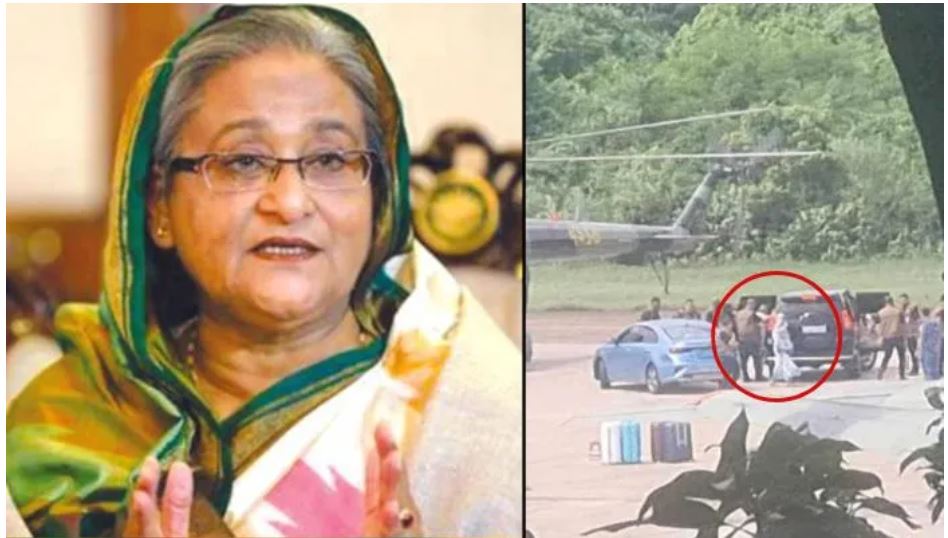
 Having served for a combined total of over 20 years, Sheikh Hasina the longest serving prime minister in the history of Bangladesh was asked to live the country within 45 minutes on Monday 5th August 2024.  Her premiership ended in self-imposed exile following a series of violent protests in 2024 following weeks of deadly protests that began as demonstrations by students against government job quotas but surged into a movement demanding her resignation. She was flown into India in a Bangladesh Military Helicopter. 


India called for an all-party meeting on Bangladesh issue. EAM S Jaishankar addressed Parliament on Bangladesh issue and said continuous contact has been maintained with the Indian community and border forces have been vigilant. IMF said it is 'fully committed' to Bangladesh after protests oust PM

Top army brass reshuffled amidst political unrest, pm resignation, and military takeover. Bangladesh former IT minister Zunaid Ahmed Palak detained while trying to flee to India and Bangladesh parliament dissolved amid warnings. Bangladesh president ordered the release of jailed ex-PM Khaleda Zia. Bangladesh President and chiefs of staff met key members of student protests. Nobel laureate Muhammad Yunus was appointed head of Bangladesh's interim government, said President's Press Secretary

Sheikh Hasina looked to Belarus, Finland, and Russia among others for political asylum. Sheikh Hasina remained at the Hindon airbase, where is expected to stay over the next couple of days as the UK rejected her political asylum.

Her Son Sajeeb Wazed said Sheikh Hasina will return to Bangladesh soon, has sought no asylum, plans to return to her country and revive her party, the Awami League. But earlier, he had said that his mother is old now and will give up politics and he too is not interested. 

On behalf of Naya Bangladesh, Bangladesh' Supreme Court Bar Association (SCBA) President AM Mahbub Uddin Khokon called on India to arrest former prime minister Sheikh Hasina and her sister Sheikh Rehana, and send them back to Bangladesh, Daily Star reported. In a statement, he said, "We want to maintain a good relationship with the people of India. Please, arrest Sheikh Hasina and Sheikh Rehana, who fled the country, and send them back to Bangladesh. Sheikh Hasina has killed many people in Bangladesh." 

What would happen, we need to wait and see. 

Some metrics from the years of her prime ministership: 

GDP in 2009 was USD 102 BILLION 

GDP in 2024 is 455 Billion

A 317% growth in 15 years. 

Per capita income  in 2024 is USD 2646

It was USD 698 in 2009

A 279% growth in per capita income 

Exports in 2009 was 17.36 Billion

Exports in 2024 are USD 50 Billion 

A 3X growth in exports 

Population in 2024 is 17.47 Crores

Population in 2009 was 14.67 Crores. 

A limited 19% growth in 15 Years. 

The economy of Bangladesh recorded an average growth rate of 6.5% in the decade to 2023, above the 4.3% average for the Asia-Pacific region.

Her fall is a great loss to Bangladesh

Bangladesh is now India’s potentially no more a friend,  Pakistan had not been ever, China has been expanding its borders,  Nepal is brooding, Maldives not close anymore, Sri Lanka is swimming out of the inner turmoil. Unfortunately, looks like India do not have even a single country in her neighbourhood as a friend, and she has been giving asylum to many .

If not managed well, this would not only effect Bangladesh, but the geopolitical situation of this subcontinent. 

So many are being killed on the borders, trying to get into India, and killed in Bangladesh. Count yet to be confirmed. 

Where is all this leading too? 

Rich can get better refuge - can move out in an aircraft, but the poor suffer. 


Wednesday, January 17, 2024

The Equator

The Equator is an imaginary line that divides the Earth into two hemispheres – the Northern Hemisphere and the Southern Hemisphere. It is also known as the latitude 0°. The Equator is about 40,075 kilometres long.

There are a total of 13 countries that pass through the equator line – Ecuador, Colombia, Brazil, Congo, Kenya, Somalia, Indonesia, Kiribati, Maldives, Malaysia, Thailand and Vietnam. Of these, Ecuador, Kenya and Somalia are the only countries that lie completely on the equator line.

Mbandaka (DRC), Kampala (Uganda), Kisumu & Nakuru (Kenya), Kismayo (Somalia), Pontianak (Indonesia), Quito (Ecuador), Macapá (Brazil), Libreville (Gabon) - all are on or very close to the equator. In South America the country Equador is split by the equator.

The rotation of the earth away and towards the sun is what causes day and night. The countries that are located on the equator experience 12 hours of daylight and 12 hours of darkness every single day of the year! For people who live in these countries, there is no real change in seasons. The weather is generally the same all year long.


The equator is located in the tropics. The tropical climate is characterised by high temperatures and high humidity. There are two seasons in the tropics: the wet season and the dry season.

The wet season is the time of year when the rains come. The dry season is the time of year when the rains go away.

The wet season lasts from May to October. The dry season lasts from November to April.

The length of the equator is 24,901.55 miles long. The distance of the equator from the north pole is 12,450.28 miles and the south pole is 12,451.27 miles.

The Tropic of Cancer lies at 23d 26' 22" (23.4394 degrees) north of the Equator and marks the most northerly latitude at which the sun can appear directly overhead at noon. This event occurs at the June solstice, when the northern hemisphere is tilted towards the sun to its maximum extent. The line at 23°27′ north latitude is named the Tropic of Cancer because earlier in history, when the line was named, the Sun lay in the constellation Cancer on June 21.

The Tropic of Capricorn can be found at latitude 23.5 degrees south. when the Sun is directly over the Tropic of Capricorn at noon, it will not be visible from the Arctic Circle.

The Arctic Circle is located at 66.5°N latitude and the Antarctic Circle is located at 66.5 °S latitude.

Sunday, December 31, 2023

Chaatpati Bengali Sweetll


 For a sweet, chaatpati halts. Wait. What's the picture there? Reminding 'Are Marriages Made In Heaven?'.

Monday, January 16, 2023

Joshimath Cracking....

Can't believe this is the place we recently visited, and the slight cracks, never bothered us. The habit of taking things for granted and not questioning. 

The Himalayas, the youngest mountain range in the world, is naturally primed for calamities. The valleys in the Garhwal Himalayas, are among the most susceptible areas in the mountain range.  A two-year study by the Indian Institute of Remote Sensing, conducted between July 2020 and March 2022, found that Joshimath and its surrounding areas have been sinking at the rate of 6.5 centimeters (2.5 inches) per year. The 2022 USDMA report also pointed to a lack of drainage and wastewater disposal systems as being part of the subsidence problem.The town is sinking gradually with huge cracks developing in houses, on roads and fields. Around 830 houses have tilted and are sinking. It is facing a major challenge due to land subsidence. The town is sinking gradually with huge cracks developing in houses, on roads and fields. 

The petitioner has contended that the incident has occurred due to large-scale industrialization and sought immediate financial assistance and compensation to the people of Uttarakhand. The plea has also sought direction to the National Disaster Management Authority to actively support the residents of Joshimath in these challenging times.

Joshimath is described in the ancient scriptures as Kartikeyapura as it has been named after Kartikeya, the God of Katyuri kings. During winters, the town becomes home of the Lord Badri, who are brought down from Badrinath to Vasudeva temple at Joshimath. Joshimath, is the gateway to famous pilgrimage sites like Badrinath and Hemkund Sahib and international skiing destination Auli, 

Few pictures from the latest Visit in Sept 22 - As I look back, I realise, how incomplete is the story, that tourists gather.


Saturday, January 14, 2023

Himalayan Tales By Ruskin Bond - 13 of 2023

The Rupa Book of Ruskin Bond's Himalayan Tales is Ruskin Bond's own collection of short stories, essays and poems, 17 in all theme of course being the hills.  Delightful reading, especially with the Haikus and poems that are interspersed with the stories. An entertaining blend of fiction and non-fiction. 


To Begin with the Poems are On Wings of Sleep followed by the Story of 'The Wind on Haunted Hills' and The Essay on 'Mother Hill'

'Who goes to the Hills, goes to his Mother', wrote Kipling, and he seldom wrote

truer words. For living in the hills was like living in the bosom of a strong, sometimes

proud, but always a comforting mother. And every time I went away, the homecoming

would be tender and precious. It became increasingly difficult for me to go away.

Then again a Poem on 

  • The Whistling Schoolboy

    From the gorge above Gangotri
      Down to Kochi by the sea,
        The whistling thrush keeps singing
          That same sweet melody.
            He was a whistling schoolboy once,
              Who heard god Krishna's flute,
                And tried to play the same sweet tune,
                  But touched a faulty note.
                    Said Krishna to the errant youth—
                      A bird you must become,
                        And you shall whistle all your days
                          Until your song is doneT


                          Followed by the story of 

                          • 'The Song of the Whistling Thrush' and the Essay 
                          • 'The Night the Roof Blew Off'.
                          • Then the story on the Cherry Tree;  
                          • From the Pool to the Glacier - is a little long one, in 5 parts; 
                          • The Last Truck Ride - of the stray mule suddenly comming on the road when Pritam Sing is driving fast, on how the tree saved him
                          • A walk through Garhwal - '"In a thousand ages of the gods I could not tell thee of the glories of Himachal". So confessed a Sanskrit poet at the dawn of Indian history and he came closer than anyone else to capturing the spell of the Himalayas.
                          Then comes the Haikus and Other Short Verses like:

                          One fine day my kite took wing,
                          Then came a strong wind—
                          I was left with the string.


                          To the temple on the mountain top
                          We climbed. Forgot to pray!
                          But got home anyway.


                          Antirrhinums line the wall,
                          Sturdy little dragons all!


                          While I was yet a boy, I dreamt of power and fame;
                          And now I'm old, I dream of being a boy again.

                          Followed by a little longer story in parts on 'A Long walk for Bina' in 10 parts, beginning and ending with verses:

                          Five more miles to go!
                          We climb through rain and snow,
                          A river to cross—
                          A mountain to pass—
                          Now we've four more miles to go!

                          and then comes the poem 'These simple Things' - Simplest things in life are the best....

                          Then back to a mix of Non fiction and fiction on "Mussoorie's Landour Bazaar', The Old Lama, Visitors from the forest, A Bouquet of Love'.

                          Friday, December 23, 2022

                          Becoming A Mountain - Stephen Alter


                          Stephen Alter is an author of non-fiction and fiction, who was born and raised in India, where he grew up as the son of American missionaries. He lives in Littleton, Colorado and in Landour, India. Landour, a small cantonment town contiguous with Mussoorie, is about 35 km from the city of Dehradun in the northern state of Uttarakhand in India. The twin towns of Mussoorie and Landour, together, are a well-known British Raj-era hill station in northern India.

                          Mussoorie is one of the most beautiful hill stations in India, the place is endowed with the most scenic landscapes you will find anywhere in India and it is no surprise that it has earned the sobriquet, the Queen of Hills. The name Mussoorie is often attributed to a derivation of mansūr, a shrub which is indigenous to the area. The town is often referred to as Mansuri by Indians. In 1803 the Gorkhas under Umer Singh Thapa conquered the Garhwal and the Dehra, whereby Mussoorie was established.

                          Following an unexpected attack, which remains an unresolved mystery, and his fathers death, Stephen Alter undertook expedition to three major mountains, those, are the major chapter's in the book, though others too are covered in due course. 

                          Beginning with a Note on the Himalayas, the book covers as main topic, which are further subdivided:
                          • Flag Hill - (Distant Prayers)
                          • Nanda Devi (Chasing Bliss) - walking is writing with the feet - 'library inside, study out of the door' - Poet Wordsworth,  inspirations from walking outdoors'.  Tigers Nest, Bhutan. 
                          • Kailash (A Pilgrim's crossing)- Entering the Mandala, Frontiers of Faith, Trans-Himalaya, Brahma's dream, Upon the Treashold, Circling the summit, Cave of mysteries
                          • Bandarpunch (Returning Home) - To the North of Mussoorie, it appears the largest and easiest to identify. Hanuman got Sanjeevani booti from here. Hidden behind Bandarpunch is a third peak that is bearly visible, except from certain angles. Known as the 'Black peak' or 'Kaala Naag'(Black Cobra), it is the highest summit of the three. Together the monkeys tail and cobra's hood evoke a mysterious. allegorical landscapes, promising answer to eternal riddles. East of Bandarpunch the mountain concede a valley where the Bhagirathi tributary of the Ganga cuts a passage through the main thrust of the Himalaya. Further on, the Gangotri group and Kedarnath bulge up in a monumental heap of snow-capped ridges. But the peak that catches eye is Nanda Devi. 

                          These mountains represents three different aspects of the Himalayas. Bandarpunch offers healing and solace, while Nanda Devi promises ananda or happineess that releases us from anger, fear and doubt and Mount Kailash, beyond line of sight, marks an elusive threshold of transcendence. Each is linked to the other by a mysterious triangulation of the foul, an inner cartography that maps the routes to be followed. Trinity of sacred peaks signifying stages of search for reconciliation and recovery. They pull like the same primal impuse that carries a migratory bird across the Himalayas. A ride on the wings of a Himalayan griffon across the mountains, soaring from Bandarpunch to Nanda Devi, then follow a straight line towards Tibet, the trajectory of flight would take one directly to Kailash, no more than 300 kms away. 

                          When we travel, as Edmund Hillary reminds us, 'It's not the mountain we conquer but ourselves.'

                          Gretel Ehrlich from Wyoming in 'Questions of Heaven' summarises her experience after viewing paintings in New York and reading Himalayas to be 'the most beautiful mountain in the world' discovered a different view from her first destination being Mount Emei. Wholesale corruption of natural beauty beginning with the  'Stalinesque' architecture of the buildings in the town below, marauding monkeys, shrines to gods of greed, and rat-infested hotels. Summit flattened into a concrete arcade of tea stalls and gaudy souvenir shops with loudspeakers blaring Chinese pop music. Most of her stories are about disillusionment and the impositions of a modern industrial society on the once pristine face of Emei Shan. 'Everything we ae continually invites us to become one with nature'. Dust thou art to dust return, was not spoken of the soul. 

                          Mom & Me: Whether it be the ziggurats of Mesopotamia or the tiered pyramids of the Aztecs, Hindu temples, Christian and Muslim domes or Buddhist chortens, the architecture of faith attempts to replicate a mountain so that devotee enter its depth and worship at its core. 

                          Bhagavad Gita explains, 'When the sage climbs the heights of Yoga, he follows the path of work; but when he reaches the heights of Yoga, he is in the land of peace.' The Katha Upanishad echoes these thoughts with the exhortation: ' Awake, arise! Strive for the Highest, and be in the Light! Sages say the path is narrow and difficult to tread, narrow as the edge of a razor.' - This reminded be of Swami Vivekanada's quote - 'Awake, Arise and stop not till the goal is achieved. '

                          Nanda Devi is often translated as the 'bliss-giving goddess', though the Sanskrit word 'ananda' at the root of her name is better understood as 'contentment'. 'Darshan' releases from discontentment rather than evoking euphoria. Darshan does not require the intercession of a priest, so it is appealing. The act is unencumbered by liturgies, pious rhetoric or moralizing. Can appreciate the spiritual experience others claim through Darshan without accepting the theology and dogma. At Nanda Devi - mountain and goddess are inseparable. Topology and myth converge in a mysterious, multi-layered landscape of narratives where nature takes on may different forms, such as rock and ice, lichens and moss, air and sunlight, just as the gods assume their various permutations - Shiva, Bhairava, Rudra and Mahasu - consorting with feminine aspects of Uma, Maya, Parvati or Nanda all of them being one and the same. 

                          Similarly I have often wondered - first Shiva and then Shankaracharya - at various places - are they one and the same or different? 

                          Search for Nanda Devi (ND) begins at the Kauri pass, where the Curzon Trail crosses over into the Dhauliganga Valley above Joshimath. She is hidden behind the Pangarchula Ridge. Lata is the last village before the ND Sanctuary.  The route is referred to as the Curzon Trail as it was prepared for the viceroy of India in 1900, though he never made his intended visit. 

                          Enroute there is Roopkund with its mysterious legend and lore, and pilgrims who came to this place sacrificed themselves to the goddess by leaping from the cliffs of Junarali, above the lake; and those wanting to continue, brace themselves to a slippery, instable descent to Bhugubasa.  Even in Kedarnath, people do that from Bhairav Jhamp.

                          Formation of the Himalayas is one of the greatest creation myths ever told. Gaia's dance displacing oceans, a process that continues even today, mountain eternally reaching up to meet the sky. 

                          While flying over the Himalayas one is overawed by the vast expanse of snow-caked ridges and summits extending form one Horizon to the next stretching beyond the limits of history and human imagination. It seem as infinite as an ocean, frozen at the climax of a storm. Tsunami of ice and rock rearing up. 

                          His Majesty the King of Bhutan has decreed the Gross National Happiness is the primary objective of his Himalayan state. With an attempt to turn itself into a modern Shangri - La, a mountainous Eden that excludes all forms of discontentment and banishes sorrow. But authority dictates its own cheerful benevolence. Happiness isn't truth - too absolute a noun. Nor is it faith, which is a charade of human psyche. Peace might serve as a suitable synonym, though it leads in far too many directions. Happiness is a transient motion that can arise out of discipline and meditation to some. Surprising at the times when we least expect. View of mountains reduce human travails to insignificant proportions. Terrible things happen in beautiful places just as beautiful things happen in terrible places. Yet we are alive and grateful to be here. Destination here is Taktsang.  

                          'Walking' Henry David Thoreau's essay - is as much a sermon as an essay, exhorting us to get outdoors and discover our place in nature. 

                          Before the trip to Kailash, a picture of Shambala was procured from Kathmandu. Inside it like the petals of a lotus, were various scenes of human figures and buildings. It seemed an enchanted garden, the promised land, a country of eternal happiness.  During the time of Shambala all languages would be understood, and one could see with the third eye. 

                          'Yatra' means both pilgrimage and journey - when a 'Yatri' boards an airplane, bus or train in pursuit of business, pleasure or salvation, it fulfils that person's dharma and leads them on a quest, both secular and spiritual. 

                          Kailash itself is stark black granite, but the stones in the valley are variegated hues of every shade and texture extending deep into the earth? What lies above the surface appears to be huge and magnificent, but even more compelling must be the molten currents beneath the earth's crust, where the mountain foats upon a raft of magma. The geological forces that thrust Kailash into the sky hundreds of millennia ago also formed its subterranean structure, the buried weight of rock that provides its hidden foundation.  The colours in the landscape, the myriad shapes of rocks around, trail of footprints in the dust is like a giant sand mandala, with the sacred mountain at its axis. Created through aeons of erosion, it could easily be a natural diagram of the cosmos. Compared to Kailash, each of the boulders is a granule, and the mineral pigments create mysterious patterns, like a maze that leads beyond perception. The valleys and mountains around Kailash are believed to be full of terma,  buried texts and treasure that will be found when the time is right. Intended to be discovered at auspicious moments by protectors of the Dharma, tertons and oracles who reveal the truth contained in terma, thereby renewing and reaffirming the faith. Padmasambhava is said to have rescued Buddhism from occult and profane influences, including the so-called sorcery and shamanism of Bon tradition. Bon pilgrims shout  'Tashi Delek!', while Hindu Pilgrim chant 'Om Namah Shivaya!', and some with the prayer wheel. Most of the Tibetan pilgrim carry prayer beads, which slip silently between their fingers. 

                          There is the great Kailash temple in Ellora. The landscape in this treeless valley has a hypnotic quality. Rocks and boulders take on weird and magical shapes like an optical illusion. You experience trance walking here. Though ancient writers about being lost here, it seems impossible now, could be because of the crowd, and dozens of trails that separate and re-converge along the eastern bank of the Lha Chu River laid out over centuries by the wandering footsteps of pilgrims, each taking their own circuit around Kailash. 

                          As we walk towards the base camp, the tea shops- just a couple of them are large tents, outer fabric a sturdy green canvas, inner fly made of printed cotton, a floral pattern of blues and pinks. In the centr of the tent stands a cast-iron stove, where two cauldrons of tea are brewing slowly over smouldering yak dung. These tea shops are set up during the pilgrimage season, from end of May to October and is dismantled during winter when the Kora route is closed. 

                          Some Pilgrims circle Kailash in a single day, walking a total of 56 kilometres. Some prostrate themselves at every step, lying flat on their stomachs and progress by lengths of their body. Then there are men with wooden blocks in each hand and pads on knees but instead of flattening himself completely , they move forward in a tight squat, like a frog.  There are trail of garbage accumulated over many years. There seems to be an equation between faith and filth. Religion is nothing more than the detritus and debris of spirituality discarded on the refuse heaps of credulity. 

                          Each of the summits here has a name - Chenresi Ri, the peak of Avalokitshvara or Jampelyang Ri, the pinnacle of Manjushree. Though trial at feet is littered with trash summits rise up in pristine grandeur, inaccessible to man. There is a small pond called 'Mirror of Yama.' People discard cloths, and carry dozens of pebbles from the pass, tiny fragments of the mountain, each representing miniature version of Kailash. Norther face gives a feel of awe and reverence. Dolma La is a dramatic landscape but it does not move one. Just below Doma La is another pond, not more than 9 metres across. Hindus call this Gauri Kund and Buddhists refer to it as the Lake of Compassion. For most of the year it is frozen, except in summer when it is chalky green in colour. Some believe that it was here Ganesha's head was transplanted to that of Elephants.  From the crest of the pass, the trail cuts down a steep slope, traversing a field of rocks and boulders. Farther on, the Lham Chu Valley open up and leads one back towards Manasarovar, descending on foot. The path is too step for horses to carry riders to valley floor. East side of Kailash, unlike the other three sides, there are no telltale bands of rock and snow. Instead, this side of the peak is a pure white cone wedged between clefts in the ridges. Enroute there is Zutrul Phuk, a monastery and settlement where the poet-saint Milarepa took shelter in a cave and meditated for many years. A few photographs of aged monks are on display but no pictures of the Dalai Lama, whose image is forbidden in Tibet. This side has some vegitations and plants. There is a vulture flying above - which is believed to be Garuda, vehicle of Vishnu. Finally back to the small settlement called Tangsar. 

                          Healing light, Jwala booti, magical herb. Despite our doubts and disbelief, the spiritual radiance of a mountain flows off its glaciers and shines like a beacon of eternity. in the course of acnt and retreat to Bandarpunch, one can see various summits like that of Srikantha and a dozen other mountains above. This mountain can be viewed on the way to Yamunotri. The name of Bandarpunch properly applies only to the highest peaks of this mountain, all the subordinate peads and ridges have their own peculiar names. Jamnotri has reference only to the sacred spot. According to native account there are four peaks, only two to be seen from south-west. The travel path is driving from Mussoorie to Uttarkashi, then further up the Ganga, to Dodital passing Gangori, there is the Darwa pass. Mountains rise above the Ganga. They wait at Sukhi to begin the journey. Base camp is Phurbu. 

                          Mountaineering is different from trekking. Acclimatization is important. Tom Longstaff, one of the Himalayan pioneers, wrote in his memoir, This My Voyage, 'To know a mountain, you must sleep upon it.'

                          Bharatha Dharsanam - Dr. A.M.C.Menon

                           This covers places like Thriveni where one is taken in a boat to the place where Gana joins Yamuna and underneath the surging and gurgling Saraswathy.  Ayodhya - dip in the Sarayu river, Kasi, Gaya, Varanasi, Indraprastham - Centre of Mahabharatha and now the capital of India, Akshardham opened on 8th Nov 2005 on the banks of Yamuna in 100 acres of land owned by BAPS foundatin - the builder of various swami Narayan temple across the world exactly after 5 years of Shilanyas with world class facility including the story of Swaminarayan travelling 8000 miles in 7 years on bare foot covering the whole India, Haridwar, Rishikesh, Kedarnath, Badrinath & Neelakantha Parvath.

                          Ages ago our 'Muni Shreshtas' have defined Bharatham in three planes; the southern part as 'Karm Bumi', Uthar Pradesh as 'Punnia Bhumi' because of the sacred birth of Rama and Kishna and the vast mountainous region north from Haridwar as 'Deva Bhumi'.

                          Bhudh Gaya has various monastery from across our neighbouring countries - Japan, Thailand, Butan, Tibet. All four depicting the image of their country. Emperor Asoka raised the original shrine here in early 3rd century.

                          Gaya was named after Gayasura, the son of Tripurasura who dominated this place once and it was believed who ever touched him attained the entrance to heaven surpassing the power of Yamaraj.  

                          Bhadrinath - The Nar Parbat mountain is located opposite to the temple, while the Narayana Parbat is located behind the Neelkanth peak.

                          In Hindu mythology, there was initially no mountain on the spot where Nilkantha stands today. There was a route between Kedarnath and Badrinath. The "Purahita" or the worshiper of the two temples worshiped them in one day. This continued for a long time until due to some sins of the worshiper, Shiva became displeased with him and stood blocking the way as a huge sky-kissing mountain, which is said to be modern Nilkantha.

                          The Distance between Kedarnath to Badrinath by road is 218KM. The aerial distance from Kedarnath to Badrinath is 41KM.

                          Situated in the Chamoli district of Uttarakhand, Nilkanth or Neelkanth peak stands at a towering altitude of 6,596 meters over the Alaknanda valley and the town of Badrinath. Legendary mountaineer Frank Smythe described the peak as “second only to Siniolchu in Himalayan beauty.” The Satopanth Glacier lies on the northwest side of Nilkanth.

                          Siniolchu is one of the tallest mountains of the Indian state of Sikkim. The 6,888 metres (22,598 ft) mountain is considered to be particularly aesthetically attractive,It is situated near the green lake adjacent to Kangchenjunga.

                          This is located behind Badrinath temple.  From Mana, you go to Hanuman Chati, Lakshmi Van to reach Nilkanth peak base camp. On the trekking route first comes Charan Paduka at a distance of 3kms- the foot steps of Lord Vishnu, from were you can view the Rishi Ganga fall. From there the terrain gets tougher, but in another 9 kms, you reach Nilkanth base camp, from where you can view Nanda Devi Peak.