Showing posts with label Reads - Mythology. Show all posts

Tuesday, January 27, 2026

Bala Bhagavatam 9 of 26


Though was the first to start in 26, was the 8th to finish, though mentioned as 9th as The re-reading of the Success Principle is still in progress

 Bala Bhagavatam is taught in Grade 3 of Chinmaya Mission’s Bala Vihar curriculum. Its purpose is to introduce children to the wisdom of the Bhagavatam, especially the stories of Vishnu’s avatars.


The book uses the stories of Lord Vishnu’s major avataras to teach children the difference between needs and wants, and how to make responsible choices. 

Children learn to own up to their actions and understand how to measure real happiness using dharmic principles. 

Through inspiring storytelling, kids are guided toward value‑based thinking, introspection, discipline, selflessness, and appreciation of nature and culture. 


Bala Bhagavatam offers child‑friendly stories from the Bhagavatam—especially the Dasavataram—that teach responsibility, value‑based living, emotional maturity, and making wise choices guided by dharma.

Sunday, August 17, 2025

Ramayana 41 of 2025


aapadaam apahartaaram daataaram sarvasaMpadaam.h |
lokaabhiraamam shriiraamam bhuuyo bhuuyo namaamyaham.h ||

"I bow again and again to Sri Rama Who removes (all) obstacles, grants all wealth and pleases all."

This is a salutation offered at the start of reading any scripture as per tradition. This prayer is for removing all obstacles encountered. The prefix Sri to Rama indicates that Rama is always accompanied by Sri, His consort Seetha in the form of goddess Sri Maha Lakshmi.

An auspicious day marking the end of Karkidakam and celebrating Janmastami. Time to contemplate,  Reread Ramayana.  The despair and grief Rama experienced Krishna never knew. Krishna cared not, nor grieved. He lead the warrior to destroy the wicked.

Their life and stories in their books are guides, guidelines and guidance to those willing to abide. One of the many is that between Sugreev's desire and Vaali's anger. Both lured them to sin. Desire and anger. KAAMOKAARSHEET MANYURAKAARSHEET.

Siblings  turns out to be Rajasic Ravan, Tamasic Kumbakaran and Satvic Vibeshan, born in the same family,  around same time and place. Can we generalise a community or group? Aren't each different?

#Ramayana #Mahabharata #Rama #Krishna #Valee #Sugreev #Rajagopalachari 


Sunday, July 06, 2025

A Grain of Sand ~ Narendra Murty 30 of 25


A Grain of Sand : Decoding Images, Rituals and Myt by Narendra Murty is again borrowed courtesy @CochinBookClub and @Harish. It is the tendency of human mind to remain enamoured by the symbols instead of breaking free from them. 


This has been beautifully expressed by Sankara in this manner:


O Lord! Pardon my three sins. I have in contemplation clothed Thee in form. Thee that art formless; I have in praise described Thee; who are ineffable; and in visiting temples, I have often ignored Thy Omnipresence. 


Santana Dharma, though it uses symbols profusely - in its images, in its Rituals and mythology - also urges us to go beyond them so that we obtain that heavenly Amrita to the Divine experience. 


When we try to show a lost/invisible object to a seeker, we guide them through the known path/route. So are the objects used to explain a child in his journey. To cling to it even after ages is mere folly.


This book reminded me of one Achan had got years before titled 'Hindukal Areyendathu'. 


Thanks, Gratitude and Salutation to Sri Aurobindi,  Narendra Murthy, Cochin Book Club and Harish.


Here’s a quick chapter‑wise breakdown of A Grain of Sand based on its structure and known themes (plus the six‑section hint from the publisher):

Section A: Invitation to Symbolism

Chapter 1 introduces the language of sacred symbols—why the veil needs decoding and how image, ritual, and myth form one cohesive symbolic tapestry  .

Section B: Images & Iconography

Chapters 2–3 explore key deity figures:

Nataraja: circle of flames, cosmic dance, Shiva as universal rhythm.

Kali: garland of heads, symbolism of destruction-renewal, her posture and attributes  

Section C: Ritual Practices

Chapters 4–5 decode typical rituals:

Pradakshina (circumambulation): the spiritual geometry of walking around the divine.

Aarti, Visarjan, Yajna: how fire, offering, and immersion carry deeper metaphysical intentions  .

Section D: Mythology as Internal Map

Chapters 6–7 reframe classic myths:

Samudra Manthan, Devas and Asuras, Pandava/Kaurava dilemmas: not just stories, but mirrors to inner transformation and cosmic balance  .

Section E: Upanishadic & Vedic Foundations

Chapters 8–9 connect rituals and images to Om, Agni, Surya, and teachings from the Upanishads and Rig Veda—showing how ancient Sanskritic thought underpins visible forms  .

Section F: Metaphysical Integration

Chapters 10–11 weave it all together:

How symbols across image, ritual, myth and scripture form an integrated path of self-realization.

Reading reality as divine narrative, and reclaiming spiritual depth in everyday worship  

It’s a progressive journey—from seeing (images) to doing (rituals), to knowing (myths & scriptures), to ultimately being (symbolic integration). Each chapter layers new meaning as you move through the sections.

Friday, October 18, 2024

The Pregnant King ~ Devdutt Pattanaik (110 of 2024)


Set in the backdrop of the Mahabharata and makes references to characters and incidents in the Kurukshetra as well as the Ramayana The Pregnant King is a 2008 book by Devdutt Pattanaik.

"'I am not sure that I am a man,' said Yuvanashva. 'I have created life outside me as men do. But I have also created life inside me, as women do. What does that make me? Will a body such as mine fetter or free me?' Among the many hundreds of characters who inhabit the Mahabharata, perhaps the world's greatest epic and certainly one of the oldest, is Yuvanashva, a childless king, who accidentally drinks a magic potion meant to make his queens pregnant and gives birth to a son. This extraordinary novel is his story. It is also the story of his mother Shilavati, who cannot be king because she is a woman; of young Somvat, who surrenders his genitals to become a wife; of Shikhandi, a daughter brought up as a son, who fathers a child with a borrowed penis; of Arjuna, the great warrior with many wives, who is forced to masquerade as a woman after being castrated by a nymph; of Ileshwara, a god on full-moon days and a goddess on new-moon nights; and of Adi-natha, the teacher of teachers, worshipped as a hermit by some and as an enchantress by others. Building on Hinduism's rich and complex mythology-but driven by a very contemporary sensibility-Devdutt Pattanaik creates a lush and fecund work of fiction in which the lines are continually blurred between men and women, sons and daughters, husbands and wives, fathers and mothers. Confronted with such fluidity the reader is drawn into Yuvanashva's struggle to be fair to all-those here, those there and all those in between."

Book is in Eight parts. The main characters in the book are:


Vallabhi was a small but prosperous kingdom that stood between Hastina-puri and Panchala on the banks of the Kalindi, a tributary of the Yamuna. It encircled the temple of Ileshwara who blessed Drupada, established long ago by Ila. 

King Yuvanashva is the well liked ruler of Vallabhi: an obedient son, a devoted husband who aspires to be just towards all and uphold Dharma in his kingdom. The epic battle of Kurukshetra is imminent but the king's mother, Shilavati, refuses to consent to war until Yuvanashva sires an heir. Despite all efforts, no child is born, and the king seeks the help of the two Siddhis, Yaja and Upayaja. Yuvanahva seemingly unintentionally drinks the potion they craft for his wives and ends up pregnant himself. The incident is hidden from all but his wife, Shilavati and Asanga, the healer. After the child, Mandhata, is born, he successfully impregnates his second wife, Pulomi. Yuvanashva, who has lived his whole life by the code of Dharma, begins to question his gender identity and longs to be called "mother" by his son.

Woven throughout are the stories of other characters who subvert expectations for gender and sexuality. Shilavati was widowed at a young age and became regent but, as a woman, was not permitted to keep the throne. Somvat and Sumedha, two childhood friends, decide to get married despite being men. Sthunakarna, a yaksha, temporarily gives up his manhood for the prince Shikhandi. Arjuna, the great warrior with many wives, is castrated and forced to masquerade as a eunuch. Adi-natha, the teacher of teachers, is worshipped as a hermit by Yaja and an enchantress by Upayaja. Ileshwar Mahadev becomes a God on full moon days and a Goddess on new moon nights.

Sunday, October 06, 2024

Durga & Kali


 Drama, Dysfunction,  Assorted Crises and just plain bad energy generated by difficult own people can drive a sane woman off balance. At times people get into your face and space and do not let you be grounded.


You will need to create boundaries,  physical,  psychological and spiritual. Durga has the very special power of being 'unreachable'. With her keep your negative people,  vibes and happenings out of your personal space. Be in charge.


Slay the evil, at the same time be the nurturer,  comforter and protectress.


Remember,  if you have your Durga and Saraswati right, Lakshmi will follow. Durga is a choice, Kali is a trigger. 


If you do not activate courage and set things right, you become Kali to slain the demons. Domesticated version of Kali is Gauri. Kali comes because you were not protected or provided. 


From guilt, comes anger, from anger destruction.  Kali comes when there is end to communication. It is impossible to talk with tongue out. 


Kali is not revenge full, she is all about passion. Too long we have been holding on to range. Remove them. Let's move from range to courage, refocus on our passion. With emotionally unstable people,  let us be sympathetic and stop taking things personally.

Wednesday, September 18, 2024

The Ascent To Heaven (102 of 2024)


This Pornami is special because this marks the period when the Pandavas with Draupadi cast off their royal heritage and set forth as hermits followed by a hound. They all walked towards the rising sun, and by the long towards Mount Meru, through forests, over streams and across the burning plains, never again to return.


Signifying life, the changing phases and it's impermanence. A short life, so much to love and cherish. So little time to ❤️ love, so many and so much to love. Death, the only certainty of this life, we do not even know when and how. Let's make life a joyful celebration of it's beauty and abundance. Yes, here we have enough for everyone's need but not for everyone's greed, anger and hatred. The underlying cause being grief, we can overcome.


Years went past, and a day came when Yudhishthira and his brethren and their wife Draupadi journeyed to the dwelling-place of their elders. They found them all there save Vidura, who had departed to a sacred place on the banks of the Ganges to undergo penance and wait for the coming of Yama, god of the dead. Then all the kinsfolk, young and old, went forth to find Vidura; but when they came to him he was wasted with hunger and great age, nor could he speak unto them. They waited beside him until he died, and then they mourned together. This new sorrow awakened old-time grief, and they spoke of all those who had fallen in the great war. Fathers and mothers lamented for their sons, and wives for their husbands.


While they wept and moaned together, the great sage Vyasa came near and spoke, saying: “I will soothe all your sorrows. Let each one bathe at sunset in the holy waters of the Ganges, and when night falls your lost ones will return to you once again.”


Then they all sat waiting on the river bank until evening came on. Slowly passed the day; it seemed to be as long as a year.


At length the sun went down, and they chanted mantras and went into the Ganges. Vyasa bathed beside the old Maharajah Dhritarashtra and Yudhishthira. Then all came out and stood on the bank.


Suddenly the waters began to heave and foam, and Vyasa muttered holy words and called out the names of the dead one by one. Soon all the heroes who had been slain arose one by one. In chariots they came, and on horseback and riding upon lordly elephants. They all uttered triumphant cries; drums were sounded and trumpets were blown; and it seemed as if the armies of the Pandavas and Kauravas were once again assembled for battle, for they swept over the river like a mighty tempest.


Many of the onlookers trembled with fear, until they beheld Bhishma and Drona, clad in armour, standing aloft in their chariots in splendour and in pride. Then came Arjuna's son, the noble Abhimanyu, and Bhima's Asura son. Soon Gandhari beheld Duryodhana and all his brethren, while Pritha looked with glad eyes upon Karna, and Draupadi welcomed her brother Dhrishta-dyumna and her five children who had all been slain by vengeful Aswatthaman. All the warriors who had fallen in battle returned again on that night of wonder.


With the host came minstrels who sang of the deeds of the heroes, and beautiful girls who danced before them. All strife had ended between kinsmen and old-time rivals. In death there was peace and sweet companionship.


The ghostly warriors crossed the Ganges and were welcomed by those who waited on the bank around Vyasa. It was a night of supreme and heart-stirring gladness. Fathers and mothers found their sons, widows clung to their husbands, sisters embraced their brothers, and all wept tears of joy. The elders who were living conversed with those who were dead. The burdens of grief and despair fell from all hearts after lone years of mourning and the past was suddenly forgotten in the rapture of beholding those who had died.


Swiftly passed the night as if it had endured but for an hour. Then when dawn began to break, the dead men returned to their chariots and their horses and their elephants and bade farewells.


Vyasa spoke to the widows and said that those of them who desired to be with their husbands could depart with them. Then the Kaurava princesses and other high-born ladies, who never ceased to mourn for their own, kissed the feet of the Maharajah Dhritarashtra and Queen Gandhari and plunged into the Ganges with the departing hosts. Vyasa chanted mantras, and all the drowned widows were transported to heaven with their husbands.


The Pandavas returned to Hastinapur, and when two years had gone past a new sorrow fell upon them. One day Narada, the sage, stood before Yudhishthira and told that a great fire had swept through the jungle, and that Dhritarashtra, and Gandhari, and Pritha, and all who were with them, had perished.


Soon afterwards the Pandavas came to know, by reason of dread omens which appeared, that a great calamity was drawing near, but no man could tell what it was or when it would take place.


Before long it became known that the city of Dwaraka was doomed to be destroyed. A horror in human shape was beheld in the night. It was coloured yellow and black, its head was bald and its limbs misshapen, and men said it was Yama, god of the dead. Visions of headless men contending in battle were beheld at sunset. The moon was eclipsed, a dread tempest ravaged the land, and a plague of rats afflicted the city.


Krishna forbade all the people, on pain of death, to drink wine, and commanded them to perform devotions on the seashore.


Then the night was haunted by a black woman with yellow teeth who grinned horribly at house doors. All the inhabitants of the city were stricken with terror. Evil spirits came also and robbed the jewels of the women and the weapons of the men. At length the chakra of Krishna went up to heaven, and his chariot and horses followed it. The end of the Yádavas was not afar off, and the day came when Apsaras called out of heaven: “Depart from hence,” and all the people heard them.


When the people gathered on the seashore they held a feast, and being allowed to drink wine for one day, they drank heavily and began to quarrel. At length Satyaki slew Kritavarman, who had gone to the Pandava camp with Drona's son on the night of slaughter. Then Kritavarman's friends killed Satyaki and one of Krishna's sons. Krishna slew the rebels, but he could not quell the tumult and in the fighting which ensued fathers slew their sons, and sons their fathers, and kinsmen contended fiercely against kinsmen.


Then Krishna and Balarama left the city, and both died in the jungle. From Balarama's mouth issued a mighty snake, for he was the incarnation of the world serpent. Krishna was mistaken for a gazelle by a hunter, who shot an arrow which pierced his foot at the only spot where he could be mortally wounded. He then departed to his heaven, which is called Goloka.


Before Krishna had left Dwaraka he caused messengers to hasten for Arjuna, who came speedily, to find the women wailing for the dead. Then Vasudeva, father of Krishna, died, and Arjuna laid the body of the old man upon the pyre, and he was burned with four of his widows, who no longer desired to live. The bodies of Krishna and Balarama were cremated also.


Arjuna then set forth towards Indra-prastha with a remnant of the people and when they had left Dwaraka, the sea rose up and swallowed the whole city, with those who had refused to depart from it. Such was the end of the power of the Yadavas.


Deep gloom fell upon the Pandavas after this, and Vyasa, the sage, appeared before them, and revealed that their time had come to depart from the world.


Then Yudhishthira divided the kingdom. He made Parikshit, son of Abhimanyu, Rajah of Hastinapur and Yuyutsu, the half-brother of Duryodhana, who had joined the Pandava army on the first day of the great war, was made Rajah of Hastinapur. He counselled them to live at peace one with another.


The Pandavas afterwards cast off their royal garments and their jewels and put on the garb of hermits, and the bright-eyed and faithful Draupadi did likewise. Yudhishthira departed first of all, and his brethren walked behind him one by one, and Draupadi went last of all, followed by a hound. They all walked towards the rising sun, and by the long circuitous path which leads to Mount Meru, through forests and over streams and across the burning plains, never again to return.


One by one they fell by the way, all save Yudhishthira. Draupadi was the first to sink down, and Bhima cried: “Why has she fallen who has never done wrong?”


Said Yudhishthira: “Her heart was bound up in Arjuna, and she has her reward.”


Sahadeva was next to fall, and then Nakula. At length Yudhishthira heard the voice of Bhima crying in distress: “Lo! Now the noble Arjuna has fallen. What sin has he committed?”


Said Yudhishthira: “He boasted confidently that he could destroy all his enemies in one day, and because he failed in his vow he has fallen by the way.”


The two surviving brothers walked on in silence but the time came when mighty Bhima sank down. He cried: “O Yudhishthira say, if you can tell, why I have fallen now.”


Said Yudhishthira: “O wolf-bellied one, because of your cursing and gluttony and your pride you have fallen by the way.”


Yudhishthira walked on, calm and unmoved, followed by his faithful hound. When he drew near to sacred Mount Meru, the world-spine, Indra, king of the gods, came forth to welcome him, saying: “Ascend, O resolute prince.”


Said Yudhishthira: “Let my brethren who have fallen by the way come with me also. I cannot enter heaven without them, O king of the gods. Let the fair and gentle princess come too. Draupadi has been a faithful wife, and is worthy of bliss. Hear my prayer, O Indra, and have mercy.”


Said Indra: “Your brethren and Draupadi have gone before you.”


Then Yudhishthira pleaded that his faithful hound should enter heaven also; but Indra said: “Heaven is no place for those who are followed by hounds. Do you not know that demons rob religious ordinances of their virtues when dogs are near?”


Said Yudhishthira: “No evil can come from the noble. I cannot have joy if I desert this faithful friend.”


Indra said: “You did leave behind your brethren and Draupadi. Why, therefore, can you not abandon your hound?”


Said Yudhishthira: “I have no power to bring back to life those who have fallen by the way: there can be no abandonment of the dead.”


As he spoke, the hound was transformed, and behold Dharma, god of justice, stood by the rajah's side.


Dharma said: “O Yudhishthira, you are indeed mine own son. You would not abandon me, your hound, because that I was faithful unto you. Your equal cannot be found in heaven.”


Then Yudhishthira was transported to the city of eternal bliss, and there he beheld Duryodhana seated upon a throne. All the Kauravas were in heaven also, but the rajah could not find his brethren or fair Draupadi.


Said Indra: “Here you shall dwell, O Yudhishthira, in eternal bliss. Forget all earthly ties and attain to perfection; your brethren have fallen short, therefore they sank by the way.”


Yudhishthira said: “I cannot remain here with the Kauravas who have done me great wrong. Where my brethren are, there would I be also with our wife Draupadi.”


Then a celestial being conducted Yudhishthira to the abode of his brethren and the Princess of Panchala. He entered the forest of the nether regions, where the leaves were like to sharp weapons and the path was covered with knives. Darkness hung heavily, and the way was miry with blood and strewn with foul and mutilated corpses. Shapes of horror flitted round about like to shadows, fierce birds of prey feasted upon human flesh. The damned were burning in everlasting fires, and the air reeked with foul odours. A boiling river went past, and Yudhishthira saw the place of torture with thorns, and the desert of fiery sand. He gazed mutely upon each horror that was unfolded before his eyes.


Gladly would Yudhishthira have turned back, but he heard in the darkness the voices of his brethren and Draupadi bidding him to stay a little while to comfort them while they suffered torment.


Then Yudhishthira said to the celestial being: “Depart now from me, for I must remain here to assuage the sufferings of my brethren and Draupadi.”


As he spoke the gods appeared, and the scene of horror vanished from before the eyes of Yudhishthira, for it was an illusion conjured up to test his constancy.


Then Yudhishthira was led to the heavenly Ganges, and having bathed in its sacred waters, he cast off his mortal body and became a celestial. Then, rejoicing, he entered Swarga, the celestial city of Indra, and was welcomed by Krishna in all his divine glory, and by his brethren and by Draupadi, and all whom he had loved upon earth.


Indra spoke and said: “This is the beautiful and immortal one, who sprang from the altar to be your wife, and these bright beings are her five children. Here is Dhritarashtra, who is now the king of the Gandharvas; there is Karna, son of Surya, the peerless archer who was slain by Arjuna. Here comes towards you Abhimanyu, son of Arjuna; he is now the star-bright companion of the lord of night. Here are Pandu, your sire, and Pritha, your mother, now united in heaven. Behold! also, Yudhishthira, the wise Bhishma, whose place is with the Vasus round my throne: Drona sits with Dharma, god of wisdom. Here are all the peerless warriors who fell in battle and have won heaven by their valour and their constancy. So may all mortals rise to eternal bliss, casting off their mortal bodies and entering by the shining door of the celestial city, by doing kindly deeds, by uttering gentle words, and by enduring all suffering with patience. The holy life is prepared for all the sons of men.”


Thus ends sublimely the story of the Great War of the Bharatas.


This story was first written by Donald Alexander Mackenzie. 

Wednesday, September 04, 2024

The Goddess Pages ~ Laurie Sue Brockway (95 of 2024)


 Laurie Sue Brockway from New York is an interfaith minister, who had researched on various Goddesses and have covered 36 in this book,  in six parts. 

Not all of them are covered here - like the Goddess of Justice : Themis and many more. 

It's only natural that the Goddess should have special significance for women, who long to know, too, that they are made in divine image. 

God is one source, but a source that manifests in many ways, through many paths, religions and spiritual practices, represented by a wider range of deities with different names. 

She was first influenced by Lakshmi, and realised that,  we can connect to any goddess we feel called to, anywhere, anytime, as long as our hearts are pure and our intentions are sincere. 

One of the many challenges we women face is low self-esteem, it seems to be the root of many problems - dating wrong men, underpaid, people taking advantage, not saying 'no' enough, not chasing dreams,  feeling unworthy or uncapable of. 

Connecting with many Goddesses of the world, will help us connect with our Goddess within. Goddess worship appears to be there from 40,000 years before, one of the most famous earliest artifacts is that of Venus of Willendorf. She is depicted as a rotund and curvy female. Her pendulous breasts represent the hills and mountains, her big belly is the rich and fecund earth. 

The Great Goddess Mother was the planet. Many of the world's culture continued to worship her, though conventional monotheistic religious belief is dominated by references and images of male. 

While the book focuses more on ritual than religion, most of the faiths honor the feminine as an aspect of God. 

Each chapter gives you directions and suggestion on how best to honor a particular goddess. Every story, every ritual and prayer is shared here to empower you, help you enhance your own life and help you tap into your own power - the Goddess within. 

Goddesses covered here are:

I 1.Reclaiming Eve:

Our first link to divine feminine in human form. Reclaiming here is the first step towards getting to know the Goddess within. 

II Goddess of Self-Empowerment and Strength:

  1. Hathor  Egyptian goddess of love, beauty and pleasure, helps you to see your inner light and shows you how truly beautiful you are. 
  2. Lilith - The Hebrew goddess said to be Adam's first wife, was demonized historically but is an empowered woman in the Kabbalah and in contemporary feminine spirituality. She helps you discover your dark and wild side. 
  3. Oya - Yoruba goddess of wind, hurricanes and wild weather helps you welcome the winds of change. 
  4. Nike - Greek goddess of victory and herald of success, helps you claim your victories in life. 
  5. Mary - mother of Jesus, is not considered a goddess in the Catholic faith, yet has the powers of Feminine Divine and has been its primary representation for two thousand years, making her the spiritual mother for us all. She helps you connect to your healing power. 
  6. Sophia - goddess of wisdom in Gnostic Christianity, is also referred to in Hebrew texts and the books of Solomon. She helps you tap into and trust your own intuition. 
  7. Kuan Yin - Chinese goddess of healing and compassion, helps you find compassion for yourself and others. 
  8. Green Tara - Tibetan Buddhist goddess of protection, helps you feel safe and shows you haow to stay calm and centered in a crises. 
  9. White Buffalo Calf Woman Native American spirit woman, is the mystical feminine force who taught great sacraments to her people. She helps you connect with the true nature of the soul and create a more peaceful life and world. 

III Goddess of Love and Romance:

  1. Venus quintessential Roman goddess of love and beauty, shows you that self-love and appreciation is the first step to embracing your own divinity and empowering your sense of self-worth. 
  2. Oshun Macumban goddess of sensuality, beauty and woman hood, helps you tap into your sensual side - and express it. 
  3. Freya Norse goddess of sexual prowess and war, guides you to be a 'man magnet' and enjoy every minute of your life's sizzling sexual energy. 
  4. Persephone Greek goddess of springtime who was abducted by the god of the underworld, shows you how to liberate yourself fro bad relationships and set forth a new path in your love life. 
  5. Gauri Hindu goddess of love and marriage, shows you how to prepare for  serious relationship and gently encourage your true love toward the altar. 
  6. Radha sacred consort of Hindu avatar krishna, helps you discover your soulful, higher lover. 
  7. Isis famous Egyptian mother goddess is hailed for her healing, magic and resurrection powers. She helps you rescue troubled relationships and get them back on track. 

IV Goddesses of Family Life and Friendship:

  1. The Great Goddess is the divine female energy of All That Is. She represents life itself, as well as death and regeneration and can help transform your relationship with your own mom by connection you with the power of female ancestry. 
  2. Pele the fire goddess who dwells in the volcano on the Big Island of Hawaii, shows you how to channel and express anger and heal in a healthy, holistic way. 
  3. Kali Hindu goddess of life, destruction and regeneration, shows you how to own up to your dark side and dance with the hungry ghosts of your past. 
  4. Saint Lucy (Lucina) is the cherished Catholic saint who originated as the Roman goddess of a newborn's first light. She can help you open your spiritual eyes, see family in a new light and bring light to the shadow side of family life. 
  5. The Muses the nine Greek deities who joyfully presided over the arts are among the most familiar mythical women and goddesses. They help you celebrate creativity and connections with sisters and friends. 
  6. Mary Magdalene the spiritual heroine who is closely linked as soul companion to Jesus, helps you survive the loss of a loved one. 
  7. Vesta Roman goddess of the hearth, assists you in creating a true home. 

V Goddesses of Work and Finance:

  1. Aurora Roman goddess of the dawn, assists you on the path to your true calling and helps your open your spiritual eyes. 
  2. Artemis Greek goddess of the hunt, helps you pursue your career goals with passion and focus. 
  3. Brigid  Celtic Irish goddess of inspiration, poetry, birth and blacksmithing helps you find your inspiration and let your creativity flow. 
  4. Lakshmi Hindu goddess of fortune, gives you a hand- or four - to boost your income, your financial potential and your ability to plan for your future. 
  5. Nemesis Greek goddess of retribution, helps you handle office politics and troublemakers while showing you how you may sabotage your self too. 
  6. Durga Hindu mother goddess of protecting and war, helps you draw your boundaries and protect yourself from negative energies. 
  7. Saint Terese The beloved Catholic saint known as the Little Flower, is a spiritual heroine or women of all faiths. She helps you complete even the most menial tasks by showing you the relevance, power and sacredness in life's little chores. 


VI Goddesses of Play and Lightheartedness:

  1. Bast Egyptian goddess of play, felines and females, shows you how to be playful as a pussycat. 
  2. Uzume The Japanese shaman goddess responsible for inspiring laughter, shows you how to bring sunshine and levity into your life. 
  3. Iris Roman goddess of the rainbow, helps you  add color and zest to your life. 
  4. Butterfly Maiden Native American spirit woman, takes you from cocoon to butterfly and helps you transform your life. 
  5. The Fairy Godmother  a goddess like figure many girls grow up with, may be an icon of fairy tales and movies, but she is also an inspiration for activating magic in our lives at any age. 
We can all greatly benefit from an intimate connection with the Divine Feminine! 

Tuesday, September 03, 2024

Muses


Our best girlfriends, and our sisters are our most intimate, closest companions for much of our lives, who have been with us through thick and thin. Female friendship, sisters are always there for us. They have forever been our solace and strength. Our informal Board of directors to help solve the common problems. We need each other and need to honor one another. Though finding time is difficult, they guide our gathering with joy, mirth and bliss of being together. 

The Greek word mousa is a common noun as well as a type of goddess: it literally means 'art' or 'poetry'. According to Pindar, to "carry a mousa" is 'to excel in the arts'. The word derives from the Indo-European root, which is also the source of Greek Mnemosyne and mania, English mind, mental and monitor, Sanskrit mantra and Avestan Mazda.The Muses, therefore, were both the embodiments and sponsors of performed metrical speech: mousike (whence the English term music) was just "one of the arts of the Muses". In the archaic period, before the widespread availability of books (scrolls), this included nearly all of learning. 

Some authors and artists invoke Muses when writing poetry, hymns or epic history. They ask for help or inspiration from the Muses, or simply invites the Muse to sing directly through the author.

Originally, the invocation of the Muse was an indication that the speaker was working inside the poetic tradition, according to the established formulas. The nine muses are:

  • Calliope (epic poetry)
  • Clio (history)
  • Polyhymnia (hymn)
  • Euterpe (flute)
  • Terpsichore (light verse and dance)
  • Erato (lyric choral poetry)
  • Melpomene (tragedy)
  • Thalia (comedy)
  • Urania (astronomy)

 We call to the Muses.....

Melpomene, Muse of tragedy,

Please deliver us from sorrows and grief,

and help us remember all that is good about ourselves and our world. 

Clio, Muse of history and the written word,

please help us honor our history together 

and let us write a new chapter in our lives,

beginning tonight.

Euterpe, Muse of lyric poetry,

make our lives like beautiful poems, 

full, rich and sweet with wonder and grace. 

Terpsichore, Muse of dance and song,

bring your joyous expression to this circle

and let us dance and sing and enjoy one another,

and the new lives we will be creating.

Erato, Muse of love poetry,

bring your sexy stirrings and wild imaginings

to our hearts and loins and let us

look forward to your presence in our lives. 

Polyhymnia, Muse of sacred poetry,

bring us prayers and soulful messages

and help us live more sacred lives. 

Urania, Muse of astronomy,

show us all your stars and let us dance in the heavens

and know the sky is not the limit!

Thalia, Muse of comedy,

let us hear your jokes and wild ideas

and bring us to the point of sidesplitting laughter and joy

that we may smile and fully enjoy your presence. 

Amen. And so it is. 

~ The Goddess Pages: Lauri Sue Brockway. 


Tuesday, July 16, 2024

The Bhagavad Gita ~ Eknath Easwaran (65 of 2024)


 Another Year. This year's 'The Bhagavad Gita' read and interpretation is of that by Eknath Easwaran. 

Nowhere has this 'mysterious Eastern notion' of Maya been formulated more succinctly than in the epigram of Ruysbroeck: "We behold what we are, and we are what we behold". The world of the sense is real, but it must be known for what it is: unity appearing as multiplicity. 

The word Dharam means many things, but its underlying sense is "that which supports", from the root dhri, to support, hold up or bear. Generally, dharma implies support from within, the essence of a thing, its virtue, that which makes it what it is. 

Karma means something that is done. Often it can be translated as deed or action. The law of Karma states simply that every event is both a cause and an effect. Every act has consequences of a similar kind, which in turn have further consequences and so on, and every karma is also the consequence of some previous karma. This refers to both physical and mental action. 

Everything we do produces karma in the mind. In fact, it is in the mind rather than the world that karma's seeds are planted. Aptly, Indian philosophy compares a thought to a seed: very tiny, but it can grow into a huge, deep-rooted wide-spreading tree. 


AS the traditional chapter titles put it, the Gita is brahmavidyayam yogashastra, a textbook on the supreme science of yoga. 

The Gita does not present a system of philosophy. It offers something to every seeker after God, of whatever temperament, by whatever path. The reason for this universal appeal is that it is basically practical; it is a handbook for self-realization and a guide to action. 

Yoga is a word with many meanings -as many, perhaps as there are paths to self-realization. What kind of Yoga does the Gita teach?

 The four main paths of Hindu Mysticism.

 In jnana yoga, the yoga of knowledge, aspirants use their will and discrimination to disidentify themselves from the body, mind and senses until they know they are nothing but the self. 

The followers of bhakti yoga, the yoga of devotion, achieve the same goal by identifying themselves completely with the lord in love, by and large, this path is choosen by mystics. 

In Karma Yoga, the yoga of selfless action, the aspirants dissolve their identification with body and mind by identifying with the whole of life, forgetting the finite self in the service of others. 

The followers of raja yoga, the yoga of meditation, discipline the mind and senses until the mind-process is suspended in a healing stillness and they merge in the self. 

The 18 chapters in the Gita can be divided into three six chapter parts, first part being on Karma Yoga, the second on jnana yoga and the last with bhakti yoga.  The Gita begins with the way of selfless action, passes into the way of Self-knowledge and ends with the way of love. 

The Gita brings together all the specialized senses of the word yoga to emphasize their common meaning, the sum of what one must do to realize the self. 

The thread through Krishna's teaching, the essence of the Gita, can be given in one word: renunciation. The is the common factor in the four yoga. It certainly encourages simplicity, but emphasis on the mind. It teaches that we can become free by giving up not material things, but selfish attachments to material things , of thoughts, word and action. 

Nishkama Karma, selfless action, work free from any selfish motive. Renounce and enjoy. 

Whatever you do, make it an offering to me. 

When Gita talks about "inaction in the midst of action" , we can call on Ruysbroeck to illumine the seeming paradox. The person who has realized God, he says, mirrors both his aspects: "tranquility according to His essence, activity according to His nature: absolute repose, absolute fecundity". 

Action of the most tireless kind; the only thing inactive is the ego. Perform selfless service. 

How do such people conduct themselves - look at those who practise it. 

2(54-72) They have banished all selfish desires. Their sense and mind are completely trained, so they are free from sensory cravings and self-will. Identified completely with the self, not with body or mind, they realize their immortality here on earth. Those "who see themselves in all and all in themselves"  would simply not be capable of harming others. 

12(13-14) Who follow the path of love - who is incapable of ill will, who is friendly and compassionate. Living beyond the reach of I and mine and of pleasure and pain, patient, contented, self-controlled, firm in faith with all their heart and all their mind given to me.

18(49-50) How to recognise man or women who has reached life's supreme goal? - Attains the supreme perfection of freedom from action. 

It is running into life, open handed, open armed. Vital, active, compassionate, self reliant in the highest sense, for he looks to the self for everything and needs nothing from life but the opportunity to give. 

Such person has yoked all human passions to the overriding desire to give and love and serve and in that unification we can see, no tthe extinction of personality, but its full blossoming.

Shraddha is much more than faith. it is literally 'that which is placed in the heart'. It is our very substance and not an intellectual abstraction. "A person is what his shraddha is". Thus shraddha determines destiny. 

The purpose of karma is to teach the consequences of shraddha - ' when a person is devoted to something with complete faith, I unify his faith in that. Then when faith is completely unified, one gains the object of devotion. In this way, every desire is fulfilled by me. '

Thus the Gita places human destiny entirely in human hands. Its world is not deterministic, but neither is it an expression of blind chance; we shape ourselves and our world by what we believe and think and act on; whether for good or for ill. In this sense the Gita opens not on Kurukshetra but on dharmakshetra, the field of dharma, where Arjuna and Krishna are standing for us all. 


Friday, July 12, 2024

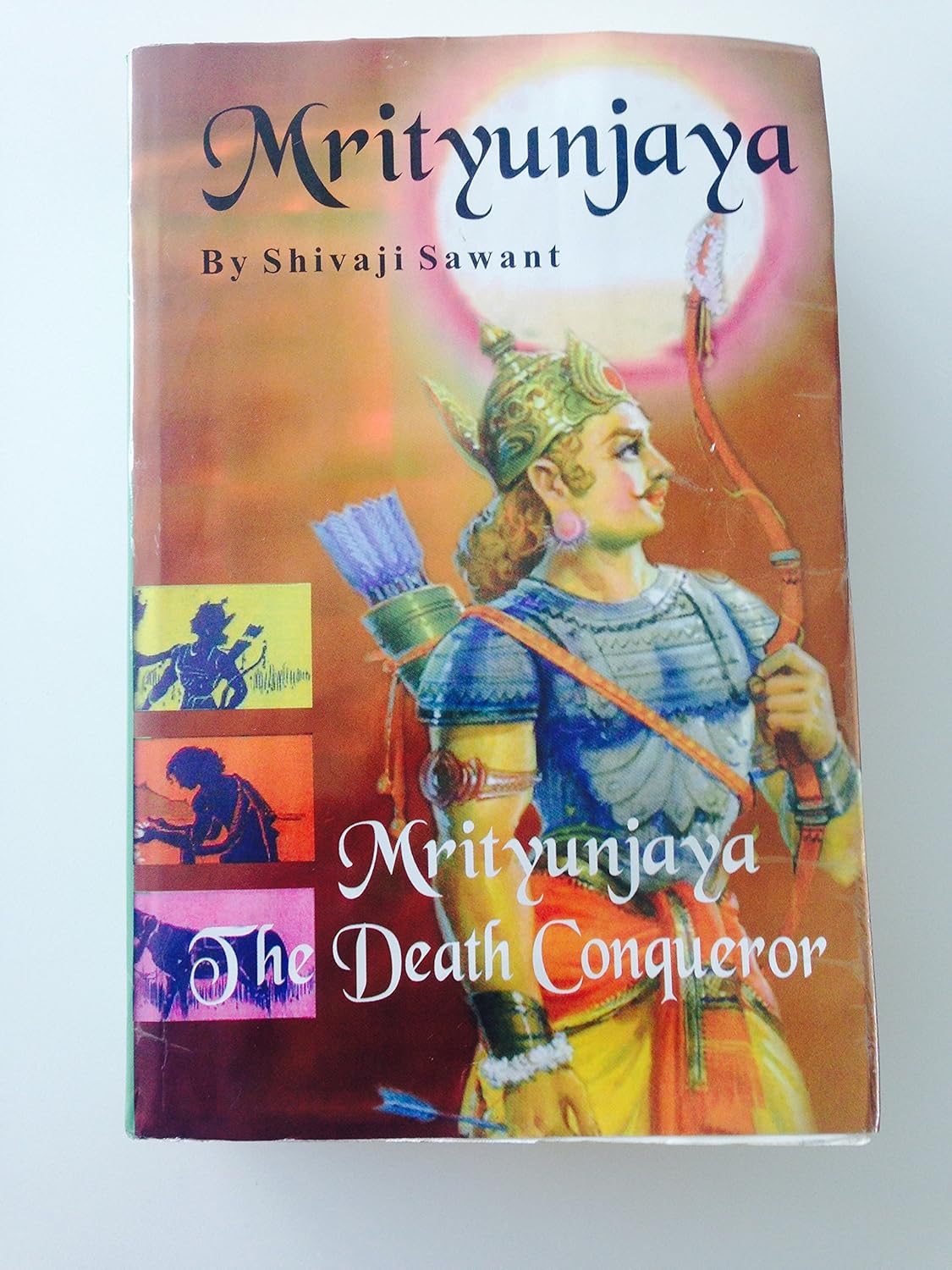
Mrityunjaya ~ Shivaji Sawant (64 of 2024)


Finally I am fortunate to read the English version of the Marathi Novel written by Shivaji Sawant, which was translated as Karnan in Malayalam thanks to Thanseeh from CBC. Have heard about this book since childhood from Sasiman, and was fortunate to get hold of the Malayalam version with Raghavan Chittapan.  


In the Mahabharata, Karna, who shines with the brilliance of the sun, is the story that has attracted the novelists the most. Am waiting to read the original Marathi version of the book. Hopefully soon.

 Brotherly love, friendship, filial affection, generosity, charity, fearlessness, courage, sense of value, idealism, purity of character, passion for culture, all of these are revealed in the novel. The sense of loss of not being able to experience anything of his own - true motherly love, family pride, Kshatriya - the disdain he had to hear even from the unworthy  - none of this swayed the Maharati even at the crucial moments. In vain moments and in dire straits, unbroken, unflinching, that brave man stood firm.

Without yielding to any temptation, he persevered with his righteousness till the end of his life. Karna faced human and divine challenges all his life with self courage and became invincible even in the face of death. Such is the immortal story of Karna that Shivaji Sawant has reimagined through the novel Mrutunchaya.

The novelist has adopted the technique of moving the story forward through the autobiographical accounts of Karna, Kunti, Duryodhana, Vrishali, Shon and Sri Krishna. Centered around Karna, rest of the Mahabharata stories are intelligently combined here. Each chapter though named after a character,  is not about them but a view of each of the characters on the events during that period. 

There are four chapters titled Karna. Athirathan's adopted son who excelled in every area. Athirathan's real son was Shon, he admired Karna a lot. For him Karna was his beloved elder brother, God like.  He has seen how Karna with all pain stood strong with smile.

Karna used to bathe in Ganga daily, where he met his first wife Vrishali  a beautiful lady. He also had another wife whose story is described in The Outcasted Queen.

In Vedas any person who has slept with more than three people is called 'Pumchali'. Karna told this about Draupadhi so Kaurava don't trouble her. Which was misunderstood.  There are so many stories and sub-stories looked at from different viewpoint  and ends with Sri Krishna describing the 18 day war and the need for it; covering emotions,  promises and betrayals of those involved. Mothers sorrow and the bond between Krishna and Karna is explained at the end with all its mirage. Enchanting,  poetic,  philosophical. 

One interesting subplot worth pondering is, the question from Arjun when Krishna praise Karna as his Chariot moves three steps behind.  Arjuna ask Sri Krishna why he was not praised when Karna's chariot was pushed five steps behind.  To this Sri Krishna said Karna did it alone when Arjuna had Sri Krishna himself as the charioteer and Hanuman to protect him. 

Shivaji Sawant presents Karna's life through his own perspective, exploring themes of fate, honor, and sacrifice delving into Karna's struggles with his identity, loyalty, and the societal pressures he faces.

The great poet Vyasa has given a miracle, by providing us the glimpse of the character Surya Sambhava Karna, in the Mahabharata.

Perhaps if Karna  had the strength of Durga, Sri Krishna would not have had to tell the secret of the Gita to Arjuna.

Vyasa says that the one who was branded as Maharati and Ardha Rati, who had the power to consume love, sacrifice, and vision, was brought to chastity  even when Karna was dead. 

Narada on meeting the Pandavas after the war tell them Karna was the most brilliant and energetic character in the Mahabharata, even if the qualities of five pandavas were put together, they would not equal to Karna.

The story of Karna and his life is a lesson on how human life is so very interconnected. Unaware we ridicule, harm and even kill others. Only to repent later. A valuable lesson for one and all of all ages. 

The book is philosophical poem. A poignant retelling and a profound exploration of a complex hero.

Monday, February 05, 2024

Genesis & Relevance of Temple - Worship : Swami Bhoomananda Tirtha(10 of 24)


Earth, water, air, fire and space that constitute the world are a creation of God, the Almighty.  But somehow, due to lack of proper thought in the matter, people are not able to perceive the world as Godly, as  a Godly product, with the result that they look for something additional or special to relate to God, while thinking of worshipping Him. 

The Idol, the sculptor makes and the priests consecrates, becomes the general focus in religious worship. It is in a way strange, nonetheless, an irrefutable need of the human mind. Our thinkers, Sage Authors, have always understood this fact and catered to the needs of the society. 

The manner in which devotees go to the temple, stand in front of the Lord, submit their prayers and express their feelings, fondness as well as needs, is something greatly touching. 

To construct a place of worship like the temple, the scriptures point out, is the most holy act, rewarding and fulfilling in every way. It is pleasing to the Lord, Sreemad Bhagavatam emphasizes. 

A temple is actually a place of public worship. When a place is set up wherein worshippers can come, stand before the Deity and worship, it becomes a temple. 

There are 'self-born' (svayambhuh) temples, as also those instituted and consecrated with the relevant ceremonial and scriptural procedures and prescriptions. 

It is to live peacefully, harmoniously and fearlessly that we build our homes. But often what happens is the reverse! Tension, apprehension and affliction assail the residents. Even when everything is all right, people still become anxious about the welfare of the family. 

Temple naturally becomes both a refuge and an inspiration. Standing in front of the Lord, devotees pray, unloading their heart, expressing their wishes and seeking the Lord's favour to give them relief, hope and confidence. Despite the fact that they do not get any direct answer from the Lord, their heart feels a sense of security and relief, something not available anywhere else. Thus temples have become an inevitable psychological need. 

In a temple, the prayer and worship offered are not really to the stone or Marble Idol as such. Worshippers look at the Idol, no doubt, but their thoughts are clearly focused on the Supreme Omnipresent Lord, represented by the Lord. The prayers made are always to the Lord Supreme. Temple but facilitates the whole interaction. That is the sole purpose of the temple institution. 

'Ya Matih so gatih'. Human thought, aspiration and will are quite powerful. Whatever one thinks, that he verily can become. Such is the supreme law. 

The divine brilliance and the benedictory power of any deity in a temple, is directly proportional to the sanctity and sublimity of consecration performed by the human being. In fact, the chief priest, who does the consecration is called the father of the deity. The deity owes its Divinity completely to him. You can say that the Deity is born of him. 

It is exactly like a child wishing to have the fondling parental touch!

When the Upanishads declare that Knowledge alone is supreme and it is the Ultimate Existence, this means Knowledge must be the very source of all creation. When do we reach at the fullness of knowledge. It's not the object knowledge. 

A thing becomes an object to be sensed or perceived only before a subject. When you see the world, including yr body, it falls in the 'object' category. And you, the seer, are the subject in the whole process, who does the seeing. Seeing as an act or function can only proceed from and rest upon the seer. Body is the object, so where and what is the subject? This is how we recede to our own within, into the arena of knowledge, knowing and ultimately the knower. When our consciousness, receding from both external and internal objects, begins to reveal the subject as it does the object, it is called prajnanam. Knowledge led thus to its fullness, becomes the Supreme Reality. It is existence, consciousness and blissfulness all at once. Sat-Cid-ananda. 

By withdrawing your gross activities and interactions, you have to remain afloat in your own mind, and thereby dissolve all mental modification like thought, thinking and thinker, to get into the real substance, which brings about all this differentiation. That unitary inner state of awareness, where all differences set and a full singularity dawns, is the wonderful fruition called prajnanam.

Temple and Deity installed in it is like a prop for those who cannot understand this. The idol idolizes the supreme. 

1) Temple worship is an Initial step. 

From acara (ritual) to vicara (contemplation)

Temple is men's creation for his own purpose. 

All the words we use to describe His qualities and powers in fact, represent our own thoughts, ideas and needs. Each of these has originated from our own mind. If deeply searched, all their connection, relevance and utility also are with us and us alone. 

2) True devotee has lord tied to the heart and want nothing. 

God rejects offers from narrow minded. 

Temples and Ashrams are complementary centres. 

Hari Oam Tat Sat!

Tuesday, December 26, 2023

Gita in 1 minute!

Gita in 1 minute!! 👇

Chapter 1: Our short-sighted vision is the cause of confusion and stress.

Chapter 2: Body will Change, Soul is Changeless.

Chapter 3: Work not just for money but to leave a legacy.

Chapter 4: To turn knowledge into wisdom, take shelter of experts with the mood of service.

Chapter 5: Your God-conscious work is your way to God.

Chapter 6: Any achievement is not possible without mind control.

Chapter 7: To see God, you first need to hear and understand God.

Chapter 8: Life is preparation; death is examination.

Chapter 9: Sincerity of intention attracts God’s attention.

Chapter 10: God is not fantasy, but fantastic.

Chapter 11: Before time devours you, devote your time to the Master of time.

Chapter 12:Unmotivated Love can conquer even Unconquerable God.

Chapter 13: The world is the stage; acting as per the script(ures)will decide whether you get pleasure or pain.

Chapter 14: To live young, to live free get rid of unseen ropes.

Chapter 15: Attachment is the root of suffering. Krishna will be with you if you want to be with Krishna.

Chapter 16: Free-will used for ego makes you evil, free-will used for God makes you angel.

Chapter 17: We make our faith and then our faith makes us.

Chapter 18: Your worldly disqualification does not disqualify you for God.


Friday, December 15, 2023

Purana's - Names

 The Vishnu Purana, for example, recites a myth where the names of the characters are loaded with symbolism and axiological significance. The myth is as follows,

The progeny of Dharma by the daughters of Daksha were as follows: by Sraddhá (devotion) he had Kama (desire); by Lakshmí (wealth, prosperity), was born Darpa (pride); by Dhriti (courage), the progeny was Niyama (precept); by Tusht́i (inner comfort), Santosha (contentment); by Pusht́i (opulence), the progeny was Lobha (cupidity, greed); by Medhá (wisdom, experience), Sruta (sacred tradition); by Kriyá (hard work, labour), the progeny were Dańd́a, Naya, and Vinaya (justice, politics, and education); by Buddhi (intellect), Bodha (understanding); by Lajjá (shame, humility), Vinaya (good behaviour); by Vapu (body, strength), Vyavasaya (perseverance). Shanti (peace) gave birth to Kshama (forgiveness); Siddhi (excellence) to Sukha (enjoyment); and Kírtti (glorious speech) gave birth to Yasha (reputation). These were the sons of Dharma; one of whom, Kama (love, emotional fulfillment) had baby Hersha (joy) by his wife Nandi (delight).

The wife of Adharma (vice, wrong, evil) was Hinsá (violence), on whom he begot a son Anrita (falsehood), and a daughter Nikriti (immorality): they intermarried, and had two sons, Bhaya (fear) and Naraka (hell); and twins to them, two daughters, Máyá (deceit) and Vedaná (torture), who became their wives. The son of Bhaya (fear) and Máyá (deceit) was the destroyer of living creatures, or Mrityu (death); and Dukha (pain) was the offspring of Naraka (hell) and Vedaná (torture). The children of Mrityu were Vyádhi (disease), Jará (decay), Soka (sorrow), Trishńa (greediness), and Krodha (wrath). These are all called the inflictors of misery, and are characterised as the progeny of Vice (Adharma). They are all without wives, without posterity, without the faculty to procreate; they perpetually operate as causes of the destruction of this world. On the contrary, Daksha and the other Rishis, the elders of mankind, tend perpetually to influence its renovation: whilst the Manus and their sons, the heroes endowed with mighty power, and treading in the path of truth, as constantly contribute to its preservation.

— Vishnu Purana, Chapter 7, Translated by Horace Hayman Wilson

Thursday, December 14, 2023

Narayaniyam


Narayaniyam is the story of Lord Narayana. It is a work consisting of 1035 slokas or verses, divided into 100 dasakams or chapters, each dasakam consisting of approximately 10 slokas. It is a condensed version of Bhagavata Purana, which consists of 18,000 slokas authored by Veda Vyasa. It is said that the work has the blessings of Lord Krishna or Guruvayoorappan, the presiding Deity of Guruvayur.  Melpathur Narayana Bhattathirippadu was born about the year 1560 in a village near the temple of Tirunāvāya in Malappuram district, Kerala. He composed the Narayanīyam at the age of 27.

The day on which Narayaneeyam was completed, 28th Vrischikam, is celebrated by the Devaswom as Narayaneeyam day. Discourses and debates on Narayaneeyam written by Melpathur take place. Special functions are held at Melpathur Illapparambu also. According to local legends, Bhattathiri had a Guru by the name of Achyuta Pisharadi, who fell victim to a severe attack of paralysis, and suffered unbearable pain. Bhattathiri desired to find a cure for his master and fervently prayed for the disease to be transferred to himself, freeing his Guru from suffering. According to the legend, Lord Krishna granted Bhattathiri his wish, and he soon became crippled.

Once, when Bhattathiri, unable to move, was carried into the Guruvayur temple, he met Thunchath Ezhuthachan, an eminent Malayalam poet of the time. Ezhuthachan advised Bhattathiri that he could be cured if he "began his treatment with fish". The disciples of Bhattathiri who heard this were shocked because Bhattathiri was a devout Brahmin and therefore a vegetarian who would consider it sinful to eat fish. Bhattathiri however understood what Ezhuthachan really meant - that he would be cured if he could compose a hymn glorifying the incarnations of Lord Krishna beginning with the fish incarnation, known as Matsya.

Accordingly, he started composing the Narayaniyam. It is said that he would recite one dasakam, consisting of ten verses, every day. The local legend says that on the hundredth day he had a vision of the Lord, and rendered a graphic description of this form, after which he was immediately cured of his disease. The final dasaka, Kesadipaada Varnanam, embodies top-to-toe picture of little Krishna in all grace and glory.

The incarnations of Vishnu are traced with piety, Bhattathiri transforms the episodes into solemn prayers, pouring out his soul in total supplication before the Lord. 

Narayaneeya Sahasranama is a condensed form of Narayaneeyam consisting of 1000 names of Vishnu. It is carefully created collections, of all the namas (names) of Vishnu's Avataras, that appear sequentially and chapter-wise in the Narayaneeyam. It was composed by Ayyappan Kariyat, an Ayurveda vaidya.

Acharyas have ruled that these are the Narayana Dasakas which give special results.

Dashakam 12 (Varahavataram) – Narayanapreeti, attainment of high position.

Dasakam 13 (Hiranyaksha Vadham) – Fame, wealth, long life.

Dasakam 16 (Nara Narayana Charita and Daksha Yaga) – Forgiveness.

Dasakam 18 (Prithu Chakraborty Charitam) – Prosperity, Children, Victory.

Dashakam 27 (Palazhi mathana and Kurmavatar).

Decade 28 (Lakshmisvayamvaram and Amritolpathi) – Intended Fruitfulness.

Dashakam 32 (Matsyavatara), Dashakam 51 (Aghasura slaying and forest eating), Dashakam 52 (Vatsapaharana and Brahma Garvu Shamana) – wish fulfillment.

Dasakam 82 (Bana Yuddha and Nrigamoksha) – All-victory potential.

Dasakam 87 (Kuchelavritta) – Prosperity, Karma Bandha Nirmukti.

Dasakam 88 (Santhanagopalam) – Removal of grief, liberation

Decade 100 (Description of Lord Keshadipada) – Long life, health and happiness.

On this Narayaniya day, Praying that Guruvayurappan may grant Health, and years of Happiness.

My copy by 'Swami Tapasyananda'


Thursday, November 23, 2023

A rare conversation between Ramkrishna Paramahansa & Swami Vivekananda

1. Swami Vivekanand:- I can’t find free time. Life has become hectic. Ramkrishna Paramahansa:- Activity gets you busy. But productivity gets you free.

2. Swami Vivekanand:- Why has life become complicated now?

Ramkrishna Paramahansa:- Stop analyzing life.. It makes it complicated. Just live it.

3. Swami Vivekanand:- Why are we then constantly unhappy?

Ramkrishna Paramahansa:- Worrying has become your habit. That’s why you are not happy.

4. Swami Vivekanand:- Why do good people always suffer?

Ramkrishna Paramahansa:- Diamond cannot be polished without friction. Gold cannot be purified without fire. Good people go through trials, but don’t suffer. With that experience their life becomes better, not bitter.

5. Swami Vivekanand:- You mean to say such experience is useful?

Ramkrishna Paramahansa:- Yes. In every term, Experience is a hard teacher. She gives the test first and the lessons .

6. Swami Vivekanand:- Because of so many problems, we don’t know where we are heading…

Ramkrishna Paramahansa:- If you look outside you will not know where you are heading. Look inside. Eyes provide sight. Heart provides the way.

7. Swami Vivekanand:- Does failure hurt more than moving in the right direction?

Ramkrishna Paramahansa:- Success is a measure as decided by others. Satisfaction is a measure as decided by you.

8. Swami Vivekanand:- In tough times, how do you stay motivated? Ramkrishna Paramahansa:- Always look at how far you have come rather than how far you have to go. Always count your blessing, not what you are missing.

9. Swami Vivekanand:- What surprises you about people?

Ramkrishna Paramahansa:- When they suffer they ask, “why me?” When they prosper, they never ask “Why me?”

10. Swami Vivekanand:- How can I get the best out of life?

Ramkrishna Paramahansa:- Face your past without regret. Handle your present with confidence. Prepare for the future without fear.

11. Swami Vivekanand:- One last question. Sometimes I feel my prayers are not answered.

Ramkrishna Paramahansa:- There are no unanswered prayers. Keep the faith and drop the fear. Life is a mystery to solve, not a problem to resolve. Trust me. Life is wonderful if you know how to live.

Monday, November 20, 2023

Theo's Odyssey ~ Catherine Clement


In 'Theo's Odyssey', ~ Catherine Clement  takes us through an amazing journey around the world with Theo and his wealthy aunt Martha crisscrossing various countries in search of a spiritual solution to the ailment, introducing Theo to the religions of the world in the process.

Theo has a mysterious illness and though no one knows what it is, the prognosis is not good, so his rich  aunt decides to take him on a world tour, as a last fling before he dies, or a special treat in case he lives. It begins from his home town in Paris. 

In the first chapter we are introduced to his family, and then begin the journey, from the oldest. It is said that , this book does for religion and spirituality what Sophie's World did for philosophy. Theo is fourteen, Parisian, and slow to get up in the mornings. His parents love him, and want him to choose his own life, his own faith, so they have deliberately avoided giving him a religious education. Theo is very clever, reads a lot, loves computer games and the Greek myths. But then, suddenly, he falls ill. His rich aunt Martha decides that they must roam the world to find a cure for his malaise. 

The sceptical, quizzical Theo being shown the varieties and depths of faith that exist in other places, other cultures. All this is handled with real style, pace, wit and clarity. The book is a thoroughly enjoyable introduction to why and how people believe in their God.

The journey begins with Jerusalem - A wall and a Tomb introducing Theo to Jews, Christians and Islam;  Then to Seen Hills, One Rock. Egypt, and Rome. Then to India covering 10 religions, Hindus, Islam, Buddhist, Sikhs, Christians, Jainism, Jews, Parsi's, Bahais; Mao and Tao in China; Shinto in Japan; Muslims, Hindus and Christians in Indonesia; Christianity and communisam from Russia; Islam from Istanbul; African traditional religion, Brazilian syncretism and even Mormons in New York, and back to Jews in Greece and return to the source. 

It covers a fair variety of religions, and most of the way through it seems to lead one down the path of syncretism, showing how each religion incorporates elements of other religions, or has points of resemblance to other religions.

Theo is half-Greek and so has an Orthodox grandmother (well, half-Orthodox, because she is syncretistic too, mixing Orthodoxy with faith in the Olympian gods). And the treatment of Orthodoxy is pretty skimpy, saying it is all about sorrow and suffering. There are detailed descriptions of rituals for some religions, at least three different rituals for the African traditional religions, but there is no comparable description of the rituals of Orthodox Christianity, not even a memorial service.  It says, Jainisam and Buddhism started around the same time, while Jainisam like Hinduism is old, and Mahavir is the 12th Thirthankara who was born during the time of Buddha. In the story of Ramayana, Rama has two mothers, when we know she has three. Nothing much is mentioned about Bahi religion. 

How is the aunt so rich? Investing and trading in stock market. Theo needs to solve a series of riddles which take him around the world to different cultures and different religions; it's hopefully not his final journey but an insightful adventure. His eccentric, atheist aunt hopes that one if all or any of the gods could heal him from his implied incurable disease.

'Faiths of many lands', is another interesting and better covered book on this subject. So does Kim by Rudyard Kipling. And Of course, my very own Swami Vivekananda and his Chicago Address. 

Thursday, August 03, 2023

GOD

 Generator, Operator, Destroyer. 

My Nephew of late has been arguing that there is no God, and everything is science .

Was researching on how to convence him and came across 'A Very Thoughtful Post. TWO FACETS OF LIFE....'

Something interesting regarding those who believe and those who don't believe in God! Very interesting. It stimulates our lateral thinking.

This lovely parable is from "Your Sacred Self" by Dr. Wayne Dyer.

In a Mother’s womb were two babies. One asked the other: “Do you believe in life after delivery?” The other replied, “Why, of course. There has to be something after Delivery. Maybe we are here to prepare ourselves for what we will be later.”

“Nonsense” said the first. “There is no life after Delivery. What kind of life would that be?”

The second said, “I don’t know, but there will be more light than here. Maybe we will walk with our legs and eat from our mouths. Maybe we will have other senses that we can’t understand now.”

The first replied, “That is absurd. Walking is impossible. And eating with our mouths? Ridiculous! The umbilical cord supplies nutrition and everything we need. But the umbilical cord is so short. Life after delivery is to be logically excluded.”

The second insisted, “Well I think there is something and maybe it’s different than it is here. Maybe we won’t need this physical cord anymore.”

The first replied, “Nonsense. And moreover if there is life, then why has no one ever come back from there? Delivery is the end of life, and in the after-delivery there is nothing but darkness and silence and oblivion. It takes us nowhere.”

“Well, I don’t know,” said the second, “but certainly we will meet Mother and she will take care of us.”

The first replied “Mother? You actually believe in Mother? That’s laughable. If Mother exists then where is She now?”

The second said, “She is all around us. We are surrounded by her. We are of Her. It is in Her that we live. Without Her this world would not and could not exist.”

Said the first: “Well I don’t see Her, so it is only logical that She doesn’t exist.”

To which the second replied, “Sometimes, when you’re in silence and you focus and listen, you can perceive Her presence, and you can hear Her loving voice, calling down from above.”

May be this was one of the best explanations to the concept of 'GOD' 🙂

Another related story from Sophie's world:

A Russian astronaut and a Russian brain surgeon were once discussing religion. The astronaut said I have been to outer space many times, but never seen God, to this the brain surgeon said, I have operated many clever brains but never seen a single thought.


Sunday, February 19, 2023

Essence of Bhagavad Geeta


https://www.holy-bhagavad-gita.org/Index


क्लैब्यं मा स्म गम: पार्थ नैतत्त्वय्युपपद्यते |

क्षुद्रं हृदयदौर्बल्यं त्यक्त्वोत्तिष्ठ परन्तप || 3||


klaibyaṁ mā sma gamaḥ pārtha naitat tvayyupapadyate

kṣhudraṁ hṛidaya-daurbalyaṁ tyaktvottiṣhṭha parantapa


BG 2.3: O Parth, it does not befit you to yield to this unmanliness. Give up such petty weakness of heart and arise, O vanquisher of enemies.


If one reads this one shloka one gets all the merits of reading the entire Gita; for in this one shloka lies imbedded the whole message of the Gita...Stand up and fight! Not one step back, that is the idea...Fight it out, whatever comes. Let the stars move form the sphere!..Thus fight! You gain nothing by becoming cowards....Taking a step backward, you do not avoid any misfortune.


Chapter 4-17 says, Activity is the core stone of life, and here it should be filled with Karma - i.e Actions to be done. These are divided into:

  • Nitya - Daily duties,
  • Naimittika - duties on special occassion
  • Kamya - desire prompted duties. 
Then there are Vi-karma (Actions to be avoided) and Inactivities. 

The 18 chapters of the Geeta falls into three distinct groups, each in six chapters explained as ' That Thou Art'.  
First six - Thou
Next six - That
Last six - Art

Chapters and verses are:
  1. The Yoga of Arjuna - Grief - 47
  2. The Yoga of Knowledge - Snkya Yoga - 72 - Peace is happiness
  3. Karma Yoga - The Path of Action - 43
  4. The Yoga of Renunciation of Action in Knowledge - Gyana Karma Sanyasa Yoga - Selfless Action- 42
  5. The Yoga of True Renunciation - Karma Sanyasa Yoga - 29
  6. The Yoga of meditation - Dhyana Yoga - 47
  7. The Yoga of Knowledge and wisdom - Gnyana Vignyana Yoga - 30
  8. The Yoga of Imperishable Brahman - Akshara Param Brahma Yoga - 28
  9. The Yoga of Royal Secret - Raja Vidya Yoga - 34
  10. The Yoga of Divine Glories - Vibhooti Yoga - 42
  11. The Yoga of Cosmic Form - Viswaroopa Sandarshana Yoga - 55
  12. The Yoga of Devotion - Bhakti Yoga - 20
  13. The Yoga of field and its knower - Kshetra Kshetranjaa Vibhaja Yoga - 35
  14. The Yoga of Guna - Gunatraya Vibhaga Yoga - 27
  15. The Yoga of the Supreme Spirit - 20
  16. The Yoga of divine and Dvilish Estates - Guna Types - 24
  17. The Yoga of threefold faith - Divine and Undivine Types - 28 (Om Tat Sat)
  18. The Yoga of liberation through renunciation - 78
All chapter name starts with Yoga. What is Yoga is mentioned in chapter 6. Krishna tells Arjuna, his alignment is not right. 'Let's go to the basics since your understanding of the problem is skewed. Examine from where your sorrow is arising.' Three yogas have been talked about here - gyan yoga, bhakti yoga and karma yoga. Alignment by using your brain is gyan yoga, by emotion is bhakti yoga and by action is Karma Yoga - that is aligning the head, heart and hands. 

For one who is a neophyte in the eight fold yoga system, work is said to be the means and for one who is already elevated in yoga, cessation of all material activities is said to be the means. 

The process of linking oneself with the supreme is called the Yoga. It may be compared to a ladder for attaining topmost realization. This ladder begins from the lowest material condition of the living entity and rises upto perfect self-realization in pure spiritual life. Complete ladder is called Yoga, and it is divided into different parts. 3 main are Jnana-Yoga; Dhyana-Yoga and Bhakti-Yoga. The beginning of the ladder is called the Yogaruruksu sage and the highest rung is called Yogarudha. 

When a man is not attached to sense objects or to actions, having renounced all thoughts, he is said to have attained Yoga. Sri Krishna explains the physical and mental condition of the Yogarudha - the one who is established in Yoga.

Chapter 14 Verse 22 to 25 says:

He who does not hate illumination, attachment and delusion when they are present or long for them when they disappear; who is unwavering and undisturbed through all these reactions of the material qualities, remaining neutral and transcendental, knowing that the modes alone are active; who is situated in the self and regards alike happiness and distress; who looks upon a lump of earth, a stone and a piece of gold with an equal eye; who is equal toward the desirable and the undesirable; who is steady, situated equally well in praise and blame, honor and dishonor; who treats alike both friend and enemy and who has renounced all material activities - such a person is said to have transcended the modes of nature. 

Chapter 16 verse 3 says:

Fearlessness; Purification of one's existence; cultivation of spiritual knowledge, charity; self-control; performance of sacrifice; study of Vedas; austerity; simplicity, non-violence; truthfulness; freedom from anger; renunciation; tranquillity, aversion to fault finding; compassion for all living entities; freedom from covetousness; gentleness; modesty steady determination; vigor; forgiveness; fortitude; cleanliness and freedom from envy and from the passion for honor - these transcendental qualities belong to godly men endowed with divine nature. 

Chapter 18 verse 51 to 53 says:

Being Purified by his intelligence and controlling the mind with determination; giving up the objects of sense gratification, being freed from attachment and hatred; one who lives in a secluded place, who eat little, who controls his body, mind and power of speech, who is always in trance and who is detached, free from false ego, false strength, false pride, lust, anger and acceptance of material things, free from false proprietorship and peaceful - such a person is certainly elevated to the position of self-realization. 

The names of each chapter is given at the end of the chapter and Partha - Is Symbolism of A Way-Of-Life.