Showing posts with label History. Show all posts

Thursday, April 30, 2026

Renaissance State The unwritten story of the Making of Maharashtra ~Girish Kuber


From the visionary leadership of Chhatrapati Shivaji Maharaj to the reformist fire of Dr. B.R. Ambedkar, this book traces how Maharashtra didn’t just evolve—it reimagined itself again and again.

It’s a story of power, ideas, संघर्ष (struggle), and renaissance—where warriors, thinkers, and reformers shaped not just a state, but the soul of a nation.

What stayed with me the most?

The idea that true progress isn’t linear—it’s built through constant questioning, courage, and reinvention.

If you love history that feels alive, relevant, and deeply human—this is a must-read.

#RenaissanceState #GirishKuber #Maharashtra #IndianHistory #BookstagramIndia #HistoryLovers #ReadingCommunity #BooksThatMatter

The book explains how Maharashtra continuously reinvented itself to shape India’s political, social, and intellectual history.

1. Maha Rashtra

Introduces the idea of Maharashtra as more than a geographic region—it is a civilizational and cultural force.

Traces early roots from ancient dynasties like the Satavahanas.

Sets the central theme: Maharashtra has always produced leaders, thinkers, and reformers who shaped India.

2. Darkness at Noon

Describes a period of decline and instability before the rise of strong regional leadership.

Fragmentation of power and absence of a unifying vision.

Prepares the ground for the emergence of transformative figures.

3. Islamic Rule

Covers Deccan Sultanates and Mughal influence.

Highlights political instability but also cultural and administrative shifts.

Shows how external pressures indirectly shaped Marathi identity.

4. O King Shivaji

Focuses on Chhatrapati Shivaji Maharaj.

His rise as a visionary leader who challenged powerful empires.

Emphasizes leadership qualities: strategy, inclusiveness, governance.

5. Hindavi Swaraj

Explains Shivaji’s concept of self-rule (Swarajya).

Not just political freedom but also cultural pride and administrative reform.

Marks a turning point in Indian history.

6. Why Shivaji Matters 

Analytical chapter explaining Shivaji’s long-term influence beyond Maharashtra.

His ideas shaped governance, nationalism, and resistance.

Establishes him as a timeless political and ethical model.

7: Deccan after Shivaji

Covers the period after Shivaji Maharaj’s death.

The Maratha state faces instability, succession struggles, and Mughal pressure.

Despite chaos, the idea of Swarajya survives, carried forward by successors like Sambhaji and later leaders.

Key idea: Institutions built by strong leaders can outlive them—even in turbulent times.

8: The Peshwas

Focuses on the rise of the Peshwas (prime ministers) who became de facto rulers.

Under leaders like Baji Rao I, the Maratha Empire expanded rapidly across India.

Pune emerged as a political and cultural capital.

However, power became centralized and elite-driven, planting seeds of future decline.

Key idea: Expansion brought glory—but also structural weaknesses.

9: The Beginning of the End

Marks the decline of Maratha power, especially after the

Third Battle of Panipat.

Heavy losses weakened military strength and morale.

Internal divisions, poor coordination, and rising British power accelerated the fall.

Key idea: External defeat + internal disunity = collapse of great powers.

10. Renaissance State

Describes the revival phase after political upheavals.

Transition from empire to intellectual and social awakening.

Maharashtra becomes a centre for progressive thought.

11. The Starry Sphere

Focus on intellectuals, scientists, and thinkers.

Contributions in education, science, and public discourse.

Shows Maharashtra as a hub of knowledge and innovation.

12. Magnificent Maharashtrians

Covers social reformers like:

Jyotirao Phule

Pandita Ramabai

M. G. Ranade

Focus: education, women’s rights, caste reform.

Transformation from orthodoxy to progressiveness.

13. Many Poles, One Centre

Rise of political diversity:

Moderates (e.g., Gopal Krishna Gokhale)

Extremists (e.g., Bal Gangadhar Tilak)

Despite differences, all contributed to India’s freedom movement.

Maharashtra as a political nerve centre.

14. Theatre of Thoughts

Emergence of ideologies:

  • Socialism
  • Hindu nationalism
  • Dalit assertion

Includes figures like:

B. R. Ambedkar

Shows Maharashtra as a battlefield of ideas shaping modern India.

15. Post-Independence Turmoil

Formation of the state of Maharashtra.

Linguistic reorganization and political struggles.

Internal challenges: identity, development, and power dynamics.

16: The Best Prime Minister India Never Had

Focuses on Yashwantrao Chavan.

Portrayed as a visionary, balanced, and pragmatic leader.

Played a major role in shaping modern Maharashtra and national politics.

Despite capability, he never became Prime Minister—seen as a missed opportunity for India.

Key idea: Leadership potential doesn’t always translate into top power.

17: So Near, Yet So Far…

Examines Maharashtra’s leaders in national politics who came close to the top but didn’t reach it.

Includes figures like Sharad Pawar.

Highlights political fragmentation, missed alliances, and timing issues.

Maharashtra remained influential—but never fully dominant at the Centre.

Key idea: Proximity to power ≠ possession of power.

18: Renaissance Once More?

Reflects on whether Maharashtra can reinvent itself again.

Revisits its legacy of reformers, thinkers, and leaders.

Raises concerns:

Decline in intellectual leadership

Political stagnation

Need for new ideas

Ends on a questioning yet hopeful note—can Maharashtra lead another renaissance?

Key idea: History sets the stage—but the future depends on present choices.

 Simple Connecting Insight


Across these chapters, the book shows a pattern:


Rise → Expansion → Decline → Reflection → Possibility of Renewal

Modern Political Journey

Maharashtra’s role in national politics. 

Mahatma Gandhi — A Moral Force, Not a Maharashtrian Core

Gandhi appears mainly in the context of the freedom movement and ideological shifts.

The book contrasts his non-violent, mass-mobilization approach with Maharashtra’s earlier assertive and intellectual traditions (like Tilak and later Ambedkar).

His influence is shown as:

Nationally dominant, shaping India’s struggle

But also redefining Maharashtra’s political tone, moving it from confrontation to mass ethics and discipline

There is an underlying tension:

Maharashtra produced strong thinkers and reformers

Yet Gandhi’s ideology became the mainstream guiding force

Core idea: Gandhi didn’t emerge from Maharashtra’s tradition—but he significantly reshaped its political direction.

 Pramod Mahajan — The Modern Political Strategist

Mahajan is portrayed as a symbol of modern Maharashtra’s political potential.

Known for:

Strategic thinking

Organizational skill

Ability to connect regional and national politics

He represents a new kind of leader—media-savvy, forward-looking, and influential within party structures.

His sudden and tragic death is implied as a major loss:

Seen as someone who could have risen to the highest levels of power

Another example of Maharashtra being “so near, yet so far” from central leadership

 Core idea: Mahajan reflects untapped potential and interrupted leadership in modern Indian politics.

Both figures highlight a recurring theme in the book:

Gandhi → Influence came from outside Maharashtra, yet shaped it deeply

Mahajan → Talent came from Maharashtra, but didn’t fully reach its peak. Together, they reinforce the book’s larger message:

Maharashtra has always been central to India’s story—but not always at the centre of power.

Leaders influencing Delhi but often “so near, yet so far” from central power.

Ends with contemporary political shifts and challenges.

Core Idea of the Book

Maharashtra is portrayed as a “renaissance state”—a region that repeatedly:

Falls → Rebuilds → Leads

It combines:

Warriors (Shivaji)

Thinkers (Phule, Ranade)

Reformers (Ambedkar)

Politicians (Tilak, Gokhale)

Monday, February 02, 2026

Akhand Bharat & Partitions


🌹🌷🌹
Some very interesting historical facts

How many of you know that ...

Q: Partition of India was done how many times ?

Answer- SEVEN times in 61 years by the British rule.

Afghanistan was separated from India in 1876,

Nepal in 1904,

Bhutan in 1906,

Tibet in 1907,

Sri Lanka in 1935,

Myanmar (Burma) in 1937

and...

Pakistan in 1947.

India's Partition of *Akhanda Bharat.*

Unbroken India extended from the Himalayas to the Indian Ocean and from Iran to Indonesia. India’s area in 1857 was 83 lakh square kilometers, which is currently 33 lakh square kilometers.

Sri Lanka
The British separated Sri Lanka from India in 1935. The old name of Sri Lanka was *Sinhaldeep.* The name Sinhaldeep was later renamed Ceylon. Sri Lanka’s name was Tamraparni during the reign of Emperor Ashoka. Mahendra, son of Emperor Ashoka and daughter Sanghamitra went to Sri Lanka to propagate Buddhism. Sri Lanka is a part of united India.

Afghanistan
The ancient name of Afghanistan was *Upganasthan* and Kandahar’s was *Gandhara.* Afghanistan was a Shaivite country. The Gandhara described in the Mahabharata is in Afghanistan from where the Kauravas’ mother was Gandhari and maternal uncle Shakuni. The description of Kandahar i.e. Gandhara is found till the reign of Shah Jahan. It was a part of India. In 1876 Gandamak treaty was signed between Russia and Britain. After the treaty, Afghanistan was accepted as a separate country.

Myanmar (Burma)
The ancient name of Myanmar (Burma) was *Brahmadesh.* In 1937, the recognition of a separate country to Myanmar i.e. Burma was given by the British. In ancient times, the Hindu king Anandavrata ruled here.

Nepal
Nepal was known as *Deodhar* in ancient times. Lord Buddha was born in Lumbini and mother Sita was born in Janakpur which is in Nepal today. Nepal was made a separate country in 1904 by the British. Nepal was called the *Hindu nation of Nepal. Nepal was called as Hindu Rashtra Nepal.* Until a few years ago, the king of Nepal was called
*Nepal Naresh.* Nepal has 81.3 percent Hindus and 9% Buddhists. Nepal was an integral part of India during the reigns of Emperor Ashoka and Samudragupta. In 1951, Maharaja Tribhuvan Singh of Nepal appealed to the then Prime Minister of India, Jawaharlal Nehru to merge Nepal with India, but Jawaharlal Nehru rejected the proposal.

Thailand
Thailand was known as *Syam* until 1939. The major cities were Ayodhya, Shri Vijay etc.

The construction of Buddhist temples in Syam began in the third century. Even today many Shiva temples are there in this country. The capital of Thailand Bangkok also has hundreds of Hindu temples.

Cambodia
Cambodia is derived from the Sanskrit name *Kamboj,* was part of unbroken India. The Kaundinya dynasty of Indian origin ruled here from the first century itself. People here used to worship Shiva, Vishnu and Buddha.

The national language was Sanskrit. Even today in Cambodia, the names of Indian months such as Chet, Visakh, Asadha are used. The world famous Ankorwat temple is dedicated to Lord Vishnu, which was built by the Hindu king Suryadev Varman.

The walls of the temple have paintings related to the Ramayana and the Mahabharata. The ancient name of Ankorwat is Yashodharpur.

Vietnam
The ancient name of Vietnam is *Champadesh* and its principal cities were Indrapur, Amravati and Vijay. Many Shiva, Lakshmi, Parvati and Saraswati temples will still be found here. Shivling was also worshiped here.

The people were called Cham who were originally Shaivites.

Malaysia
The ancient name of Malaysia was *Malay Desh* which is a Sanskrit word which means the land of mountains. Malaysia is also described in Ramayana and Raghuvansham.

Shaivism was practiced in Malay. Goddess Durga and Lord Ganesha were worshipped. The main script here was Brahmi and Sanskrit was the main language.

Indonesia
The ancient name of Indonesia is *Dipantar Bharat* which is also mentioned in the Puranas. Deepantar Bharat means the ocean across India. It was the kingdom of Hindu kings.

The largest Shiva temple was in the island of Java. The temples were mainly carved with Lord Rama and Lord Krishna.

The Bhuvanakosh is the oldest book containing 525 verses of Sanskrit.

The names or motos of the leading institutions of Indonesia are still in Sanskrit:

Indonesian Police Academy – *Dharma Bijaksana Kshatriya.*

Indonesia National Armed Forces – *Tri Dharma Ek Karma.*

Indonesia Airlines – *Garuda Airlines.*

Indonesia Ministry of Home Affairs – *Charak Bhuvan.*

Indonesia Ministry of Finance – *Nagar Dhan Raksha.*

Indonesia Supreme Court – *Dharma Yukti.*

Tibet
The ancient name of Tibet was *Trivishtam* which was divided into two parts. One part was given to China and the other to Lama after an agreement between the Chinese and the British in 1907.

In 1954, India’s Prime Minister Jawaharlal Nehru accepted Tibet as part of China to show his solidarity to Chinese people.

Bhutan
Bhutan was separated from India by the British in 1906 and recognized as a separate country. Bhutan is derived from the Sanskrit word *Bhu Utthan* which means high ground.

Pakistan
There was partition of India on August 14, 1947 by the British and Pakistan came into existence as East Pakistan and West Pakistan. Mohammad Ali Jinnah had been demanding a separate country on the basis of religion since 1940 which later became Pakistan.

In 1971 with the cooperation of India, Pakistan was divided again and Bangladesh came into existence. Pakistan and Bangladesh are parts of India.

How many of you are aware of this history ?
Please know your country and its past history.

Friday, January 16, 2026

The Reader ~ Bernhard Schlink (4 of 26)


There are certain books which have an impact on one, without one being able to put one's finger exactly on the reason why. 'The Reader' by Bernhard Schlink is such a book. The experience of reading this book was like taking a train ride through a pleasant landscape: you mosey along comfortably, enjoying the view and the climate, settled and relaxed. The journey is comfortable enough without being anything out of the ordinary. Then suddenly, the train enters a section of the countryside which is breathtaking in its beauty, and you are jolted out of your somnolence. You sit up and watch, your nose glued to the window, watching with rapt attention. You are unaware of the journey's passing, of temporal time, so engrossed are you in the present experience. The tale of 15-year-old Michael Berg (the first-person narrator) and thirty-something Hanna Schmidt, a tram conductor in post WW-2 Germany is pretty sordid in the beginning; having collapsed from hepatitis in front of her house, he is taken care of and helped home by her. Michael's thank-you visit to Hanna after convalescing, however, becomes a voyeuristic session and it's not long before they are lovers. It is an adolescent's fantasy come true, a bit like Lolita in reverse. The tale takes on a different twist once Michael starts reading to Hanna. Apparently, she can't get enough of his stories. So their sexual escapades are now connected to prolonged reading sessions which each one of them enjoys. But Hanna still remains an enigma to Michael with her erratic behaviour, an enigma which becomes all the more inexplicable when she disappears on the threshold of her promotion as tram driver. The next time he sees her, she is in the dock. Hanna is charged as a Nazi war criminal, a guard of a small concentration camp near Cracow, a satellite camp for Auschwitz. She is accused, along with others, of causing the death of a group of camp inmates by locking them up in a burning church. As a law student, Michael is covering her trial. Hanna's strange, self-destructive behaviour in the courtroom as well as her unusual acts as the camp guard (providing vulnerable young inmates with special status in the camp, to read books to her, until they were sent to Auschwitz to their death) intrigue him. One day, linking it to their sex-cum-reading sessions, he makes a startling discovery about his one-time lover... Later on, Michael is a disillusioned middle-aged man, with a failed marriage and a colourless life. He finds that he cannot exorcise Hanna from his psyche. At the end of his tether, he hits upon a unique solution: Michael finds solace for himself, as well as redemption for Hanna, through his old medium - that of reading. *** Ultimately, what is this book about? Is it about paedophilia, or an adolescent fantasy? Is it about Nazism, and man's cruelty towards man? Is it the tale of a Germany coming to terms with its Nazi past, disguised as a coming-of-age story? I, personally, would like to see it as an allegory on the redemptive power of storytelling. In all cultures, bards enjoyed a special, revered status - in India, it approaches the divine (think of Vyasa and Valmiki). Here, Hanna's sins - both the carnal as well as the homicidal - are linked with getting stories read to her; so, unusually, is her redemption in the last part of the book. Hanna Schmidt is a masterly creation. In the short span of 200+ pages, the author has brought to life an engrossing character who remains a puzzle until the very end. This is one holocaust story which does not take the trodden path.

---------


Bernhard Schlink’s The Reader is a novel that defies easy categorisation. Though framed initially as a clandestine romance between a teenage boy and an enigmatic older woman, the narrative soon widens into an unflinching examination of guilt, complicity, and the moral inheritance of post‑war Germany. It is a book that leaves an imprint not through dramatic proclamation, but through a quiet, accumulating weight—difficult to pinpoint, yet impossible to ignore.

The story begins with Michael Berg, a 15‑year‑old schoolboy who collapses from hepatitis outside the home of Hanna Schmitz, a woman in her thirties working as a tram conductor. What begins as an act of caretaking soon transforms into an intense, secretive affair. Michael, still forming his identity, is swept into a relationship marked as much by ritual—bathing, lovemaking, and reading aloud—as by emotional ambiguity. Hanna is alternately tender, distant, authoritarian, and evasive. While she takes possession of him with unquestioned authority, she also demands stories: she wants to be read to. This act becomes the axis on which their relationship turns, imbuing their intimacy with a strangely literary texture.

Yet Hanna’s opacity deepens the longer Michael knows her. Just as their connection seems to stabilise, she abruptly disappears. Michael’s attempts to understand her withdrawal fail, and her loss leaves him emotionally disoriented, shaping his relationships and self-perception for years to come.
The novel’s second movement ruptures any illusion of romantic nostalgia. As a law student, Michael attends a trial of former concentration camp guards—and sees Hanna among the accused. She is implicated in the deaths of hundreds of women, locked in a burning church during an evacuation march. Her behaviour in court puzzles Michael: she accepts responsibility too readily, refuses to defend herself, and even volunteers to take the blame for a written report she clearly did not author. Only then does Michael realise the truth—Hanna is illiterate, a hidden shame that governed her life decisions, including her entry into the SS.

This revelation forces Michael into a devastating moral quandary. He alone recognises how her illiteracy influenced both her personal cruelties and her wartime choices. He also knows he could reveal this fact and reduce her sentence. But his uncertainty—about justice, dignity, guilt, and whether he has the right to intervene—paralyses him. Hanna is sentenced to life in prison.
Over the years, Michael attempts to live a normal life, but the psychological imprint of Hanna—and of his young self’s complicity—remains. He becomes emotionally withdrawn, his marriage collapses, and he exists in a state of muted detachment. Finally, he turns again to the medium that once connected them: he records himself reading books and sends the tapes to Hanna in prison. Through these recordings, Hanna learns to read, slowly moving from dependence to self‑determination. Michael’s gesture becomes a symbolic attempt at redemption—for Hanna, perhaps for himself, and perhaps for a generation facing the enormity of its inherited past.

The novel closes on morally complex terrain. Hanna’s literacy and long imprisonment do not erase her crimes, nor do they provide Michael relief from his internal conflict. Instead, Schlink presses the reader to consider not simply who is guilty, but to what degree, and how a society should confront those whose actions are inextricably bound up in historical atrocity, personal weakness, and structural coercion.
Ultimately, The Reader is far more than a story of forbidden love or wartime guilt. It is an allegory of the power of storytelling—its ability to connect, to wound, and to redeem. Hanna’s relationship to stories frames both her sins and the small measure of grace she achieves. Schlink positions reading as an act that can humanise, illuminate, and liberate, even as it uncovers painful truths.

Few literary works capture the psychological landscape of post‑Holocaust Germany as intimately as The Reader. Through its layered narrative, Schlink raises enduring questions: How do we judge those shaped by oppressive systems? How do we love those who have done the unforgivable? And how does a generation come to terms with the shadows cast by its predecessors?

In the end, The Reader resists resolution. Instead, it leaves us with the haunting sense that moral clarity is elusive, that love can coexist with horror, and that stories—read, heard, or remembered—can be both burden and balm.

-------------

Book of the Month: The Reader — Bernhard Schlink

A haunting love story that becomes a moral reckoning.
Michael, 15, falls for the mysterious Hanna — a woman who later stands trial as a former concentration‑camp guard. Their secret past forces him to confront guilt, complicity, and the weight of a nation’s history.

What begins as desire becomes a lifelong question:
How do we love someone capable of the unforgivable?

A powerful tale of shame, silence, and the strange salvation found in storytelling. 

The Striking Feature

The most striking feature of The Reader is how a simple, intimate act — reading aloud — becomes the emotional, moral, and symbolic core of the entire story.

It starts as a ritual of love between Michael and Hanna, becomes the clue to Hanna’s secret (her illiteracy), and ultimately turns into the only bridge connecting them years later when Michael sends her tapes from afar.

Reading is transformed from an erotic ritual → to a revelation → to a form of redemption.


Why the Title Matters

The title The Reader works on multiple levels:


Michael is “the reader” — literally reading to Hanna, but also figuratively trying to read and interpret her morally.

Hanna is also “the reader” — or rather, the one who cannot read. Her illiteracy drives her life choices, her shame, her wartime actions, and her silence in court.

The novel itself forces us to become “readers” — confronting uncomfortable truths about guilt, responsibility, and the legacy of a nation.


In the end, the title reflects the novel’s central idea:

Reading — and the inability to read — shapes identity, morality, power, love, and forgiveness.

#TheReader #BernhardSchlink #BookReview #HolocaustLiterature #MustRead #StorytellingMagic #Bookstagram

Friday, January 03, 2025

The Golden Road: How Ancient India Transformed the World ~ William Dalrymple (1 of 25)


One might say we Indian's always knew of our contributions to the world. But did we know the extent and repercussions of that.  We might have studies in bits and parts or listened to bollywood songs like "Jahan Daal, Daal par Soni ki chiriya Karti hai basera, wo Bharat desh hai mera" and "Deta na dashamlav Bharat to Yun Chand pe jaana mushkil tha'.  William Dalrymple's ability to churn out brilliant stories is well known and it is exactly what he has done in 'The Golden Road -How Ancient India Transformed the world'. He explores the profound impact of ancient India on global civilization. The book highlights India's contributions to art, science, religion, philosophy, mathematics, and culture, demonstrating how the Indian subcontinent influenced and shaped the ancient world across vast distances.

Dalrymple works into his text the lives of key individuals—Xuanzang, Wu Zetian, Mahendravarman Pallava, Khalid ibn Barmak, the Holy Roman Emperor Frederick II, Fibonacci among others—who were instrumental in the spread of Indian knowledge - India gave to the world ideas, in return, she was under corporate slaver. The books show what the avid indophiles of south-east Asia and the Middle East did with the ideas they borrowed. 


William Dalrymple proposes that India was to the rest of Asia what Greece was to Rome, and to the world she was the one who gave the most commonly used numerals. 

The book looks huge the actual content is only 50% of the book. Remaining half comprises notes and bibliography. So it was not quite as daunting as I thought it to be.


The region-which includes China, nearly all of south-east Asia and much of the Arab world is what Dalrymple would like to call 'the Indosphere' or 'The Golden Road'. 

Dalrymple begins with a stirring account of the discovery (in April 1819) of the caves of Ajanta near Aurangabad, and uses this to pole-vault into a discussion on the origins and development of Buddhism in India with 'The Gale of Stillness'. He ties this into some factors that led to the spread of Buddhism outside India: the travels of Buddhist traders, for instance, and the proselytization by monks. This story of Buddhism as an export comes into its own later in the book, when Dalrymple discusses the close connections between ancient China and India as a result of Buddhism: the life and times of the famous Xuanzang, who travelled, a fugitive from Tang China to Nalanda to study at the university; and Xuanzang’s later patroness, the ambitious Empress Wu Zetian, whose work to propagate Buddhism was a major factor in its spread in China. in 4th chapter The Sea of Jewels: Exploring the Great Library of Nalanda cover, followed by the Fifth Concubine on Wu Zetian,  a fifth-grade concubine in the Chinese royal harem in the 7th century who rose to become China's only empress.

India: 'The sink of the World's Most precious metals' - Cover how Thomas brought Christianity to India


The Great King, King of Kings, Son of God speaks about connection with Rome and Ceaser

Woven in, too, are descriptions of the trade with Europe: with the Greeks, and with the Roman Empire, importing everything from ‘Indian ivory mirrors, boxes and carved furniture’, to wild animals, spices, and pepper: expensive luxuries that drained (according to Pliny) the Empire of ‘at least fifty-five million sesterces’ a year. India and its goods were all the crack in Rome, and in the areas dotting the sea route between India and the Mediterranean.

Caligula’s consort Lollia Paulina, for example, wore forty million sesterces’ worth of Indian emeralds and pearls, and carried around the receipts to prove it

With the collapse of the Roman Empire, this trade declined, but Dalrymple explains how, in the meantime, India’s links with South-East Asia strengthened, both through flourishing trade networks as well as through the dissemination of Hinduism. This, combined with the impact of Indian influences on art, language, architecture, etc, created an Indosphere that is palpable even to this day.

Then there are chapters titled The Diaspora of the Gods, In the lands of God, 'He who is protected by the Sun, 'The Treasury of the Books of Wisdom'.

Among the most interesting, and far-reaching, effects of India on the world, however, is what Dalrymple ends the book with 'Fruits of the Science of Numbers': the gift of mathematics, and of its related field of astronomy. How zero made its way West, how Indians were once acclaimed far and wide as the best mathematicians around, and how, in essence, India’s contribution to accountancy helped facilitate commerce in Europe.

Dalrymple examines how Indian ideas, technologies, and cultural practices spread across Asia, the Middle East, and Europe through trade, migration, and conquest.

The book traces the routes of cultural diffusion, such as the spread of Buddhism to East Asia and Hindu influences on Southeast Asia; discusses India's role as the birthplace of major world religions like Hinduism, Buddhism, and Jainism, and how these ideas transformed societies far from their origin and celebrates the artistic and architectural achievements of ancient India, showcasing their influence on other cultures.

Dalrymple combines historical analysis with storytelling, using vivid descriptions and historical anecdotes to make the material accessible and engaging. He draws on extensive research, archaeological findings, and his deep understanding of South Asia to provide a nuanced view of India's global legacy.

If you’re interested in history, culture, and the interconnectedness of ancient civilizations, this book offers a fascinating perspective on how India shaped the broader world.

As Harish say:

"Over the centuries many of the merchants who pulled in to take in water and food supplies carved their names into the walls and stalagmites of the caves in a variety of languages: Persian, Palmyrene Aramaic, Ethiopic Aksumite, Arabian and Nabatean. But most of the graffiti has been left by Indians"

How typical! I'm now convinced our habits date back centuries....

Monday, December 23, 2024

Decisive Battles, Strategic Leaders ~ J.P. Alexander (120 of 2024)

 "Decisive Battles, Strategic Leaders" by J.P. Alexander delves into pivotal military engagements throughout history, analysing the strategic decisions of renowned commanders and their lasting impacts on nations and warfare. The author delves into the minds of these strategists to understand how their battlefield decisions influenced the outcomes of wars and the destinies of nations. The book presents fundamental principles of warfare and draws analogies between military strategies and business tactics, offering insights valuable to both military enthusiasts and practicing managers. Interesting point is that the author has visited each of these sites mentioned in the book, and was present there personally. 


Book begins with strategic leadership in 2014, and takes us back to ancient leaders and battles. 

The book examines campaigns from ancient to modern times, featuring leaders such as Pharaoh Thutmose III at the Battle of Megiddo (1479 BC), Alexander the Great, Hannibal, Constantinople, Charles Martel, Hastings,  Genghis Khan, Gustavus Adolphus, Blenheim, Napoleon Bonaparte, General Sam Manekshaw during the Bangladesh War of 1971 and many more of them. 

It also explores the fall of significant cities like Constantinople, Delhi and Singapore  providing detailed accounts of these events. Divided into 24 chapters, the book covers many battles. 

Autor mentions and pays special tribute to Krishnaswamy Subrahmanyam (19 January 1929 — 2 February 2011) was an Indian international strategic affairs analyst, journalist and former civil servant. Considered a proponent of Realpolitik, Subrahmanyam was an influential voice in Indian security affairs for a long time.

A commander must handle three basic element - men, material, and ground. Success comes to the general who is adept at the art of applying the first two elements to the last, in the most effective way. 

According to the author, there are three deadly bombs waiting to be exploded - nuclear, financial and climate. 

Prof. Arnold Toynbee (author of the classic 'Study of History) in his Azad Memorial Lecture (1960) in Delhi -"The new danger to which our race is now exposed - the danger of our being destroyed by our own hands - ought to inspire in us a new patriotism for Mankind as a whole, and this ought to take precedence in our hearts and minds over traditional attachments to this or that fraction of mankind."

Samurai Spirit, pervades all aspects of leadership style and strategy. In his 17th century "Book of the 5 rings" Samurai Miyamoto Musashi spells out the strategic principles. Five brief studies titled over 5 elements of nature - Chi/earth, Mizu/water, Hi/fire, Kaze/wind and Ku/emptiness. He covers many leadership lessons in it, like Balance, Intuition/sixth sense, Negotiation, Seeing the big picture etc. 

Studies reveal that Ambition (Caesar), Hatred of Rome (Hannibal), Pride (Frederick the Great), Professionalism (Yamashita, Gustavus, Adolphus), Avarice (Genghis Khan, Abdali), Patriotism (Harold, Joan of Arc) and Sense of Destiny (Napoleon, Alexander) were their  more obvious motivation factors - all located close to the summit of the hierarchical 'needs' pyramid. 

Are geniuses born or made? nature or Nurture? Superstars are product of history and community of opportunity and legacy. 

Major clash between the nomads and settled civilisation occurred in the 2nd millennium BC when the warlike Indo-European hordes poured out of the central Asian grasslands around the caspan and Aral Seas, in search of 'lebensraum'. (Territory needed for natural development) Astride sturdy horses and wielding spears and swords, they swept south-eastwards into India (as Aryans) and south westwards into Iran (as Medes and Persians)

The first major battle every recorded was fought at Megiddo (Armageddon), south east of Nazareth in Palestine on 14th April 1479 BC. 

Interestingly, the 6th Century BC, Provides a contemporaneous galaxy of ethical thinkers - Mahavira, Gautama Buddha, Zoroaster, Lao Tse, Confucius, Pythagoras of Samos and the Hebrew prophets of the Babylonian exile. Intrigued by this amazing coincidence, Jawaharlal Nehru devotes a full chapter to this spiritual phenomenon in his "Glimpses of world History', drawing parallels between these philosopher - prophet- teachers of different genres. He observes "There must have been a wave of thought going through the world, a wave of discontent with existing conditions and of hope and aspiration for something better."

Chinese mass lay far outside the fulcral area of the other major civilizations, under the Shang and Chou dynasties (till 771 BC) when they were unified by Chi'ins. Sun Tzu was a successful general of the  king of Wu and his  perceptive 'Art of war' was widely studied in China and Japan for his principles of "Creating confusion and friction."

Tuesday, December 10, 2024

Early Indians: The Story of Our Ancestors and Where We Came From ~ Tony Joseph (115 of 2024)


Early Indians: The Story of Our Ancestors and Where We Came From is a 2018 nonfiction book written by Indian journalist Tony Joseph. His question was how did Harappan vanish? This made him want to know who they were, which made him think when the agriculture started and when did people come to inhabit in India?  So he went back to 65 thousand years before. 

The book relies on research findings from six major disciplines: history, archaeology, linguistics, population genetics, philology, and epigraphy, and includes path-breaking ancient DNA research of recent years. Each of them having a different story, and different starting point, because of different starting point. Example archaeology look at tools, while genetics look at modern human. By then people living during the time we find archaeology would have been wiped out. 

The book discusses four prehistoric migrations in India. The first Indian's Out of Africa. the first farmers, the first urbanites - Harappa's and The last migrants The Arya's.

70000 years ago few hundred of Africa migrated out of Africa into the Arabian Peninsula, and they reached America around 16000 years ago defined by Climatic change. 

Then when people started experimenting with Agriculture, not all were successful, Egypt Mesopotamia, India and China were lucky as they have wide variety of cereals to domesticate and they became farmers from hunter gatherers. There is a population explosion leading to migration, that leads to population concentration changing the demographic of the world with mastery of nature. It happened from West Asia and East Asia. 

According to Joseph, Proto-Dravidian is related to the Elamitic language of Iran. Mastery of mobility with wheels, metals, from Central Asia moved to Europe and Asia, spreading Indo - European language. 


All existing population are a mixture of previous migrations,  which again is a mixture of previous migrations and so on. 

Colonial migration, when people started moving in large numbers. It has virtually no impact on India. It mentions that "Aryan" culture was most likely the result of interaction, adoption, and adaptation among those who brought Indo-European languages to India and those who were already well-settled inhabitants of the region, and that Sanskrit and the Vedas developed in the Indian subcontinent.

By integrating diverse strands of evidence, Joseph provides a nuanced understanding of the complex migrations and interactions that have shaped the genetic and cultural landscape of the Indian subcontinent. 2000 years ago, Endogamy was in place. We all have common ancestor, cast system came into place 2000 years ago. 

5th class of major migration today - difference in population growth and economic prosperity. This is related to climate as climate change can effect economic prosperity. We have to wait and see if it will change the world demographic. 

Where reason and logic can't reach art can. We are all Indian's and we are all migrant's. 

Sunday, November 17, 2024

Freedom at Midnight


A fairly faithful adaptation of Dominique Lapierre and Larry Collins’ non-fiction book Freedom at Midnight. The  book with around 774 pages and 20 chapters is a fascinating and deeply moving account of one of the seminal events in world history, the emergence of India and Pakistan as sovereign nations.

Could not resist myself from watching it this weekend. A fair justice is done to the book, though it does not cover all the chapters. The Series stops with granting of freedom. Well directed,  some actors have done a commendable job, few could be better, will leave that upto the viewers. 

Like the book I would like to say, this is a 'must' wach for all fans of India, history, the book and authors.  

How we love reading history now....and conjecturing about how things might have been different...both fiction and non fiction...Sadly we were taught history in such a dull way in our school days.

1. India was still under British rule
2. Sardar Vallabhai Patel was the first Prime Minister
3. Subash Chandra Bose was still alive. 
4. There was no partition and Jinna was made the first prime minister

Friday, October 18, 2024

Wolf Hall ~ Hilary Mantel


'Wolf Hall', our BOTM for November, which is a larger book in size and scale, we had set of milestones, using which we can gauge our reading progress. 


Part 1- 19/10


Part 2 & 3 - 26/10


Part 4 & 5 - 2/11


Part 6 - 9/11


Set in the period from 1500 to 1535, Wolf Hall is a sympathetic fictionalised biography documenting the rapid rise to power of Thomas Cromwell in the court of Henry VIII through to the death of Sir Thomas More. The novel won both the Booker Prize and the National Book Critics Circle Award.

As much as I love Tudor history and have read a lot of historical fiction, this book requires strict attention to detail or you keep going backwards to try and understand what is going and who is saying what. ROB It can be a difficult read. Having a reasonable working knowledge of Tudor history does help.

The Tudor period occurred between 1485 and 1603, including the Elizabethan era during the reign of Elizabeth I (1558–1603).


Why were the Tudors called “the Tudors”? Because it was their name. The House of Tudor were descended from the Welsh Tudor family of Penmynydd in Anglesey in North Wales. The Welsh Tudors included Owain Glyndŵr, who was presented as a rather comic figure in Shakespeare's Henry IV Part 1, Owen Glendower.

In 1500, the teenage Thomas Cromwell ran away from home to flee his abusive father and sought his fortune as a soldier in France.

By 1527, the well-travelled Cromwell had returned to England and was now a lawyer, a married father of three, and highly respected as the right-hand man of Cardinal Thomas Wolsey, with a reputation for successful deal-making. His life takes a tragic turn when his wife and two daughters abruptly die of the sweating sickness, leaving him a widower. His sister-in-law, Johane, comes to keep house for him.

Cromwell is still in Wolsey's service in 1529 when the Cardinal falls out of favour with King Henry VIII because he failed to arrange an annulment of the King's marriage to Catherine of Aragon. Cromwell manages to buy the Cardinal a little time before everything the Cardinal owns is repossessed and given to Henry's mistress, Anne Boleyn. Cromwell subsequently decides to relocate the Cardinal and his entourage to a second home in Esher, and the Cardinal moves on to York.

Though he knows the Cardinal is doomed, Cromwell begins negotiations on his behalf with the King. During his visits, he meets the recently widowed Mary Boleyn, Anne's elder sister, and is intrigued by her. Cromwell is eventually summoned to meet Anne and finds Henry's loyalty to her unfathomable.

Continuing to gain favour with both the King and Anne, Cromwell is disturbed by Wolsey's activities in York but is shocked when he learns that the Cardinal has been recalled to London to face treason charges and has died on the way. Cromwell mourns his death and vows to take vengeance on those involved in his downfall. Despite his known loyalty to Wolsey, Cromwell retains his favoured status with the King and is sworn into the King's council after interpreting one of Henry's nightmares about his deceased elder brother as a symbol that Henry should govern with the blessing of his late father and brother.

Cromwell continues to advise Anne and works towards her ascent to Queen, hoping he will rise too. Just as the wedding appears imminent, Henry Percy, a former lover of Anne's, declares that he is her legal husband and still loves her. Cromwell visits Percy on Anne's behalf and threatens him into silence, securing his position as a favourite in the Howard household.

King Henry travels to France for a successful conference with the French. Finally, secure in her position, Anne can marry Henry privately and consummate their relationship. She quickly becomes pregnant, and Henry has her crowned Queen in a ceremony that Cromwell perfectly organises.

The title comes from the name of the Seymour family seat at Wolfhall or Wulfhall in Wiltshire; the title's allusion to the old Latin saying Homo homini lupus ("Man is wolf to man") serves as a constant reminder of the dangerously opportunistic nature of the world through which Cromwell navigates.

The family seat of Jane Seymour is called 'Wolf Hall. ' Not a single scene is set there, but we are directed, ironically, to Anne Boleyn's downfall even at the time of her greatest triumph.

‐-----‐------------

"There are moments when a memory moves right through you. You shy, you duck, you run; or else the past takes your fist and actuates it, without the intervention of will. Suppose you have a knife in your fist? That's how murder happens." (65)


‐----------------

Chapter 2 Part 2 : Occult History 
“Beneath every history, another history.” The ancient history of England is narrated in mythical form and ties in with the characters of the novel, which underscores the idea that they, too, are characters as much as people. While history is being narrated in the novel, Mantel suggests that all history is, in essence, a story—not objective truth, but a version of events.

When Wolsey was a powerful man in court, he even controlled the marriages between the courtiers to ensure that matches were made between equals. Ironically, he considered Anne Boleyn to be too inferior to marry even an earl, which explains why he never considered her a threat to his plans of marrying King Henry off to a princess.

According to legend, the Tudors are said to descend from a Trojan named Brutus who fought and killed a race of giants. Prince Arthur, a Tudor, married Katherine of Aragon but soon died. Because he died, his brother Henry became king of England.

Twenty-year-old Anne Boleyn comes to court at Christmas of 1521. Rumors say she has pledged herself to marry Harry Percy, the Earl of Northumberland's heir. However, Cardinal Wolsey has plans to have her marry Butler of Ireland, and Harry Percy is supposed to marry Mary Talbot, the Earl of Shrewsbury's daughter. Wolsey pressures Thomas Boleyn, Anne's father, to force her and Percy apart, rudely noting the Boleyn family is not noble enough to marry into the Percy family.

Thomas Cromwell, now one of Wolsey's lawyers, tells Wolsey about a rumor that is passing among the women at court: Mary Boleyn, Anne's older sister, is having a secret affair with the king. Cromwell wonders aloud what the Boleyn family will want to get out of the affair, especially if Mary bears the king's child. Later, George Cavendish tells Cromwell that Wolsey argued with Percy about the match and convinced the young lover to give up Anne in favor of Mary Talbot. Cavendish also implies that King Henry had his eye on Anne, even as he was having an affair with her sister, Mary.

In May 1527 Wolsey opens a "secret" court of inquiry "to look into the validity of the king's marriage." Wolsey tells Cromwell about the many pregnancies Katherine has endured, without producing a male heir. King Henry seems to think the lack of male heirs is because of some sin of his or of Katherine's, though Wolsey detects a hint of something "not entirely sincere" when the king speaks of this. For her part Katherine blames Wolsey for escalating the matter. Cromwell admires Katherine's loyalty to Henry. Lady Anne Boleyn, meanwhile, is clearly the object of the king's affections, perhaps lending urgency to the king's desire to set Katherine aside.

The Holy Roman Emperor's troops have ransacked the Holy City and taken the pope prisoner. Emperor Charles is Katherine's nephew, which means King Henry's annulment is stalled. Wolsey considers how to leverage the situation to Henry's advantage. He plans a diplomatic trip to France, hoping for a treaty with King Francis that will help further the king's divorce case.

The sweating sickness sweeps London, and Cromwell's wife, Liz, becomes sick while he is away. By the time he gets home, she is dead. She is buried quickly, and the house is under quarantine because of fears about the contagious illness. Eventually the family is able to have a funeral Mass. Meanwhile, Wolsey returns to England, having had mixed results with the French. Thomas More attempts to befriend Cromwell, and persecutions of heretics continue under More. The king is crazy with desire for Anne Boleyn and will not be content until the divorce occurs.

In 1528 and 1529 the sweating sickness sweeps through again. Cromwell strikes up a friendship with Mary Boleyn. She is a wealth of information about her sister Anne and obviously thinks taking Cromwell as a husband would give her family a shock—a prospect she finds appealing. Cromwell decides he needs to put some distance between himself and the Boleyns. When he learns that Mary is pregnant, he realizes how close he came to raising the king's bastard child as his own. Cromwell's daughters, Anne and Grace, die of the sweating sickness.

The king attempts to prove Katherine was not a virgin when she married him; she makes a statement at her trial. Katherine is sincere and believable, and the trial concludes without a clear win for the king. Having failed, Wolsey falls out of favor with the king, and predators in the court swoop in. He is charged with various crimes and cast from his high office.

This chapter opens with a retelling of a legend that begins with women killing their husbands and ends with Henry VIII ascending the English throne. The use of myth and legend—seen here and in other places in the novel—stresses the importance of history and ancestry to both personal and national identity. It is important to English identity that England has a history dating back to prehistory and rooted in mythology. It is important to the personal identity of the Tudor king, Henry VIII, that he is part of this sweeping narrative of English history. And the genealogy of any individual—how it fits into this sweeping history—affects the person's status in society. That the myth is fantastical is a reminder that fabrication—or at least finesse—is part of establishing social status. A person may build a family tree that looks clear on paper, but the reality of ancestry is far messier. For example, there are plenty of children born out of wedlock—some acknowledged and some unacknowledged. The noble and royal families are all related, so the actual distance between cousins, for example, might be difficult to pin down. 

The mythological, or "occult" (as the title of the chapter says), history of England is also set forth as an alternate history to the one imposed by the Church: "There were no priests, no churches and no laws. There was also no way of telling the time." Of course, the Church's history of English royalty does not include murderesses and giants; it includes leaders lifted up or given by God as part of his providence. The novel presents history as if it were stories layered upon one another: "Beneath every history, another history." As time moves forward, new narratives are layered over old ones.

The theme of identity surfaces in this chapter in the most literal of ways. When Thomas Boleyn meets with Cardinal Wolsey, Cromwell is present but not fully visible. Boleyn asks "Who's that?" and the cardinal replies "Just one of my legal people" and refers to him as Thomas. Boleyn muses, "Half the world is called Thomas." Both the description of Cromwell being hidden in a shadowy corner and the fact that his first name is among the commonest suggest Cromwell lacks outward defining features. He is hidden from view physically and hidden in a sea of Thomases because his name provides no clues to his identity. This inability of others to see Cromwell clearly is contrasted with Cromwell's own keen sight: "The light is dim, but he, Cromwell, is of very strong sight." So while he can hide in dim light and shadows, he sees clearly in the same conditions. This sharp eye is a metaphor for his ability to "see" what others cannot generally.

WOLF HALL - The reason my bar for historical fiction will forever be high from now on. 

Constantly challenging yet thoroughly rewarding, this book is one of my top reads of 2024.  As someone who wasn't sufficiently  proficient in Tudor history, I found myself scampering down one internet rabbit hole after another while reading this brick of a book. 

This book demanded the kind of discipline and attention from me that I had believed I had lost to social media reels long ago. I came out of Wolf Hall better knowledged. I came out of Wolf Hall, a better reader. I am grateful to have had the good sense to finally pick up my copy. 

The sheer audacity of some of the narrative choices Mantel employed in Wolf Hall left me gaping. She is a genius. I'm not the first to say it. And I won't be the last. She won the Booker Prize. Twice. And not without good reason. 

In Wolf Hall, Thomas Cromwell and Anne Boleyn have been generously bestowed upon with untold shades of gray unlike the many previous historical retellings that chose a dull black and white approach. Don't get me wrong, Cromwell hasn't been pardoned. There's no whitewashing here. 
Only the dilution of an earlier blackness. 
Only the defiling of a maiden whiteness. 
The sinless have no place in Wolf Hall. 
It's occupied only by ones who dream of survival.
And sometimes surviving means willing to be the last one standing.

Tuesday, October 01, 2024

Golconda Ford


Golkonda Fort, located near Hyderabad in Telangana, India, is one of the most important historical sites in the region, known for its architectural grandeur, military significance, and cultural legacy. Here are the key points of its significance:


1. Historical Importance
Capital of the Qutb Shahi Dynasty: Golkonda served as the capital of the Qutb Shahi dynasty from 1518 to 1687. The fort was originally built by the Kakatiya dynasty in the 12th century and later expanded by the Qutb Shahi rulers, transforming it into a sprawling and fortified citadel.
Centre of Power: Under the Qutb Shahi rulers, Golkonda became a flourishing center of power and culture, attracting scholars, poets, and traders.

2. Architectural and Engineering Marvel
Strategic Fortifications: Golkonda Fort is renowned for its advanced military architecture, including massive walls, complex gateways, and bastions. The fort is built on a granite hill, with several concentric layers of fortifications.
Acoustic Engineering: One of the unique features of Golkonda Fort is its acoustic system. A clap at the entrance of the fort can be heard at the highest point, about a kilometer away. This was used as a security measure to alert the rulers in case of an invasion.
Water Supply System: The fort had an advanced water management system, with aqueducts and Persian-style gardens that ensured a steady water supply even during sieges.

3. Diamonds and Wealth
Famous Diamond Trade Center: Golkonda was a major center for diamond trading in the medieval period. The region is associated with some of the world’s most famous diamonds, including the Koh-i-Noor, Hope Diamond, and Darya-i-Noor, which were reportedly mined in the nearby Kollur mines.
Rich Prosperity: The wealth generated by Golkonda’s diamond trade made the Qutb Shahi dynasty one of the wealthiest of their time, enabling them to build grand structures like mosques, palaces, and gardens within and around the fort.

4. Military Significance
Resisting Mughal Forces: Golkonda was one of the strongest forts in India and successfully withstood several Mughal sieges, until it finally fell to Emperor Aurangzeb in 1687 after an eight-month siege. The fort’s formidable defenses made it a key site during regional power struggles.

5. Cultural Influence
Architectural Blend: The fort's architecture reflects a blend of Persian, Hindu, and Islamic styles, representing the cultural fusion that took place in the Deccan region during the Qutb Shahi era.
Cultural Hub: Golkonda was not just a military stronghold but also a vibrant cultural center, promoting literature, art, and music. The rulers of Golkonda were great patrons of the arts, contributing significantly to the development of Deccani culture and architecture.
6. Tourist and Heritage Value
UNESCO Tentative List: Golkonda Fort is on the UNESCO Tentative List for World Heritage Sites. It is a major tourist attraction today, drawing visitors for its historical significance, architectural grandeur, and the famous Sound and Light Show that narrates the fort’s history.

Golkonda Fort is significant for its historical, architectural, cultural, and economic contributions to India's history, making it a symbol of the prosperity and power of the Deccan region during the medieval period.

Wednesday, September 18, 2024

Beneath the Devil Tree Malabar 1921 ~ Anjana Varma (101 of 2024)

 There is so much of good in the worst of us &

So much of bad in the best of us, 

That it ill behoves any of us, 

To find fault with the rest of us. 


Something bitter and choppy is bubbling beneath the surface. The Matriarch senses this and it is what she most dreads. The volcano of human emotion that has been hitherto somewhat dormant is in danger of a violent eruption. The searing lava of hatred and revenge would flow out and all that remains would be the burnt out ashes of sorrow, loss, and suffering. The Matriarch fears for her loved ones and worries about the fate of the land. Ernad, Malabar 1921. The Khilafat movement has found a firm footing and has succeeded in inciting the pride of the essentially poor and downtrodden Mappila community. The oppression meted out by the Hindu landlords and the injustice of the British government's land reforms would no longer be tolerated, the newly formed CongressKhilafat Alliance was determined. But reality is a strange aberration. The Sixth Tirumulpad, a haughty landlord, Alijan Sahib, the local Khilafat kingpin, Mammad, the young secretary, Stanley-Pat Eaton the rich planter are all caught plumb in the middle of what follows. Apart from the Matriarch herself, Benu, Sethu, Priya, Razia, Winefred Eaton, and the tribal lass, Cheenkanni all find themselves staggering as things take a turn for the worse


"What Ali Musaliar feared so much was what he himself secretly longed for. That the Khilafat Movement turn into a great roaring fire that would purge the land of the Sayippe's oppressive rule.....British government is crumbling to bits. Alijan couldn't help chuckling...It will not be long before the whole kingdom is in our hands....The way things were going, he only had to sit back and let the tide take over.  " He dreamt of being Sultan Alijan. Ali from the Yatim Khana had been good at achieving his goals, venturing, using his instincts and street smart ways to become a rich man by the age of twenty, married his sweetheart, had money and loyal manpower on his side. He craved power. He had blessings from Jawadikka, Black Brigade. 

Friday meeting is the place where they form and share opinions. Things and plans move even otherwise like the march from Tirurangadi to Nilambur. When your supporters increase and your army swell in size, the thrill would multiply and so all would be charged. 

The Malabar women did not seek vengeance but compassion. Is'nt it true of most women world over. To know what and how they do it, you need to read the book. 

Very rarely we connect and discuss with the author or writer, which gives us a greater perspective of the book. Was lucky to do that here and to connect with Anjana Varma, what she said was:

"The only ones in their true historical roles are those in the background like madhavan Nair, Collector Thomas, superintendent Hitchcock etc. Vadakkeveettil Mammad's real name and position as Ernad Khilafat Secretary and the fact that he was killed in the battle of P has been maintained but the rest of him is fictious. Mithran is modelled on Chinnanunni Thampan, the 6th Tirumulpad of Nilambur in charge of Pookottur affairs. His personal life is fiction. All we know us that there was a Rani of Nilambur who signed the Petition to Lady Reading, so Mathu is essentially mine. Sethu, Priya, Raziya are imaginary. Mr and Mrs Eaton , their names, Eatons murder etc are true. Cheenkanni is imaginary but there was a girl found dead with her womb cut open and the foetus hanging out.  Benazir is fictious but Alijan is loosely modelled on a real khilafat leader"

Tuesday, September 03, 2024

Cold war 2.0 ~ Madhav Das Nalapat (93 of 2024)


Cold War 1.0 was fought principally between the US and the Union of Soviet Socialist Republics. Soon after the collapse of the latter, Cold War 2.0 began. Just as with the earlier Cold War, this is also a battle of systems on an existential trajectory. This time around, the principal protagonists are the US and the People Republic of China (PRC). Those who deny the reality of the new Cold War, believe that Cold War 1.0 has reappeared, this time with the Russian Federation replacing the Soviet Union as the opponent. Such a view ignores the changes to the global order caused by the increasingly visible efforts of the PRC to replace the US as the prime mover influencing the trajectory of the twenty-first century.


Rather than a rearview mirror perspective on the current geopolitics, what is needed is a forward looking view of the overall relationship between not just the four Great Powers (China, the US, Russia and India) but also key players such as the European Union. From the 1980s, China has harnessed geopolitical currents to rise from a poverty-stricken behemoth to a superpower. India's inability or unwillingness to adopt the same practical approach has thus far constrained its rise.


The book details the crosscurrents of Great Powers' dynamics in the twenty-first century, and why it is important for a future-focused rather than a past-obsessed approach towards each other by the two biggest democracies on the planet, India and the US. Each needs to reinforce the other to jointly overcome the multi-dimensional challenge posed by the Communist Party of China to the global future. Just as in the case of Cold War 1.0, the democracies need to prevail in Cold War 2.0 as well.


Saturday, August 10, 2024

Bangladesh Unrest

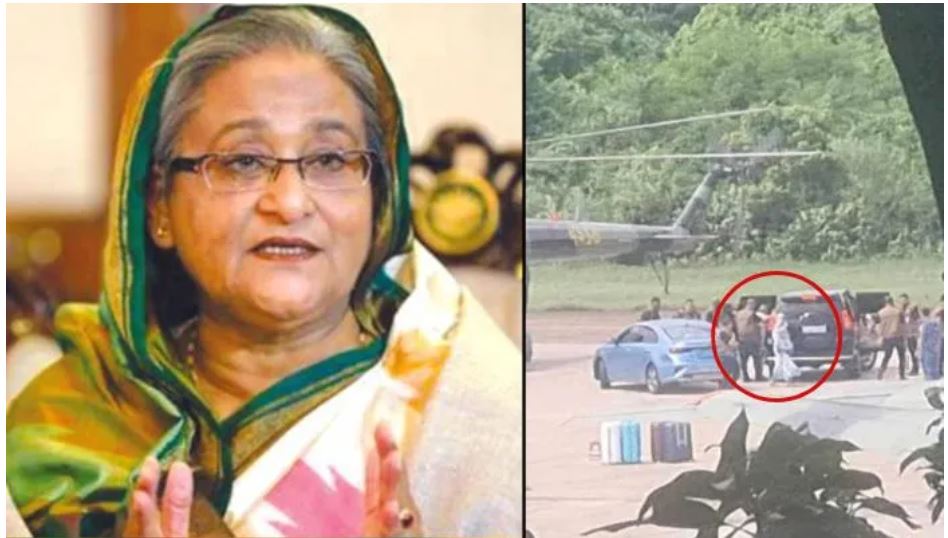
 Having served for a combined total of over 20 years, Sheikh Hasina the longest serving prime minister in the history of Bangladesh was asked to live the country within 45 minutes on Monday 5th August 2024.  Her premiership ended in self-imposed exile following a series of violent protests in 2024 following weeks of deadly protests that began as demonstrations by students against government job quotas but surged into a movement demanding her resignation. She was flown into India in a Bangladesh Military Helicopter. 


India called for an all-party meeting on Bangladesh issue. EAM S Jaishankar addressed Parliament on Bangladesh issue and said continuous contact has been maintained with the Indian community and border forces have been vigilant. IMF said it is 'fully committed' to Bangladesh after protests oust PM

Top army brass reshuffled amidst political unrest, pm resignation, and military takeover. Bangladesh former IT minister Zunaid Ahmed Palak detained while trying to flee to India and Bangladesh parliament dissolved amid warnings. Bangladesh president ordered the release of jailed ex-PM Khaleda Zia. Bangladesh President and chiefs of staff met key members of student protests. Nobel laureate Muhammad Yunus was appointed head of Bangladesh's interim government, said President's Press Secretary

Sheikh Hasina looked to Belarus, Finland, and Russia among others for political asylum. Sheikh Hasina remained at the Hindon airbase, where is expected to stay over the next couple of days as the UK rejected her political asylum.

Her Son Sajeeb Wazed said Sheikh Hasina will return to Bangladesh soon, has sought no asylum, plans to return to her country and revive her party, the Awami League. But earlier, he had said that his mother is old now and will give up politics and he too is not interested. 

On behalf of Naya Bangladesh, Bangladesh' Supreme Court Bar Association (SCBA) President AM Mahbub Uddin Khokon called on India to arrest former prime minister Sheikh Hasina and her sister Sheikh Rehana, and send them back to Bangladesh, Daily Star reported. In a statement, he said, "We want to maintain a good relationship with the people of India. Please, arrest Sheikh Hasina and Sheikh Rehana, who fled the country, and send them back to Bangladesh. Sheikh Hasina has killed many people in Bangladesh." 

What would happen, we need to wait and see. 

Some metrics from the years of her prime ministership: 

GDP in 2009 was USD 102 BILLION 

GDP in 2024 is 455 Billion

A 317% growth in 15 years. 

Per capita income  in 2024 is USD 2646

It was USD 698 in 2009

A 279% growth in per capita income 

Exports in 2009 was 17.36 Billion

Exports in 2024 are USD 50 Billion 

A 3X growth in exports 

Population in 2024 is 17.47 Crores

Population in 2009 was 14.67 Crores. 

A limited 19% growth in 15 Years. 

The economy of Bangladesh recorded an average growth rate of 6.5% in the decade to 2023, above the 4.3% average for the Asia-Pacific region.

Her fall is a great loss to Bangladesh

Bangladesh is now India’s potentially no more a friend,  Pakistan had not been ever, China has been expanding its borders,  Nepal is brooding, Maldives not close anymore, Sri Lanka is swimming out of the inner turmoil. Unfortunately, looks like India do not have even a single country in her neighbourhood as a friend, and she has been giving asylum to many .

If not managed well, this would not only effect Bangladesh, but the geopolitical situation of this subcontinent. 

So many are being killed on the borders, trying to get into India, and killed in Bangladesh. Count yet to be confirmed. 

Where is all this leading too? 

Rich can get better refuge - can move out in an aircraft, but the poor suffer. 


Wednesday, July 31, 2024

Sea Prayer ~ Khaled Hosseini (73 of 2024)


'Sea Prayer' by Khaled Hosseini is a book of illustrations and very few words. The lines are short yet poetic and profound, and never fail to present a vivid picture of the Syrian refugee crisis it tries to explain. It’s a father’s words to his little son sleeping in his arms as they wait for a boat that would carry them along with many others across the sea to a safer shore. The story is said to have been inspired by Alan Kurdi, the three-year-old Syrian boy who made headlines across the world when his body washed upon the shore amid the Syrian crisis. (Illustration by Dan Williams)


His latest work Sea Prayer is a departure from those best-selling novels — it's a short work of fiction that captures the heartbreak of the Syrian refugee crisis. It's told as a poetic letter, from a father to a son as they prepare to embark on a journey across the sea, and features the illustrations of Dan Williams.


This is a short war story and in the form of a letter by a father to his son on the eve of their journey fleeing from war-ridden Syria and a prayer to the sea for the safety of his son in this journey.

We all remember the harrowing image of Alan Kurdi, the 3 year old Syrian boy whose body washed upon a beach in Turkey in Sept '15 after drowning in the Mediterranean Sea trying to reach safety in Europe. This book is a tribute to millions of families like his.


It reads like spoken word poetry. The story, heartwarming. His writing style, elegant as always. It reminds us of the perils refugees face while leaving their country, a place they've called home their entire life; how unwelcome they are in other countries; how they are asked to take their misfortune elsewhere. The story starts with the father describing his childhood in Syria and its beauty with its mosques, souks and crowded lanes in contrary to what his son got to witness which is only death, air filled with dust from exploding bombs and families praying for survival. The gorgeous illustrations change as the story develops from displaying green fields & busy lanes to protests, siege and war. Hosseini is one author who can make you feel empathy like no one else


A country with lush green plains and with ordinary hustle bustle is now converted to a battleground. Children born in these years are subjected to the sounds of bombings, hungers and terror everyday.

Khaled Hosseini's touch to this world is to always show the dark side as he once wrote....

"There is only one sin, only one. And that is theft. Every other sin is a variation of theft. When you kill a man, you steal a life. You steal his wife's right to a husband, rob his children of a father. When you tell a lie, you steal someone's right to the truth. When you cheat, you steal the right to fairness."

-Khaled Hosseini (The Kite Runner)


From A Thousand Splendid Suns by Khaled Hosseini. 


“I know you’re still young, but I want you to understand and learn this now…. Marriage can wait, education cannot. You’re a very, very bright girl. Truly, you are. You can be anything you want, Laila…. I know that when this war is over, Afghanistan is going to need you as much as its men, maybe even more. Because a society has no chance of success if its women are uneducated, Laila. No chance.”


~ Khaled Hosseini, A Thousand Splendid Suns (Chapter 16)


Treasure

by Georgia Douglas Johnson

What matters though love's dream shall pass,

Since from the throbbing hour-glass

One golden-throated moment prest

Its attared incense to my breast.


Since I have known the purple gleam

That lifts above me—can I deem

The way unlighted—when I go

Encircled by love's afterglow?


Monday, July 29, 2024

Partition, Bengal and After : The Great Tragedy of India ~ Kali Prasad Mukhopadhyay (68 of 2024)


Leonard Mosley in is book 'The Last Days of the British Raj', has rightly painted the year 1947 as the 'Year of Vultures' - as their most favourite food the human flesh were in abundance in Indian streets. A lot has been said about the great tragedy of Jews in Germany where around 2 million were effected, pathetic.  The Great India Tragedy has lead to tears of at least One hundred million people.  

This book is a comprehensive history of Partition and its impact in the life and property of the minorities, especially in East Pakistan, now Bangladesh. This is a narration of terrific atrocities and holocaust on innocents. After the Partition, demand for exchange of population  has been severe communal riot. The way all this was done was a great Blunder. The cost was not insignificant. Over 600k people were killed, smashed, raped, robbed. 

On 4th June after the announcement previous day that partition was inevitable as needed by Muslim league and it will be carried out in the peaceful and friendly spirit of the Gandhi-Jinnah appeal, Gandhi was like a bird with a broken wings, preparing to break with the Congress leadership and denounce the plan in the evening prayer meeting. Many newspapers christened it at the 'Mountbatten Plan'. Leaving the choice of their future to the Indian people themselves, avoiding coercion and transferring power as soon as possible were suggested by Gandhiji. Louis Mountbatten's  persuasiveness had won him the ultimate and most difficult triumph of his Viceroyalty, and ended up saying in the prayer meeting "It was no use blaming the Viceroy for partition. Look to yourselves and in your own hearts for an explanation of what has happened."

And on the eve of Independence, there was no one getting off the 'Ten down express' in Amritsar that night, it was a train full of cropses. In great white-washed letters on the flank of the last car the assassins' calling card read: "This train is our Independent gift to Nehru and Patel.' It was preplanned to put to shame what Halaku (Hulagu Khan) did. The uprooted and alive millions were in a terrible state of mind.  Kushwant Singh, a Sikh lawyer from Lahore, was totally indifferent to the gay crowds around him in New Delhi. 'I had nothing to rejoice about' he would bitterly recall. 'For me and millions like me, this Independence was a tragedy. They'd mutilated the Punjab, and I had lost everything.' Since both the communities in Western India were warrior class, they fought from day one, the holocaust in Western Pakistan had its repercussions in East Punjab.  Administration there was virtually broken down.  The partition of Punjab caused great untold miserly, to several million refugees.Some suggest it to be upto 5 lacs. 

In Eastern Pakistan there was supression of news because of retaliation.  They were not fully out of the 'Direct Action Day' on the 16th August 1946 where thousands of Hindus were massacred and Muslim League volunteers set fire to Hindu houses, it was known as 'Great Calcutta Killing'. By the end of 1947 about 4,25000 hindus had migrated from East Pakistan, of the 13 million Non muslims. Right from the beginning discrimination against the non-Muslims became the rule. There was a false rumour spread about the murder of Fazlul Haq a prominent leader of East Bengal, who had come to Calcutta to dispose of his property. Nehru suggested that Liaquiat Ali Khan and he sign an agreement to stop the recurrent massacres and large scale migration. But the people there were instructed to talk sweetly to minorities with a smile on lip, but not to appoint non muslims in govt. jobs. force hindu's to wind up their businesses, blame them for anything going wrong, thus encouraging foul play, and creating havoc with the rights of the minorities. Trailokya Natch Chakrabarti, who fought for freedom and was in jail for 30 years and underground for 5 years,  was sent out at the age of 75 when he was suffering from Cardiac problem.  All hindus were brought to a court compound, there were no toilets and basic necessities. Condition was pitiable. These continued, situation worsened again in 1964 when 3000 refugees left from Bangladesh but only 1500 reached India. US Senatro Edward Kennedy in his report gives the following details about the refugees from Bangladesh in 1971. As on October 25th 1971, 9.54 million refugees from East Pakistan had crossed over to India. The average influx as of October 1971 was 10,645 refugees a day. In the 1971 war of liberation 2,00,000women were raped hundreds of thousands were victims of mass murders.  Parties were created within on the basis of subreligion. Indigenious people had their own group. 

The task that confronted the Government of India was threefold. Firstly, they had to retrieve the law and order position and to stop the communal frenzy; secondly they had to bring about a sense of security among the Muslim minority/afford those who wanted to go away safe transit across the frontier, ensure the peaceable transfer of Hindu's and sikhs to India and provide for their resettlement.  An emergency committee of 15 was set up.  Hindu's were fleed from West Pakistan and they left Bangladesh mainly because of communal oppression, Communal atrocities, Declaration of Enemy Property Act, occupation of religious property, depriving Government services to the Hindu community etc. A veteran Journalist (RGK) once said, he heard some Pakistanis boasting in 1947 - Haske Liya Pakistan, Ladke Lenge Hindustan. This was confirmed by Collins and Lapierre. There is another slogan in Agartala, Thripura and other North Eastern States - 'Ghuske Lenge Hindustan' - Intruders. 

Soon after Independence, many of the leaders were assassinated in all three countries. Dr. Shyam Prakash Mookherjee and Lal Bahadur Shastri died a mysterious death.  In a speech at the India house in November, Mountbatten, during his visit to London said 'Only'  hundred thousand people had died and only a small part of the country has been effected. 

All Human Rights Group ignore the issue and try to silence others under the grab of so called secularism.  

There were business classes, missionaries, novelists, labourers etc. ex-majors who were located sleeping on railway platforms and women reduced to begging or abandoned some by Indian husbands.  After living in India for 40 years and more some found it difficult to leave India - as they could not afford cooking, did not know how to make even a tea, when they would return to London. In 1979, Mountbatten was killed by IRA 

Islamic exploration started in 636 AD but they could obtain foothold in 713 AD with the victory over Sind. For the next three centuries India resisted further spread. From 11th century AD rapacious Islamic invasion of Turkish origin started. Mahmood Gazhni invaded India several times from 1000 to 1026 AD and annexed Punjab to his empire. The Ghur successor expanded to the heart of India after defeating the valorous Prithivi Raj Chauhan in 1192. Upto 17th century, various Islamic dynasties, from Turko-Afghans and later the Central Asian Mughals ruled over large parts of India. They did not subscribe to the fundamental civilisational and religious principles of India. They consciously and perhaps conscientiously, resisted acculturation into the timeless civilizational and religious milieu of India. This thus became the first source of heterogeneity in India, dividing the Indian population into two religious communities as reflected in 1881 census, leading to partition. In Bangladesh Indian religionists fell from 33.93% in 1901 to 11.37 in 1991.  Of the estimated 15 to 20 million illegal migrants, approximately 8 to 10 million have settled in West Bengal, 6 to 8 million in Assam and the rest in Tripura and other north eastern states and in other cities like Delhi, Mumbai and Ahmedabad.  Then there are Indian Muslims who are made to flee these regions. Sending immigrants is the most effective way to colonise countries because it is less offensive than to send military expeditions and much less expensive. 

P.S. The Cheraman Juma Mosque is a popular pilgrim centre in Kodungallur in Thrissur district. According to hagiographical legends, it is claimed that the mosque was built in 629 CE by Malik Bin Dinar. It is claimed to be the first mosque to be built in India and the second in the world where Juma prayers were started.

Jinnah was stern and wanted to continue with the British law followed the British style of life, and transfer Pakistan into another Turkey on the lines of Kamal Ataturk. He was influenced by West. When Ulama asked him whether to apply the Shariah to the functioning of the new state, he asked: "Whose Shariah? Hanafis? Hambalis? Sha'afis? Ma'alikis? Ja'afris? I dont propose to hand over the the field to Ulama, I don't fall to propose to fall into their trap. 

P.S. The important thing for you to know is that if you see someone else following different rules because that person follows a different fiqh, do not argue, disrespect or feel bad about it. Respect them for what they do and practice with confidence what your fiqh teaches.

This flexibility is in matters of fiqh rules. But make sure that your Aqeedah is exactly as described in the Qur-aan. No difference is acceptable in matter of Aqeedah, which must come from the Qur-aan.

The Hanafi and Shafii schools of fiqh (jurisprudence) are two of the four major Sunni schools of Islamic law, the others being the Maliki and Hanbali schools. All four schools are named after their founders and are based on the teachings of the Prophet Muhammad and the interpretations of the Qur'an and Hadith (sayings and actions of the Prophet).

Imam Malik was in Al-Madina. He founded. the Maliki school in parallel to Abu Hanifa founding his Hanafi school. Imam Shafi^i was a student of Imam Malik. Imam Ahmad ibn Hanbal was a student of Imam Shafi^i.Maliki, Shafi^i, and Hanbali schools have great similarities between them because they come down from teacher to student and student becoming a Mujtahid and making his own deliberations. Hanafi school is different and so you will see much difference between Hanafi and those three schools.

There are several differences between the Hanafi and Shafii schools, including:

  1. Methodology: The Hanafi school places a greater emphasis on the use of independent legal reasoning (ijtihad) and the application of legal principles (usul al-fiqh) in making legal decisions, while the Shafii school places more emphasis on the use of precedent (qiyas) and analogy (analogical reasoning).
  2. Sources of law: The Hanafi school gives greater weight to the Qur'an and the Hadith, while the Shafii school places more emphasis on the Hadith and the consensus of the community (ijma).
  3. Legal principles: The Hanafi school has a more liberal approach to legal principles, allowing for greater flexibility in the application of the law, while the Shafii school is more strict and rigid in its application of legal principles.
  4. Areas of law: There are also some differences between the Hanafi and Shafii schools in the way they approach specific areas of law, such as inheritance, marriage, and criminal law.
Despite these differences, both the Hanafi and Shafii schools are recognized as legitimate interpretations of Islamic law and are followed by millions of Muslims around the world.

Before partition Jinnah had been cautioned by several experts that it would be difficult to manage both western and the eastern wings separated by twelve hundred miles of foreign territory and inhabited by people different in their habits, customs and lifestyle. But he had such confidence in the supremacy of his leadership that he believed that he would be able to put everything right. Now he became aware that neither he nor the bond of Islam would be able to knot together two such diverse people. The gulf in political, economic and social respect was very wide. Despite his ill health he rushed to Dacca to pacify the agitated people there. On March 21, 1948 when he reached there were no slogan's of 'Quaid-i-Azam Zindabad'.  Language was proving to be a much more powerful link than religion. He had declared Urdu to be the national language of Pakistan, when Bangladesh would not accept. This was of course, the most volatile, divisive issue in Pakistan politics. 

The extremists on the Muslim side Khaksars, a group of militant Muslims had demanded a Pakistan stretching from Karachi to Calcutta.  The council of the All India Muslim League wanted to have undivided Pakistan and Bengal. 

After the meeting he told his sister Fatima, "I am sorry the game is lost. I backed the wrong horse. Liaquat Ali Khan was the prime minister then. Jinnah's absurd two nation theory had created Pakistan, but he could not run it as he wanted, soon after he died on 11th Sept 1948 at 10.20 pm. Initially men governing Pakistan were not practicing Muslims, but products of Anglo-Saxon training. Muslims in India were united before partition, but Jinnah divided Indian muslims into Pakistani Muslims, Indian Muslims and Bangladeshi Muslims who had no connection with each other. He had destroyed all the ties which had knit them together. All this he had done in the name of Islam. After Jinnah's death the politicians of Pakistan were like 'a flock of sheep without their Shepherd. From the date of its birth till the Governor-General Iskander Mirza, handed over the country's Government to General Ayub Khan in October 1958, there were as many as seven Prime Ministers and none of them were bold enough to tackle the difficult situation.