Tuesday, May 18, 2021

Beyond 2020: 25 Happening Careers in Accounting and Finance

 An engaging book that chronicles the cope, skills, education, pay-pack and the road ahead in respect of each of 25 future careers. It is going to be survival of the fittest. To win in any of the many careers, you must have a strong knowledge of it. It gives an insight into what in the era of Industrial Revolution 4.0, is instored for each of us. 43rd of 2021.

This book is an update of CA to CEO, a book written in 2009 by the same author, with all the updates that have happened since then. The book covers, how the rules have changed and that there's more to come. The 25 careers, and the comping up. 


HOW CAREERS ARE CHANGING

Here is a sneak peek at the kind of organization that you will be working in.

In tomorrow's world, you may work in a company headquartered in India, whose raw material is sourced from Australia, the finished product is marketed in America, money is raised in Europe, and the finished goods are manufactured in Asia. In short, it is a trans-national company.  In such a world, your colleagues, peer, mentors, and leaders will not have the same socio, economic, and cultural backgrounds. They would come from differing backgrounds with different workplace ethics that would lead to culture shocks. To succeed in such a place, you need to understand the changing rules of the career market.

RULE 1: Uni-functional Vs. Multifunctional

KNOWLEDGE IS POWER

You will have to be thorough in your area of expertise. If you have majored in marketing, you must know marketing inside out to become the head of marketing one day. But if you want to head a company sometime in the future, you will have to understand manufacturing, finance, logistics, HR, and technology. To score high in your career, you must have a multi-functional appreciation of happenings in your organization. 

RULE 2: 9 to 5 Vs. 24*7

CAREER FIRST

Once upon a time, people went to the office at 9 a.m. and returned home at 5 p.m. Working on holidays was a strict no-no. Today, you cannot be a clock-watcher. Today, it is not just enough to show up; you have to deliver. There is nothing like 9 to 5 office timing. You work at your convenient hours, and results are what counts and not the hours you clock. 

RULE 3: Grey hairs vs. Grey Cells

AGE NO BAR

RULE 4: IQ VS. EQ

BEYOND KNOWLEDGE

Earlier, to win in the workplace, you had to be strong in your subject. IQ (aka knowledge) was necessary. Even today, IQ is essential; but it alone won't do. You must also have the skills the job calls for. Everything is not taught in colleges and are learned at the workplace. You have to get along with people, and this calls for both emotional and social skills. Your ability to communicate, be a team player, contribute as a team member, lead small groups, generate and take through ideas, motivate others are crucial. These are the emotional and social quotients. 

RULE 5: One Time Vs. Life Long

KEEP RUNNING

Earlier, the availability of knowledge in the world doubled every 50 years. Later, it started doubling every 15 years, and then every 3 years. This means that if you don't update for three years on the trot, you will become outdated, like a museum piece. Today, learning is life long and continuous. The moment you stop learning, your career is over. You will have to continually upgrade both your knowledge and skills to move to stay relevant. That will put enormous pressure on you in your job.

RULE 7: Adam Vs. Eve

IT'S A WOMAN'S WORLD ALSO.

RULE 7: Man Vs. Machine

ROBOT AS COWORKER

Newer technologies are disrupting organizations. The constant question is how much can be automated and how much can be replaced with AI. As machines begin to replace men, dramatic changes are happening. No, the role of people has not been abated; it has only been transformed. You will spend more time working alongside key internal stakeholders, challenging their strategic plans, and modeling and predicting different scenarios.

PARADIGM SHIFTS

SHIFT NO. 1: NEW SECTORS ARE OPENING UP

The later part of India's Millennial Generation (aka market generation), born and grew up in a market economy, is getting into the earn-and-spend mode. The age of agriculture and to a large of extent manufacturing is gone. IT, ITES, Retail, Communication, Hotel, Banking, Entertainment, etc., are booming. These are throwing up tremendous opportunities in the employment market.

SHIFT NO. 2: PORTABILITY OF JOBS AND MARKETS AND RISE OF THE GIG ECONOMY

Suddenly both men and money are portable. You can now work in any part of the world if you are adequately skilled. There is also a shift in the type of jobs, which are emerging. Today, one in three workers are freelancers, and many of them are working outside office hours. In fact, in the gig economy, you will find people working for more than one employer at the same time. Loyalty will be to the individual and not to the organization. 

SHIFT NO.3: BIG TO SMALL COMPANIES -SIZ DOES'NT MATTER

SHIFT NO.4:THE AGE OF ARTIFICIAL INTELLIGENCE

Artificial Intelligence, technical automation, and bots are transforming the workplace culture. Technologies, however, are yet to master Emotional Quotient, and this is where soft skills like decision-making and empathy of a deserving candidate are crucial. In the light of the dynamic landscape of the job market demands you should have varied skillsets for the job.

Few Interesting Careers that would be of more demand in the future are:

1)    Fraud Investigator: For those who are interested in tracking the crimes that do not necessarily leave a paper trail behind them. You would be in great demand in Accounting/law/Consulting firms, Security and Risk Management firms, Bank and Public Financial institutions and Government agencies.

2)    Mergers and Acquisitions: It’s the time of Empire Building, with world moving towards monopoly, 18 corporates dominating the entire web. There would be lot of mergers and acquisitions happening, and it’s a challenging career to be part of.

3)    Technology and Analytics: Technology is now a way of life and the future of any business or profession would be predominantly tech-driven. You have a wide scope here from technology implementation to technology governance and audit. More on it later. If you have analytical aptitude, data management skills, domain knowledge, Proficiency in understanding charts and graphs, technical skills, application of data analytics functions, this is what you could try.

4)    Consulting: Consultants work in multiple areas, chief among which are Portfolio Strategies, Business Strategy, Finance Strategy, People Strategy. If you have problem solving skills, can create a personal impact, have deep domain expertise, can meet expectations, keep confidentiality, you can give this a try.

5)     Investment Banking: Popularly known as dealmakers, investment bankers are into a wide range of functions. They advise on financing alternatives, help raise capital, provide advice on M&A, help value businesses, Price fixing, Underwrite public issue, research. If you are interested in these, is conservative and aggressive, with accounting, finance, legal, analytical, skills, give this a try.

6)    Taxation: Some of the areas where you could work are, Tax compliance, consulting, litigation, International taxation, Transfer Pricing. Skill sets needed are ability to rad and understand, interpersonal skills, attention to details, communication, commercial understanding, Flexibility.

7)    Supply Chain Management: It’s the chain that costs more than gold. Things need to reach from the Point of Origin (POO) to Point of Consumption (POC), and making that happen on a timely and efficient manner. The size, type, geographic scope and organizational structure of the firm that you choose to work for. If you have analytical skill, research skill, interpersonal skill, accounting skill, technology skill, you can give this a try.

8)    Insurance: In an Insurance Industry, there would be accountants, Internal auditors, Risk Managers, Product designers, Product pricing, Digital Officers, investment managers, claim managers, Advisors. To excel here you would need to have a flair for numbers, Knowledge of IRDA regulations, knowledge of Indian and Global market, Forensic skill and legal skill.

9)    Enterprise Risk Management: Every action of an enterprise has a risk perspective. Managing risk is at the heart of strategic management. If you have reading skills, number crunching, technology, decision making, people management skill and is holistic, this is for you.

10)                    Teaching: “The influence of teachers extends beyond the classroom, well into the future. It is they who shape and enrich the minds of the young, who touch their hearts and souls. It is they who shape a nation’s future,” wrote F Sionil Jose. The way teachers teach may change, but the profession would always be there to stay. If you are passionate  about it, have Knowledge of the subject and can Encourage, inspire, and motivate, you can definitely give this a try.

 Some other equally interesting areas are Practice Management, Project Management, Commercial Banking, Statutory Audit, Cost Management, Equity, Corporate Finance, Internal Audit, Information Systems Audit, Financial Modelling.

AUTOMATION:

It will kill some jobs, leave some untouched and create new ones as well, Jobs, that are likely to go away due to automation include:[PR1]  call center employees, data entry operators, insurance underwriters, tax preparers, sales representatives, translators, and fast food employees.

Bots are set to replace tax preparers, Online shopping is making the sales rep extinct, Self checkout reduces the need for cashiers, Robots are replacing medical technicians, lawyers are replaced with bots, BPO can become machine driven.

Yet, no advancement can upstage psychiatrists, storytellers, world-class teachers, scientists, actors, and thought leaders because these roles need innovative and personal skills.

The World Bank estimates up to 69% of today’s job positions will become redundant. But there is no need to panic. For every job lost, new ones will come up. Look at history, for proof. The 20th century hadn’t heard anything like Chief Technology Officer, Chief Delivery Officer, Chief Belief Officer, and Chief Gardener. It is not that job opportunities are not there. It is just that skills set requirements have changed. So what is most important is to ensure that workforce is smart and adaptive and can take up newer roles.

MICRO INNOVATION

Innovation does not evolve overnight. It is the outcome of years of punishing schedule followed by the fear of being so near, yet so far. Suspension bridges and skyscrapers did not happen overnight. The electric car as innovation is taking its time in coming. Two years ago IOT, machine learning, artificial intelligence, virtual reality, etc., were a vision. Now, they are work-in-progress. To succeed, you don’t have to get into big-ticket innovation. If you can copy, localize, iterate and ‘micro-innovate’ you may end up doing spectacularly well. Uber is an example. Uber connected individual drivers to needy passengers and created a revenue model out of it. Did they innovate at the leading edge? Fat chance. They used a technology that has been around for donkeys’ years, GPS. Earlier you paid to access cars, now you pay money to access transportation as a service. Beyond Uber, there are other fixers. The pricing differential that you see in Airbnb’s accommodation especially if you are looking for a stay for a couple of hours has been a game changer. Some sites help freelancers connect with business owners. Others provide spaces in cities where you can rent a desk at comfortable prices. Elsewhere women can borrow saris and kitchen appliances at moments of need. In short, it’s about quick tweaks on existing products. These companies haven’t done anything novel; they are merely using big data and algorithms. And the funny part is none of them own the assets they use! WhatsApp is another example of micro-innovation that disrupts traditional telecom messaging services. From Morse code to smartphones the travel has been incredible. In the automobile industry, the talk is about driverless cars. Our carmakers have always focused on delivering a better driving experience. Now they will have to look at providing a better passenger experience!

ARTIFICAL INTELLIGENCE

 Analytics and Robotics are the new buzzwords.  Four technologies will dominate the world. These are bid data analytics, robotic process automation, artificial intelligence and block chain.

There are huge data sitting out there, the ability to track both structured and unstructured data and bring out meaningful insight will be a critical job in the future.

Both robotics and people will work together. Robots will do the dirty job, and free up people to do intellectual stuff!

Artificial Intelligence (AI), an omnibus term which I use for a thinking machine. It can read and grasp reams of data; it can determine patterns and spot outliers. Unlike automation, it learns from mistakes, and like human beings, with more practice, it becomes better. AI is meant to free up time for people for but can never dispense with the need for human experience and insight.

The new-aga accountant will have to learn to work with and through the blockchain. It is a digital leader that can be shared across a network of computers. It helps update real time information, without alteration.

The Cloud is becoming mainstream. It enables access to networks, storage, and applications and allows users to process data on third-party servers. Chief Information Officers (CIOs) are unlikely to invest in hardware anymore. With the arrival of the cloud, technology is an operating expenditure Bots are set to replace tax preparers. Robots are replacing medical technicians. Online shopping is making the sales rep extinct. Self checkout reduces the need for cashiers. BPO can become machine driven. JP Morgan replaced 1,000 lawyers with bots.20 ICT Academy Publications and not a capital expenditure. You can rent them like you rent zoom-cars; meaning you use it and pay for it. All of this is just the beginning as we will see more of a sharing economy. Organizations of the future are going to have only one small core team, with everything else outsourced or hired. An uberization in every part of the company: sales, health marketing, HR will create many more entrepreneurs than regular jobs. The cloud will throw up new opportunities. For instance, once a patient puts his biometrics, the details can be accessed from anywhere and a professional diagnosis given.


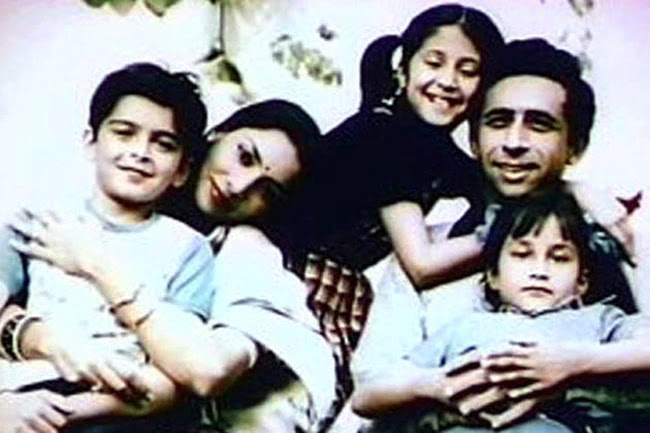
Masoom


The Shekhar Kapur 1983 film starring Naseeruddin Shah, Shabana Azmi, and Jugal Hansraj in lead characters, was based on Erich Segal's novel "Man, Woman and Child".

What a movie ! A perfect cocktail of emotion, love, jealousy, repentance, self realization and forgiveness A masterpiece and brilliant acting by all the actors . And masoom name is actually justified by Jugal Hanshraj as Masoom . Mesmerizing songs and perfect background music. A splendid blend of human emotions and a treat for a movie lover .

Indu (Shabana Azmi) and DK (Naseeruddin Shah) have a happy marriage and two daughters — Pinky (Urmila Matondkar) and Minni (Aradhana Srivastav) — and live in Delhi. The tranquility of their life is interrupted when DK receives word that he has a son, the result of an affair with Bhavana (Supriya Pathak) during his 1973 visit to Nainital when his wife Indu was about to give birth to their first child Pinky (Urmila Matondkar). Bhavana did not tell DK about their son as she did not want to disturb DK's matrimonial life. Now that she has died, her guardian Masterji sends word to DK informing him that his son, Rahul (Jugal Hansraj), who is nine years old, needs a home. Despite the objections of Indu, who is devastated to learn of her husband's infidelity, DK brings the boy to stay with them in Delhi. Rahul is never told that DK is his father as he bonds with DK and his daughters. But Indu can't bear to look at him, a tangible reminder of DK's betrayal. Tanuja as Chanda, Indu's friend, a socialite; Saeed Jaffrey as Suri, DK's family friend, Jairaj as Master Ji, Bhavna's guardian, Satish Kaushik as Tiwary Ji, adds to the story line. 

DK, worried by the effect Rahul is having on his family, decides to put him in a boarding school in St. Joseph's College, Nainital; Rahul accepts with reluctance. After gaining admission at the school and returning to Delhi before his permanent move to Nainital, Rahul figures out that DK is his father and runs away from home. After he is escorted home by a police officer, Rahul confesses his awareness of the identity of his father to Indu. Indu is unable to bear his heartbreak and intercepts Rahul before he is put on the train to Nainital, thereby accepting him into the family and wholeheartedly forgiving DK, after which they drive home happily.

A well thought film and masterpiece of Gulzar's lyrics, dialogue and screenplay.  Lakdhi khi Khati and Thujse Naraj Nahi Zindagi, are two songs, which has been through the growing up days. A simple plot that takes you through an emotional journey of innocence and rests at a  pleasant station. A happy family goes through turbulent times because of a big mistake by one of the family members. A must watch for film lovers.

India of 2021 - Peri Maheshwer


 It all started with fear.. Fear that hinduism will perish. Fear that outsiders will take away our jobs and locals will be jobless. Fear that those who enjoyed supremacy will lose it. Fear that those who had control over others will lose it.. Fear that others will control us, fear that our Gods are being tortured by those who place constitution over temple laws, fear that we will be stripped off our rights to preach and follow a religion of our choice. Fear was marketed and it sold well,not only in India, but across the world. Now we have reasons good enough to be scared of..The psychological impact of the fear of Covid. 


-----------------------------------------------

India of 2021 - Peri Maheshwer

Where Coronil is approved in a week

And Pfizer is kept waiting for months

Where center exports vaccines

And States import the same vaccine 

Where make shift crematoriums are opened

And existent vaccination centers getting closed.

Where beef in a tiffin box can cause riots;

And human carcasses on holy river is treated normal

Where politicians speak caste and religion 

And baba's speak politics and governance 

Where people die for want of oxygen

And governments make money on oxygen concentrators

Where people are arrested for criticising the PM

And rewarded for provoking communal strife

Where testing and transparency is punished

And lesser testing and hiding death rewarded 

Where we are the pharmacy of the world

And 150 countries are sending their pharmacies.

Where India owns the IPR for Covaxin

But holds its rights against its own people

Where at WTO, we seek patent rights waiver

And argue against a waiver in Supreme Court

Where messages were mostly Happy birthday

And now wake up to messages of RIP

Where thousands die for want of health care

And we want to spread 'positivity' from death

Where we wish to start the day with a Jai Shri Ram

And are increasingly saying Ram Naam Satya Hai

- Peri Maheshwer

Friday, May 14, 2021

Anand

 बाबूमोशाय जिंदगी लंबी नहीं बड़ी होनी चाहिए, this masterpiece has completed 50 years; and is an eternal truth. 

आंनद मरा नहीं आंनद तो मरते नहीं!

जब तक जिंदा हैं तब तक मरा नहीं, और जब मर गया तो मै नहीं ,

तो फिर डरना किस बात का

Babumushoi, zindagi aur maut upar waale ke haath hai…Usse na toh aap badal sakte hai na main…Hum sab to rangmanch ki kathputliyan hai jinki dor upar waale ki ungliyon mein bandhi hai.

Zindagi kaisi ye paheli...kbhi ye hasaye kbhi ye rulaye🙂

What a concept, awesome acting, casting, dialogs, lyrics music complete package.  Hats off to team of Anand .


These are nothing but life lessons about death. Anand taught us to look at death differently. For this gem of a movie, we can't thank the late Hrishikesh Mukherjee enough.

Tuesday, May 11, 2021

Covid 2 plan Suggestions

 I really don't know what will wake up this government? It is time they tackle realty than build perception. Peri Maheshwer's  recommendation as he had posted in FB which is so assuring, hope Government  would heed, it is:

1. Create a seperate ministry to strategize, plan and execute all Covid related issues. It must be headed by some one who is a task master and in a project mode. My candidate would be Chandra Babu Naidu. 

2. Form a national team like the GST task force, comprising of scientists, epidemiologists, health ministers/secretaries of each state. Develop a common policy on testing, tracking, vaccination, curfew, lockdowns, oxygen etc. They must be empowered to act with similar powers like our Election/Poll officers during elections.

3. Place orders for 2.5 Billion vaccines,. Invite a global tender. Create manufacturing capacity within India. It would all cost no more than 30000 crores. 

4. Invoke the NDMA act. Invoke section 90/92 of patents act and license two facilities in each state to manufacture the vaccine. 

5. Vaccinate India on the polio vaccination mode when 140 million children would be vaccinated on a single day. 

6. Remove all taxes(Direct & indirect) on every medicine, equipment or solution. Remove all taxes on all hospitals for a period of two years. 

7. Expand health infrastructure for testing and treatment. Give tax breaks for such investments. Absorb medical, Pharma and nursing students to be on field supervised by senior doctors. 

8. Ensure proper count of tests conducted, positive cases, and deaths. Unless we have proper data we cannot act take corrective action.

9. Plan for the third wave. Develop a national plan to stop it, if you can. Develop a defense like in a war. 

10. Ensure that every baba, swami, Yogi, maulvi and Godmen propagating unscientific cure are charged with sedition and put behind bars or attenders to Covid positive patients in hospitals.

Have a plan. Get out of your slumber. Strategise. Decentralise power. Trust the scientists. Stop hiding data. Manage realty. Forget the perception. In the long run, the world should judge us on how we fought this war and won!

Gauriamma


 https://fiftytwo.in/story/the-knife/

Modern India’s history is replete with instances of extraordinary misogyny inflicted on its most prominent women politicians, including Jayalalithaa, Mayawati, Mamata Banerjee and Sonia Gandhi. Gouri was perhaps the first to face it within a party whose ideals explicitly uphold the principles of universal human equality.

Gouri “was thrown out of the party because she is a gutsy woman. This secret is now widely known through whispers about her boldness and arrogance.” In a patriarchal world, he noted, “these are attributes which only men are entitled to. In men these are qualities of leadership; in a woman they are signs of impudence and haughtiness. Male chauvinism expects women to meekly follow commands without questioning.”

In discussing Gouri’s political career, observers sometimes bring up her temperament: what they describe as her thandedam, thanporuma and thanpramanitham—her boldness, her tendency for one-upmanship and her self-aggrandisement.

Kerala politics is, even today, unable to accommodate outspoken women.

Memory is such a bitch, telling you different things at different times. People you thought you could never love, people you think you will never manage to forgive, you forgive after some time.

Karayatha Gouri, thalaratha Gouri

Kalikondu ninnal aval bhadrakaali

Ithukettu konde cherubalyam ellam

Pathivayi njangal bhayamaatti vannu


The Gouri who never cries or tires

The Gouri who becomes Bhadrakali in her rage

Hearing her stories, throughout our childhood

We routinely escaped from our fears.

‐--‐----------

It's not just politics. Politics is an extension  of life. Basically our Indian society is patriarchal and could never stand an outspoken woman in any walk of life. Women who made it to top and made a mark there did with lot of struggle and no or less support. The struggle for every woman with opinion is real. We adjust that's why the society is at peace. The day we all just turn to rebel mode n back each other, the world will see a new revolution.

Missing my father,  who introduced her to me. Thanks to  Bindu Manoj for sharing  this  link,  reading  it, felt  like I was talking to my father. 42nd of 2021

Friday, May 07, 2021

Mankind I pray for you...Sebastian Chettan

 For a lot of people, what is happening is another event and the people who die are data points. Not to the families who lose their loved ones. The closest families are numbed beyond mourning. They can't even bid a final farewell. A virus came and took away their loved ones without warning in the most unexpected way.  

India, home to some of the richest in the world, still has to go with a begging bowl  Where the wise advise fellowmen  to stay safe at home, while power hungry politicians lead them astray. Spends millions to build statues and rest houses for politicians, but has no money to build hospitals. Where cows have high level security and freedom but women live in fear.  Has the best doctors and nurses but they have to watch helplessly as their patients die, gasping for basic necessities.India, I cry for you, Mankind I cry for you. Image building  is the first priority,  Nation  building  comes somewhere  later if at all. 

Since 15th April  had 5 of my friends  and relatives  who had lost their life. Today 6th May 2021, just two weeks  after Geeta Aunty, almost at the same time,  there is an SMS, Sebastian  Chettan is no more. He was the Antony Perumbavoor  to us, another family  member  to so many of us in Potta, who was with my Achan all through  his Chemo , until his last breath.  We unfortunately  cannot bid him Good Bye even. He is'nt an event, he is'nt a data point,  but a life gone too soon.  A loss to so many, above all to his family.  Feel heartbroken to see these repeating

"मैं जहां भी देखता हूं, लोग ही लोग दिखाई देती हैं. " - What now?

Mankind  I pray for you...May there be an end to this soon. May the mastermind  behind  this , whichever  part of the world they may be in, be brought to light.

Tuesday, May 04, 2021

Assembly Elections - 2021


On 6th April 2021, Votes were polled in 1,53,538 Polling Stations spread across 475 Assembly Constituencies, in the states of Kerala, Tamil Nadu, Puducherry and for third phase of Assam and West Bengal. The number of Polling Stations has increased in view of the fact that the number of voters per polling station has been reduced from 1,500 to 1,000 keeping social distancing norms in view.

The voter turnout In Assam was 82.28% and 84.21% in West Bengal. While 73.40% of the people voted in Kerala till 6 pm, neighboring Tamil Nadu witnessed 62.86% during the period till 5 pm. 77.87% voters cast their votes in Puducherry. All these amidst the growing Pandamic.  In Bengal it was in 8 phases ending on 29th of April, in Assam in three phases, beginning on March 26.


Pinarayi Vijayan, Mamata Banerjee, Edappadi Palaniswami, Sarbananda Sonowal

The Mamata Banerjee-led Trinamool Congress (TMC) pulled off a spectacular victory in a high-stakes electoral battle, trouncing BJP to form the government for a third consecutive term in West Bengal. In the hotly contested Nandigram seat, BJP’s Suvendu Adhikari defeated his former party chief Mamata Banerjee though.


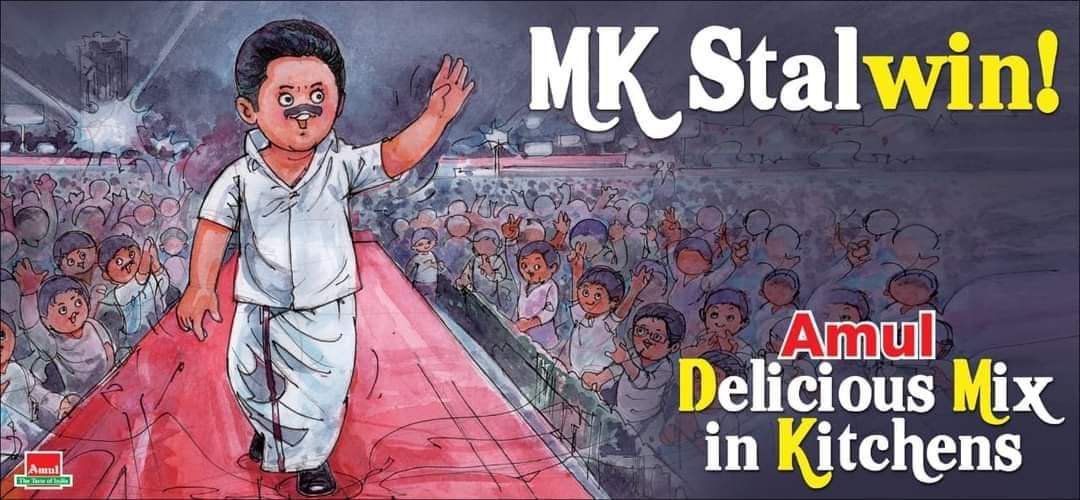
In Tamil Nadu son and the sun rise, MK Stalin become the state Chief Minister with the DMK-led alliance leading.


 In Kerala, the Pinarayi Vijayan-led LDF government scripted history by retaining power, the first time in four decades that the same grouping will form the government for the second consecutive time. 


For the BJP, Assam emerged as the lone bright spot with the ruling NDA  retaining power in the state. Meanwhile, in Puducherry, the NDA looked set to form the government.

The elections were held amid a surge in Covid-19 cases across the country – a second wave that has ridden the country to an unprecedented crisis.


The last 2 phases of WB elections were held under the shadow of death & distress across the country and it was important to understand its impact on the results. Giles Verniers, a teacher and researcher at Ashoka University analyses this Covid effect. 

1. The vote share of BJP drops from 39% to 32% in the last two phases, a 7% drop. At the same time, TMC jumped from 47% to 52%, a swing of 5%. 

2. TMC makes its most impressive vote gains with the gap with BJP increasing to 13.5% and 11% in the last two phases. 

3. The voting in the last two phases is spread across 9 contiguous districts making it a pan WB demographics. 

4. In 2019, the BJP scored 35% of vote share across the Kolkatta city’s assembly segments, while the Trinamool was at 48%. This vote was 28% and 61% in 2021 indicating a surge for TMC and punishing BJP because of Covid.  mishandling. 

BJP would do well to manage the Covid crisis so that people see the difference. Else, they will face a west bengal like swing in other states too.


Lessons learnt. As long as BJP don't enter into a cease fire with Non BJP states, things will not go fine in India, what we need is a successful vaccine drive and peoples safety first. Modi can win a lamppost election for himself, it's a high command run party, they will have to rethink. In the North or the Hindi belt of India, all level of politicians eat money and nothing reach the lower level, while in the southern belt, the top level, takes money, but things are delivered to the poor, there is mid day meal, schools and hospitals. What the south need is not religious divide but unity. Never taunt a woman anywhere, ever....Modi-o-Modi, and all the blind bhakths. Learn to respect. 

Bengal 2021 was not a normal election. This was the most audacious political heist attempted in recent times. Bengal was the final frontier that the BJP needed to cross to consolidate its hegemony. And it chose this election to launch an all-out attack. It threw everything into it: money, media, organisational machine and, of course, Narendra Modi. While it shows the limits to dividends of communal polarisation, it is not a rejection of communal politics. If anything, the Bengal election has rekindled the pre-Partition communal fire that the state will have to deal with for a long time. Besides, mobilisation of anxious Muslim voters against the BJP is hardly a sign of secular politics.The biggest public health crisis of post-Independence India was not an electoral issue anywhere, except Kerala.

There cannot be two opinions about the real loser today: the Indian National Congress. The grand old party did not miss an opportunity to ensure it misses out on a regular opportunity to come back to power in Kerala, in the first Assembly election after Rahul Gandhi became an MP from the state. Similarly, in Assam, it allowed the BJP to come back to power despite massive anti-CAA protests in the state a year ago. It ceded power in Puducherry and sank to irrelevance in West Bengal. The message is as clear as it gets: the Congress in its current form cannot lead India in a battle to reclaim democracy

Everything; victories, defeats, right or wrong analysis, looks so hollow in comparison to the lives still being lost because of infrastructural failure. .....Assembly Election  2021, for me, it's Prasanth Kishore's Win👍 A hope for a different  tomorrow.  Better or new, I do not know. For the kind of change  in mindset in many of us.


A Quiet Place - Seicho Matsumoto (Spoilers)


The opening chapter of A Quiet Place describes a meal between businessmen and civil servants.  Geishas are present. Geisha (or geiko) are professional entertainers who attend guests during meals, banquets and other occasions. They are trained in various traditional Japanese arts, such as dance and music, as well as in the art of communication.  This odd mix of duty and indulgence defines the responsibility and entitlement of the Japanese male.  Words and gestures are circumscribed by careers and business. A Quiet Place centers on dedicated government bureaucrat Tsuneo Asai, a section chief in the Ministry of Agriculture and Forestry. It's told in the "eyes" of Tsuneo Asai. He is a company man working his way up the ladder. Rung by rung. Coming from humble background and being dedicated to his education and his passing the entrance to civil service has encompassed his entire life as the primary purpose. Always the primary core to his actions. He is in his mid-forties, and has been successful in his career, knowing how to kowtow to the fast-track superiors that come and go in the department, and with decent prospects for advancement -- at least as far as his background will allow within the limitations of the still extremely rigid Japanese system of the early 1970s. He knows his place, and the importance of appearances -- and he craves stability. The unexciting aura of the first chapters capture the personality and lifestyle of Asai, who is an unexciting man. When his first wife passed away when he was thirty-four he was married again within a year, to Eiko. The novel begins, however, with Eiko's death -- a hard blow for Asai, they were married for seven years now.  Asai was more or less satisfied with his marriage, convinced: "he and Eiko were perfectly in tune". Sure, they didn't have a very active sex life -- but Eiko didn't really seem to be into it, and given her health situation Asai was understanding, and sex wasn't such a big deal for Asai anyway .

Eiko had a heart attack. She had had one previously, so it isn't a complete surprise, but she generally took care not to overly exert herself and Asai does have questions. It takes him a while to really look into the circumstances, but he does find it hard to explain to himself what she was doing walking on a rather steep road far from home. Asai was away on a business trip when it happened, but when he returns home he discovers her body was found in a shady part of town – what was she doing so far away from their house? As he begins to investigate, he finds out his wife has been leading a secret double life. He believes his life to be a respectable, if rather ordinary one while his marriage is solid. The fact that his wife died in a disreputable part of town is almost incomprehensible to him.  Various factors play their part in what follows.  These include ignorance, fate, paranoia, ego, timidity, incompetence, self-destruction and irony. All these factors are affected by how the characters understand the boundaries in Japanese life and their obligations.  The extent to which each factor determines the outcome is not obvious. Asia's social standing is of primary importance to him as is his position at work. Nevertheless, slowly but surely, Asai finds himself in circumstances completely alien to him. He begins to lose control of the situation which leads to an inevitable but tragic conclusion.

Looking back, however, it's pretty clear he didn't really know his wife very well. He had his role -- his job, above everything -- and she her supporting one (though disappointingly she didn't socialize as helpfully as his colleagues' wives knew to); beyond that, he left her to her own devices, and didn't ask much about what she did or how she spent her time. Eiko was active in a haiku-writing club -- and apparently very talented -- The middle of the book has extremely intense and deductible sublime conclusions for some amusing parsing to a haiku. Haiku composed by his departed wife; haiku composition was her hobby. Asai looks into this a bit as he can't quite let go of wondering about why his wife died the way she did. There are several secluded hotels up the street from where she died, and Asai can't help but wonder whether she was on her way to one of them, for an illicit rendezvous. Could she have been having an affair ? When Tsuneo goes to apologize to the boutique owner for the trouble caused by his wife’s death he discovers the villa Tachibana near by, a house known to be a meeting place for secret lovers. As he digs deeper into his wife's recent past, he must eventually conclude that she led a double life...Asai can't keep himself from digging -- though for months he doesn't really get anywhere. But eventually the pieces fall into place, and Asai figures out exactly what happened. He enlists the services of a detective agency, and these provide some of the necessary background information, and suddenly it all makes sense.

Although we never encounter her in the present, the character of Asai’s deceased wife is a rich one—she was a seemingly humble, dispassionate woman who Asai realizes too late actually had strong desires and talents. She practiced the writing of haiku and, while Asai assumed this was just something for a housewife to engage in as a pastime, he learns after her death that she was a talented poet who was envied by other haiku artists who knew her work. People who knew her remark to Asai how beautiful and desirable she was becoming as she reached her mid-30s, when he always thought of her as average looking. And then, there’s the fact that she was having a whole lifestyle unknown to him, involving the two mystifying people from the strange neighborhood and possibly a secret romance. Asai’s investigation, along with details he learns from a private detective he hires, leads him to focus squarely on two people who might have had some role in his wife’s secret existence and death: a woman who runs a high-end cosmetics shop in the neighborhood, this store being the place Asai’s wife allegedly stumbled into while suffering the heart attack; and a man who lives in the area and has business, and possibly personal, relations with the shopkeeper. Asai becomes convinced that these two people were players in his wife’s private life and that they may have played roles in her death—or they at least know more about all of this than they are telling. He begins investigating them closely, to the point of stalking them.… He suspects his wife of having an affair, which indeed he confirms. Asai follows his wife’s paramour by train to the sanatorium where his wife is a patient, and in the woods a short walk from the train station, he kills Konosuke Kubo by bashing his skull with three rocks. He sets off in the dark, walking back to the train station to return to Tokyo. One car only comes along the country road, stops, picks him up and takes him to the train station.

Everything develops seamlessly. Asai resumes his dedicated occupation at the Ministry. Then comes a request for Asai to address the farmer’s union of the prefecture where he killed Kubo and was given a lift to the station by two farmers. No drama, no histrionics. A story of the composed face of honor as it slowly crumbles from unseen cracks. Asai's Achilles heel is his job and reputation, which he values above all else -- a vulnerability that leads to the threat of his complete downfall. Backing himself into a corner, Asai keeps taking actions that further complicate his situation -- right down to the irony of how the story is wrapped up.  The final act is rushed and horribly contrived. Out of nowhere, Asai does something rash and out of character that tries to give the book an unearned crescendo that instead ends up baffling. Following that is the forced introduction of two characters in an attempt to create an unconvincing dramatic finale. This is a terrific, short book by one of Japan’s literary treasures.

What was essentially the story of a hunter --flips into one of Asai as the hunted. For a while we expect the criminal to be the victim. The crime is a consequence of when manners are forgotten, when temper rules. What follows is fate, and timid obedient men can shape fate as much as the confident and the assertive. ‘Manners maketh man’ Manners can mean self-effacement and missed opportunities but they can also determine what follows.  Manners inform decisions, and decisions determine subsequent events. 

 In A Quiet Place, Matsumoto uses the mystery of Asai’s wife’s death as a means of exploring things like: the kind of relationship that can happen between a couple whose marriage was set up by a matchmaker; the friction between a civil servant’s career aspirations and personal life when there is some upheaval in the latter; and the prevailing temperaments and attitudes of various people from his country. Also, in the relationship Matsumoto shows Asai to have had with his wife, coupled with what he learns about her after her death, he brings out a universal truth key to many human alliances: that the people we know, even those closest to us in our everyday lives, might be leading double lives unknown to us.

The story provides an insight into the layers of duty and social obligation (giri) found in many aspects of Japanese society, from spousal relationships to interactions with corporate and government organisations. The theme of giri plays a recurring and important function in the writing, dominating multiple interactions among the characters and essentially driving the story forward at every turn.

Note too that an action that sets the plot in motion at the start of the novel, is also key to the ending. Matsumoto was an originator of the form in that country. This is before tech, I-phones, Internet- all of that.  41st of 2021.

Saturday, May 01, 2021

Hope & Bible


 Thanks to Christy for sharing these with me.

Are you optimistic about the future? Many people try to remain positive despite the serious problems we face today. But can we realistically expect things to get better? Yes! The Bible gives us a solid hope for a better tomorrow.

 What hope does the Bible provide?

 Is the hope the Bible offers us too good to be true?

 How will this hope come about?

When will this hope be fulfilled?

 How can the hope the Bible offers us help you today?

 What hope does the Bible provide?

The Bible acknowledges that humankind faces tremendous problems. However, it promises that these problems will not afflict us indefinitely. Consider a few specific examples.

Problem: Homelessness

What the Bible says: “They will build houses and live in them.”—Isaiah 65:21.

What it means for the future: People will enjoy their own home.

Problem: Unemployment and poverty

What the Bible says: “The work of their hands my chosen ones will enjoy to the full.”—Isaiah 65:22.

What it means for the future: All humans will have satisfying, enjoyable, and rewarding work.

Problem: Injustice

What the Bible says: “Princes will rule for justice.”—Isaiah 32:1.

What it means for the future: Racial, social, and economic injustice will be eradicated forever. Everyone will be treated fairly.

Problem: Malnutrition and Hunger

What the Bible says: “There will be an abundance of grain on the earth; on the top of the mountains it will overflow.”—Psalm 72:16.

What it means for the future: Everyone will have access to an abundance of healthy food. No one will go to bed hungry or suffer from malnutrition.

Problem: Crime and violence

What the Bible says: “They will sit, each one under his vine and under his fig tree, and no one will make them afraid.”—Micah 4:4.

What it means for the future: Everyone will feel safe and secure because wicked people will be gone, and “the righteous will possess the earth.”—Psalm 37:10, 29.

Problem: War

What the Bible says: “Nation will not lift up sword against nation, nor will they learn war anymore.”—Isaiah 2:4.

What it means for the future: Peace will prevail earth wide. (Psalm 72:7) No one will need to mourn the death of a loved one killed in war or seek refuge from war zones.

Problem: Sickness and disease

What the Bible says: “No resident will say: ‘I am sick.’”—Isaiah 33:24.

What it means for the future: People will no longer suffer from disabilities or get sick. (Isaiah 35:5, 6) The Bible even promises that “death will be no more.”—Revelation 21:4.

Problem: Damage to the environment

What the Bible says: “The wilderness and the parched land will exult, and the desert plain will be joyful and blossom as the saffron.”—Isaiah 35:1.

What it means for the future: The earth will become a global paradise for humans to inhabit, as God originally intended.—Genesis 2:15; Isaiah 45:18.

 Is the hope the Bible offers us too good to be true?

Understandably, you may feel that it is. However, we encourage you to examine further what the Bible says about the future. Why? The promises found in the Bible are different from the promises and predictions that people make. The promises found in the Bible are from God. Here is why that makes a big difference:

God is trustworthy. The Bible says that God “cannot lie.” (Titus 1:2) In addition, only God has the ability to foretell the future. (Isaiah 46:10) The Bible contains countless examples that prove that what God foretells always comes true. For more information, watch the video How Can We Be Sure the Bible Is True?

God has the power to solve our problems. The Bible says that God has the power to do “everything he pleases to do.” (Psalm 135:5, 6) In other words, nothing can stop God from fulfilling his promises. What is more, God wants to help us because he loves us.—John 3:16.

Naturally, you may wonder, ‘If God wants to help us and has the power to help us, why do we still experience so many problems?’ To answer that question, watch the video Why Does God Allow Suffering?

 How will this hope come about?

God will use his Kingdom, a government in heaven, to fulfill his promises. He has appointed Jesus Christ as Ruler of that Kingdom, and he has given him authority to care for the earth and the people on it. When Jesus was on earth, he cured the sick, fed the hungry, controlled the weather, and even resurrected the dead. (Mark 4:39; 6:41-44; Luke 4:40; John 11:43, 44) He thus showed what he would do as King of God’s Kingdom.

Watch the video 'What Is God’s Kingdom?' to learn more about how God’s Kingdom will benefit you.

 When will this hope be fulfilled?

Soon! How can we be sure? The Bible foretold events that would signal that God’s Kingdom is about to begin its rule over the earth. (Luke 21:10, 11) Present world conditions match what the Bible foretold.

 How can the hope the Bible offers us help you today?

One Bible writer compared the hope that the Bible gives to an “anchor for the soul.” (Hebrews 6:19) Just as an anchor keeps a ship steady during a storm, the Bible’s solid hope for the future can help us weather the problems we face today. Our hope can protect our emotional and mental stability, and even our physical well-being - 1 Thessalonians 5:8

Has living under the threat of COVID-19 begun to wear you down? If so, you are not alone. For months, people around the globe have had to adapt to living under the threat of this pandemic. Many “have made huge sacrifices to contain COVID-19,” says Dr. Hans Kluge, World Health Organization Regional Director for Europe. “In such circumstances it is easy and natural to feel apathetic and demotivated, to experience fatigue.”

If you are experiencing what is being called pandemic fatigue, take courage. The Bible is helping many to cope with life during this stressful time. It can help you too.

 What is pandemic fatigue?

 Why is pandemic fatigue serious?

 What Bible principles can help you to beat pandemic fatigue?

 Bible verses to help with pandemic fatigue

 What is pandemic fatigue?

Pandemic fatigue is not a medical condition but is a term used to describe the natural response people feel to the prolonged uncertainty and disruption caused by a pandemic. While each person reacts differently, some common signs of pandemic fatigue include:

Lack of motivation

Changes in eating or sleeping habits

Irritability

Stress over tasks that would normally be handled well

Difficulty concentrating

Feelings of hopelessness

 Why is pandemic fatigue serious?

Pandemic fatigue poses a serious threat to our safety and that of others. If we do not battle it, we may gradually begin to lose our motivation to follow COVID-safe practices. Over time, we may become complacent about the virus, even while it continues to spread and kill. Tired of living under restrictions, we may seek greater freedom, which could put us and others at risk.

During these stressful times, many are experiencing the truth of what the Bible says: “If you become discouraged in the day of distress, your strength will be meager.” (Proverbs 24:10) The Bible offers principles that can help us cope with discouraging situations, including this pandemic.

 What Bible principles can help you to beat pandemic fatigue?

Stay at a distance physically—but not socially

What the Bible says: “A true friend . . . is born for times of distress.”—Proverbs 17:17.

Why it matters: True friends build us up. (1 Thessalonians 5:11) In contrast, prolonged isolation puts our health at risk.—Proverbs 18:1.

Try this: Stay connected with your friends through video chats, phone calls, or e-mail and text messages. Reach out to friends when you are having a bad day, and regularly check in to see how they are doing. Exchange tips on what is helping you to cope during the pandemic. Find ways to do something kind for a friend, and you will make a bad day feel better.

What some have said

Megan.

“I try to make plans to have a videoconference with friends. Sometimes we get together one-on-one. At other times, it’s fun to get a group together to play a game or just to catch up. Even though it’s not quite the same as meeting in person, it really helps. The pandemic has made life hard, so it’s important to reach out to our friends and be honest about how we feel. It can be difficult to do, but we all need help.”—Megan, Canada.

Nathan and Emma with their children, Eli and Hope.

“We miss our family and friends, but we have found ways to reassure them of our love. As a family, we made cards and small gift bags for many of our friends and included an encouraging Bible verse to let them know that we were thinking of them. This brought us so much joy! Spending time doing things for others helps us forget our own worries and anxieties.”—Emma with her husband, Nathan, and children, Eli and Hope, United States.

Make the best of your current circumstances

What the Bible says: “[Make] the best use of your time.”—Ephesians 5:16.

Why it matters: Using your time wisely can help you to stay positive and avoid excessive worry.—Luke 12:25.

Try this: Rather than focus on what you can no longer do, look for ways that you can take advantage of your situation. For example, are there projects that you now have time for or hobbies that you can now pursue? Can you spend more time with your family?

What some have said

Evan and Samantha with their children, Eli and Adam.

“We’ve been able to do a lot of additional projects around the house, including growing vegetables and herbs, doing art projects, and decorating.”—Evan with his wife, Samantha, and their children, Eli and Adam, South Africa.

Ivan and Eve.

“My wife and I have spent more time together than at any other period of our 30-year marriage. It has deepened our love for each other, as we’ve come to appreciate each other’s frailties and strengths as never before. We are now better prepared to support each other during future crises.”—Ivan with his wife, Eve, Italy.

Stick to a routine

What the Bible says: “Let all things take place . . . by arrangement.”—1 Corinthians 14:40.

Why it matters: Many people tend to feel more settled and happier when they have a general routine.

Try this: Make a schedule that reflects your current situation. Set aside specific times to do schoolwork, secular work, and household chores as well as times to take care of your spirituality. Include other healthy activities, such as spending time with family, being outdoors, and exercising. Periodically review your schedule, and revise it as necessary.

What some have said

Kgaogelo.

“I’ve kept almost the same routine that I had before the pandemic. I’ve replaced some of my normal activities with exercise, but I still get up at the same time in the morning. My routine takes my mind off of the pandemic and helps me to concentrate more on my family and friends.”—Kgaogelo, South Africa.

Carmel.

“I like to get up and make my breakfast and coffee as usual. Then I get ready and fix myself up as if I were leaving the house. This has helped me to feel good about myself and to be more alert throughout the day.”—Carmel, France.

Adapt to changing seasons

What the Bible says: “The shrewd one sees the danger and conceals himself.”—Proverbs 22:3.

Why it matters: Depending on where you live, changing seasons may reduce your opportunities to get fresh air and sunlight, which are good for your physical and mental health.

Try this: If winter is approaching, try to adjust your living room or work area to maximize sunlight. Plan outdoor activities you will be able to do despite the colder weather. If possible, obtain winter clothes that will let you spend more time outside.

If summer is approaching, people will spend more time outdoors, so be safe. Plan where you will go, and choose times when crowds will not be there.

What some have said

Sameena.

“I live in a rainy climate, so a flexible routine helps. As soon as I see some sun, my goal is to go outside quickly. Even a short walk or bike ride in the sunshine does a lot for my mood.”—Sameena, France.

Tiffany.

“The summer was easier to deal with because there were opportunities to do things outside, but now as winter approaches, I am making a list of inside projects that I want to work on.”—Tiffany, Canada.

Continue to practice COVID-safe behavior

What the Bible says: “The stupid one is reckless and overconfident.”—Proverbs 14:16.

Why it matters: COVID-19 is deadly, and we risk infection if we let down our guard.

Try this: Regularly check reliable local guidelines and consider whether you are still being cautious. Focus on how your actions will affect you, your family, and others.

What some have said

Daryn.

“I am doing my part to stop the spread. Although others ignore regulations, I focus on what I can do to keep myself and my family safe.”—Daryn, South Africa.

Strengthen your relationship with God

What the Bible says: “Draw close to God, and he will draw close to you.”—James 4:8.

Why it matters: God can help you to cope with any challenge.—Isaiah 41:13.

Try this: Read a portion of God’s Word, the Bible, each day. This Bible-reading plan can help you get started.

Why not contact Jehovah’s Witnesses to learn how you can benefit from the arrangements they have made to continue meeting during the COVID-19 pandemic? For example, worldwide they have been using videoconferencing for their congregation meetings, annual commemoration of Jesus’ death, and annual convention.

What some have said

Roberto.

“I’ve been using some of my extra time to read the Bible. It builds my confidence and trust in Jehovah’s * promises. I can see how bright the future really is.”—Roberto, Italy.

Alta and Jannie.

“My husband and I read the Bible together and make it a point to memorize scriptures. Prayer, Bible reading, and sharing the Bible’s hope with others gives us the strength to cope with our situation.”—Alta and her husband, Jannie, South Africa.

 Bible verses to help with pandemic fatigue

Isaiah 30:15: “Your strength will be in keeping calm and showing trust.”

Meaning: Trusting in God’s advice can help us to stay calm during difficult times.

Proverbs 15:15: “All the days of the afflicted one are bad, but the one with a cheerful heart has a continual feast.”

Meaning: Focusing on positive things can help us to be happy even during difficult times.

Proverbs 14:15: “The naive person believes every word, but the shrewd one ponders each step.”

Meaning: Heed health precautions, and do not be quick to believe that such restrictions are unnecessary.

Isaiah 33:24: “No resident will say: ‘I am sick.’”

Meaning: God promises to put an end to all forms of sickness

God Bless My Country!

Covid is surging. There are no beds in hospitals, no oxygen, no medicines, no care. People are dying like flies. Modi hai to mumkin hai. Kuch logon kha vikas bakhi kha antim sanskar. "Ram nam se, BJP kho kursi, or janatha kho arthi mili". These are the frustrated comments around. Is this the promised Ache Din?

"The BJP supporter is living in denial. He knows his party has mismanaged the second wave. He knows people are dying because his party leaders were busy celebrating the demise of covid and claiming victory in advance. He knows they were fighting elections where millions of people were being assembled with flags and slogans. He knows that Kumbh Mela was an unnecessary exercise in religious oneupmanship. All this could have been avoided. He knows that the over confidence of Modi and Amit Shah (both fully vaccinated) has led to lacs of avoidable deaths. 

Yet, he refuses to budge. 

He also knows that Narendra Modi speaks half truths and plain lies. He knows that the stories fed to him on Mann Ki Baat and WhatsApp are mostly fake. He knows that there are several non-BJP governments who are doing an excellent job in managing the pandemic. He knows his own party is hiding deaths in MP, UP and Gujarat. He feels ashamed by the unscientific statements made by BJP MPs and MLAs. 

Yet, he refuses to budge. 

What he does instead is finding a silver lining in this pandemic. He speaks about how per capita deaths and infections of India are still the lowest. He forgets that each death is that of a living being who has a family and loved ones. Death cannot be a comparative statistic, but a BJP supporter is beyond such grace. His commitment to protecting his political agenda is so intense that everything pales in comparison. 

The reality is that his insecurity as a Hindu is so epic that he is willing to forego everything to protect his religious identity. He believes Modi is his last chance to build a resurgent Hindu nation. So everything, including deaths, is a small price to pay. 

He believes that West Bengal has to be won. At any cost. It’s the largest communist bastion in the world. So COVID can wait. Infections and deaths are okay. He knows that the decision to hold Kumbh Mela was inappropriate and wrong. So he shares fake videos of empty roads and river banks in Haridwar -- despite knowing that global media is posting pictures of the thousands of people bathing in Ganga. He knows they are true, but he wants to believe that it is a hoax. 

The BJP supporter has become a laughing stock in this country. Many like him have shifted their loyalties long back because their conscience cannot allow them to indulge in political oneupmanship over deaths of their own countrymen. 

When asked why he still supports BJP, he says what choice do we have? I feel like telling him that your choices have to be based on values. You can’t forgo your values to justify a bad choice. That is the sign of a man with no integrity to the nation. 

This country has NOTA. If you don’t like any party you are supposed to join the NOTA movement in India. You don’t have to worry about the political implications of NOTA. You have to press on NOTA because your integrity does not allow you to vote for any political party. 

But all these arguments won’t work with a BJP supporter. It all boils down to wisdom. You can be educated and qualified, but since 2014 I have realised that the most educated and qualified in this country have emptied their brains when it comes to making political choices. They have lot of intelligent arguments to make, but the wisdom is somehow missing. What the BJP supporter does not understand is that an insecure mind can never achieve wisdom. 

When India is on a ventilator, if politics and religion dictates where you stand, then the Delhi High Court was right in staying that God runs this country."

~ Tanaz Patel Sopariwalla

In a virtual meeting with Indian ambassadors and high commissioners posted across the world, External Affairs Minister S Jaishankar on Thursday conveyed the message that the “one-sided” narrative in international media — that Prime Minister Narendra Modi and his government had failed the country by their “incompetent” handling of the second Covid-19 wave — must be countered.

The meeting came in the wake of strong editorials, commentary and reports in leading international newspapers such as the New York Times, Guardian, Le Monde, and Straits Times, and on TV channels, blaming the Modi government for ignoring warning signs, holding an extended election in West Bengal, and for not cancelling the Kumbh Mela.

Accordingly, the participants were told that the ferocity of the second surge was something no public health expert in the world had predicted, and that health infrastructure even in the most advanced countries had crumbled in the first wave last year, so this was not a disaster that was uniquely Indian.

Jaishankar presented the argument that the numbers were highest in Maharashtra and Delhi, two states that did not go to the polls.

He did not touch upon the subject of Kumbh Mela, which has been been described in every international report as a “super spreader” event.

Although the participating diplomats had questions, no one asked about the consequences of holding the Kumbh. Nor were there any questions about the messaging from crowded election rallies addressed by the Prime Minister and Home Minister Amit Shah, in violation of social distancing norms, or any of the institutional failures pointed out by the international media. Jaishankar also did not touch upon Vaccine Maitri, under which India shipped 66 million vaccines to other nations. 

Among suggestions made by envoys was that there was no need to counter every media criticism with a rebuttal of the kind written by the deputy high commissioner to Australia in response to ‘The Australian’ report headlined “Modi Leads India out of lockdown…and into Covid apocalypse”.

Demand and request to spread positivity. Will and can that be done, when your house is burning? What is important hiding facts or speaking the truth?

When people die, instead of taking up responsibility, the priority is image building. Proving Arnab is guilt free, is more important than arranging oxygens, and with huge election rallies, which are a priority and new parliament building coming up, not even virtual session to discuss the current situation. 

And the message going around is:

Is the second corona wave *a planned biological war* against India?
Do you believe that the second wave of the current widespread pandemic in India is due to the spread of the virus in general?

Till a fortnight ago I used to believe that this is the second wave, but now a lot of doubt has gone home in my mind.

Look at the state of the entire Indian subcontinent. Pakistan, Bangladesh, Nepal, Bhutan... There was no other wave in these countries or in any other country of Asia. Today there are similar conditions as they were in India two-and-a-half months ago. Then how did this bomb explode in India itself? Are the citizens of all those countries very much disciplined than Indians? Do they wear masks around the clock to avoid epidemics?
No!
Do their geographical location differ from India?
No!
Then, the second wave could not even touch these countries and is breaking India, why?

ICMR has said at the time of the first wave that crores of people got this *disease* in India and they did not even know and when  crores of people suffered it, they became *disease resistant* . If so, then *the second wave*... How did it become *dangerous*? And why did it happen *only in India*?

Look at the *global conditions* after this *pandemic*. From *medicine, vaccine* to  *economy management*. *India* amazed the whole *world*.
And now, understand the *real concern* of *China*. *China* is talking of *help* to *India* today. Last year was also it was *infiltrating* in the *pandemic period*. After * kicking out* there, situation is  so *improved* that it started to help us ????

*Pakistan* as *long time foe* and a  *lame* talking of help to India ??.
One very important reason is that *Modi* is not bowing down like *Trump*.

The world's *Pharma Lobby, Oil Lobby and Arms Lobby* created this *pandemic* and
*BlackLivesMatter* and
*George Floyd*  beat *Trump* by causing a terrible uproar in the *media* of the issues. Because *Trump* stood against  these *lobbies*. Today the same people are following * Modi*.

Do you know why? because ...
... the *business* of *pharma companies* is at least *4 to 6 trillion dollars (annually)*. Vaccine business of at least *1.25 trillion* was reduced to zero. The *PPE Kit* of *500 billion dollars* and *business* of *mask* was almost reduced.
In the field of *medical* , *India*, who was suffering *loss* due to *self-sufficiency*..How did the country that always was extending alms has  become a *vaccine* sharing country ??Undigestable isn't it ?  Germany knows this pain on how India beat them* in the field of  *Drugs*. Please  think again.

Going forward..
... *75000 to 100000 charging stations* are being built for *electric vehicles* in India in the next 2 - 3 years which will reduce *oil* consumption by *30%*. This is a slap in the face of the  *global oil lobby*.

not only this...
... India has started *export* of *LCA fighter planes* and *BrahMos missile* which is proving to be a *massive setback* for the *global arms lobby*.

*Modi* is a big *thorn* in the way of all these lobbies…
... and they firmly believe that this *thorn* can be removed only by *public anger*.

Another aspect...
Most people are now shown to be angry at *Modi*'s  *rallies and campaigning* in  *Assam* and *West Bengal* elections. But they have no understanding of *Geo Politics*.
*15 crore Bangladeshis* and *Rohingyas* in *Assam* and  *West Bengal* many *lakh intruders* have been made guests.
( *Didi*  and *Raga/Soga* have also made *Aadhaar Card* for everyone.)

Now looking into this sensitivity, *Assam* and *Bengal* are *perhaps* more important to India than it is to *Kashmir*.

Search *"Chicken Neck"* on Google.

"Believe it or not, the *second wave* of *Chinese disease* in India has been projected for Modi  to *fail* on every front and to make it *civil war* in the country."

It is a *dangerous game* of the *Maoists* of *China* and its *sleeper cells* hiding in India…
Showing *24x7 dead bodies and oxygen deficiency**pandemic news* , the opposition parties and their governments  are ignorantly (wantingly) co-conspiring with anti-Modi global lobbies.

Why is the same *mother shown* dying as a *mother* of hundreds?

Why only there is *crowd* in the *crematorium*?

Some *70 tweets*  alike surfaced Why  that our  *Mother* died *without oxygen* ??

*Tool Kit Gang* again *active* at whose  *gesture*?

Suddenly the *farmer* also returned to the *border of Delhi*?

As soon as the *recovery scandal* surfaced in Maharashtra, Modi started winning *Bengal*.

...then  *how* did the *pandemic* appear again ???

Brothern, this is a *conspiracy* Believe it or not !!
This could be a *huge war*!
I am not an *expert* but look at *situations* and think *why all of a sudden* this happened only with *India*

It can be a *formidable biological weapon* !!!

After a short interval, this  *fight* is going to go a long way.

If the next *generation* is not to be made a *slave* then in that case…
... you understand very well what you have to do.


The coronavirus doesn’t fit into many leaders’ agendas ! Neither does the virus follow the chants of blind followers !

Authoritarian governments cannot imprison a savage virus and the havoc it wreaks.
Transparency and information sharing are not exactly strong traits of authoritarian leaders.

The coronavirus may currently be the world’s top threat, but a very close second is the political leader who doesn’t see it that way , along with his legions of devoted acolytes with blinkers on!

Not long ago, in January 2021, this government bragged to world leaders that India had set a shining example on how to beat the virus. People believed it. A month later, the BJP was effusive in its praise of Modi’s leadership in dealing with the pandemic’s first wave. We kept our faith in the resolution passed at the BJP meeting than on reality. A couple of weeks later, the health minister, who should have resigned a dozen times in the last one year, declared, “We are at the endgame of the corona crisis.”

There were counter-warnings during the same period but none paid attention. As early as in February, Mr Rahul Gandhi (lampooned by rival BJP as ‘Pappu’) cautioned that the threat from the virus was very much alive and urged the government to devise an action plan. But why should anyone listen to him? He knows nothing, was the collective disdain. Virologists and other experts, too, sounded alarm bells. Every country in the world faced second, third and even fourth waves and India cannot escape, they said. But we went ahead with the Kumbh Mela and elections. On a day when the country recorded over 2.5 lakh cases, we gloated over the “biggest ever rallies in Bengal”.

The narrative was pushed — cases are not going up in Bengal or Uttarakhand despite rallies and the Kumbh. Once both states started witnessing a rapid rise in cases, that spin was dropped. Instead, what are we told now? The second wave was expected, not the ‘tsunami’. Who converted what could have been a second wave but a manageable one into an unmanageable tsunami leading to mass cremations? If only we were cautious instead of getting busy with just the Didi hatao campaign in Bengal; if only the Centre and the states had worked as a team and marshalled all possible resources learning from last year’s experiences; if only we had placed orders for vaccines when other countries did. If only….the list is endless. 


Call the virus, Bio Bomb, or unexpected break out, do the Prime Minister not have a responsibility to safeguard the country? Why do we have the defense and security? Well what do we say when the leader is not a visionary, is unethical, uneducated - his deedhi-o-deedhi still linger, quick to condemn and slow to praise, who never saw anything positive in Nehru, Gandhi, Pakistan, China or England, and when things screwed up for him, is adamant to spread only positivity, and not use social media? Is social media only to display his whims and fancies? we follow our leader who is a great visionary, who saw the data of Kerala being second in India, since last 4 months, and thought physical election rallies were important, who thought virus knew borders and will not move from one state to another, when Maharashtra and other states had increasing numbers, who preach social distancing, but go ga-ga, seeing a cheering crowd, without wearing mask and with no social distancing, cry on the top of the voice Deedhi-o-Deedhi, what an example to the others in the nation, kudos to those who follow them, my heart bleeds to see people still unable to see all these, now I understand why some are called Blind - they just either pretend to not see, or only see what they want to. Virtual parliament sessions cannot be done when needed, new building has to be constructed for what and whom? I can go on and one.....How dare I say India made mistakes? How dare I suggest other good vaccines exist that aren't made in India? How dare I question decisions? I must be paid, ignorant, evil or an idiot. It's ok, it's only lakhs of Indians dying while world recovers from Covid. Its all down to state governments mismanagement, The One on top is God.....for the blind. Do u really think these Politicians serve the Country. Infact they're on amassing spree. They want to lay their hands on all the states. 
That's it. 
In this Pandemic, its disgusting to see our PM having rallies after rallies and proudly claiming "मैं जहां भी देखता हूं, लोग ही लोग दिखाई देती हैं. 
What a disgrace to have such an irresponsible person as our PM. 

“In looking for people to hire, you look for three qualities: integrity, intelligence, and energy. And if they don’t have the first, the other two will kill you.” – Warren Buffet