Thursday, February 20, 2020

Hobby Hub


A great venture by talented Roniya Roy - Collection of her various works, as a past time. Facebook page created, link to which is https://www.facebook.com/Hobby-Hub-149948755733759/


The eye opener was a visit to my house, with lots of plants, and my gifts :


This eventually led to participation in the exhibition on 23rd and 24th of December 2017 at Central park, Panampilly Nagar. Wondering how this wonderful day's were missed to be posted. A Flea Marketing initiative:


Stalls there were:


Our stall looked one of the best.


A wall of our stall was somewhat like this:

Full night view was:


Close view of stall:


Sale did not take long to kick off: First sale was To Deebesh by Robiya

Bottle Art

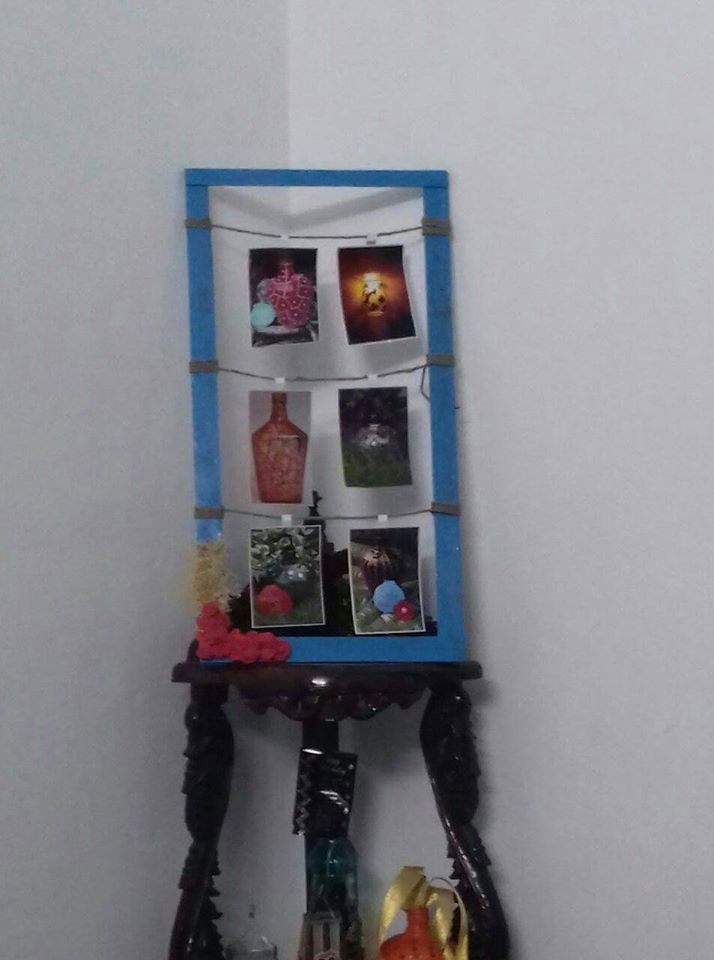
Photo Frame for decoration:


Items for sale where:

1) Shell works - Key chains, pendents,


2) Hanging candle glass bottles


3) Book marks


4) Bottles


5) Coconut shell paintings:


6) Handkerchiefs -

7) Glass paintings


"Before I throw away anything , I always ask myself, Can I make something with this?"

Some satisfied customers send picture of items kept at their house:


My Favorite bottle was:


Ventures after the exhibition are:

1) Handmade Clay key chains.


2) Gift boxes.


3) Candle Stand.


4) Stone Paintings


5) Tyre paining - Table and stool


6) Cycle garden - Have you thought you can make your old unusable cycle so beautiful?


7) Christmas Decorations


8) Neck Chain


9) Bottle Arts with lighting


10) Bottle art


11) Clay Pendants


You are a star Roniya - May your hobby take you places, and you keep shining brighter like your star; and may your stars shine as long as the ones up above the sky.


Tuesday, February 18, 2020

Chemical Free Life - An intense desire


Most home cleaners are chemical -laden and toxic. Not only for us, but for our surroundings as well. Completely safe, bio-degradable cleaners, is something that we can do without much investment and as 'best out of waste' too. We can make natural, biodegradable, non-toxic, responsibly disposable, dish wash, toilet cleaners, laundry wash, floor cleaners. Recently home, my sister in law, is very passionate about this, and has an intense desire to spread Chemical free life style.

HOW TO MAKE DISHWASHER DETERGENT WITH LEMONS

Method 1:

Ingredients

2 cups lemon (Use both the rind and fruit with seeds removed, about 4 medium lemons)
3 1/2 cups water (Divided into 1 ½ cups and 2 cups)
4 oz white vinegar
4 Table spoon salt
4 shikakai/Ritha/Soap Nut
Pinch of turmeric for colour

Instructions

Pressure cook lemon, water, salt and soap nut. 3-4 whistles. Let it cool, filter out the solid parts. Add vinegar and pinch of turmeric for colour.

Method 2:

Ingredients

2 cups diced lemon (Use both the rind and fruit with seeds removed, about 4 medium lemons)
3 1/2 cups water (Divided into 1 ½ cups and 2 cups)
4 oz white vinegar
1 cup kosher salt

Instructions

Cut lemons into small ¼ inch thick chunks, making sure all seeds are removed. Place the lemons into a small sauce pan with 1 ½ cup of water.
Heat the lemons and water to a slow boil. Simmer for 20 minutes until water is reduced and syrupy and lemons are very tender. Make sure to stir frequently, add water if needed. Add the cooked lemon and syrup mixture to blender with 2 cups of water, blend on high until very smooth.
Strain lemon mixture back into your saucepan using a small colander. Add vinegar and salt to saucepan and stir until well combined.
Bring mixture to a slow boil and cook for 10-15 allowing it to thicken slightly. It will be the consistency of runny applesauce when done.
Cool completely in sauce pan, stirring occasionally to incorporate salty crust that may form on the top.

To wash dishes: Fill your dishwasher detergent dispenser with the fresh lemon gel. I use about 3 tablespoons of detergent.


HOW TO MAKE FLOOR CLEANER WITH LEMONS

Ingredients

Jaggery - 1 part
Lemon/Orange peels - 3 part
Water - 10 part

Instructions

The trick is to remember the ratio, 1:3:10- jaggery to citrus peels and water. Since the bio-enzymes are natural cleaning agents, you need not be completely accurate in the measurements but make sure you don’t stray away from them too much either.

Make sure the jaggery cubes are cut into small pieces to ensure they dissolve quickly. Keep stirring till all the jaggery is dissolved. Meanwhile, fill a plastic bottle with the peels. (Make sure you use a plastic bottle because unlike metal or glass, the plastic will allow the gases that form during chemical reactions to expand. This is also a great way to reuse disposable plastic bottles at your home). Fill jaggery solution in the bottle along with the peels. Now we just have to wait patiently.

The cap needs to be air-tight to allow uninterrupted chemical reaction. However, if the bottle you are using has a small opening, make sure you open the cap twice a day to release the gases formed.

The first batch of bio-enzymes takes about 90 days to prepare. The next batch, however, can be quickened if you use a part of the old batch with the fresh one.

HOW TO MAKE HOMEMADE MOSQUITO REPELLENT

Method 1

Ingredients

Garlic
Mineral oil
Water
Fresh lemon juice


Instructions

Mince a few cloves of garlic, cover it with mineral oil and let it sit for a day. Take a teaspoon of that oil and mix 2 cups of water along with a teaspoon of fresh lemon juice. Pour it into a spray bottle and keep the mosquitoes away.

Method 2

Ingredients

Lavender/oil - 15 drops
Vanilla - 3 Tablespoon
Lemon juice -1/4th cup
Distilled water


Instructions

Mix 15 drops of lavender essential oil, 3 tablespoons of vanilla extract, and a 1/4 cup of lemon juice into a spray bottle and fill the bottle with 2 to 3 cups of distilled water. Give it a good shake and spray this effective repellent (that also happens to smell good) onto skin and clothes.

Method 3

Neem oil when mixed with coconut oil acts as a very effective mosquito repellent. This mixture is especially effective against the mosquitoes that cause malaria. Simply apply the solution on your skin and keep mosquitoes far away.

Method 4

Camphor is also an effective way to keep mosquitoes away. Take a small bowl, fill it with water and put a camphor tablet in it. Keep it in a corner of your room. If you have a bigger room, use two of these bowls.

HOW TO MAKE HOMEMADE SHAMPOO

Method 1

Ingredients

Tender leaves of a hibiscus plant,
Tender vine and
Leaves of a pepper plant.

Instructions

Soak them overnight in water. The next morning, before you go for a head bath, crush the leaves in the water and use the liquid as shampoo. It may not form the foam that you’re used to.

Method 2

Ingredients

. Shikakai- 500 gms

· Soap Nut- 100 gms

· Fenugreek seed (Methi)- 250 gms

· Holy Basil (Tulsi) leaves- 1 twig full

· Green gram (Moong bean)- 250 gms

· Fresh curry leaves- 1 bunch.

Instructions

You need to clean all the ingredients underwater and put them out to dry in sun. They might take up to two days to dry off completely. Then, grind them to a fine powder. This is basically your hair powder.

Each time you want to wash your hair with this, mix a small portion of this powder with water and soak for about two hours. Even soaking overnight will work. Apply it on your scalp, gently massaging it for about five minutes and wash it away, as you do with your regular shampoo.


HOW TO MAKE HOMEMADE TOOTH PASTE AND TOOTH BRUSH

Ingredients

A tablespoon of refined camphor,
one tablespoon of sugar,
one teaspoon of alum (Paṭikāram, फिटकिरी/phitakiree)
two tablespoons of sunflower oil and
five drops of clove oil for this.

Instructions

Just mix these ingredients for the Ayurvedic toothpaste! That’s it! Camphor and alum will make your teeth strong and white, while clove oil will strengthen your gums. The sugar will add sweetness to the paste, so you don’t cringe while you brush.

Match this Ayurvedic toothpaste with a Neem twig toothbrush. Simply soak a twig in water for about 24 hours, so that it softens. Crush a tip to use it as bristles. Cut the part after use, and discard. Repeat the process the next day.

HOW TO MAKE HOMEMADE TOOTH POWDER

Ingredients

100 gms charcoal from rice husk,
pepper,
two cloves,
2 cardamoms,
sweet fennel,
salt and refined camphor.

Instructions

Grind them together to make a fine powder. Store it in an air-tight bottle or box. Each time you use the powder, make sure you massage thoroughly or leave the powder on your gums and teeth for about five minutes.


HOW TO MAKE HOMEMADE BATH POWDER

Ingredients
200 gms of wild turmeric,
200 gms vetiver (kas kas),
200 gms sandalwood,
200 gms holy basil and
500 gms powder of the fruit of soap nut acacia tree.

Instructions

Grind them into a fine powder. Store the powder in an air-tight container. When you use it, mix it with some water to make a paste and use it as you would use a body wash.


HOW TO MAKE HOMEMADE SOAP

Ingredients

· Powdered fruit of soap nut acacia tree- 200 gms

· Holy basil, Neem leaves and raw turmeric- 250 gms each

· Coconut oil- one kg

· Refined camphor- 15 gms, dissolved in 100 gms of coconut oil

· Glycerin- 100 ml

· Caustic potash- 250 gms

Instructions

The first step is to crush the holy basil, neem leaves and raw turmeric in 1.5 litres of water, and sift the residue. Add to the mixture, the powdered acacia fruit and bring to boil. Once the mixture is boiled, close the vessel with a lid and keep it so for a day. The next day, sift the mixture and bring to boil once again. While heating, keep adding little portions of caustic soda, making sure you stir it well. Once the mixture is homogenous, allow it to cool.

Add the coconut oil when the mixture comes down to room temperature, stirring thoroughly.

The mixture will start solidifying soon. This is when you add the glycerin and the refined camphor-coconut oil mixture. Keep stirring.

Take a flat vessel that is at least three inches tall and pour the mixture in a way that it stands two inches thick. Let it dry for about 2-3 days. Cut it into a shape and size you want. Your Ayurvedic soap is ready!
These will not only make your homes better, but will help us leave the planet better than we found it.


HOW TO MAKE SINDOOR

Ingredients

1 kg whole turmeric crushed into powder. You could buy turmeric powder if you find it too tedious to crush turmeric at home
40 grams alum or phitkari
120 grams borax or suhaaga
Enough lemon juice to make a paste (the juice of about 20- 25 lemons should be enough)
2 table spoons sesame oil

Instructions

Mix the alum powder and borax powder with the lemon juice to make a solution.
Pour this on the turmeric powder and mix, to make a paste.
Dry this mixture in the shade for two to three days — you will see the turmeric turn red.
Once it is completely dry, take a few drops of till oil on your palms and rub the powder in between your palms. Take a little at a time such that the powder is just moistened with the oil. Be careful not to make it into a paste.
Now store this kumkum or sindoor in a porcelain, glass or wooden container.
Use this as and when required.

Tip: If you buy sindoor or kumkum commercially, a good way to test for its authenticity is to take a little bit of it on a white piece of paper. Now fold the paper and rub the two halves together. You should see only a yellowish stain of haldi and no other colouring.

HOW TO MAKE KAJAL

Here are the different methods of making kohl at home.

Method One
Things required:

Two bowls of equal size
A small lamp (diya) with oil and a wick in it
A steel plate
A handful of almonds
Almond oil
Place the diya on the floor and light it. On either side of it, place the bowls. Place the steel plate on top of them, using the bowls as a stand. Make sure that the flame touches the bottom of the steel plate. Now place an almond on the centre of the plate. Each almond should burn for around three minutes (one and a half minute on each side). Discard the almond after three minutes and repeat the process with the rest of the almonds. When the almond burns, it releases oils that then form the soot. Once you’re done burning all the almonds, scrape out the soot using a knife and store it in a clean container. Add a drop of almond oil to it and mix well to form your kajal.

Method Two
Things required:

Two bowls of equal size
A small lamp (diya) with oil and a wick in it
A steel plate
Castor oil
Light the diya and place it on the floor. Place the bowls on either side of it. Apply some castor oil on the steel plate and place it on top of the bowls. Let the plate heat up for half an hour. The castor oil will burn and the soot can then be scrapped off and stored. Add a drop or two of oil to bring the kajal to the desired texture.

Method Three
You can follow the exact method described above but substitute castor oil with ghee. Ghee is very helpful in cooling the eye and getting rid of dark circles. So if that is your concern, then use ghee in place of castor oil and follow the instructions given in the above method.

Method Four
Things required:

Two bowls of equal size
A silver or copper lamp
Castor oil
Pure cotton wick
A copper plate
Fill the lamp with castor oil and dip the cotton wick in the oil and light the lamp. Place the bowls as stand and place the plate on the bowls. Make sure the plate is turned upside down as it needs to collect the soot from the lamp. This method requires a lot of time so it is best if you do it at night. Do this before you go to bed, making sure the lamp is in a secluded place and will not be put out by wind. Let the lamp burn for around ten hours. Carefully upturn the plate (use towel as the plate will be super hot) and scrape out the soot using a knife. Store it in a clean container, adding a drop or two of oil to it.

Method Five
This method follows the exact steps of the above method with the only difference being that the cotton wick is dipped in sandalwood paste and let to dry. This is done repeatedly till the cotton has absorbed as much of the sandalwood paste as possible. This wick is then used to make the kajal. The soot obtained thus is particularly helpful in cooling the eyes.

Method Six
Things required:

Ten camphor pellets
Two bowls to act as a stand
Two copper plates
Place a plate with the camphor in its centre and place the bowls on either side of it. Place the other plate (inverted) over the bowls. Light the camphor and let it burn out completely. The soot gets collected on the inverted plate and can be scraped out and used as kohl. The camphor has amazing cooling properties and will keep your eyes clean as well. This is probably the quickest method of making kajal. The camphor burns really quickly and the entire process will take you less than ten minutes.

Method Seven
Things required:

Muslin cloth (four by four inches)
3 to 4 Ajwain seeds
Sandalwood paste
Copper lamp
Copper plate
Two bowls of equal size
Castor oil
Dip the muslin cloth in the sandalwood paste and let it dry in shade. Place the bowls on either side of the lamp and fill the lamp with castor oil. Keep the Ajwain seeds in the muslin cloth and roll it to form a wick. Tie the ends with a thread to keep it from coming apart. Light the wick and place the plate on top, using the bowls as a stand. Let the lamp burn till all the oil is exhausted. The soot collected on the plate can then be scraped and stored in a clean container.

Method Eight
Follow the steps given in the above method with a slight variation. Smear some Aloe Vera onto the plate before placing it over the lamp. This way, the cooling and healing properties of the Aloe Vera also gets encompassed in the final product.

Note: Make sure that all the things that you use, right from the knife to scrape off the soot to the container to collect it in are clean. Also, try to use a silver container to store your Kajal if possible. Use an eyeliner brush or a Q-tip ear bud to apply the Kajal.


QUICK BITS

1) Heat ghee and let it cool in a glass container. This will work as a natural lip balm, but even better!
2) Greasy kitchen top, Gap stove - wipe with vinegar
3) Oily floor/vessels - use wheat/rice powder
4) Have plants around, even inside the house.
5) Avoid plastic bottles and canned foods. ...
6) Filter your tap water. ...
7) Keep shoes out of the house

When I Hit you - Meena Kandasamy


Tender, lyrical, raw, brutal, fears and honest is 'When I Hit You: Or, A Portrait of the Writer as a Young Wife' by Meena Kandasamy. This was my 17th book in 2020 and the fourth in February.

Chapters epigraphs from Anne Sexton, Kamala Das and Elfriede Jelinek (“art creates the / suffering in the first place”), beyond caste, race or culture, even beyond language difference. Each one before the 14 chapters are just amazing.

First chapter begins with how her mother retells her escape story, crediting it to her feet, and the great battle of her versus the Head Lice. She thought of writing her own story to stop this and take responsibility over her own life.

The unnamed narrator falls in love with a university lecturer because of his Marxist ideologies and revolutionary thoughts and marries him. Soon after the marriage, they move to Mangalore, their house in Primrose Villa, so very well described and she realizes that she is all alone there. Her husband decides to show her “right path” and soon her marriage becomes a training camp for her. He dictates her what to do, how to behave in public, whom to talk and even he limits her online presence time. He demands all her passwords and took the control of everything from her. After two weeks of marriage, the husband burns himself with matches until she deactivates her Facebook account. He deletes every email she has ever received to “set [her] free”. She is constantly under his radar and finds herself totally cut-out from the outside world. He forbids her from writing poetry about his abuse because it will create a “material basis” which their relationship cannot transcend, then writes his own dreadful poems about abusing her as his own therapy. The title of the book comes from one his poems called When I hit you, Comrade Lenin weeps. And when the narrator finally begins standing up for herself, he rapes her every night. She writes letters to imaginary lovers.

Indian form of toxic masculinity is dissected by Kandasamy. A few brief, funny pages sketch a lineage of sexual repression from Gandhi to the current prime minister, Regardless of ideology, the Indian politician must appear to be a bachelor, and women must be subjugated. Her mothers view - 'Politicians are hoodlums'.

She admitted that no one forced her to into this relationship, yet she went into it because no one knows what future holds. Thousands of women across the world share the story, voice, tears. " Sometimes the shame is not the beatings, not the rape. The shaming is in being asked to stand to judgment."

Monday, February 17, 2020

The Red Dot


This is not about 'The Red Dot Award' or the 'Red light' in the traffic signal or other places; but the Red dot on Women's forehead.

Whether you call it a bindi, pottu, thilak, bottu or bindu, this dot that adorns the foreheads of Indian women is what I am pondering over today; especially after seeing how it was being distributed, among others, and worn even by muslims with their burqa, in Seattle City Council, just to vote against CAA - I felt it to be a cheap act. May be this was distributed and worn by the ladies, to make them feel Indian?

Have you ever seen them? Do you know who wears it and what is it's significance?

Many know of the pottu as an Indian fashion accessory, thanks to pop stars like Madonna, Gwen Stefani or Selena Gomez who brought this to spot light internationally.


A red pottu is something special and it identifies you as a married Hindu woman. It’s worn between the eyes as this point is said to be the most important pressure point, which is known as the Ajna chakra – the spiritual eye or third eye that is the place of wisdom and the center point of concentration. It is also said that the energy emerges from the base of the spine while meditating and moves to the head. Ajna chakra is the point where the energy is released. The pottu is believed to cool the forehead and prevent energy loss. Some consider it has the ability to ward off bad luck. The colour red signifies Goddess Shakthi and love. Traditionally, pottu has been applied with kungumam, a red powder made of saffron or turmeric, something which is said to give many benefits. There are various sticker versions available now which may not give the same noted benefits. Regardless, the red colour of the pottu indicates the marital status of women. In addition to the bindi, in India, a vermilion mark in the parting of the hair just above the forehead is worn by married women as commitment to long-life and well-being of their husbands. During all Hindu marriage ceremonies, the groom applies sindoor in the part in the bride's hair and ties a mangalsutra around her neck. (Had a separate post on Mangalsutra a couple of years ago)


If you compare this to the wedding ring, anyone can wear a ring on any of their fingers. But wearing your engagement ring or wedding band on the left ring finger is considered special and indicates your marital status to the rest of the world. It’s not very common for women to wear an engagement ring or wedding band as a fashion statement. Then how is it that we don’t give the red pottu the same amount of respect instead of using it as a mere fashion statement? After all, just as the engagement ring is considered to be a Western symbol of marriage, the red pottu is a part of our culture. A black Pottu is never adorned by a married woman as this is considered inauspicious; though unmarried girls use it.

Pottu, Tilak or the like are kept by both men and women in India, in the middle of their forehead since time immemorial. In earlier times, the four castes (based on varna or colour) – Brahmana, Kshatriya, Vaishya and Sudra – applied marks differently. The brahmin applied a white chandan mark signifying purity, as his profession was of a priestly or academic nature. The kshatriya applied a red kumkum mark signifying valour as he belonged to the warrior races. The vaishya wore a yellow kesar or turmeric mark signifying prosperity as he was a businessman or trader devoted to creation of wealth. The sudra applied a black bhasma, kasturi or charcoal mark signifying service as he supported the work of the other three divisions. Also Vishnu worshippers apply a chandan tilak of the shape of “U”, Shiva worshippers a tripundra of bhasma, Devi worshippers a red dot of kumkum and so on. The tilak is applied with the prayer – “May I remember the Lord. May this pious feeling pervade all my activities. May I be righteous in my deeds.” The tilak and pottu cools the forehead, protects us and prevents energy loss. Sometimes the entire forehead is covered with chandan or bhasma. From a health point of view, the Bindi is worn between the eyebrows where the pineal gland lies. This is an important nerve center and applying sandalwood or ash keeps the nerves cool and so keeps you cool and conserves energy. Using plastic reusable “stick bindis” is not very beneficial, even though it serves the purpose of decoration. Modern accessories, can even cause skin cancer.

Why on Forehead? - In the Kundalini system (7 'chakraas' or 7 nodes/junctions in the human body starting from area between anus and the genitals to the area of the crown of the head), the 'Ajna' chakra (I call it the Agnyaana or Gnyaana chakra) is in the area behind the region between the eyes on the forehead. Modern science showed that the Pineal gland & Pituitary gland reside there, and we know that the function these two glands serve in our body are highly important. The ancient Vedic folk believed that this region emanates significantly powerful waves of energy, which if prevented from going outside the body benefit the body internally greatly. That is why that region is covered (hence the dot with the red powder - a mixture of limestone and turmeric). Modern experiments also showed that meditation impacts the functioning of the pineal gland somehow. Vedic folk realized that the area in the brain directly behind the region between the eyes on the forehead has to do with memory, concentration and mental clarity. Accordingly, this region heats up throughout the day as we use our brain, and hence the white sandalwood power or the red powder cools and nurtures that part of our body somehow (a good thesis subject for a modern Phd student).

We do have so much of policing around, I am not a pottu or a traditional police, nor particular about these, but for last few months, it has been an important part of my life. With one year of rituals after the death of my Mother-In-Law; it has been a practice that we should not wear Sindoor at the beginning of the pooja, can wear a turmeric tikka (as there should be something on the forehead always), and half way through, Wadyar would ask us to go apply sindoor and come, both on forehead and in the parting of hair just above forehead. My father was very keen of always having a tilak on his forehead - mostly white and yellow, and at times read. We did have an interesting discussion, when he went to the US visa interview with it. He was determined, in case that be the cause for rejection, so be it. He would say 'Kulchial thodathavane, thottal kulikanam' - meaning - If you do not apply something on your forehead after your bath, anyone touching you will have to bath again.

In India, bindis are widely worn by women from many different religious and cultural communities, including Hindus, Jains, Sikhs, Buddhists and Catholics, today basically as a fashion accessory. But if you go to church - especially the orthodox/Jacobite the father would ask us to remove the pottu (it has happened to me). Wearing a bindi or mangalsutra signifies a lack of faith in Almighty God, our Creator, who is the best to protect. In India too, these days few hindu married women too do not wear this out of fashion, or as we become secular, it has always been part of the culture, and is even shown in movies. That is why people always wonder, why Rekha always moves around with Sindoor.
We do have the famous dialogue - 'Ek chutki Sindoor khe Kimath' - The value of a pinch of Sindoor - Indeed is precious.

Wednesday, February 12, 2020

Deep Work - Cal Newport


Deep Wok by Cal Newport; emphasis Winifred Gallagher's says " I'll live the focused life, because it's the best kind there is"

Part I: The Idea - Is to convene that the deep work hypothesis is true.

1) Valuable: Two core abilities for thriving in the New Economy, which would depend on your ability to perform deep work are:

i. The ability to quickly master hard things. - If you can't learn, you can't thrive.

As mentioned by Antonin-Dalmace Sertillanges who penned 'The intellectual life' -"Let your mind become a lens, thanks to the converging rays of attention. Let your soul be all intent on whatever it is that is established in your mind as a dominant, wholly absorbing idea."

To be great at something is to be well myelinated. The core components usually identified for the deliberate practice actually required are:
a. Focusing attention tightly on a specific skill you're trying to improve or an idea you're trying to master;
b. Receive feedback, to correct your approach to keep your attention exactly where it's most productive.

ii. The ability to produce at an elite level, in terms of both quality and speed.

One method is batching of hard but important intellectual work into long, uninterrupted stretches.
High-quality work produced = (Time spent)*(Intensity of Focus)

The type of work that optimize your performance is deep work. Unless there is a strong evidence that distraction is important , we need to give serious consideration to depth.

2) Rare: With so many trends prioritized, they are like adding insult to injury, decreasing one's ability to go deep.
i. Facebook in Silicon Valley, encourage people to stay out in the open because they believe in serendipity - and people walking by each other teaching new things.
ii. Instant messaging has become the way of communication, even important.
iii. Need to maintain a social media presence. With the cult of internet, there is a culture of technopoly, where as Aldous Huxley outlined in his book 'Brave New World' - "It does not make them illegal. It does not make them immoral. It does not even make them unpopular. It makes them invisible and therefore irrelevant.

Deep work is build on values like quality, craftsmanship and mastery that are decidedly old-fashioned and non technological.

3) Meaningful: Deep life is not only economically lucrative, but also a life well lived. There are Neurological, Psychological and philosophical arguments for depth in work. Deep work is increasingly valuable in our economy, at the same time it is also becoming rare; this represents a classic market mismatch. Therefore if your cultivate this skill, you'll thrive professionally. A deep life is a good life, anyway you look at it.


Part 2: The Rules - Teaches how to take advantage of this reality by training brain, and transforming work habits to place deep work at the core of professional life. Will help simulate the effect of Deep work, in otherwise distracted world.

1) Work Deeply : Become a disciple of depth in a shallow world. It is tough to replace distraction with focus, there is always an urge to turn attention to things superficial. With great regularity and strength it complicates efforts to concentrate on hard things. Desire turn out to be the norm, not an exception - like eating, sleeping, sex, emails, social networking sites, surfing web, listening to music, watching television. The depth philosophy can be monastic (eliminate or minimise shallow obligations), bimodal (divide time, dedicate clearly defined stretches to deep pursuits, and leave rest open to everything else), rhythmic (transform it, into simple regular habit), Journalistic (where you fit deep work wherever you can into your schedule). There is no on correct deep work ritual - it would depend on both the person and the type of project pursued. An effective ritual must address questions like: Where you'll work and for how long?; How you'll work once you start to work; How you'll support your work? Sometimes to go deep, your must first go big : Don't work alone working with someone will help push each other toward deeper level of depth, execute like a business. The 4 disciplines of execution known as 4DX are: Focus on the wildly important, act on the lead measures, keep a compelling scoreboard, create a cadence of accountability. At times it is good to be lazy, because, downtime aids insight, it helps recharge the energy needed to work deeply, the work that evening downtime replaces is usually not that important, - the three reasons support the general strategy of maintaining a strict endpoint to workday. Once workday shut's down, you cannot allow even the smallest incursion of professional concerns into your field of attention; have a shut down ritual ensuring that every incomplete task goal or project has been reviewed and for each you have plan, and it's captured. Committing to a specific plan for a goal may not only facilitate attainment of the goal, but may also free cognitive resources for other pursuits. Regularly resting your brain improves the quality of your deep work. When you work, work hard. When you're done, be done. You'r email response time might suffer, but your volume of work will go up.

To summaries Rule 1 tells us how to integrate deep work into schedule and support it with routines and rituals designed to help consistently reach current limit of concentration ability.

Rule 2 to 4 present among other things, strategies for training your concentration ability and fighting back encroaching distractions.

2) Embrace Boredom : This will help you significantly improve the limits. The strategies that follow are motivated by the key idea that getting the most out of your deep work habit requires training and it must address two goals viz. improving your ability to concentrate intensely and overcoming your desire for distraction. You don't take break from distractions, eliminate it; take breaks from focus. Three important points to consider are: i) This strategy works even if your job requires lots of internet use and/or prompt e-mail replies. ii) Regardless of how you schedule your internet blocks, you must keep the time outside these blocks absolutely free from internet use. iii) Scheduling internet use at home as well as at work can further improve your concentration training. Meditate productively, be wary of distractions and loopings, structure your deep thinking.

3) Quit Social Media

4) Drain the Shallows :
Don't autopilot, schedule every minute of your day. At first you would not know how much time you would require for most things, block expected time with additional block that has a split purpose. Be liberal with your use of task blocks. Combination of comprehensive scheduling and a willingness to adapt or modify the plan as needed will likely experience more creative insights than someone who adopts a more traditionally spontaneous approach where the day is left open and unstructured. Without sturcture it is easy to allow your time to devolve inot the shallow - email, social media, web surfing. This type of shallow behavior, though satisfying in the moment, is not conducive to creativity. With structure, on the other hand, you can ensure that you regularly schedule blocks to grapple with a new idea, or work deeply on the type of commitment more likely to instigate innovation. Treat your time with respect. Shallow work are non cognitively demanding, logistical-style tasks, often performed while distracted. These efforts tend not to create much new value in the world and are easy to replicate. When you have multiple task, to priorities, ask how long would it take (in months) to train a smart recent college graduate with no specialized training in my field to complete this task. Quantifying the depth of every activity helps. To accomplish tricky goals, ask your boss for a shallow work budget, finish your work by 5.30, have fixed schedule productivity, become hard to reach. Resistance is not futile, you have more control over your electronic communication than you might at first assume. Three tips to regain authority are : 1) Make people who send you email do more work, 2) Do more work when you send or reply to email. The process centric approach will help reduce the number of emails in your inbox, thereby reducing time and brainpower using Inbox and will help 'Close the loop' easily. 3) Don't respond.

Deep work is the ability to focus without distraction on a cognitively demanding task. It's a skill that allows you to quickly master complicated information and produce better results in less time. Deep work will make you better at what you do and provide the sense of true fulfillment that comes from craftsmanship.


Indeed "Deep Work is an indispensable guide to anyone seeking focused success in a distracted world."

Tuesday, February 11, 2020

The Juvenile Immigrant - Namrata Verghese


Namrata Verghese's collection of 20 short stories, 'Indian stories from America', is the best example of how the young, new generation sees and experiences the homeland from different angles. A new book captures the diaspora experience and identity politics that accompanies it - the disorders and triumphs of Indian immigrants, especially Malayalees, in America with minute detailing and a mix of colloquial words and lively narrative. This was 15th of 2020 and second in February.

Covering stories on how legally dependent's on spouse's H1-B visa families stay in fear; a mother on her way home fearing the impact of racial profiling on her young daughter Anjali in 'Alone'; back home for vacation how marriages are arranged and even rejected because the boy is “too poor, too dark, and most damningly, too Mar Toma"; A Hindu teenager eats a Big Mac to beat peer pressure from her American friends: “She found the burger delicious, but forced herself to throw it up within minutes; reverberating with current situations like beef ban; how saree move hands generation to generation; how secularism was given, but is being uprooted in Aaja Nachle; and guide to Bharathnatyam and Kathakali.

What is interesting is so well written it is, that it is incredible that the writer 'Namrata Verghese' graduated from Emory University in 2019 as a Robert W. Woodruff Scholar. A 'juvenile immigrant' herself, she was born in India and spent her early years in England before moving to the United States. Her writing has appeared in Tin House Online, Nimrod International Journal of Prose and Poetry, World Literature Today and elsewhere. 'The Juvenile Immigrant' is her first book. Way to go girl....Best wishes.....Looking forward for your next book.

Monday, February 10, 2020

Delhi Elections - Arvind Kejriwal - AAP vs. BJP vs. Congress


Very Ridiculous & Irresponsible Statement......Lowest level of Dirty Politics..... This is how BJP's CM candidate, and ex-AAP tweeted, soon after filing nominations:

Kapil Mishra
@KapilMishra_IND
·
Jan 23
𝗜𝗻𝗱𝗶𝗮
𝘃𝘀
𝗣𝗮𝗸𝗶𝘀𝘁𝗮𝗻

8𝘁𝗵 𝗙𝗲𝗯𝗿𝘂𝗮𝗿𝘆
𝗗𝗲𝗹𝗵𝗶

8 फरवरी को दिल्ली की सड़कों पर हिंदुस्तान और पाकिस्तान का मुकाबला होगा

And the flag they use for campaigning - Not the Indian flag.

For the sheer ugliness, hatred, and depravity of its campaign, the BJP deserves to lose this election.

Exit polls predicted that, but they can go to any extend to win. This party is the one which has taken it to its limits, including by the prime minister and his man Friday. Plus this party is the one in power and is hence responsible for setting the example.

Culture is about civility. Culture is about respect to others. Their winning does not make their language and the finer. Perversion is the prerogative of the current party in power where even the PM has sunk low. He leads from the front in matters like these.

Can I please watch just ONE TV debate where the BJP spokie does not mention @RahulGandhi or Congress or Pakistan. 6 yrs in power. Why this obsession??🙄

BJP's complacent, 'best practices’ election campaign, which they implemented even in Delhi contains — last-stage amping up of Hindutva and anti-Pakistan rhetoric, rolling out of Modi’s oratory, boxing the opposition as anti-nationals, carpet-bombing constituencies with VIP leaders, and doing road-shows.

In Hindsight:

On a lighter note when results were declared, this went viral - after huge rallies Amit Shah asked people, whom would they vote for, and the crowd tired 'AAP kho', he thought votes would go to him/his party, did not realise they meant Aam Admi Party Kho...
-------------------------------------------------------------------
They have been exposed in this election.... It will be a moment of joy if Arvind Kejriwal wins and it will be a moment of joy because the people of Delhi would have chosen education, health, campassion, empathy, development over hatred, manipulation, muscular nationalism and white lies...

Chief Minister Arvind Kejriwal on Friday said that elections in Delhi are an internal matter of India and no interference by Pakistan, the biggest sponsor of terrorism, would be tolerated.

The chief minister was responding to a tweet by Pakistan's Minister of Science and Technology, Fawad Hussain, in which he had said that people of India must defeat Modi madness. Kejriwal hit out at Hussain saying no matter how hard Pakistan tries, it cannot attack the unity of this country.

"Narendra Modi ji is the Prime Minister of India. He is my prime minister too. The election of Delhi is an internal issue of India and we will not tolerate the interference of the biggest sponsors of terrorism. As much as Pakistan tries, it cannot attack the unity of this country," Kejriwal said in a tweet.

Arvid Kejriwal keep projecting nationalism-minus-Hindutva embracing Hinduism, saying chanting Hanuman Chalisa and saying how it cools a person. He had build his own version of vikas-purush (development man) model with mohalla clinic and school reforms narrative. AAP's IT Cell and meme factory were as active as the BJP’s from the beginning. The way the BJP has diminished Rahul Gandhi’s persona through memes, jokes, and WhatsApp forwards, the AAP did the same with Manoj Tiwari. He never really took off. Kudos to AAP Political Strategist Prashant Kishor, key workers like Manish Sisodia, all supporters, from front and behind the scene of AAP, for putting up a tough fight to a strong center hold, who have tried to be non-cooperating in governance in many instinct (example one is non-participation in the pollution meeting), and adhering to dirty election campaigning. They indeed have promising candidates like Raghav Chadha, a Chartered accountant, who was the treasurer and Spokesperson of the party, and now MLA from Rajinder Nagar.

-----------------------------------------------------------------------
8th February 2020

Arvind Kejriwal say - 'Khya main adhar a saktha ho'? ; Narendra Modi shoots the gun - 'Desh khe Gadharo kho, Goli maro, Salo kho' ; Rahul Gandhi - 'Gaya', 'Katham', 'See Yo', 'Tata', 'Bye-Bye'

Voting for the Delhi assembly election closed at 6 pm on Saturday. More than 24 hours later, the Election Commission said around 62.59 per cent of 1.47 crore eligible residents voted in the polls. The delay by the Election Commission in releasing the final voter turnout for the capital city's assembly polls held a day ago was "absolutely shocking". The data is usually released on the same evening of the election. "Accuracy is very important, it was taking time to collate the data," Delhi's Chief Electoral Officer Ranbir Singh said.

After reporting unusually low voter turnout through most of the day on Saturday, the Election Commission reported a spurt in turnout and released provisional figures at the end of voting at 57.06 per cent though officials said the number was likely to go up in the final tally.

Releasing a number of videos, the party claimed that there were many reports of EVMs being taken away illegally to tamper with them. Election Commission officials have denied the charges.

Voting was held for all 70 of Delhi's Assembly seats on Saturday, with nearly 2,700 polling stations and 13,000 booths set up across Delhi opening at 8 am.

Exit polls predicted that AAP, led by Arvind Kejriwal, will win a clear majority and be back in power, defeating the BJP which rules at the centre.

Rubbishing the exit polls, the BJP's Manoj Tiwari claimed that his party would win the election with precisely 48 seats and said other parties should not make the excuse of EVM tampering for their defeat.

---------------------------------------------------------------------
10th Feb 2020

Amit Shah says results will shock every one, BJP rejects exit polls, Smriti Irani says their voters came out to vote after 5 pm, after exit polls were already conducted, hence the exit polls do not capture the real mood of the people, even when the ballot papers were used, EC used to announce the voter turnout in the evening of the poll day, why then are they withholding information? Only reason could be, more voters were added, the mismatch in the voter turnout per EVM and Actual would create mayhem. It's a catch 22 situation for EC, as there would be a big chaos if votes counted are more than votes polled. We need one conscientious official in the EC to blow the whistle! Will someone have the courage?

---------------------------------------------
11th February 2020


And the results were out on 11th February, BJP's success mantra for elections appears to have became its biggest foe. Feelings, Emotions, Relations, Religion, Press, Law, unfortunately everything is Politicalised. Don't know when the PM will realise he is PM of India and not party and need to clarify whether he stands with violence or with non-violence as well as whether with development or with intolerance and treat all citizens equally and not with bias. The people of Delhi, who are from all parts of India, have defeated the polarizing, divisive and dangerous agenda of the BJP. Hope they learn to mind their language at least going forward.

Congress hasn't just scored ZERO, but lost its deposit in SIXTY SEVEN seats in Delhi. This was a party that was in power for 15 unstoppable years under Sheila Dikshit till 2013.

Three things have worked for AAP:
+They have a CM face who's an anti-corruption activist
+Certain civic programmes have helped them
+They avoided the polarisation trap of BJP',

Counting started in the morning, and expected it to end by noon, but still the final results are pending and it's 10 Pm at night, 1 seat left. How are EVM better to Ballot papers?

In the end, there was one common factor in the 2019 Lok Sabha and 2020 Delhi assembly elections – the TINA factor, which stands for ‘there is no alternative’.

For some reason, tears fill my eyes, as I type this, and rein-store faith in democracy and countrymen. Delhiites have indeed saved the 'soul of India'. On a lighter note who says people have voted differently in parliament and assembly elections? Delhi has given BJP exactly same MLAs as MPs ..7 !


So what is the answer to Kapil Mishra's question? Who lost in Delhi? India 62; Pakistan 8. India wins in Delhi!


Friday, February 07, 2020

Don't tell the Governor by Ravi Subramanian


Don't tell the Governor by Ravi Subramanian; Published by HarperCollins; is an easy read, simple, engaging and interesting thriller set against the ongoing tumult in the relationship between the Reserve Bank of India and the Central government. The novel weaves through the world of power, politics and lobbying, glamour and corporate malfeasance, and presents, in thinly fictionalised form, several recent events that have hogged the headlines - demonetization, IPL and match fixing, terrorism and fake currency, the surgical strike against Pakistan, Indian public sector banks and their bad loans, Vijay Mallya and Mehul Choksi, to name a few.

Aditya Kesavan, an academician and a best selling authour of Indian origin in the US is suddenly asked to become the RBI governor by the PM himself, that throws him into a boiling pot of hardcore politics, money laundering and scams. On 8 November, when the clock strikes 12, your money will be no good. Somewhere on the India-Nepal Border, a car full of passengers swerves off a highway and plunges into a valley, its trunk full of cash. In the UK, a Bollywood starlet wins Big Survivor, the most popular reality TV show in the country. In Panama, Central America, a whistle-blower at a law firm brings down billionaires across the globe. Aditya Kesavan is dynamic, charismatic and ambitious. And he's been handed the reins of the RBI on a platter. His only job: to make sure he doesn't rock the boat. But, unknown to him, the wheels have begun to turn, as the country heads towards the biggest financial event in modern Indian history. And Governor Kesavan is about to carry out the most brazen act of his life - and, perhaps, his most foolish. Will he be able to pull himself out of the mess he has got into or will he have to surrender to the manipulative forces behind the scenes? Running desperately out of time, the Governor must set things right.

At times because of differences of opinion,it looks like there are two different agendas for the Governor of RBI and finance ministry. Development is Governments agenda, controlling inflation through tweaking of interest rate and monetary policy is RBI's, forgetting the common cause - Nation First.How do you get a big line look tiny? By drawing a much bigger line next to it.

Waiting to read other books from Ravi Subramanian.

Thursday, February 06, 2020

Religion - Man-made


It is ironical that the two biggest architects of the two-nation theory, Mohammed Ali Jinnah and Vinayak Damodar Savarkar, were staunch atheists..Savarkar arguably first peddled the two-nation theory some years before the idea of Pakistan was mooted by Choudhry Rahmat Ali and then put into action by Jinnah and the Muslim League.

https://timesofindia.indiatimes.com/life-style/spotlight/Atheist-fundamentalists/articleshow/6014430.cms?fbclid=IwAR2UJWN-laj51R5ORgknbRV1Gi-M166Nj31ps2UZ05NXq89pAMHr4eTr7ME&from=mdr

So much of religious debates have been evolving these days, rather than going forward we appear to be moving backwards, without realizing, we are all children of same parents - one mankind. God is one and only one, interpreted by different people in different ways. There was no religion by creator, it is man made. Religion touches on everything about the world around us, from the explanations we seek for the creation of the universe and our purpose within to the higher power behind these things to the way we behave, treat one another, and interact with society to the values, laws, and beliefs that govern us. Whether you are a person of faith, a skeptic, or something in between, the concepts of spirituality, organized religion, and morality effect us all. Below are some of the leading spiritual and religious traditions in the world:

1) Atheism/Agnosticism:
Atheism refers to either the absence of a belief in the existence of deities or to an active belief that deities do not exist. This belief system rejects theology as well as the constructs of organized religion. Some who refer to themselves as secular humanists have developed a code of ethics that exists separate from the worship of a deity. It was first self-applied during the Age of Enlightenment in 18th century France prompting a period atheism became an important cultural, philosophical, and political entity.

2) Hinduism:
Hinduism is regarded by some as the world’s oldest religion, likely dating back to what is known on the Indian subcontinent as the Vedic age. Though no one figure or group is credited with its founding, solidified from multiple intertwining strands of Indian spiritual and cultural tradition, emerging from a broad range of philosophies to share a unifying set of concepts. Critical among these concepts is the theme of the Four Purusarthas, or goals, of human life: Dharma (ethics and duties), Artha (prosperity and work), Kama (desires and passions), and Moksha (liberation and salvation). Other important concepts include karma, which asserts a universal relationship between action, intent, and consequences; samsara, the Hindu concept of rebirth; and a wide range of Yogic practices merging the body, mind, and elements. Hinduism is the third largest religion in the world today. Its more than one billion adherents comprise more than 15% of the world’s population. Hinduism is not a religion. There is a difference between Dharm and Mazhab. Mazhabs are born and they die , Dharm is eternal. In his seminal text 'Hindutva', published in 1923, Savarkar gave a territorial and racial spin to the word Hindu. "Dharma of a Hindu being so completely identified with the land of the Hindus, this land to him is not only a Pitribhu but a Punyabhu, not only a fatherland but a holyland," he famously wrote. The essentials of Hindutva, in Savarakar's mind, had nothing to do with religion per se but were predicated on a common nation (rashtra), a common race (jati) and a common civilisation (sanskriti).It has no prophet or a book of fundamentals. Mazhabs are not Dharm but 'Panth'.

3) Jainism:
Jainism is one of the oldest religions in India. Present historians say that it is at least 5000 years old but Jains believe it to be eternal. Jainism is thought to have begun in the Indus valley civilization around 3000 B.C. Lord Mahavira contemporary of Lord Buddha is NOT the founder of Jainism; he only re-established Jainism. It can be traced through a succession of 24 sagely teachers. The first of these teachers is thought to have been Rishabhanatha, who lived millions of years ago. Jainism’s primary tenets are ahiṃsa(nonviolence), anekntav (many-sidedness), aparigraha (nonattachment) and asceticism (abstinence from pleasure). These and other concepts are outlined in the Acaranga Sutra, the oldest of the Jainist scriptures. Like Hindu and Buddhism, Jainism teaches the doctrines of karma, rebirth, and monastic (as opposed to theistic) spiritual practices. Jainists believe the soul is an ever-changing thing, bound to the body only for a lifetime, which differs from Hindu or Buddhist. Today, most of the world’s four to five million Jains reside in India.

4) Zoroastrianism:
Zoroastrianism is considered one of the world’s oldest religions, and some of its earliest ideas — messianism, posthumous judgment, and the duality of heaven and hell — are believed to have informed the evolution of Judaism, as well as Gnosticism, Christianity, and Islam. Its founding figure, Zoroaster, was an innovative religious thinker and teacher who is believed to have lived between 700 BCE and 500 BCE in Persia (modern-day Iran). Its primary text, the Avesta, combines the Gathas (Zoroaster’s writings) with the Yasna (the scriptural basis of Zoroastrianism). Zoroaster’s influence loomed large in his time and place. In fact, Zoroastrianism was soon adopted as the official state religion of the Persian Empire and remained so for nearly a thousand years. Zoroaster’s ideas finally fell out of authority after the Muslim conquest of Persia in the seventh century CE. What followed was centuries of persecution and suppression by Muslim conquerors, to the point of almost entirely snuffing out Zoroastrian teachings and practices in the Arabic-speaking world. These practices have seen a small resurgence in the late 20th and early 21st centuries, with some Iranians and Iraqi Kurdish populations adopting Zoroastrianism as a mode of resistance to theocratic governance. Today, there are roughly 190,000 Zoroastrians, mostly concentrated in Iran, Iraq, and India.

5) Judaism:
Judaism is one of the oldest monotheistic world religions, among the first ethnoreligious groups to move away from idolatry or paganism and toward the recognition of a single deity. Judaism is said to have begun with the figure of Abraham, a man living in the Land of Canaan — a geographical expanse likely encompassing portions of Phoenicia, Philistia, and Israel. In the Tanakh — the body of Jewish scripture which includes a foundational text called The Torah, and later supplemental texts call the Midrash and the Talmud — it is said that God spoke to Abraham and commanded him to recognize the singularity and omnipotence of God. Abraham accepted, becoming the father not just of Judaism but of the various monotheistic (or Abrahamic) religions that followed. Thus, Abraham is seen not just as the first prophet of Judaism, but also of the Christian and Islamic faiths that sprung from the Judaic tradition. Historians observe that while Abraham almost certainly lived more than 3,000 years ago, literary liberties taken with the scriptures make it impossible to ascertain exactly when he lived. But his influence would loom large in the ancient world, with the rabbinic moral codes of Judaism and its model of ethical monotheism both significantly informing the formulation of law and religion in western civilization. With roughly 14.3 million adherents, practitioners of Judaism comprise about 0.2% of the world’s population.

6) Druze:
Druze refers to an Arabic ethnoreligious group that originated in and still largely inhabits the Mountain of Druze region in southern Syria. Despite a small population of adherents, the Druze nonetheless play an important role in the development of their region (known in historical shorthand as the Levant). The Druze view themselves as the direct descendants of Jethro of Midian, distinguished in Jewish scripture as the father-in-law of Moses. The Druze consider Jethro a “hidden” prophet, one through whom God spoke to “revealed prophet” Moses. As such, the Druze are considered related to Judaism by marriage. Like their in-laws, the Druze are monotheistic, professing faith in only one God. Druze ideologies are something of a hybrid though, drawing from the cultural teachings of Islam, but also incorporating the wisdom of Greek philosophers, such as Plato, and concepts of reincarnation similar to those in Hindu canon.

7) Confucianism:
Confucianism was a dominant form of philosophy and religious orientation in ancient China, one that emerged from the teachings of Chinese philosopher Confucius, who lived 551–479 BCE. Confucius viewed himself as a channel for the theological ideas emerging from the imperial dynasties that came before him. With an emphasis on family and social harmony, Confucianism was a distinctly humanist and even secularist religious ideology. Confucianism had a profound impact on the development of Eastern legal customs and the emergence of a scholar class (and with it, a meritocratic way of governing). As Buddhism became the dominant spiritual force in China, Confucianism declined in practice. And with the emergence of communism and Maoism in the 20th century, the mainstream practice of Confucianism was largely at an end. It was a foundational ideology and force underlying Asian and Chinese attitudes toward scholarly, legal, and professional pursuits. Today, there are various independent Confucian congregations, but it was only in 2015 that congregation leaders in China gathered together to form the Holy Confucian Church.

8) Buddhism:
Buddhism both a religion and philosophy is based on the original teachings of Gautama Buddha, a sagely thinker who is believed to have lived between the fourth and sixth centuries BCE, before Christianity, making it one of the oldest religions still being practiced.Buddha provided the template for a faith based on the ideas of moral rectitude, freedom from material attachment or desire, the achievement of peace and illumination through meditation, and a life dedicated to wisdom, kindness, and compassion. Buddhism is largely divided into two branches: Theravada — the goal of which is to achieve freedom from ignorance, material attachment, and anger by practicing the Noble Eightfold Path, all in pursuit of a sublime state called Nirvana; and Mahayana — the goal of which is aspire to Buddhahood by practicing the Zen principles of self-control, meditation, and expression of the insight of Buddha in your daily life, especially for the benefit of others, all to the end of achieving bodhisattva, or an ongoing cycle of rebirth by which you can continue to enlighten others. Today, roughly 7% of the world practices some form of Buddhism, making it the fourth largest of the world’s religions, with an estimated 500 million adherents.

9) Gnosticism:

Gnosticism likely refers not to a single religious orientation but to an “interreligious phenomenon” in which various groups across an array of regions evolved to a similar set of beliefs and ideas. A term adapted in modern historical discourse, gnosticism concerns the variety of religious systems and beliefs in the ancient world that emerged from the Judeo-Christian tradition. These belief systems held that emanations from a single God were responsible for the creation of the material world and that, as such, all humans carried the divine spark of God. Gnosticism is dualistic and draws sharp divides between the superior spiritual world and the inferior material world, with the gaining or receiving of special, hidden knowledge (“gnosis”) allowing transcendence from one realm to another. Emerging in the first century CE — in close concert with the emergence of Christianity — gnosticism is perhaps best understand as the intermediary set of ideas shared by portions of the world as Christianity gradually eclipsed Judaism in size and scope.


10) Christianity:
Christianity is a monotheistic religion based on the life and teaching of Jesus of Nazareth. Christianity teaches that Jesus is the Son of God and the Messiah (the savior of humanity foretold in the Torah, the primary scriptural doctrine of the Jewish faith). Christians believe Jesus successfully met and completed all the requirements of the Old Testament laws, took upon himself the sins of the world during his crucifixion, died, and rose to life again so that those who place their faith in him are forgiven their sins, reconciled to God, and granted grace for daily living. Christianity has seen countless reformation movements, which spawned innumerable sects and offshoot denominations. Christianity is the largest religion in the world, with roughly 2.4 billion adherents, or 33% of the total population.

11) Shinto
Shinto is religious tradition native to Japan. Initially an informal collection of beliefs and mythologies, Shinto was less a religion than a distinctly Japanese form of cultural observance. The first recorded use of the term Shinto can be traced to the sixth century CE and is essentially the connective tissue between ancient Japanese customs and modern Japanese life. The primary focus of Shinto is the native belief in kami (spirits) and interaction with them through public shrines. Shinto is unique among religions. As a reflection of Japanese identity, Shinto observance is not necessarily limited to those who view themselves as religious adherents.

12) Islam

Islam is a monotheistic religion that — like Christianity and Judaism — traces its roots to the Garden of Eden, Adam, and the prophet Abraham. Islam teaches that Allah is the only God and that Muhammed is his messenger. Islam holds that God spoke to Muhammed through the archangel Gabriel some time around 600 CE, delivering the revelations that would form the Quran. This primary text of the Islamic faith is believed by adherents to contain the exact words of God and therefore provides a full and nonnegotiable blueprint for how to live. The Quran and the Islamic legal code known as Sharia inform every aspect of life, from ethics and worship to family matters and business dealings. Islam holds that good behavior and adherence will lead to an afterlife in paradise, whereas disregard for Muhammed’s teachings will lead to damnation. The Islamic faith proliferated rapidly through the Middle East, particularly around the three holiest sites of the faith: Mecca, where an awakened Muhammed made his first pilgrimage; Medina, the center of early Islamic faith under Muhammed’s leadership; and Jerusalem, the spiritual capital of the ancient world. In the centuries to follow, Islam would simultaneously produce countless wars of succession and a growing sense of spiritual unity within the Arab World. This dichotomy between internal conflict and cultural unity remains a presence in the Islamic faith today. This dichotomy would also give way to a division between the two dominant sects of Islam, Sunni and Shia. With more than 1.6 billion adherents, Islam is the second largest religion in the world and the chief spiritual identity for more than 24% of the world’s population.

13) Sikhism
Sikhism is a monotheistic faith emerging from and remaining concentrated in the Punjabi region that traverses Northern India and Eastern Pakistan. The Sikh religion came into focus during the late 15th century and draws its tenets of faith, meditation, social justice, and human equality from a scripture called the Guru Granth Sahib. The first spiritual leader of Sikhism, Guru Nanak, lived from 1469 to 1539 and taught that a good, spiritual life must be intertwined with a secular life well-lived. He called for activity, creativity, fidelity, self-control, and purity. More important than the metaphysical, Guru Nanak argued, is a life in which one enacts the will of God. Guru Nanak was succeeded by a subsequent line of nine gurus, who served as spiritual leaders. The tenth in this line of successors, Guru Gobind Singh, named the scriptures as his successor. This was the end of human authority in the Sikh faith and the emergence of the scriptures as a singular spiritual guide. Today, the more than 28 million estimated adherents of Sikhism are largely concentrated in India, making it the seventh largest religion in the world.


14) Bahá’í:
The Bahá’í faith is essentially a spiritual ideology that teaches the value of all religions, espousing the importance of universal equality and unity. Bahá’u’lláh, the founding figure in the Bahá’í faith, officially established his ideology in 1863 in Persia (or modern-day Iran). It incorporates some of the teachings of Islam but merges them with some Christian principles.

15) Rastafarianism:
Rastafarianism is a newer religious movement that follows in the Abrahamic tradition of monotheism, referring to the singular deity as Jah. Rastafari hold the Christian Bible as their primary scripture but offer an interpretation highly connected to their own political and geographical realities. Centered around early 20th century Jamaica, Rastafarianism emerged as a ethnocultural reaction to British occupation and oppression. This oppression would play a major role in the Afrocentric interpretation of the Bible favored by Rastafari. In the early 1930s, a movement of Rastafarians espoused that the faithful were living in an African diaspora, scattered from their homelands by colonization and slavery. To be freed from oppression in Western society (or Babylon), many Rastafari believe it necessary to resettle adherents in the African homelands. A figure of central importance in the Rastafarian faith, Haile Selassie rose to the rank of Emperor of Ethiopia in 1930. This was considered the germinal moment in the emergence of the modern religious tradition. Selassie was viewed by Rastafari as the Second Coming, a direct descendant of Christ, and the Messiah foretold in the Book of Revelation. Today, between 700,000 and one million adherents practice Rastafarianism, the majority of them concentrated in Jamaica.

16) Apart from these, Countless religious traditions inform the inhabitants of the African continent, each with its own distinct practices and beliefs based on region and ethnicity. Because Africa contains diverse people groups, and their religions remain deeply tied to geography and tribal lands, the continent’s history is a tapestry of distinct spiritual traditions.

17) The European slave trade and the practices of colonization created what is known as the African diaspora. Here, individuals, families, and whole groups were displaced from the communities or tribes they called home on the African continent. The result was the proliferation of innumerable religious groups around the Caribbean, Latin America and the southern United States during the 16th through 18th centuries. Each had its own linguistic, spiritual, and ritualistic customs, generally rooted in their respective histories and their new geographic surroundings. Often, like the traditional African religions they emerged from, these groups shared common threads regarding reverence for the spirits, veneration of the dead, and similar creation mythologies. Too extensive to even name there are many varieties to it.

18) Native American religions encompass the broad and diverse set of customs, beliefs, and practices observed by the indigenous populations that thrived in the Americas before the arrival of European colonists. The diversity of customs and beliefs represented here is as diverse as the major population centers, tribes, and small nomadic bands that inhabited the Americas for millennia. The arrival of Europeans signaled the beginning of a cultural, spiritual, and actual genocide, one that wiped out tribes wholesale through violence, disease, and religious conversion. Some religions would disappear entirely. Other religions are still practiced by dwindling populations, many living on reservations.

You could spend a lifetime studying each of these traditions as many do.

(Thanks to https://thebestschools.org/magazine/world-religions-study-starters/ - Have inputs from this site)

With growing unrest and animosity in the world, despite most religion preaching non violence, some countries have come be conclude that 'All Religions Are Weapons Of Mass Destruction'. Islam, Christianity, Judaism, Hinduism, and Buddhism are now in the same category as nuclear weapons, mustard gas, and weaponized biological agents. Looking at the Crusades, the wars of jihadist conquest, or how evangelical climate denying oligarchs in America are destroying the planet, one realizes faith is fatal on a mass scale.

We do have, "Sanatana Dharma", the two words come from the ancient Sanskrit language. "Sanatana" denotes that which is Anadi (beginningless), Anantha (endless) and does not cease to be, that which is eternal and everlasting. With its rich connotations, Dharma is not translatable to any other language. Dharma is from dhri, meaning to hold together, to sustain. Its approximate meaning is "Natural Law," or those principles of reality which are inherent in the very nature and design of the universe. Thus the term Sanatana Dharma can be roughly translated to mean "the natural, ancient and eternal way."

The greater portion of human religious aspiration has always been unknown, undefined, and outside of any institutionalized belief.

Tuesday, February 04, 2020

Coronavirus


Wuhan a central Chinese city is the epicentre of the outbreak of the new coronavirus, which is believed to have jumped from wild animals at a city market into humans. It has infected more than 800 globally and several countries have confirmed cases of deadly virus. What is happening in Wuhan is tragic. Our sympathy to the Chinese. Such calamities do happen and we learn from it and not guess who is at fault.


The virus, which emerged late last year, has claimed at least 213 lives and infected thousands in China, with at least 159 deaths in Wuhan alone. With the virus spreading to other countries, the World Health Organization has declared the crisis a global health emergency. Three positive cases, of students who came back from Wuhan, the epicentre of the virus, were reported from Thrissur, Alapuzha and Kasarkode districts of Kerala. India Government have made arrangements to bring Indians from there, while some countries have decided not to.

This has a mention in a 1981 book :


"Contagion" is a 2011 movie about a pandemic with potentially eerie similarities to recent events. At the time of the movie's release, Laurie Garrett, a consultant on the film who wrote the book "The Coming Plague," stated that the plot is "part fantasy, part reality and totally possible." It stars Matt Damon, Jude Law, Gwyneth Paltrow and Kate Winslet and - the disease like virus that begins spreading from China to spread to the rest of the world! The strangest thing is that at the end of the movie it turns out that the cause of infection is the bat, which is the same reason that the disease is currently spread !!

May be Its coming from a medical understanding that bats carry viruses which would kill human immune system. And I have heard that in China they drink bat soup and its common in many places so can't be prophetic.

Corona Virus——-

This is from a doctor in Hong Kong who consulted with his friend (who currently works on SARS prevention research) on some effective ways to prevent the Coronavirus.

Doctor's advice about coronavirus:

1. It is pretty large in size (cell is about 400-500nm diameter), so any normal mask (not just the N95 feature) should be able to filter it out. However, when someone who's infected sneezes in front of you, it will take a great 3 meters (about 10 feet) before it drops to the ground and is no longer airborne.

2. When the virus drops on metal surface, it will live for at least 12 hours. So remember if you come in contact with any metal surface, wash your hands with soap thoroughly.

3. The virus can remain active on fabric for 6-12 hours. Normal laundry detergent should kill the virus. For winter clothing that does not require daily washing, you can put it out under the sun to kill the virus.

About the symptoms of the pneumonia caused by Coronavirus:

1. It will first infect the throat, so the throat will have the dry sore throat feeling which will last for 3 to 4 days

2. Then the virus will blend into the nasal fluid and drips into the trachea and enter the lungs, causing pneumonia. This process will take 5 to 6 days.

3. With pneumonia, comes high fever and difficulty in breathing. The nasal congestion is not like the normal kind. You will feel like you are drowning in water. It's important to go seek immediate medical attention if you feel like this.

About prevention:

1. The most common way of getting infected is by touching things in public, so you must wash your hands frequently. The virus can only live on your hands for 5-10 mins, but a lot can happen in those 5-10 mins (you can rub your eyes or pick your nose unwittingly).

2. Aside from washing your hands frequently, you can gargle with Betadine Sore Throat Gargle to eliminate or minimize the germs while they are still in your throat (before dripping down to your lungs).

Folks, take extra care and drink plenty of water.

Reminder: How can I help protect myself and those around me?

• If soap and water are not available, use an alcohol-based hand sanitizer
• Avoid touching your eyes, nose, and mouth with unwashed hands
• Avoid close contact with people who are sick
• Stay home when you are sick
• Cover your cough or sneeze with a tissue, and throw tissue in trash
• Clean and disinfect frequently touched objects and surfaces

Don't Panic, today that seems scarier than the virus.

The Unlikely Pilgrimage of Harold Fry - Rachel Joyce


What a book! - 'The Unlikely Pilgrimage of Harold Fry' by Rachel Joyce-

Wanting to go on a walk across my country last year, just caught hold of this book as it was about a man's walk - So many emotions, so many lessons, Changing times, relationships, with few constants. 14th of 2020, and first of this February.

Harold Fry, recently retired from Kingsbridge, lives down south of England, with his wife, Maureen. One morning a letter addressed to Harold arrives from Queenie Hennessy who is in hospice and is writing to say goodbye. He hasn't seen or heard from her in twenty years. Harold pens a quick reply and, leaving Maureen to her chores, heads to the corner mailbox. And thus begins the unlikely pilgrimage.


Harold Fry is determined to walk six hundred miles from Kingsbridge to the hospice in Berwick-upon-Tweed because, he believes, as long as he walks, Queenie Hennessey will live. In his yachting shoes and light coat, Harold embarks on his urgent quest across the countryside. Along the way he meets one character after another, each of whom unlocks his long-dormant spirit and sense of promise. It begins with the Garage Girl, whose words ' if you have faith, you can do anything', inspires him to go ahead, and he keeps writing to her till the end.

Memories of his first dance with Maureen, his wedding day, his joy in fatherhood, come rushing back to him - allowing him to also reconcile the losses and the regrets. As for Maureen, she finds herself missing Harold for the first time in years. Along with the Pilgrimage of Harold, we too become a pilgrim, as Queenie too is in one, and there are many others, some wholeheartedly, some for fun, and some with nothing else to do, who join him.

Some thoughts are, "All the pieces of a life must eventually be surendered, as if in truth they amounted to nothing." " Walking should be simplest thing, just a question of putting one foot in front of the other, how difficult are things supposed to be instinctive." "So many stories, so many people we do not know"; "We do not need to be extraordinary to do extraordinary things". He covered 627 miles in 87 days, from Kingsbridge to Berwick.


And then there is the unfinished business with Queenie Hennessy. I wonder, how worth is it holding a person suffering and about to die? Is'nt it better to let them go, when the time has come, without suffering?

'The Love Song of Miss Queenie Hennessy' (Harold Fry #2); not a Harold Fry prequel or sequel but a parallel story, told by Queenie's ...hope to read it some day.