Sunday, October 30, 2022

Chardam (Chota) Darshan - Part 1 The Beginning

It was the time of Malikapaksham also known as Pitru Paksha - the 15 day holy period  when Hindus perform rituals, including Tarpan, Shradh, and Pind Daan that I was fortunate to take up the journey during to this divine Deva Bhoomi for Chardam (Chota) Darshan. Though often called Chardam,  actual Chardam is Rameshwaram; Dwaraka; Puri and Bhadrinath. Char Dham literally means ‘the four abodes/seats’.

These main 'dhamas' are the shrines of Lord Vishnu and Rameshwaram is a shrine of lord Shiva. All the 'dhamas' are related to four epochs,(1) Dham of Satyuga- Badrinath, Uttarakhand (2) Dham of Tretayuga -Rameswaram, Tamil Nadu (3) Dham of Dwaparayuga - Dvaraka, Gujarat (4) Dham of Kaliyuga - Jagannatha Puri, Odisha.

This year, Pitru Paksha began on September 10 and ended on Sarva Pitru Amavasya on September 25. As per Hindu Panchang, during this 15-day cycle that commences on the full moon, ancestors visit Earth to shower blessings on their children. My trip started the beginning of this auspicious period and ended on the day it finished; auspicious time when the Pandavas descended to heaven and is believed to have done from the present day Uttarakand aka uttaranchal.

During these two weeks, as we pray for the peace of  ancestors, it is believed that if food is offered to animals like cows, dogs, and crows, the deceased ancestors are also being fed in the process. 

Trip started with pooja at Hanuman temple at Aluva and flag hoisting for a safe trip to be removed when we return.


Went to Kudalmanikam temple when some had started the journey in train, we took the flight upto Delhi on Sunday, as leaves were my constraint. 

Reached Delhi Sunday afternoon, all were to meet at Ayyappa Dharma Shasta  temple at Mayur Vihar phase 3. There were co-travellers who were having their first flight, some had Knife in hand bag, power bang in check in, luggage was around helping them. Train was late, and then, there were some issue with the bus. 

We started our journey to Haridwar almost after 7 pm, took a break in between, the moon view was amazing, first orange, turning yellow and white. 


Finally we reached Sri Vyasa Ashram, Kashimatt, Haripur Marg, Sadhubala.(Near Bharathmatha Temple) after 1 am. With room allocation and settling, it was almost three, when we hit the bed. Temperature there was hotter than in Kerala. 


Monday  went around Vyasa ashram, saw amazing Ganga flow both in the morning at the courtyard, serene.


Evening, in a battery Rickshaw went to a place believed to be one where Rakshaprajapathis Dashayagam took place, also the birth place of Sathidevi  where she finally took her life. 


While returning  visited Gita Mandir where we could not only see Gita Ma in splendid colors but also


And the 10 Awatara. Alaypayuthe song was sung there with violin being played by friends. 

Finally saw the Ganga Aarthi in the evening, full crowded. For me it was like finally meeting the soul of my live after years of waiting. Had Ganga Aarthi and took oath to keep Gaga clean Har-ki-Pouri. Ganganadhiyile sandhya. Aarathikalude ozhukk. 


Ganga Aarthi 

Tuesday morning had a dip in the Ganges. It rained heavily as we set out for it at 5.30 am in the morning.  

Haridwar & Ganga Aarthi

Did vehicle pooja with bus called Ganga; Yamuna; Saraswathi and Alaknanda. 


We were in Saraswathi with Mahenderji as our driver, who wanted to be ahead of others. Having 20 years of experience he tried to fly the bus without seat built. So the beginning was with a bang right at the first exit on a traffic jam road with people and cow all in between.  He was strictly instructed and not allowed to overtake the bus Ganga.

We set out towards Bhadrinat with prayers:

സമസ്ത ജഗദാധാരാ 

ശങ്ഗചക്ര ഗദാധര

ദേവദേഹീ മമാനുജ്ഞ

യുഷ്മത്  തീർത്ഥനിഷേവനി 


തപോയുതം പാവനപാപനാശകം 

മുനീന്ദ്രദേവാർച്ചിത സിദ്ധപൂജിതം 

അവ്യക്ത നാരായണ വാസഭൂമിനം 

നമാമി തം ഹൈമവതാഖ്യ ഭൂതലം നമാമി തം ഹൈമവതാഖ്യ ഭൂതലം


 🙏 രാധേ ശ്യാം ..

If Ganges is our beloved mother, the mightly Himalayas is our father and we were on our journey exploring it - never realised that there was much more than expected that was instored way ahead. 

The sight of the mountains were enthralling, initially as we left the plains it was like the way to Malkapara or Munnar as we left the plains but soon the landscape started changing.  


Lunch was very late, but it did not matter, for I was awestuck by the sights around, especially the Devaprayag. Never realised even then, that there was lot of learnings that I would be unfolding in the days to come. 


A separate post on Ganga  and the Prayags. At this point, just realised that this is where River Bhagirathi and River Alaknanda met to form Ganga - But it never striked me the the significance of it or this was where Ganga was born, though was in love with this place for some reasons unknown to the external self. 


Was very late to reach piplekotti where we stayed that night to begin the actual trip. Well we were into fourth day of the Pilgrimage,  but the real uphill task was yet to start.


Next morning the cloud was misty and we saw the sign, welcome to Devabhoomi.


These were the places for us to visit, but the time taken to travel that distance was not confined to the speed and was much more than the normal,  given the condition of cockskrew roads, whether conditions and landslides. 


Mountains were filled with 'Devatharu' trees.

 Am wondering Christmas 🎄would be a version of this


This mountain mesmerized us and we felt something mystic about it, soon to realize that there indeed was. We were soon approaching Joshimat. It is believed that it was here Shankaracharya first halted,  there is his ashram  and beautiful temple just facing this mountain. 


The road being very narrow we had to park ahead and walk behind to an amazing Narasimhamurathi temple with huge clean space around facing this mountain 

and Shankaracharays ancient home and temple adjacent. 


Narsingh Temple is the winter home for Lord Badri who is shifted here when main temple of Badrinath remains closed from the time of Diwali to Akshay Tritiya. The deity of Lord Vishnu in the form of Narsingh (half human and half lion) is revered in this temple.

Shankaracharya Math is believed to be established by the Hindu Guru, Adi Shankaracharya, it is a sacred place housing the temples of Lord Badri and Rajrajeshwari Devi.


From Narasing temple walked few kilometers upward 


Sweet drinks were served to all, and bangles given to ladies.


We also did see the Amar Kalpa Vriksha.


As we continued,  the bus had a huge jump. Was in the back seat that day. Went up and came Ta-Da down with a bang. Tried to get up but could not.

Halted at Vishnuprayag for lunch, I could neither walk nor move. 

Vishnuprayag is one of the sacred prayags of the ‘Panch Prayag’ group, the Vishnuprayag lies at the confluence of rivers Alaknanda and Dhauliganga in Chamoli district . It is believed that sage Narad worshipped Lord Vishnu at this holy confluence. Lots of pilgrims take a holy dip in the waters of the ‘Vishnu Kund’ and visit the ‘Vishnu Temple’ dedicated to Lord Vishnu.

After lunch as a concession I got to sit right in the front in the driver's cabin area.


Finally reached Bhadrinat.  Guess this post is becoming too long. How about the rest being in the next?


Sita Raman


Homebound last couple of weeks; Thanks to Amazon Prime ended up watching 'SitaRaman'. Since then do not know why am humming 

"Do pal ruka Khwaabon ka karwan

Aur phir chal diye, Tum kahan hum kahan

Do pal ki thi Yeh dilon ki dastaan

Aur phir chal diye; Tum kahan hum kahan"

The movie did remind of Veerzaara but is more  than a love story; highlighting that humanity matters more than war, boundaries and religion.  Like VeerZaara movie runs in two+1 timelines; with Rashmika like Rani Mukherjee trying to connect the dots in the story.

Whatever the key characters called, the essence of the story is worth a watch.

The Sense of an Ending - Julian Barnes

 “I certainly believe we all suffer damage, one way or another. How could we not,except in a world of perfect parents, siblings, neighbours, companions? And then there is the question on which so much depends, of how we react to the damage: whether we admit it or repress it,and how this affects our dealings with others.Some admit the damage, and try to mitigate it;some spend their lives trying to help others who are damaged; and there are those whose main concern is to avoid further damage to themselves, at whatever cost. And those are the ones who are ruthless, and the ones to be careful of.”

This Man Booker Prize–winning novel is now a major motion picture is so full of tought provoking nuggets and it's not just the suspense in the story but loose end that keep one thinking with so much of  psychological and emotional depth and sophistication. It reminds us that jumping to conclusions is always a mistake. The story is fragmented and open to interpretation.


This novel follows Tony Webster, a middle-aged man, as he contends with a past he never thought much about—until his closest childhood friends return with a vengeance: one of them from the grave, another maddeningly present. Tony thought he left this all behind as he built a life for himself, and his career has provided him with a secure retirement and an amicable relationship with his ex-wife and daughter, who now has a family of her own. But when he is presented with a mysterious legacy, he is forced to revise his estimation of his own nature and place in the world.

We live in time - it holds us and molds us - but I never felt I understood it very well. And I'm not referring to theories about how it bends and doubles back, or may exist elsewhere in parallel versions. No, I mean ordinary, everyday time, which clocks and watches assure us passes regularly: tick-tock, click-clock. Is there anything more plausible than a second hand? And yet it takes only the smallest pleasure or pain to teach us time's malleability. Some emotions speed it up, others slow it down; occasionally, it seems to go missing - until the eventual point when it really does go missing, never to return. ~Julian Barnes

This reminded me of:

“In telling the story of any life, and certainly when telling our own, we cannot pretend we are narrating anything just as it happened. Our memories come to us as images, feelings, glimpses, sometimes fleshed out, sometimes in outline. Time solidifies as well as dissolves. We have no precise recollection of how long things took: a few days, weeks, a month? Chunks of time are a blank, while others grow to be momentous in retrospect. I believe this is true for most people.” - All the lives we never lived

“How often do we tell our life story? How often do we adjust, embellish, make sly cuts? And the longer life goes on, the fewer are those around to challenge our account, to remind us that our life is not our life, merely the story we have told about our life. Told to others, but-mainly- to ourselves.”

You had me, and will always have me captivated with your words - "... we are dishonest narrators of our own lives.

The Title of the novel The Sense of an Ending depicts ending of two lives Robson and Adrian,  it also suggests that this is an ending of journey of Tony too as he is very close to the ending of Tony who feels guilty because his spiteful letter drove Adrian to Veronica’s mother, which led them to produce a son, which led to his suicide. The suggestion, then, is that Adrian’s suicide wasn’t an intellectual/philosophical decision after all, but a banal one on the same level as Robson’s suicide in their school days. As Tony says, “I looked at the chain of responsibility. I saw my initial in there.” I believe the title of the book “The Sense of an Ending” explains the ending. Tony is suppressing what happened to him. He has a sense of what happened but not the whole story. So the ending of the book is only his sense of what happened — not what actually happened.

Also felt it was a revelation that Tony couldn’t possibly have guessed, any more than we could. So why was Veronica so angry at him all the time for not getting it? What was there for him to get? How could he possibly have got it or how could he have forgotten the letter he wrote? Does it indicate he had Alzemers of which he was always afraid of? Why are we supposed to believe that Tony had any agency in the love triangle between the mother, daughter and Andrian? Just because he once introduced them and then wrote a poison pen note? Tony seems to bear no responsibility whatsoever. Andria and the mother bear 100% of the responsibility for their actions. Or does it show that she was very angry and deeply hurt.

Did Tony have an affair (if you can call a one night stand that) with Sara thus producing Adrian 2? Do Veronica sleep with Tony only after this to get back at her Mother? There is some question about Veronica’s own parenthood “Could such a giant oaf produce an elf like Veronica” but will leave that in the disfunctionality of Veronica’s family. Brother Jack seemed like an odd lot from the get go.Why is the child named Adrian and why does Adrian1 kill himself, is it not emotional but philosophical as Tony first suspects ans as documented by letter to coroner? Veronica’s attesting that “Tony doesn’t get it” seems to refer to her mother’s sexual exploits and the child.

Look at the names and their literary place is another interesting bit:

Anthony: hermit who founds Christian monothicism (Tony is a hermit of sorts)

Veronica: Sta who wipes Jesus face and finds his image upon it – is our Veronica permanently stained?

Mary: Either Virgin Mary and immaculate conception (Adrian -2’s birth we never know for sure who the father is) or Mary Magdelene (loose woman, secret lover of Jesus, Mother of his child.. to put the reader off the scent?)

Margaret: patron Saint of expectant Mothers (Mother of all Mothers in the story)

Sara – wife of Abraham sho gives birth to Isaac at 90 (late childbirth of Adrian 2)

Adrian comes from Hadrian who is best known for his Wall across Britian – does Adrian put up a Wall

I also think that the names contain some important clues.

Even Annie the girl that Tony hooks up with while traveling the States. The name Anne derives from the Sanskrit word “the one without sin”. It also mentions that “it is said that Mary’s mother was Anne and the name Mary and Anne are commonly used together.”.

Is that as corroborating the theory that Tony had an affair with Sarah (Mary’s mother) which he repressed in his memory. Instead, he seems to remember a lengthy affair with an American girl which is a much more innocuous memory to have. Hence, this particular memory is one where he didn’t committ a sin of sleeping with his girl friend’s mother and possibly getting her pregnant.

Indeed, it may have been that Sara was predatory on all of Veronica’s boyfriends, and in this sense Veronica’s behaviour that weekend was a test of sorts, which Tony passed. But then what does “Sleep the sleep of the wicked” mean which Veronica whispered to Tony on the second night?

Accordingly, because Tony passed the test of being faithful to Veronica and not being pounced upon by Sara’s mum, Veronica verbalized “He’ll do, won’t he?”, and then steered him to the next step of the relationship. But by this time Tony was fed up, confused, feeling outclassed and adrift, and indicated no inclination to deepen the commitment, so Veronica left?

Tony likes to “lie-in”. It seems to me that the mother is expected to make advances toward him, maybe after she’s taken the cooked breakfast up to his room.. But this doesn’t happen because he doesn’t lie-in and, being the straightforward guy that he is, he would have been horrified at such an event.. Nevertheless, the conniving mother (Sara) uses the intimate breakfast- affair with Sarah that Andrew points to cannot be so simple – Veronica wears a red glass ring on her marriage finger. The interpretation of this is left completely open, but it is not too much to assume it is in memory of Adrian

Tony is a manipulative narrator, not just an unreliable one.

 Tony’s perception of Veronica colored his entire life after they parted. He chose the safety of marriage to a woman who was Veronica’s opposite and seemed to remain distant and dispassionate in his own life ever after.

Veronica’s life took a somewhat different turn with similar results. I believe her immersion in the “you just don’t get it” mantra became so central to her life that she chose it over living. It seems to me that her early fears of rejection were solidified when Adrian chose her mother over her. Rather than realize that Adrian and her mother were flawed, she chose to punish herself instead. Her unrelenting anger at Tony kept her bound in a relationship with him.

The ending was a revelation of sorts – Tony and Veronica each based their existence…

Another ironic comment not “to let Veronica get away with too much,” ironic since the mother was the one who got away with too much.

Tony helped deliver Adrian to Sara by telling him to “consult the mother.” Again, Tony “didn’t get it.” He thought Sara’s role would be to help Adrian understand how to handle Veronica.

I think Veronica knew what Sara was capable of. She understood how dangerous her mother was, and she was furious with Tony because he didn’t “get” that. He encouraged Adrian right into her web.

In Car while returning from his only visit to her home Adrian had said her mother was great, what did he mean by that? “I like your mum”, the rival comment, the odd wave/gesture followed immediately by “I rather wished I’d talked to her more, at one point Sara “just smiled at me, as if we had a secret”, that Sara sends Tony a letter, that Tony refers to Sara as “carefree” and “dashing”. Also later in the story – Tony admits to completely omitting Veronica from “his history” when talking with Margaret. Perhaps he would omit others from his history if inconvenient?

Then you wonder if Adrian did not father the boy, why did he committ suicide?

What did Adrian's mathematical equations mean?

b = s –v +/x a1

a2 + v + a1 x s = b?

Equation 1: Sara who has a unhealthy relationship with Veronica( jealousy)  causes her to have a more meanful,passionate relationship with Adrian  that lead to the formation of a another life,a baby.

Equation 2: Anthony   who had a meanful relationship with Veronica, who started to date Adrian after breaking up with Tony, indirectly lead Adrian to have a more meanful or more important relationship  with Sara which lead to the formation of a baby.

And why did Sara send the blood money? The right definition of 'Blood Money' is the money paid by the murderer to victims family as a act of penance.Veronica who sees her mom responsible for Adrian suicide refers the money Sarah left to Tony,Adrian's friend and most likely to be  the last surviving kin  of Adrian as blood money.

 The red line of the entire novel is that memory is not to be trusted, that it is selective, that we choose how to interpret the memories so that they support the image we have of ourselves.

“I thought of a woman frying eggs in a carefree, slapdash way, untroubled when one of them broke in the pan; then the same woman, later, making a secret, horizontal gesture beneath a sunlit wisteria. And I thought of a cresting wave of water, lit by the moon, rushing past and vanishing upstream, pursued by a band of yelping students whose torch beams crisscrossed in the dark”. So the novel almost ends with reflections but what do that indicate?

Our memories are not really actualities, but stories we tell ourselves about the past?

Then am reminded of what Adrian says about V’s brother Jack? “I hate the way the English have of not being serious about being serious. I really hate it.”

May be Veronica has a mother with Narcissistic Personality Disorder. Her family revolves around the narcissistic parent, children learn this from birth. The son is her prize and is often spoiled while the daughter is a competitor so must be kept down. Very common. This happens from birth so the children inherit degrees of the disorder, and are often quite unbalanced themselves. In this case, the family knows about the mother’s tendencies in sex (quite common.) Is that why she keep saying “You still don’t get it and you never will”

” — bathwater long gone cold behind a locked door.

This last isn’t something I actually saw, but what you end up remembering isn’t always the same as what you have witnessed.”

The cold bathwater behind the locked door referred to Adrian’s method of suicide. He slit his wrists and bled to death in the bathtub, and his body was not found for a day and a half.

May be Veronica didn’t find out about the letter or her mother’s affair with Adrian until after her mother’s death, when the letter and diary came into her possession. So Veronica’s angry, frustrating and mysterious behaviour were not a clumsy plot device but (a) the result of her finding out very recently about Tony’s letter and its consequences, combined with (b) the fact that she was still very much in love with him and he just couldn’t see it because he had such a low opinion of himself.

As Tony, Adrian and his fellow classmates debated  about the definition of history in part 1, we all can agree that all the characters agree that history is an account of a person using only  imperfect memories  and inadequacies of documentation.Just like  Robson suicide made the students to speculate what  really happened,Adrian's suicide,the 'historical event' of  this novel is left to the readers own speculation and interpretation  based on what Tony remembers and what Veronica and Sara implied.So just like Robson suicide and other historical event,  nothing can be proved unless with a testimony  from the person involved which in this case quite impossible as Adrian is not alive or with the authentic documentation on what has happened(The diary).Unless Julian Barnes decide to write another book on Veronica's POV or publishing the fragments of the diary,like all historical events,we are left to assume and believe what might have happened.

There is so many questions and thoughts after reading the book which aptly goes with the title.


Thursday, October 27, 2022

Prayags to Ganga and On - The Story of Our River (Tributaries & Trails)

The Ganga makes a long journey from the snowy pinnacle before touching the plains. Most of the people when asked, "Where do Ganga start from?" The answer would be Gangothri or Gomukh. 

Interestingly, the river that starts from Gangothri or Gomukh is Bhagirathi. As this flow starts, there is Alaknanda - named after the hindu trinity Brahma, Vishnu and Mahesh; rising at the confluence and foot of the Satopanth and Bhagirath Kharak glaciers in Uttarakhand near the Indo-Tibet border. As it flows, it eventually meets Saraswathi at Manna. 


Saraswati River is a tributary of Alaknanda River joining at Keshav Prayag, near Mana village, Badrinath.  A natural stone bridge, named "Bhim Pul", lays across flowing Saraswati river, making a passage towards Vasudhara falls and Satopanth Lake. It is believed by locals that Bhim Pul is a rock bridge founded by Bhima of Mahabharatha, to help Draupadi to cross the rivulet. From Manna we see only Alaknanda and there is no Saraswati. 


Alaknanda just before reaching Bhadrinath temple.

** Interesting is this meeting happens before the Panch Prayag and is not part of it. But every prayag - including Triveni Sangamam is expected to be the meeting of three rivers - and there is the omnipresent Saraswathi. Sárasvatī is the feminine nominative singular form of the adjective sárasvat (the name of the keeper of the celestial waters), derived from ‘sáras’ + ‘vat’, meaning ‘having sáras-’. Sanskrit sáras- means ‘lake, pond’ (cf. the derivative sārasa- ‘lake bird = Sarus crane’).  *sar- ‘run, flow’  could have been a river that connected many lakes due to its abundant volumes of water-flow, or a general name for flowing river. A separate post for Sarawathi. 

The two head streams of Ganga are the Alaknanda and the Bhagirati. Though the former is longer and is regarded as the source stream in hydrology, Bhagirati, with its strong mythological connection, is regarded as the main source of the Ganga. 

Bhagirathi the source stream of Ganga emanating from Gangotri Glacier at Gaumukh (Cow face) at an elevation of 4,356 m

When Bhagirath’s penance brought Ganga down to earth, she flowed down from the heavens fiercely, threatening to finish all life on the earth. Lord Siva controlled her flow by trapping her in his matted tresses. Later he released her as seven streams which eventually meet and river Ganga flows becoming the elixir of life . The confluence of rivers Alaknanda and Bhagirathi at Devprayag, forms and flows as river Ganga or The Ganges from the point forward.


Confluence of rivers - Prayags are consecrated confluences of sacred rivers where cleansing before worship, Shraardha (the last rites for the departed soul) and worship of the river itself is performed with devotion.


Devprayag = Bhagirathi + Alaknanda ( 93kms from Haridwar)

Rudraprayag = Alaknanda + Mandakini (71 kms from Devprayag)

Karnaprayag = Pindar + Alaknanda ( 34 kms from Rudraprayag)

Nandaprayag = Mandakini + Alaknanda (21kms from Karnaprayag)

Vishnuprayag = Dhauli Ganga + Alaknanda (10kms from Joshimath)

At Vishnu Prayag, Dhauli Ganga originating from Niti Pass in the border regions between Garhwal and southwestern Tibet, flowing 50 km (30 mi) southwards meeting the Rishiganga on its left bank at Rini, in the vicinity of Tapovan in Chamoli district finally meets the Alaknanda. Sage Narada is believed to have performed penance when Lord Vishnu appeared before him to release him from his curse. An ancient temple for Lord Vishnu stands here.

To quench Parvathi’s thirst, while travelling from Kailash, Lord Siva struck his trident at the base of the Trishul Mountain and the River Nandakini emerged. Originating in the glaciers below Nanda Ghunti on the Nanda Devi Sanctuary, Nandakini joins Alaknanda at Nandaprayag. There is a temple for Gopalji.

The Pindar or Karnaganga has its source in the Pindari Glacier and it unites with Alaknanda at Karnaprayag. This place is named after Karna, the tragic hero of Mahabharata, who meditated here. The main temple is dedicated to Uma, Himavan’s daughter.

At Rudraprayag Mandakini comming from Kedarnath, meets Alaknanda. 

Finally it is at Devaprayag, here The Ganga is born at the confluence of Alaknanda and Bhagirathi.


Devprayag is a town and a nagar panchayat in Tehri Garhwal District in the state of Uttarakhand, India, and is the final one of the Panch Prayag.


She then pierces through Sukhi near Rishikesh, and comes to Haridwar. It is at Rishikesh that the Ganga leaves the mountain ranges in Shivalik and flows onto the plains in northern India. At both these places, Ganga is worshiped, with a pledge not to pollute her. She is diverted into Upper Ganga Canal, and continues flowing South East leaving Uttarkand to UP. 

At UP in Allahabad, she meets Yamunotri - again at the Thriveni Sangamam - joining the imaginary or underlying Saraswathi. The longest tributary of Ganga is the Yamuna. The distance from Yamunothri to Allahabad is more than the distance from Tibet via Nepal to Brahmaghat. 

She touches Bihar, where she meets Karnali river comming from Tibet through Nepal at Revelganj. Karnali joins the Sharda river at Brahmaghat and together they form Ghaghara river, thus becoming the largest by volume and the second longest left bank tributary of the Ganges. One of the major river joining Sharda river is Gori Ganga. Gori Ganga's principal source is the Milam Glacier, just northeast of Nanda Devi along with the Glaciers of the Ralam River, and the Pyunshani and Uttari & Dakshini Balati Glaciers that lie on the western face of the Panchachuli Peaks. There are many other rivers joining Goriganga enroute, which joins the Kali River  also known as Sharadha rive or Mahakali river at Jauljibi. Kali or Sharadha river originates at Kalapani at an elevation of 3,600 m (11,800 ft) in the Pithoragarh district in Uttarakhand, India. It flows along Nepal's western border with India

"Ghaghara, also called Karnali, is a perennial trans-boundary river originating on the Tibetan Plateau near Lake Manasarovar. The Karnali cuts through the Himalayas in Nepal and joins the Sharda River at Brahmaghat in India. Together they form the Ghaghara River, a major left bank tributary of the Ganges. - Brahmaghat."

She then flows through Jharkand to finally reach West Bengal. 

At Farakka, it forms the barrage and further ahead before eventually meeting the sea. Ganga bifurcates into Hoogly, Padma and Jamuna . Hoogly becomes Bhagirathi and winds southwards into Bay of Bengal.  There is the Sundarbans  delta, famous for it's Bengal Royal Tigers.  Jamuna, the largest distributary of Brahmaputra meets Padma at Shivalaya. Padma turns south-eastwards to Bangladesh.


Started my journey exploring Ganga taking a dip and evoking her blessings at Haridwar. Waiting to see her join the Bay of Bengal - Via Hoogly and her other travels enroute. 

अपने इश्क को ढूढ़ते रहे हम कश्मीर से कन्याकुमारी तक
लेकिन जिंदगी हमारी लिन थी गंगा के किनारे.....

Like our life, Ganga too is not only polluted but also is shrinking. Right from the glacier, where the streams are getting narrower to people constructing more of barrages and Canals, changing routes. But like life, the flow goes on. May be that is the story of Saraswathi too....for another post, another day. 

"Birth, sickness, ageing and death flow ever onward, a river without ford or bridge....Have you prepared yourself a boat? " - Dampa Sangye (died 1117)

*Tributaries  

 • left Ramganga, Garra, Gomti, Ghaghara, Gandak, Burhi Gandak, Koshi, Mahananda Brahmaputra

 • right Yamuna, Tamsa (also called Tons), Karamnasa, Sone, Punpun, Falgu, Kiul, Chandan, Ajoy, Damodar, Rupnarayan

Contact Vs. Connect - Connection

How many people do you have in your contacts - Phone, Social media?

How many people are you connected, you connect regularly ?

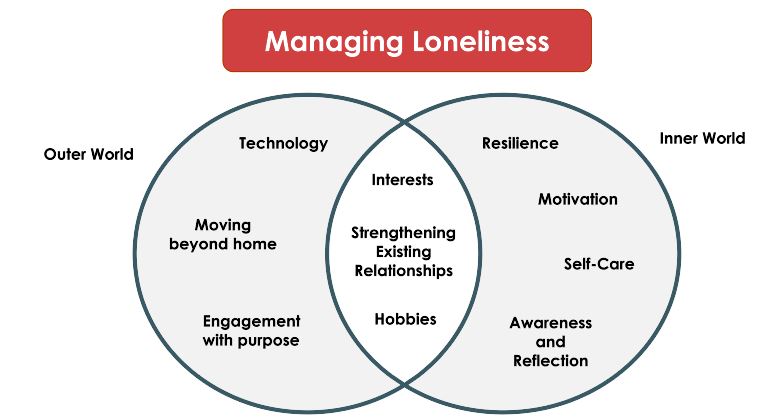
Is being alone same as being lonely?

Alone is physical and lonely is an emotion. 

From caution we have moved to comfort zone, and physical distance is creating emotional distance as well


Some loneliness may be transitory and some will be chronic. If it is chronic needs help. 


It is so important to constantly be aware of who are all there in your life in the given point of time so that you don't take anyone for granted or you don't let anyone take advantage of you. 

Let's get into the exercise now. ✅

Get a pen and paper. Draw 4 concentric circles and name it c1, c2, c3, c4. Have you done it?

Now write down 10 names of people who are in close and constant contact with you. 

C1 is your inner most circle, and it consists of people in your close circle. Your family members, your close friends and your partner comes into that list. Done? Good. 

Now move on to the next circles and write 10 names down in each circle till you reach c4. Remembering 25 names would be easy. But for some the rest of the names would be tough. 

You might even think whether your circle is small and if you know only a few people in life. No, not really. When we do exercises like this, we would want to come out as the good person at the end of such exercises. 

But now it's the time to resonate with life and your thoughts that you have come through all these years. Think about the people with whom you had a fall out because there was this issue of ego playing between you and them. 

It is because of this ego that we are not able to come up with 40 names of people who are important to us. 

The same way, we have given importance to a lot of other people who don't even fit in the four circles. We have stopped ourselves from playing to the fullest, thinking what these people might judge. 

This circles should be an eye opener about your near and dear ones and who really matters to you out of them. Think a little more and come up with 40 names. 

Now to the next part of the exercise. We are going to categorize the people inside these circles. Let's start with c1.

Categorize them as 

 💚Energy giver

 🛑Energy Sucker

 🟰Neutral

Let's make one thing clear here. We are not trying to label our friends and families here. We are just trying to figure out where they stand in our lives.

We need to understand and analyze who they are and how we should respond and bond with the people in our environment. 🌟

Understanding that you are the energy power house is very important for our growth. But if your energy is always going to be sucked out completely because you are in an environment like that, you should find a way to fix these energy suckers. We can't and shouldn't try in making them the energy giver. We can try to make them neutral. ✔️

But when it comes to family members, if our parents, spouse and kids fall in energy suckers category, we need to address it immediately. It is a serious issue, as we are living with them. If someone from your family is an energy sucker, it is our duty to look out for them and try to explain it to them that what they are doing is wrong. Talk to them and try to come up with a list of what are all the problems you face with them and what is your expectation.❤️

Now question yourself.

Have you anytime told them what you expect? When was the last time you had a conversation with them without emotion, without anger, without ego? Easiest way to get out of the problem is to satisfy their ego. But you have to do what is right for you. When the problem rise again, just say sorry and accept what they say and try to explain it to them to your best. 

Tell them you will try to handle it better over the next time. But you keep on working on your path towards your success and when you slowly march towards success, they will stop giving you advice. Because every household doesn't have a perfect relationships like we see in movies. 

90% of the house have one issue or the other. I am talking this much about you concentrating on c1 because if you fix your issues with the people in c1, that will take care of 80% of your success. Because, at the end of the day, all your success matters only to people in c1 circle.

A zen concept like pouring good (eg. milk) over bad (Poisson).Yes, initially both get mixed, but with continuous/conscious doing of good over bad, in a period of time, a stage will come, the glass/person (ES) filled with good, become as an (EG) 👍

🛑 Toxic people

🛑 Toxic mindset

🛑 Toxic thoughts 


✅ Neutralise them or run away

Tuesday, October 11, 2022

5 Breathing Techniques - Mindfulness

 1. Equal breathing - any count - through nose. No holding breath. - Try doing deep breathing - empty as much carbondioxide. As you breath in, breath going into self, into your abdomen. It's a continuous process

2. Mindful breathing - Breath deeply through nose, and breath out through mouth. Own count but if you inhale at a count of five , exhale at a count of seven. Keep hand on belly, feel rise and fall. 

3. 4-7-8 Technique - Breath through nose for the count of four through nose, hold for 7 count, and exhale at the count of eight through mouth with a wishing sound

4. Box breathing 4-4-4-4 Technique - Breath in, hold, out , hold. Remove breadth exhale through mouth. 

5. Stop - Dorbadhi Bhudda - We are all in the market, be Bhudda. We do not want to react, but respond. 

Stop . Take a Breadth. Absorb. Open eyes and see. (Stop, Take a breadth, Obsorb, Proceed)

STOP

S = Stop

T=Take a breath

O = Observe

P= Proceed

Grounding  - Bare foot, keep foots down. Heal, foot, tose, lift. Be there. Do slow, but no need to be there. 

Mindfulness is about connecting with self. It is all about being aware. 

All these do mindfully. Shewat Vij and Vijayata Sharma