Monday, July 29, 2024

Kerala Independence - Aikya Keralam


*This Day in Cochin History*
*29th July 1946*
    
Everyone would have read or heard the “Tryst with Destiny” speech by Jawaharlal Nehru on the eve of Indian Independence towards midnight on 14th August 1947, but not many know that for the Princely State of Cochin and for Kerala, the actual Tryst with Destiny was on 29th July 1946.

Raja Kerala Varma (1946-1948) The Maharaja of Cochin addressed the Cochin Legislative Assembly on 29th July 1946.

He said that he had arrived at the conclusion that Kerala must unite and be one if it were to save itself from cultural extinction.

He said “I earnestly desire to combine my State Cochin with Malabar and Travancore in order to form the Province of Kerala.”

The Maharaja said “I don't seek any reward except the fulfillment of the dream that I have been cherishing all these years - The Unification of Kerala”

The Maharaja also said that he had decided to allow the people of Cochin to elect their representatives to the Constituent Assembly.

This was indeed a seminal moment in Cochin History.

After this epochal speech Raja Kerala Varma came to be popularly known as Aikya Keralam.

Aikya Keralam had sown the seeds of a United Kerala in the minds of the people of Cochin, Travancore and Malabar.

Aikya Keralam had articulated his vision and dream. He had set into motion a chain of events which would eventually lead to a United Kerala

After an illustrious and eventful regime of nearly two and a half years, His Highness passed away on 8th July 1948.

It took another 10 years for Aikya Keralam’s  dream to come true.

Cochin and Travancore joined together on 1st July 1949 to form the state of Travancore-Cochin often known as Thiru-Kochi.

Finally on 1st November 1956, Kerala was formed by merging Thiru-Kochi, Malabar and Kasaragod taluk of South Canara.

On the 78th anniversary  of the pathbreaking  speech, it can be said without any doubt that all Keralites have been beneficiaries of the Vision and Statesmanship of the Maharaja of Cochin (1946-1948) Aikya Keralam.


Wednesday, July 24, 2024

Kaliyug

 Arms, Narcotic and human trafficking is the three largest money making industry we need to fight against. Women end up being victims. 


Released on 9th December 2005, the film was initially titled 'Blue Film' however the title was later changed to 'Kali Yuga', written and directed by Mohit Suri and produced by Mukesh Bhatt. It introduces actor Kunal Khemu, in his debut film as an adult actor. It also stars Emraan Hashmi, Smilie Suri, Deepal Shaw, Amrita Singh and Ashutosh Rana.

Pushkaran and his son, Kunal, were forced to leave Kashmir by terrorists 18 years ago,. They re-locate to Mumbai, where Kunal grows up. Kunal's father later dies in a train accident and relatives from Jammu contact Kunal after the funeral, informing him that his father had promised to look after a young woman named Renuka. He agrees to fulfill his father's promise.

When Renuka arrives, she and Kunal fall in love and get married. They spend their honeymoon at a hotel, where they encounter Johnny, a womaniser. The newlyweds consummate their marriage and enjoy their honeymoon until a few nights later, when police storm in and arrest them. It is revealed that their intimate night was secretly recorded and uploaded onto a porn website. Kunal realizes that Johnny is responsible.

Renuka is forced by police to sign papers and testify against her husband. Kunal tells her the truth and begs her not to sign the papers. The feelings of guilt, embarrassment, and confusion prove too much for Renuka, who jumps off the ledge and dies by suicide in front of Kunal. He is sent to prison since he refuses to admit to the false charge.

Eventually, he is able to prove himself innocent. Now free, he tracks down Johnny and discovers he is working for Simi Roy, a businesswoman who is secretly the porn website creator; she lives in Zürich, Switzerland. Kunal leaves for Zürich to take revenge against Johnny and Simi.

In Zürich, he meets Ali, a modern-day emo who runs an adult shop. In Ali's shop, he sees a magazine featuring an adult actress he'd seen on the website where his and Renuka's video was featured. Kunal and Ali track the girl down in a bar, where she works as a prostitute. When Kunal finds a woman being held hostage there, he beats up the bodyguards but gets hit by Simi Roy. The next day, he overhears Simi arguing with her abusive daughter, Tanya, about her sexual activities with her girlfriend. He asks Simi about the porn website but she lies to him.

Kunal and Ali lure Johnny and his goons into a trap. During the fight, Ali is fatally stabbed by Johnny. Before dying, he manages to kill Johnny and his men, and reveals that Simi is indeed the mastermind; she also controls the red light district in Zürich.

Kunal asks Tanya for help; in return, he will help her ruin Simi's reputation. Simi is devastated when she sees her own daughter on her porn website and it gets all over the news. In the ensuing confrontation, Tanya kills Simi before Simi can kill Kunal. Everyone involved with Simi is arrested. His revenge complete, Kunal starts a new life with the hostage he had saved, Annie.

Simi's words - what you see from outside, may not always be true. Things and people would be different from inside - was/is so right. 

Tuesday, July 23, 2024

My Kochi - Tevara Once Upon a time


 Thevara Junction , Once Upon a Time....


Who remembers the Thevara Junction like this as seen in the featured photograph. 


Earlier known as Perumanoor junction, also has the renowned yesteryears  Hindi actress Nutan connect to it. 


The current crowded Thevara we know of has many a tale , giving that extra edge of character both heritage & legacy wise, stories which I came to know today. A certain period of history it was known as bonda mukku, a railway halt as Perumanoor station and so on. Read the engrossing article below through the eye of an old time Peramanoor resident. 


Junction Annals....


THEVARA JUNCTION: A nondescript, busy junction has been witness to great political and social change


Every place has a story and a history waiting to be uncovered. The busy, yet nondescript, Thevara Junction is one such place. The many shops in the vicinity of the junction seem to be heaving and pushing…jostling for space. There is really nothing that sets Thevara Junction apart from any other overcrowded junction in the city. But long ago, what used to be Perumanoor Junction, which is what the junction used to be called, was witness to some interesting nuggets of political and social change. It also played an important contributory role in nation building.


Ironically, in the beginning, there wasn’t even a Thevara Junction. It got that name much later because it fell on the way to Thevara College (Sacred Heart College). Until then and for sometime afterwards (up to the 60s) it used to be called Perumanoor Junction. Some people even today refer to it as Perumanoor-Thevara Junction. Today, the Cochin Shipyard occupies the pride of place and that is its claim to fame.It was the 60s, a young independent and confident India was growing and a shipyard, it was felt, would contribute to developing India’s blueprint for growth. This part of Perumanoor was chosen and close to 400 families, voluntarily moved out to make place for the shipyard. It was for development, says veteran journalist K. M. Roy, whose family was among those who made way for the shipyard.


It was not just families that moved out, even the centuries old Varavukkatt Kurish Palli was given up and a cemetery was moved too.


The Venduruthy Bridge connects the Naval Base (Willingdon Island) to the mainland and Thevara Junction is the first stop this side of the bridge. “There was a time when this area was known more as Bonda-mukku .


 Work was in progress on the Venduruthy Bridge, the Naval Base and the old airport. In the evening womenfolk would get bondas stacked in baskets for sale, the sole source of food for famished workers. There were no hotels or anything,” says Roy. The name stayed from the late 30s to the 60s, “that is until some of us youngsters got together and threatened to beat up bus conductors who called the place bonda mukku ,” he adds.


The seemingly insignificant junction was the site of what was probably the biggest lathi charge in Cochin State, Roy says. Sir C. P. Ramaswamy, the Dewan of Travancore, had come to Cochin for the inauguration of Chevalier C. Paul Luiz Memorial Industrial School which is now the Anglo Indian School at Thevara. A group of students from Travancore organised a protest against Sir C.P. There was stone pelting, the police was called out, and a lathi charge was ordered. “It was, probably, the first and biggest lathi charge in the history of Cochin. Former minister, the late Baby John led the protestors,” Roy reminisces.


He says, as a youngster, he has heard stories of C. Paul Luiz’s timber yard which was the biggest in Cochin, extending from Thevara Junction to the Thevara canal and that it employed 26 elephants.


The railway line runs close to the junction. There was even a Perumanoor halt, for students from ‘far off’ places like Chowara, Chalakudy etc. to come to Thevara College. “This is also probably the only instance of people (of an area) asking for a railway station or a halt to be removed. When buses started plying on this route we said we did not want the halt anymore,” he reminisces.


Although the government had acquired land for the shipyard, from 1961 to 63, there was nothing to show. “In 1967 we, evictees, decided to do something. We made a ship (a scaled down version), mounted it on a trolley and took it around the city. And even set it sail in the waters. It created quite an impact. The news even appeared in the newspapers in Delhi,” Roy adds. Indira Gandhi, apparently, took notice and work on the shipyard began, he says.


The shipyard came, kin of evictees found employment there, and Perumanoor Junction came to be known as Thevara Junction. As a result of the proximity to the Naval Base, small businesses came up with life and attitudes changing.


“Those were the times when womenfolk, especially those belonging to my mother’s generation rarely stepped out of their homes, for purchases. The late actor Nutan’s husband Commander Rajanish Behl was posted here at the Naval Base. Whenever she would be here on holidays, she would come to small shops at the junction to shop. My mother and her contemporaries realised that if ‘Nutan can shop then why can’t we?’ it was a social change of sorts,” Roy says.


Change, some wise man said, is the only constant. Perumanoor is today known more as Thevara, the shipyard has changed it beyond recognition. The only thing that hasn’t changed is, probably, that solitary lamp post in the middle of the junction. The stories it could tell.


Credit courtesy : Article by Shilpa Nair Anand shared from The Hindu, August 2013

Friday, July 19, 2024

A A Milne author of Winnie the Pooh


A.A. Milne, the author of Winnie the Pooh, wrote a series of books for children. The most notable ones include:

1. "Winnie-the-Pooh" (1926): The first collection of stories introducing Winnie the Pooh and his friends in the Hundred Acre Wood.


2. "The House at Pooh Corner" (1928): Another collection of adventures featuring Pooh and his friends, including the introduction of Tigger.


3. "When We Were Very Young" (1924): A book of children's poetry by Milne, including verses about Christopher Robin.


4. "Now We Are Six" (1927): Another poetry book for children, continuing the themes and characters introduced in "When We Were Very Young."

These timeless classics continue to enchant generations of readers with their charming characters and heartwarming tales.

The Big Indian Wedding


So is this wedding a pathetic tamasa?

As Coco Chanel writely said..

" Some people are so poor, they have only money "

Do you think too much was spent on the wedding?

Proportion My Dear, Proportion 🤷🏻‍♀️so advocate some.

Many of us will buy a saree worth 10 K INR in a split second, well maybe we take a long to choose but you got the gist. And that maybe bekaar-ka-kharcha for our domestic help as for them they get the best in 1 K.

They have build their empire. Their ancestors have that gut to take every small risk to think big and now they are making it bigger.

If they are rich then they are. If we cannot build our empire then that's our problem.

After an elaborate engagement, prewedding celebration in Jamnagar and Europe, all star studded and with guests from across the globe, the wedding lasted for three days, not including the sangeet and the prayers. 


There is a reason why the super rich Ambanis look so comic in their desperation to find an audience in the social media with their choice of over the top dresses, celebrations, milling around guests, being the guide,  dancing on which they probably spent hundreds of practice hours to coordinate their two left feet, their need to bring in western pop singers to go global, get famous actors to serve food and entertain guests with jokes. This is not something that we have seen before. 

They could do what they are best capable of, With the kind of salary and dividends to each of them from various business ventures, and all kind of money - and plans for expansion, how better could they do it?

Would doing charity, help them expand their business? They are business family - they know what is best for them. Establishing a global brand is important for them, and they did find an opportunity here. 


Wedding of three children over the years with that of the last one spreading almost a year am sure they have bettered themselves and can start their own event management company too.


They collectively appear to be needing the ostentation to confirm their happiness, are they too living in their bubbles. These need to put the bubble on social media for the watch and swoon  unwashed masses. The social cells are instructed to add hundreds of comments on these videos that go ‘ very nice’, ‘good dancing’, ‘adorable’ and so on basically asking all others to follow in the same vein.

It makes you wonder what might their thoughts be… Mukesh is probably scheming about how to make more as soon as this is over. Nita is bemoaning she has no more sons to marry off in a serial wedding spree. The family must, by now, be bored with clothes, jewellery, travel? 

A woman is often expected to be flawless. But what if, amidst all the festivities, she couldn't manage to stay awake? From what we saw in the videos, she handled her children, the guests, the rituals, and the responsibilities of being the eldest daughter-in-law admirably. After all, they are human too, and like us at weddings, they too might need a power nap.

A  wedding of 5 days, great Indian culture and music for the world to see, sound and light shows of our great ancient architecture  as background to the family photographs making the world salivate over our incredible country and the first business family who can afford to frame it for personal shoots. Vanity satiated. Tourism promoted. Jobs created. Many agencies,workers, cooks and laymans will be earning from these events.  Guests invited will be spending on designer cloths, travel, lodging,  gifts.

Now they could have opened a few schools. In each state. The kids used their own expertise to give back to the people. Built toilets, dug wells, built animal sanctuaries, financed clinics, created maternal counselling - all as Anant Radhika Centres. What a wedding that would be?

But then for each their own way of celebrating. One life. They show how to make life a celebration.  Wish and 🙏 pray not at the cost of bankruptcy. 


All these was, is and will be part of the society, how well has it been written by RK Lakshman far before. I do not say this wedding was vulgar. Looks like it was meticulously planned with lots and lots of effort.

Neither supporting such Grandeurs nor Ambanis. Just that to each their own 🤜🏽🤛🏽

My friends in Mumbai have to park their cars at Jio Park ( see the strategy) and walk to office, a 30 min commute now takes 2 hrs. The event has been declared public event, so all schools and companies have early dismissal or wfh. And this  continues for 7 days. The message is if you have wealth you can own a city and country and beyond! It is unfair at every level, but more things are unfair in life than fair!

Who is to blame for it? The bad roads, the crowd? 


Wishing and praying 🙏,  after all these thamasha may there be showers of blessings on the couple. For me this wedding stands out for couple of reasons:

Showcasing that not all of India is a poor country as the west perceive; the rituals explained and traditions followed by Nita and Mukesh - Nita's explanation on Kanyadhan had brought tears to some eyes too and how they tried to include all, and kept a separate day for their employee, help and associates like the owner of the Mysore Cafe and those who brought up Anand, and on that day treated them with AR Rahman music with amazing singers, hats off for that. 

Thursday, July 18, 2024

Ambani Brothers and In Laws


Both Mukesh and Anil sat quietly (in the same room) observing Dhirubhai conducting business for years. So practically, they were trained by the same man with the same input and in the same workshop. Yet, one guy couldn’t replicate the success of another.

Why? Why both the brothers, with enough capital available at their disposal, looked at the business ( telecom ) so differently?

Dhirubhai Ambani, the founder of Reliance Industries died in 2002 after suffering a massive stroke.

The patriarch hadn't left a will and his elder son Mukesh Ambani became chairman and managing director of Reliance Industries Ltd while his younger son, Anil Ambani was made vice-chairman.

Mukesh reportedly tried to oust Anil from the board. Mukesh Ambani and his brother Anil Ambani have been in a bitter feud ever since the death of their father in 2002. Ambani's death sparked a feud for control which ultimately lead to the split of the Reliance Group.

Their mother brokered a demerger in 2005, which gave Mukesh control of oil and gas, petrochemicals, refining and manufacturing while Anil took reign over electricity, telecoms and financial services.

Since the split, the brothers have feuded via press conferences, meetings with the ministers, letters to the Prime Minister, interviews to news channels and dragging each other to court.

June 2005: Their mother, Kokilaben, intervenes and splits Reliance Group into 2

December 2005: The split is approved as Mukesh gets Reliance Industries & IPCL, and Anil gets Reliance Infocomm, Reliance Energy, and Reliance Capital.

Before the separation, Mukesh managed Petrochemicals. He also built the Telecom business single handedly. Anil was handling Finance and energy/electricity.

Anil was the the public face of Reliance. He also interfaced with the investors. Mukesh kept himself busy building the assets and mostly stayed in the background.

Initial idea was that allow the brothers to keep the business(es) they were handling. Anil did not agree. On request from Kokilaben, Mr Kamath of ICICI became the advisor. It was decided that no business must be split. A business in its entirety must be transferred to one party. Mukesh was deep into Petrochemical business and he was managing it well. Anil was managing finance. So it became apparent that Mukesh would get Petro chemicals and Anil would keep the finance and energy business.

Anil wanted Telecom, though it was a Mukesh's baby, to maintain the parity. Mukesh was reluctant. Because he had grand plans for telecom.

After a lot of heart burn, Mukesh handed over Telecom and more than 25000 crore ( the actual amount might vary but I remember it was in that magnitude) cash to Anil.

[ The valuation of Reliance Telecom went UP and DOWN in just few weeks. Market manipulation ? That’s another story. :) ]

So after separation, Anil had large cash, new fast growing Telecom, old finance and promising energy business.

Mukesh had just one entity - RIL.

Now Anil was more than happy. He had new found freedom, large cash. Now the brothers could decide the future course of their own business. Till then, Anil was known as the face of Reliance, more of a party hopping type and Mukesh a backroom type businessman.

Now Mukesh started attending the public parties and Anil started investing in many businesses to prove that he too was a business builder.

The initial days were great. Anil started flying high. Mukesh stayed busy with RIL.

The Bombay High Court approved the de-merger for Reliance Industries shareholders after it was accepted by the Bombay Stock Exchange and the National Stock Exchange.

Mukesh Ambani got Reliance Industries and IPCL, while Anil was given control of Reliance Infocomm, Reliance Energy and Reliance Capital.

Some shareholders opposed the decision saying it was more a family arrangement than a business separation.

November 2006: Anil Ambani's Reliance Group challenges a gas contract signed by Mukesh's company during the split.

2009: Brothers live close-by but barely speak

The Ambani brothers lived in "Seawind" in an upscale neighborhood of South Mumbai, and restricted meetings to family gatherings or conferences. The Guardian reports:

"There's no conversation, let alone warmth. Sometimes they are forced to shake hands, but they do not look at each other," said the friend.

"It's a tragedy because they were a class act. One used to start a sentence and the other would finish it. How does that kind of chemistry go wrong?"

May 2010: Ambani's mother brokers a peace agreement between the brothers

Kokilaben brokered a peace agreement between the brothers. Officials of Reliance Industries Ltd. and Anil Dhirubhai Ambani Group both received notes that said the Ambani brothers would draft a non-compete agreement, to replace an earlier one that obviously didn't work.

What was the difference between Mukesh and Anil?

Their basic way of thinking.

Anil loved to dabble with too many things. That gave him high. Mukesh loved doing one thing right. Anil looked for horizontal spread while Mukesh looked for the depth.

If Mukesh was an Aircraft Carrier, then Anil was a frigate. If Mukesh was an elephant, Anil was a leopard.

Mukesh would think of a businesses at a much larger scale. He could wait for years for the cash. But he always wanted his business to run at a certain scale. On the other hand, Anil always wanted the quick return of cash. In fact, he would collect cash from the public first then take years to build a business. Mukesh would take years to build a business and then go public much later.

So Anil became the darling of quick return seeking investors and Mukesh became GOD for the project management professionals.

Anil loved flashy lifestyles, rarely managed business at a micro level. It was said Mukesh could conduct a meeting for hours without taking a loo break. He was always the God of details. You must study him in depth to understand his personal contribution to any business.

Their businesses are easily differentiated today because of their personal characteristics, not because one business was more profitable than the other or the luck factor.

Study both brothers carefully and you would know this was to happen. I hate to say "I told you so.", but I always maintained Mukesh would race ahead though many of my corporate friends disagreed at the time of the split of Reliance.

Mukesh has 25X grand vision than Anil and he has patience to execute that vision.

Look at the World's biggest startup -JIO.

Who would invest and create a new telecom business after handing over the Reliance Telecom to his brother?

A madman or Mukesh Ambani.

Years back, Mukesh chose CDMA over GSM because he believed in DATA. Anil never understood that. To him telecom was just another business like the film production! That’s why Reliance Telecom failed after Anil took over. He didn’t have the passion for the business.

To mukesh, telecom meant different thing altogether. That's why he is back with JIO.

Mukesh creates business. Anil profits from the market trends.

Is the difference obvious between the brothers?

One more indicator :

After the split, Mukesh said he would NOT waste a single minute in future. Anil publicly thanked Tina, his wife, for guiding him through the split and said “we (together) did it!” !!!

Do you still need more explanations why one brother is more successful than the other?

Tina had a successful career before marriage. Unfortunately, she got caged in that limited success. She and Anil were like any other regular rich couple and Tina lived a predictable life.


On the other hand, Nita took Mukesh as her mentor and friend. It's said Nita would listen to Mukesh's dream projects with rapt attention late into night. Mukesh needed somebody to bounce his ideas while they were still at ideation stage and Nita was eager to learn from Mukesh's entrepreneural journey. It was almost like Nita was dreaming along with Mukesh. While Mukesh was away at the project site for a long time, it's said Nita landed there out of curiosity and got involved with the development and ancillary activities. She developed the zeal to learn. While Tina watched Anil's projects falling apart, Nita was playing an active role in a growing empire. Both Anil and Tina thought since they attended the glamorous social parties, they were the social face of the Ambani family. They presumed Mukesh and Nita to be drab, unglamorous. They forgot one simple fact that one needs only a good event manager and good amount of money to throw the most talked about party in the town. So Tina was on a fragile ground. People forget it takes great efforts to make money not to spend money. Tina's so called superior industry connection and social popularity got busted when everyone became eager to be on Nita's phone book and loved to be seen at her party. Simplistically, while Tina was consuming her existing wealth to stay competitive, Nita was building her wealth. It was natural that Nita would outshine Tina after some time.

Sad to see Mukesh Ambani losing faith in his basic traits and adopting populism. The exogenous factors finally have started to impact Mukesh Ambani. The spurious elements creeping into his thought process? If yes, the downward slide begins.

It wasn’t really that difficult to make an Anil Ambani out of Mukesh Ambani, after all!
Narrative Techniques

List of various narrative techniques used in literature:


1. First-Person Narration: The story is narrated by a character within the story, using "I" or "we."

2. Second-Person Narration: The narrator addresses the reader directly using "you."

3. Third-Person Limited: The narrator tells the story from the perspective of one character, using "he," "she," or "they."

4. Third-Person Omniscient: The narrator knows all the thoughts, actions, and feelings of all characters.

5. Stream of Consciousness: The narrative attempts to capture the character's thought processes in a flow of thoughts and feelings.

6. Unreliable Narrator: The narrator’s credibility is compromised, making their version of events suspect.

7. Epistolary: The story is told through letters, diary entries, or other documents.

8. Frame Story: A story within a story, where the main narrative is set within another narrative.

9. Multiple Narrators: The story is told from the perspectives of multiple characters, each providing their own viewpoint.

10. Stream of Consciousness: A technique that depicts the flow of thoughts and feelings passing through the mind.

11. Interior Monologue: The narrative provides insight into the character's inner thoughts and feelings.

12. Soliloquy: A character speaks their thoughts aloud, often when alone, revealing their inner thoughts.

13. Flashback: The narrative shifts to an earlier time to provide background or context to the current events.

14. Foreshadowing: Hints or clues about events that will happen later in the story.

15. Chekhov's Gun: A dramatic principle stating that every element in a story must be necessary, and irrelevant elements should be removed.

16. Symbolism: The use of symbols to represent ideas or qualities.

17. Irony: A contrast between expectation and reality, often highlighting a discrepancy.

18. Allegory: A story with a double meaning: a primary, surface meaning, and a secondary, deeper meaning.

19. Magical Realism: A narrative technique that incorporates fantastical elements into a realistic setting.

20. In Medias Res: Starting the story in the middle of the action.

21. Metafiction: The narrative self-consciously addresses the devices of fiction, often blurring the boundary between fiction and reality. 

You can choose from the above on how you want to write.

The Reluctant Fundamentalist ~ Mohsin Hamid


Excuse me, sir, but may I be of assistance? Ah, I see I have alarmed you. Do not be frightened by my beard: I am a lover of America. I noticed that you were looking for something; more than looking, in fact you seemed to be on a mission, and since I am both a native of this city and a speaker of your language, I thought I might offer you my services.


So begins the The Reluctant Fundamentalist by Mohsin Hamid; a great opening paragraph which catches your eye and which in fact made me purchase this book. (Advice to all wannabe writers, including myself: write a great opening line. This is what sells books.) Unfortunately, what follows hardly measures up. In fact, Mr. Hamid lets the reader down with such a great thud that I am surprised there are no bruises to show for it!


The setting and style of the novel is – well – novel. An unidentified American has entered the district of Old Anarkali in Lahore. He is approached by Changez, the narrator and protagonist, with the above quoted line, and guided to a tea shop the “quality of whose tea is unparalleled”. There, he unburdens his heart to his apprehensive guest. He is a Princeton graduate, and has spent four-and-a-half years in America. The reason why he has come back to Pakistan is the subject of the story.


Changez narrates his tale to his invisible (in literary terms!) guest, and we listen. We can imagine ourselves in the place of the American, or as an eavesdropper on their conversation. Throughout the narration, the listener’s reactions are remarked upon by the teller; which is all we get to see of him. This shadow listener, in facts, works well as a literary device and also serves to enhance a feeling of creeping menace slowly slipping into the barmy Lahore evening.


Well, in my opinion, the positives end there.


Changez is explaining why he became disillusioned with America and became the “reluctant fundamentalist” of the title: however, his story doesn’t hold water. He is the blue-eyed boy from Princeton, top-ranked among his young fellow executives in the valuation firm of Underwood Samson and the personal favourite of his mentor Jim. He is in love with Erica, a beautiful American girl. He is slated to go far in his profession. The good ol’ American (expat) dream…


Well, with 9/11, his world comes crashing down…


…now, if you are waiting for the story of the poor Muslim boy persecuted by Big Bad Uncle Sam, well, think again. Nothing of the sort happens.


Our hero is in Manila on a mission when the Twin Towers are brought down. He watches it on TV and says “my initial reaction was to be remarkably pleased” because “someone had so visibly brought America to her knees”! Well, as a reader, I lost whatever sympathy I had with Changez then and there. I mean, here’s a guy who has studied in America, is working in America, planning to marry an American girl and settle down in America – and he’s pleased at a wanton act of terrorism on America? He is not a reluctant fundamentalist but a closet terrorist!


As the story moves on, there are no instances of any discrimination against Changez, other than an airport search and a threatening encounter with a semi-crazed man in a car park. However, his sense of alienation grows and he starts considering himself as an outsider. But what really distresses Changez is not the status of Muslims in America post-9/11. It is the slow slide into madness of his love Erica, and the perceived threat to Pakistan from India.


Erica is a girl who lives partially in her mind with her long-dead boyfriend Chris. She is so disturbed that she can have sex with Changez only by imagining him to be Chris. Although initially she encourages him, she slowly moves away from Changez into an institution; then moves away from life totally, disappearing without a trace. This tale of Erica is Norwegian Wood with all the magic removed – a pastiche. We should be feeling for our poor protagonist, but I was only feeling bored.


The second reason for Changez’s self-destruction, the perceived war with India, is even sillier. This is the period after the attacks on the Indian Parliament in December 2001 by Lashkar-e-Toiba and Jaishe-e-Mohammed activists which lead to massing of troops by both countries at the border. Changez’s latent patriotism comes to fore and he flies to Pakistan against the better counsel of his parents. The thing is, while we can understand his need to flaunt his Pakistani-ness, and his displeasure with India, his anger against America is ludicrous. He becomes disillusioned with America for remaining neutral and not chastising India!


Whatever the case, from here onwards Changez self-destucts. He is sent on an important mission to Chile by Jim as a chance to rejuvenate his career, disregarding opposition from the company vice-president who accompanies him. However, Changez does such a shoddy job on purpose and refuses to continue so that the company has no option other than to fire him. The ostensible reason for this change is his realization that he is the modern-day equivalent of a Janissary (Christian youths stolen away by Turks at the time of the Ottoman Empire and used as warriors), fighting for the evil American empire. The reason I can see is that the guy is seriously screwed up.


By now, we have reached the last twenty pages or so, and we see Changez racing into his fundamentalist career with gusto (although specifics, other than a speech, are missing). The narrative then suddenly slides into an ambiguous ending which is left open for reader interpretation. It all depends on whether we accept Changez as a reliable or unreliable narrator. Obviously, it is meant to be explosive – but to me, it felt like a damp squib. I couldn’t care less.


Tailpiece:


In the West today (in India, too) Islamophobia is a serious concern. Singling out of Muslims as potential terrorists everywhere has done untold harm to religious harmony, and has resulted in many moderate Muslims embracing hardcore concepts. Many of them are reluctant fundamentalists – Mohsin Hamid has tackled a real problem.


Unfortunately, Changez cannot represent them.


‐--‐----


My next reading recommendation for the refugee theme.


A thought provoking novel that delves into themes of migration, love, and the human experience during times of crisis. The story centers on Saeed and Nadia, a young couple who fall in love amidst a civil war in an unnamed city. As their homeland becomes increasingly perilous, they discover mysterious doors that transport them to different parts of the world.

Hamid's writing captures the emotional and psychological toll of displacement, highlighting the resilience and adaptability of individuals facing profound changes. As Saeed and Nadia navigate the challenges of their new lives, their evolving relationship provides a deeply personal lens through which to view the broader refugee crisis.

A compelling narrative that offers a unique perspective on the global issue of migration, while also exploring universal themes of love, loss, new beginnings and the search for a better future.

A testament to the resilience and adaptability of people who are forced to leave their homes and start anew.


Tuesday, July 16, 2024

Cold Warriors: Writers who waged the Literary Cold War ~ Duncan White (67 of 2024)


If the Cold War had not been selected as the theme for our July Cochin Book Club meet up, I would never have come across this utterly engrossing book recommendedand read by Abraham Varghese Sir. Even those of us who are familiar with these authors and have read their books  will be amazed at how much more we can learn about those years and the parts they played as authors, spies, propagandists. Their very human frailties   courage and weaknesses are revealed.

 "In this brilliant account of the literary war within the Cold War, novelists and poets become embroiled in a dangerous game of betrayal, espionage, and conspiracy at the heart of the vicious conflict fought between the Soviet Union and the West

During the Cold War, literature was both sword and noose. Novels, essays, and poems could win the hearts and minds of those caught between the competing creeds of capitalism and communism. They could also lead to blacklisting, exile, imprisonment, or execution for their authors if they offended those in power. The clandestine intelligence services of the United States, Britain, and the Soviet Union recruited secret agents and established vast propaganda networks devoted to literary warfare. But the battles were personal, too: friends turned on one another, lovers were split by political fissures, artists were undermined by inadvertent complicities. And while literary battles were fought in print, sometimes the pen was exchanged for a gun, the bookstore for the battlefield.

In Cold Warriors, Duncan White vividly chronicles how this ferocious intellectual struggle was waged on both sides of the Iron Curtain. Among those involved were George Orwell, Stephen Spender, Mary McCarthy, Graham Greene, Aleksandr Solzhenitsyn, John le Carré, Anna Akhmatova, Richard Wright, Ernest Hemingway, Boris Pasternak, Gioconda Belli, and Václav Havel. Here, too, are the spies, government officials, military officers, publishers, politicians, and critics who helped turn words into weapons at a time when the stakes could not have been higher. Thus Besides the obvious names like le Carre , Orwell, these are some of the other writers who were part of the Cold War, willingly , unwillingly and in some cases unwittingly. No writer could avoid been involved.

Vaclav Havel

Boris Pasternak

Stephen Spender,  Graham Greene

Arthur Koestler

Mary McCarthy

Anna Akhmatova

Alexander Solzhenitsyn

Andrei Sinyavsky

John Steinbeck

Ernest Hemingway

Roald Dahl

The narrative is mostly chronological, and White shifts focus, chapter by chapter, to various writers and the political realities that they had to face—and endure. He also shows how governments tried to influence (or silence) their own writers and how they tried to use literature both as a weapon and a shield. “The issue of complicity is at the center of this book,” he writes. “Every writer in these pages had to grapple with it in one form or another—such was the price to be paid for writing at a time when, to paraphrase historian Giles Scott-Smith, to be apolitical was itself a form of politics.” White delivers tales of astonishing courage—e.g., the Czech playwright Václav Havel emerging from persecution and prosecution to become his country’s president, Solzhenitsyn sticking firmly to his determination to tell his stories—and of duplicity and betrayal: The story of Kim Philby, the English traitor, is prominent. Many readers will be surprised by the connections among these writers, which White ably highlights: Orwell and Hemingway, Koestler and McCarthy, and so many others."

Drawing upon years of archival research and the latest declassified intelligence, Cold Warriors is both a gripping saga of prose and politics, and a welcome reminder that--at a moment when ignorance is all too frequently celebrated and reading is seen as increasingly irrelevant--writers and books can change the world."

Duncan White has written a book that manages to be both academically rich while reading like a thriller. In the hands of a lesser writer this effort might not have worked, but the prose deftly conveys the complexity of things like the internally twisted logic of Soviet ideology while keeping the reader wanting to read more. Starting with Orwell, Koestler and Spender's experiences during the Spanish Civil War, the book relies on the intimacy of biography to reveal larger trends in the ideological battle that was the Cold War. This approach works. Instead of simply detailing the myriad ways in which the KGB and CIA leveraged the work of writers (and used them as pawns), White's intimate portraits show these writers to be active, thinking subjects who make choices within the historical contexts in which they lived. The result is a narrative that exposes both sides: the power of institutions and humanity of people that confrent them.

"...

The Cold War may have been a conflict of ideas, but imposing those ideas on the enemy through military means was not an option. As Kenneth Osgood writes in Total Cold War, the existence of nuclear weapons meant that “the Cold War, more than any other conflict in human history, was channeled into nonmilitary modes of combat, particularly ideological and symbolic ones.”Each side therefore used various forms of propaganda and disinformation "as a way to undermine the way its enemy organized its own society. Some of this propaganda was crude and, as such, ineffective. But literature was another matter, for it had a more sophisticated power to persuade. In reading Animal Farm, with its allegory of a revolution gone awry, exploited by corrupt and self-serving leaders interested only in consolidating their own power, Polish citizens might begin to question the received truths of their rulers."

https://www.kirkusreviews.com/book-reviews/duncan-white/cold-warriors/https://www.kirkusreviews.com/book-reviews/duncan-white/cold-warriors/

The Bhagavad Gita ~ Eknath Easwaran (65 of 2024)


 Another Year. This year's 'The Bhagavad Gita' read and interpretation is of that by Eknath Easwaran. 

Nowhere has this 'mysterious Eastern notion' of Maya been formulated more succinctly than in the epigram of Ruysbroeck: "We behold what we are, and we are what we behold". The world of the sense is real, but it must be known for what it is: unity appearing as multiplicity. 

The word Dharam means many things, but its underlying sense is "that which supports", from the root dhri, to support, hold up or bear. Generally, dharma implies support from within, the essence of a thing, its virtue, that which makes it what it is. 

Karma means something that is done. Often it can be translated as deed or action. The law of Karma states simply that every event is both a cause and an effect. Every act has consequences of a similar kind, which in turn have further consequences and so on, and every karma is also the consequence of some previous karma. This refers to both physical and mental action. 

Everything we do produces karma in the mind. In fact, it is in the mind rather than the world that karma's seeds are planted. Aptly, Indian philosophy compares a thought to a seed: very tiny, but it can grow into a huge, deep-rooted wide-spreading tree. 


AS the traditional chapter titles put it, the Gita is brahmavidyayam yogashastra, a textbook on the supreme science of yoga. 

The Gita does not present a system of philosophy. It offers something to every seeker after God, of whatever temperament, by whatever path. The reason for this universal appeal is that it is basically practical; it is a handbook for self-realization and a guide to action. 

Yoga is a word with many meanings -as many, perhaps as there are paths to self-realization. What kind of Yoga does the Gita teach?

 The four main paths of Hindu Mysticism.

 In jnana yoga, the yoga of knowledge, aspirants use their will and discrimination to disidentify themselves from the body, mind and senses until they know they are nothing but the self. 

The followers of bhakti yoga, the yoga of devotion, achieve the same goal by identifying themselves completely with the lord in love, by and large, this path is choosen by mystics. 

In Karma Yoga, the yoga of selfless action, the aspirants dissolve their identification with body and mind by identifying with the whole of life, forgetting the finite self in the service of others. 

The followers of raja yoga, the yoga of meditation, discipline the mind and senses until the mind-process is suspended in a healing stillness and they merge in the self. 

The 18 chapters in the Gita can be divided into three six chapter parts, first part being on Karma Yoga, the second on jnana yoga and the last with bhakti yoga.  The Gita begins with the way of selfless action, passes into the way of Self-knowledge and ends with the way of love. 

The Gita brings together all the specialized senses of the word yoga to emphasize their common meaning, the sum of what one must do to realize the self. 

The thread through Krishna's teaching, the essence of the Gita, can be given in one word: renunciation. The is the common factor in the four yoga. It certainly encourages simplicity, but emphasis on the mind. It teaches that we can become free by giving up not material things, but selfish attachments to material things , of thoughts, word and action. 

Nishkama Karma, selfless action, work free from any selfish motive. Renounce and enjoy. 

Whatever you do, make it an offering to me. 

When Gita talks about "inaction in the midst of action" , we can call on Ruysbroeck to illumine the seeming paradox. The person who has realized God, he says, mirrors both his aspects: "tranquility according to His essence, activity according to His nature: absolute repose, absolute fecundity". 

Action of the most tireless kind; the only thing inactive is the ego. Perform selfless service. 

How do such people conduct themselves - look at those who practise it. 

2(54-72) They have banished all selfish desires. Their sense and mind are completely trained, so they are free from sensory cravings and self-will. Identified completely with the self, not with body or mind, they realize their immortality here on earth. Those "who see themselves in all and all in themselves"  would simply not be capable of harming others. 

12(13-14) Who follow the path of love - who is incapable of ill will, who is friendly and compassionate. Living beyond the reach of I and mine and of pleasure and pain, patient, contented, self-controlled, firm in faith with all their heart and all their mind given to me.

18(49-50) How to recognise man or women who has reached life's supreme goal? - Attains the supreme perfection of freedom from action. 

It is running into life, open handed, open armed. Vital, active, compassionate, self reliant in the highest sense, for he looks to the self for everything and needs nothing from life but the opportunity to give. 

Such person has yoked all human passions to the overriding desire to give and love and serve and in that unification we can see, no tthe extinction of personality, but its full blossoming.

Shraddha is much more than faith. it is literally 'that which is placed in the heart'. It is our very substance and not an intellectual abstraction. "A person is what his shraddha is". Thus shraddha determines destiny. 

The purpose of karma is to teach the consequences of shraddha - ' when a person is devoted to something with complete faith, I unify his faith in that. Then when faith is completely unified, one gains the object of devotion. In this way, every desire is fulfilled by me. '

Thus the Gita places human destiny entirely in human hands. Its world is not deterministic, but neither is it an expression of blind chance; we shape ourselves and our world by what we believe and think and act on; whether for good or for ill. In this sense the Gita opens not on Kurukshetra but on dharmakshetra, the field of dharma, where Arjuna and Krishna are standing for us all. 


Indian Philosophies

 Philosophy arose in India as an enquiry into the mystery of life and existence.

Indian Philosophy refers to several traditions of philosophical thought that originated in the Indian subcontinent.

Over centuries, India’s intellectual exploration of truth has come to be represented by six systems of philosophy. These are known as Vaishesika, Nyaya, Samkhya, Yoga, Purva Mimansa and Vedanta or Uttara Mimansa.

These six systems of philosophy are said to have been founded by sages Konada, Gotama, Kapila, Patanjali, Jaimini and Vyasa, respectively. These philosophies still guide scholarly discourse in the country.

The six systems of philosophy were developed over many generations with contributions made by individual thinkers. However, today, we find an underlying harmony in their understanding of truth, although they seem distinct from each other.

Orthodox Schools of Indian Philosophy

Orthodox (astika) schools, originally called sanatana dharma, are collectively referred to as Hinduism in modern times. The ancient Vedas are their source and scriptural authority. Hinduism consists of six systems of philosophy & theology.

Samkhya (Kapila): Samkhya is the oldest of the orthodox philosophical systems, and it postulates that everything in reality stems from purusha (self, soul or mind) and prakriti (matter, creative agency, energy).

Purush cannot be modified or changed while prakriti brings change in all objects.

Yoga (Patanjali): Yoga literally means the union of two principal entities. Yogic techniques control body, mind & sense organs, thus considered as a means of achieving freedom or mukti.

This freedom could be attained by practising self-control (yama), observation of rules (niyama), fixed postures (asana), breath control (pranayama), choosing an object (pratyahara) and fixing the mind (dharna), concentrating on the chosen object (dhyana) and complete dissolution of self, merging the mind and the object (Samadhi).

Yoga admits the existence of God as a teacher and guide.

Nyaya (Gautama Muni): Nyaya Philosophy states that nothing is acceptable unless it is in accordance with reason and experience (scientific approach). Nyaya is considered as a technique of logical thinking.

Nyaya Sutras say that there are four means of attaining valid knowledge: perception, inference, comparison, and verbal testimony.

Vaisheshika (Kanada): The basis of the school's philosophy is that all objects in the physical universe are reducible to a finite number of atoms and Brahman is regarded as the fundamental force that causes consciousness in these atoms.

Vaisheshika system is considered as the realistic and objective philosophy of universe.

The reality according to this philosophy has many bases or categories which are substance, attribute, action, genus, distinct quality and inherence.

Vaisheshika thinkers believe that all objects of the universe are composed of five elements–earth, water, air, fire and ether.

They believe that God is the guiding principle. The living beings were rewarded or punished according to the law of karma, based on actions of merit and demerit.

The Vaisheshika and Nyaya schools eventually merged because of their closely related metaphysical theories (Vaisheshika only accepted perception and inference as sources of valid knowledge).

Purva Mimamsa (Jaimini): This philosophy encompasses the Nyaya-vaisheshika systems and emphasises the concept of valid knowledge. According to Purva Mimamsa, Vedas are eternal and possess all knowledge.

According to Mimamsa philosophy Vedas are eternal and possess all knowledge, and religion means the fulfilment of duties prescribed by the Vedas.

It says that the essence of the Vedas is dharma. By the execution of dharma one earns merit which leads one to heaven after death.

Vedanta: The Vedanta, or Uttara Mimamsa, school concentrates on the philosophical teachings of the Upanishads (mystic or spiritual contemplations within the Vedas), rather than the Brahmanas (instructions for ritual and sacrifice). The school separated into six sub-schools, each interpreting the texts in its own way and producing its own series of sub-commentaries:

Advaita (Adi Shankara): It states that both the individual self (Atman) and Brahman are the same, and knowing this difference causes liberation.

Visishtadvaita (Ramanuja): It believes that all diversity is subsumed to a unified whole.

Dvaita (Madhvacharya): It considers Brahman and Atman as two different entities, and Bhakti as the route to eternal salvation.

Dvaitadvaita (Nimbarka): It states that the Brahman is the highest reality, the controller of all.

Shuddhadvaita (Vallabhacharya): It states that both God and the individual self are the same, and not different.

Achintya Bheda Abheda (Chaitanya Mahaprabhu): It emphasizes that the individual self (Jīvatman) is both different and not different from Brahman.

Unorthodox Schools of Indian Philosophy

Schools that do not accept the authority of Vedas are by definition unorthodox (nastika) systems. The following schools belong to heterodox schools of Indian Philosophy.

Charvaka (Brihaspati): Charvaka is a materialistic, sceptical and atheistic school of thought.

According to Charvaka there is no other world. Hence, death is the end of humans & pleasure is the ultimate object in life.

It is also known as the Lokayata Philosophy-the philosophy of masses.

Buddhist philosophy (Siddhartha Gautama): Buddhism is a non-theistic philosophy whose tenets are not especially concerned with the existence or nonexistence of God. Buddha considered the world as full of misery and considered a man’s duty to seek liberation from this painful world. He strongly criticized blind faith in the traditional scriptures like the Vedas

Jain philosophy (Mahavira): A basic principle is anekantavada, the idea that reality is perceived differently from different points of view, and that no single point of view is completely true.

According to Jainism, only the Kevalins, those who have infinite knowledge, can know the true answer, and that all others would only know a part of the answer.

Manthan - Amul


Shyam Benegal's the Churning (Manthan): Screenplay, by, Vijay Tendulkar, Shyam Benegal, Samik Banerjee, was first made into a film and then there was the book.  Aside from the great measurable success that this project was, it also demonstrated the power of "collective might" as it was entirely crowdfunded by 500,000 farmers who donated Rs. 2 each.Manthan is the first crowdfunded Indian film. The film won the 1977 National Film Award for Best Feature Film in Hindi and National Film Award for Best Screenplay for Vijay Tendulkar, and was also India's submission for the Academy Award for Best Foreign Language Film for 1976. A restored version released in the Cannes Classics section of the 2024 Cannes Film Festival.

The word manthan literally means "churning", and other meanings may be deep contemplation, churning of facts, analysis aimed at a solution or conclusion. The film traces a small set of poor farmers of Kheda district in Gujarat who had the vision and foresight to act in a way that was good for the society and not for the self alone.

The cast in the movie are Girish Karnad as Dr. Rao, Kulbhushan Kharbanda as Sarpanch, Smita Patil as Bindu, Naseeruddin Shah as Bhola, Mohan Agashe as Deshmukh, Anant Nag as Chandavarkar, Amrish Puri as Mishraji, Rajendra Jaspal as Bindu's Husband, Abha Dhulia as Shanta, Dr Rao's Wife, Sadhu Meher as Mahapatra and Anjali Paigankar

Dr. Rao, a young veterinary doctor with his team of Deshmukh, Chandravarkar and others comes to a village in Kheda district, Gujarat. The village is inhabited by poor people whose chief occupation seems to be cattle-rearing and producing milk, which they sell to a local dairy owner Mishra. Mishra pays them ridiculously low amounts for their milk. Dr. Rao and his team have arrived with the purpose of setting up a co-operative society dairy which will be owned collectively and managed by the villagers themselves. As Dr. Rao and his team grapple with village politics, rigid casteism and general distrust of the village folk, they face planned hostility from the local Harijan community's leader Bhola who harbours deep anger and resentment against the higher caste Panchayat Head. Local village women are led by a feisty young woman Bindu, mother of a young child whose husband has supposedly left her.

Dr. Rao wins the trust of Bindu and other villagers by testing their milk and paying them fair amounts for their high fat-content milk and this irks Mishra. Deshmukh is worried by the caste politics and divide between the higher castes and Harijans in the village and repeatedly warns Rao against getting involved in it. Chandravarkar gets attracted to a local Harijan girl and has a rendezvous with her in secret. The Harijans don't want to join the co-operative as they feel that the higher caste Sarpanch and his cronies will usurp the society as well. Rao and his associates talk sense into them and organise an election for the post of the head of the co-operative. Bhola begins to trust and believe in Rao's ideals when Rao fires Chandravarkar for cheating the Harijan girl on pretext of marrying her and bails Bhola out of jail when Sarpanch gets him arrested for rowdy behaviour.

Meanwhile, a mutual admiration and liking develops between Rao and Bindu, which is cut short when Bindu's husband returns home suddenly, and Rao's wife comes to visit him in the village. In the election, the Harijan representative Bhola defeats the Sarpanch in a tiebreaker and the Harijans erupt in joy. The Sarpanch takes the loss terribly on his ego and joins Mishra, also aided by Bindu's husband. Together, they force Bindu to put her thumb impression on legal papers that claim Dr. Rao has raped her. Dr. Rao is extremely agitated when the allegations are brought against him and starts to wonder if he has bitten off more than he can chew. His wife also falls sick with Typhoid. Dr. Rao finishes the setting up of the board and leaves with his wife. This greatly troubles Bhola as he considers this cowardice on Dr. Rao's part. Bhola, however, continues to carry on the work of the co-operative with support from a few villagers and notably, Bindu. Both of them have been inspired and churned as new, brave individuals by the work of Dr. Rao.

Real Inspiration

Under leaders like local social worker Tribhovandas Patel, who took up the cause of the farmers, lead to the formation of Kaira District Co-operative Milk Producers' Union. Soon the pattern was repeated in each district of Gujarat, which in turn led to the formation of Amul, a dairy cooperative in Anand, Gujarat in 1946, which is today, jointly owned by some 2.6 million milk producers in Gujarat, India.Inspired by the pioneering milk cooperative movement of Verghese Kurien. Eventually, this led to the initiation of White Revolution of India in 1970, by creating a "Nationwide Milk Grid", and the setting up of Gujarat Co-operative Milk Marketing Federation Ltd. (GCMMF) in 1973, whose 500,000 members jointly financed the film, by donating Rs. 2 each.Upon its release, truckloads of farmers came to see "their" film, thus making it a box office success.

Manthan - A movie for entrepreneus. 

Monday, July 15, 2024

Book Facts

 Here are some interesting facts about books from CBC:

1. Harvard University Library has four books bound in human skin.

2. Iceland tops the world in per capita book reading.

3. People who read books are less likely to develop Alzheimer’s disease.

4. In Brazilian prisons, reading a book can reduce a prisoner's sentence by four days.

5. Virginia Woolf wrote all her books while standing.

6. The most stolen book is the Bible.

7. Roosevelt read an average of one book per day.

8. There are over 20,000 books written about chess.

9. Victor Hugo’s "Les Misérables" contains a sentence with 823 words.

10. Words like "hurry" and "addiction" were invented by Shakespeare.

11. If all the books in the New York Public Library were lined up, they would stretch 8 miles.

12. Leo Tolstoy's wife hand-copied the manuscript of "War and Peace" seven times.

13. Noah Webster took 36 years to write his first dictionary.

14. The Mahabharata is the only book or epic in the world with over 1,200 characters.


Books enable me to see the world in general with new eyes and critique hitherto taken for granted norms prevalent in society. They also serve as a microcosm of the world around us.

When my confidence soars too high, I open a book to ground myself. Guess it works both ways.

- The first book ever written was "The Epic of Gilgamesh" around 2500 BC.


- The longest book in the world is "Remembrance of Things Past" by Marcel Proust with 1.26 million words.


- The most expensive book ever sold is the "Codex Leicester" by Leonardo da Vinci for $30.8 million.


- The most translated book in the world is the Bible.


- The first e-book was created in 1971 by Project Gutenberg.


- The most borrowed book in libraries is "The Da Vinci Code" by Dan Brown.


- The longest novel ever written is "Artamène ou le Grand Cyrus" with 13095 pages.


- The most popular book genre is romance.


- The average book takes 475 hours to write

.


Sunday, July 14, 2024

Ullozhukku


Saw this film today.  Lost both money and peace of mind. Could spend some time with Jomy, Thanks to Sini.  While it's a good movie - well scripted, competently directed, and with stellar performances from Parvathy and Urvashi - it's not in any way exceptional, the way the praise it's getting on social media would make you think.

Anju, trapped in a loveless marriage to a sick man, is carrying on with her sweetheart. While her husband is on his deathbed, she learns that she is carrying her lover's child. Her mother-in-law Leelamma naturally thinks this is her son Thomas Kutty's child and is overjoyed.  In the middle of the lashing rains and waterlogging,  Thomas Kutty breathe his last. However, during Thomas Kutty's final rites she learns the truth. 

In the process, long buried secrets are revealed, and the undercurrents are too strong for the principal players to handle especially since there are more people around – Anju’s parents (Alencier and Jaya Kurup), her ex-boyfriend Rajeev (Arjun Radhakrishnan with some good dubbing by Roshan Mathew), Leelamma’s younger sister who is a nun, Thomaskutty’s sister Sheba and her young daughter etc. 

Anju's determination to unite with her lover against all odds leads to a huge meltdown.

The slow disintegration of a traditional Christian family on the banks of Allapuzha backwaters against rising flood waters is evocatively picturised. The movie raises valid concerns about traditional morality and women's autonomy; and does it without unnecessary histrionics. But that's it. The story moves along expected channels towards its highly predictable ending.

A good movie - but nothing pathbreaking.

Christo Tomy writes and directs “Ullozhukku” (“Undercurrent” in English) that was in the news since the screenplay won the Cinestaan India’s Storytellers Contest in 2018 pushing the script of another recent, well received film – “Laapata Ladies” - to the second place. Coming from the maker of the documentary – “Curry & Cyanide: The Jolly Joseph Case” – and headlining the talent powerhouses – Urvashi and Parvathy Thiruvothu. The movie is Produced by Ronnie Screwvala, Honey Trehan and Abhishek Chaubey

 The constant rains, the waterlogged house and surroundings and the principal characters that carry a sea of emotions within them with Sushin Shyam’s minimalistic but impactful background score helps the narrative soar and Shehnad Jalal’s cinematography deserves a special mention – from the dimly lit interiors of the flooded house to the aerial shots of the backwaters, this is one cinematographer who understands exactly what the director is trying to convey. Kiran Das’s editing, Ronex Xavier’s make up and Dhanya Balakrishnan’s costumes complement the director’s vision and intention. 

There are no songs in the movie. It is not everyday that you come across a movie that is carried forward by its female protagonists – Urvashi and Parvathy have proved themselves multiple times in the past, but they approach their respective parts with the hunger to make a mark and play off each other so well that it is difficult to conclude who is better than whom. 

“Ullozhukku” is another shining example of what Malayalam cinema can achieve with minimum spend and drama. On the flip side, the first half is extremely slow and could have been trimmed by at least 10 minutes without diluting the impact. Rajeev’s characterization seems to be more convenient than convincing to get to the climax that the filmmaker wanted. 

Though there are great appreciation for the movie and I loved the cinematography and female lead characters,  may be it was too much of hype and expectation or my inability to reconcile with the story which do have all possibility to be true; that let me down.

Friday, July 12, 2024

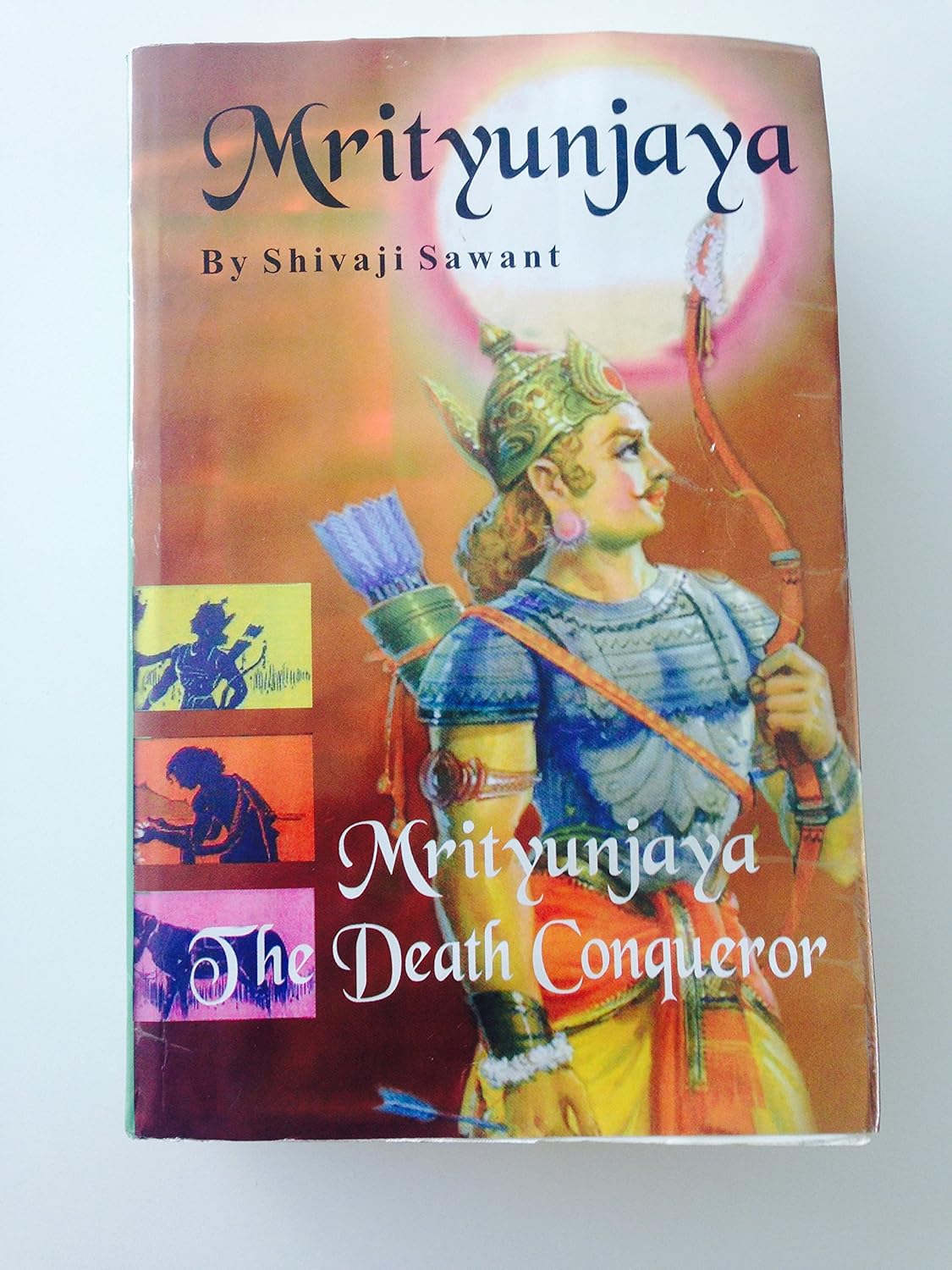
Mrityunjaya ~ Shivaji Sawant (64 of 2024)


Finally I am fortunate to read the English version of the Marathi Novel written by Shivaji Sawant, which was translated as Karnan in Malayalam thanks to Thanseeh from CBC. Have heard about this book since childhood from Sasiman, and was fortunate to get hold of the Malayalam version with Raghavan Chittapan.  


In the Mahabharata, Karna, who shines with the brilliance of the sun, is the story that has attracted the novelists the most. Am waiting to read the original Marathi version of the book. Hopefully soon.

 Brotherly love, friendship, filial affection, generosity, charity, fearlessness, courage, sense of value, idealism, purity of character, passion for culture, all of these are revealed in the novel. The sense of loss of not being able to experience anything of his own - true motherly love, family pride, Kshatriya - the disdain he had to hear even from the unworthy  - none of this swayed the Maharati even at the crucial moments. In vain moments and in dire straits, unbroken, unflinching, that brave man stood firm.

Without yielding to any temptation, he persevered with his righteousness till the end of his life. Karna faced human and divine challenges all his life with self courage and became invincible even in the face of death. Such is the immortal story of Karna that Shivaji Sawant has reimagined through the novel Mrutunchaya.

The novelist has adopted the technique of moving the story forward through the autobiographical accounts of Karna, Kunti, Duryodhana, Vrishali, Shon and Sri Krishna. Centered around Karna, rest of the Mahabharata stories are intelligently combined here. Each chapter though named after a character,  is not about them but a view of each of the characters on the events during that period. 

There are four chapters titled Karna. Athirathan's adopted son who excelled in every area. Athirathan's real son was Shon, he admired Karna a lot. For him Karna was his beloved elder brother, God like.  He has seen how Karna with all pain stood strong with smile.

Karna used to bathe in Ganga daily, where he met his first wife Vrishali  a beautiful lady. He also had another wife whose story is described in The Outcasted Queen.

In Vedas any person who has slept with more than three people is called 'Pumchali'. Karna told this about Draupadhi so Kaurava don't trouble her. Which was misunderstood.  There are so many stories and sub-stories looked at from different viewpoint  and ends with Sri Krishna describing the 18 day war and the need for it; covering emotions,  promises and betrayals of those involved. Mothers sorrow and the bond between Krishna and Karna is explained at the end with all its mirage. Enchanting,  poetic,  philosophical. 

One interesting subplot worth pondering is, the question from Arjun when Krishna praise Karna as his Chariot moves three steps behind.  Arjuna ask Sri Krishna why he was not praised when Karna's chariot was pushed five steps behind.  To this Sri Krishna said Karna did it alone when Arjuna had Sri Krishna himself as the charioteer and Hanuman to protect him. 

Shivaji Sawant presents Karna's life through his own perspective, exploring themes of fate, honor, and sacrifice delving into Karna's struggles with his identity, loyalty, and the societal pressures he faces.

The great poet Vyasa has given a miracle, by providing us the glimpse of the character Surya Sambhava Karna, in the Mahabharata.

Perhaps if Karna  had the strength of Durga, Sri Krishna would not have had to tell the secret of the Gita to Arjuna.

Vyasa says that the one who was branded as Maharati and Ardha Rati, who had the power to consume love, sacrifice, and vision, was brought to chastity  even when Karna was dead. 

Narada on meeting the Pandavas after the war tell them Karna was the most brilliant and energetic character in the Mahabharata, even if the qualities of five pandavas were put together, they would not equal to Karna.

The story of Karna and his life is a lesson on how human life is so very interconnected. Unaware we ridicule, harm and even kill others. Only to repent later. A valuable lesson for one and all of all ages. 

The book is philosophical poem. A poignant retelling and a profound exploration of a complex hero.

Life Lessons


Three stories to boot:

1. Nokia refused Android


2. yahoo rejected google


3. Kodak refused digital cameras

Lessons:

1. Take chances


2. Embrace the Change


3. If you refuse to change with time, you'll become outdated

Two more stories:

1. Facebook takes over whatsapp and instagram


2. Grab takes over Uber in Southeast Asia


Lessons:

1. Become so powerful that your competitors become your allies


2. Reach the top and eliminate the competition.


3. Keep on innovating

Two more stories:

1. Colonel Sanders founded KFC at 65


2. Jack Ma, who couldn't get a job at KFC, founded Alibaba and retired at the age of 55.

Lessons:

1. Age is merely a number


2. Only those who keep trying will succeed

Last but not least:
Lamborghini was founded as a result of revenge from a tractor manufacturer who was insulted by Ferrari founder Enzo Ferrari.

Lessons:
Never underestimate anyone, Ever!
✔️ Just keep working hard
✔️ Invest your time wisely
✔️ Don't be afraid to fail

Thursday, July 11, 2024

Becoming Wise: An Inquiry into the Mystery and Art of Living ~ Krista Tippett (66 of 2023)


Becoming Wise: An Inquiry into the Mystery and Art of Living ~ Krista Tippett 


She is the host of the public radio program and podcast On Being and Curator of the Civil Conversations Project. As the host of the On Being podcast, Krista Tippett gets to have conversations with some of the most inspiring artists and spiritual teachers in the world – from the Dalai Lama to Anne Lamott, Mary Oliver to Eckhart Tolle, and most people in between.


'Becoming Wise' is a distillation of some of her most memorable conversations, and acts as a kind of guide to living – how to be. The richness of the book is almost overwhelming – it's sumptuously written, full of wisdom from some of the greatest thinkers of our time, ambitious in its scope. It encomposses all that Krista Tippett has found to be most crucial in the "art of living." Don't expect roadmaps, but expect questions and soft direction.


In Becoming Wise, Krista Tippett has created a master class in living for a fractured world. Fracture, she says, is not the whole story of our time. The enduring question of what it means to be human has become inextricable from the challenge of who we are to one another. She insists on the possibility of personal depth and common life for this century, nurtured by science and “spiritual technologies,” with civility and love as muscular public practice. And, accompanied by a cross-disciplinary dream team of a teaching faculty, she shows us how.

Book is divided into six parts beginning with Introduction i.e. the Age of us. 

Words are the poetry of creatures

Flesh is the Body's grace. 

Love: A few things learned. 

Faith: The Evolution

Hope : Reimagined. 

So many excellent and eloquent quotes. Some from Tippett, Some from those she has interviewed over the years.


On tolerance:

"We chose too small a word in the decade of my birth—tolerance—to make the world we want to live in now. We opened to the racial difference that had been there all along, separate but equal, and to a new infusion of religions, ethnicities, and values. But tolerance doesn’t welcome. It allows, endures, indulges. In the medical lexicon, it is about the limits of thriving in an unfavorable environment. Tolerance was a baby step to make pluralism possible, and pluralism, like every ism, holds an illusion of control. It doesn’t ask us to care for the stranger. It doesn’t even invite us to know each other, to be curious, to be open to be moved or surprised by each other."


On admiration and love:

"When you admire people, you put them on pedestals. When you love people, you want to be together."


On the Miraculous and Love:

"What do you do about evil that swoops down completely at random? I suppose that’s where the issue of miracles comes in, that so many things had to happen in the right way, or the wrong way, depending on how you put it, for this particular young woman to meet this particular guy in the parking lot at 7:00 in the morning. That is as improbable as any miracle. And because of that, a miracle to me can’t just be something that was providential, that everything had to line up just right in order for it to happen. Bad things happen that way too. Really bad things happen that way too. If I look at it from another perspective, and this is really the perspective I maintain, I don’t look for God or God’s work in magic or in tricks or in, you know, “this is what I want” and then I get it. I look for God’s work always in how people love each other, in just the acts of love that I see around me."


God is bigger than Religion:

"The Bible is saying to us the whole time: Don’t think that God is as simple as you are. He’s in places you would never expect him to be. And you know, we lose a bit of that in English translation. When Moses at the burning bush says to God, “Who are you?” God says to him three words: “Hayah asher hayah.” Those words are mistranslated in English as “I am that which I am.” But in Hebrew, it means “I will be who or how or where I will be,” meaning, Don’t think you can predict me. I am a God who is going to surprise you. One of the ways God surprises us is by letting a Jew or a Christian discover the trace of God’s presence in a Buddhist monk or a Sikh tradition of hospitality or the graciousness of Hindu life. Don’t think we can confine God into our categories. God is bigger than religion."


On Resilience:

"I’m glad for the language of resilience that has entered the twenty- first-century lexicon, from urban planning to mental health. Resilience is a successor to mere progress, a companion to sustainability. It acknowledges from the outset that things will go wrong. All of our solutions will eventually outlive their usefulness. We will make messes, and disruption we do not cause or predict will land on us. This is the drama of being alive. To nurture a resilient human being, or a resilient city, is to build in an expectation of adversity, a capacity for inevitable vulnerability. As a word and as a strategy, resilience honors the unromantic reality of who we are and how we are, and so becomes a refreshingly practical compass for the systems and societies we can craft. It’s a shift from wish-based optimism to reality-based hope. It is akin to meaningful, sustained happiness—not dependent on a state of perfection or permanent satisfaction, not an emotional response to circumstances of the moment, but a way of being that can meet the range of emotions and experiences, light and dark, that add up to a life. Resilience is at once proactive, pragmatic, and humble. It knows it needs others. It doesn’t overcome failure so much as transmute it, integrating it into the reality that evolves."


Wednesday, July 10, 2024

GOOD BOOKS BY Edgar Guest

 GOOD BOOKS BY Edgar Guest


Good books are friendly things to own

If you are busy they will wait

They will not call you on the phone

Or wake you if the hour is late

They stand together row by row

Upon the low shelf or the high

But if you’re lonesome this you know

You have a friend or two nearby


The fellowship of books is real

They’re never noisy when you’re still

They won’t disturb you at your meal

They’ll comfort you when you are ill

The lonesome hours they’ll always share

When slighted they will not complain

And though for them you’ve ceased to care

Your constant friends they’ll still remain


Good books your faults will never see

Or tell about them round the town

If you would have their company

You merely have to take them down

They’ll help you pass the time away

They’ll counsel give if that you need

He has true friends for night and day

Who has a few good books to read